
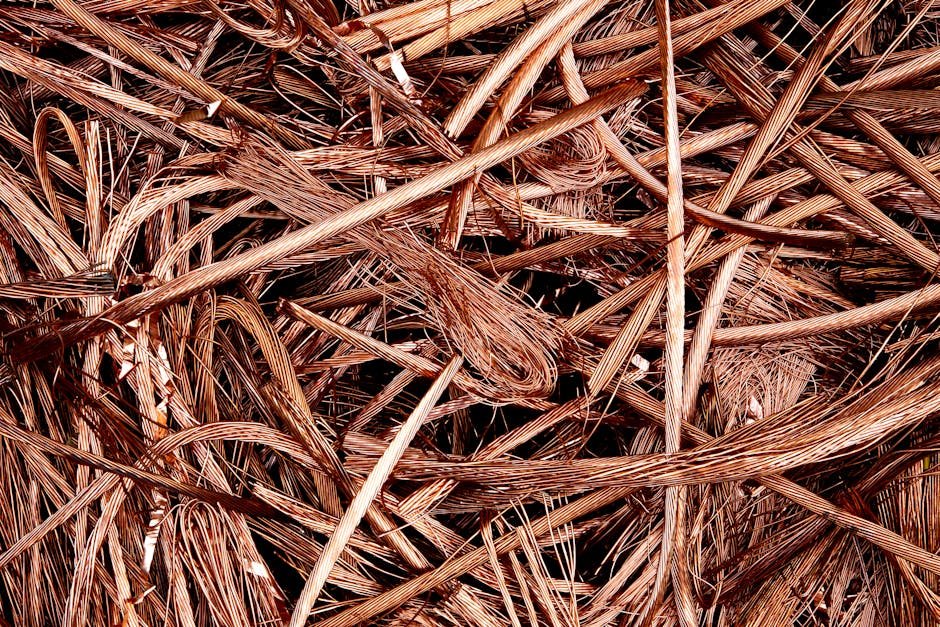

Understanding scrap metal copper prices is essential for electricians, plumbers, demolition contractors and household recyclers who want to extract maximum value from leftover copper wire, copper pipe and off-cuts. This comprehensive guide explains how Australian dealers quote copper price per kg, which grade applies to your material, and how recycling copper benefits both your wallet and the environment.
Scrap Metal Copper Prices Today: How the Daily Number Is Set
Scrap yards don’t pick a number out of thin air. Scrap metal copper prices track the three-month copper contract on the London Metal Exchange (LME), adjust for the AUD/USD exchange rate, then subtract a treatment/refining charge that covers the processor’s cost of turning dirty scrap into 99.99% cathode. Most Australian yards publish their buying rates at 7 a.m. AEST, so checking Scrap Metal Prices before you load the trailer can save a wasted trip.
Other variables that move the daily quote include:
- Supply gluts: During major demolition projects, sudden inflows can depress local prices for 48–72 h.
- Freight costs: A spike in diesel or container rates reduces what processors can pay.
- Smelter capacity: When Port Adelaide’s Port Pirie lead smelter shuts for maintenance, copper concentrate backs up and discounts widen.
- Global demand: Chinese grid infrastructure spending and European green-energy stimulus can lift world numbers within hours.
For current visibility, always search Scrap Metal Prices Near Me to see yard-specific rates, because the price you receive can vary by $0.40/kg between Sydney and regional NSW once logistics are factored in.
Copper Grades Explained: From Bare Bright to Number 2 Copper
Grade determines value more than weight. Australian processors use the ISRI (Institute of Scrap Recycling Industries) specification, so material is sorted into four main bands:
1. Bare Bright Copper
Clean, unalloyed, uncoated 99.95% Cu wire >1.5 mm diameter with no burnt or brittle ends. Fetches the top copper price per kg, currently around $10.50–$11.00. Strip insulation with an automatic stripper to upgrade light-grade wire into this band.
2. Number 1 Copper
Clean pipe, busbar or solids with minimal oxidation. Paint or solder must be under 5% of surface area. Trades at roughly $0.60/kg below bare bright.
3. Number 2 Copper
Painted, soldered or coated copper pipe, burnt wire, or solids with other metals attached. Heavily discounted—expect $7.50–$8.00 currently.
4. Copper Alloy (Mixed)
Includes brass-plated fittings, radiators and gunmetal valves. Priced as brass, not copper.
Bring mixed loads and the yard will apply the lowest applicable grade to the whole bin unless you pre-sort. Time spent separating number 2 copper from bare bright copper often doubles your payment.
Practical Tips to Maximise Copper Scrap Value
- Strip strategically: Only strip large-gauge copper wire where insulation diameter > wire diameter. Thin data cables lose money once labour is counted.
- Cut off fittings: Remove brass ferrules and steel hangers from copper pipe; even small attachments drop you from number 1 to number 2 copper.
- Keep it dry: Water in pipe increases weight but yards deduct 2–3% moisture, so store indoors or drain before delivery.
- Bundle neatly: Tangled messes cost you $0.20/kg in handling fees at some processors.
- Check timing: Prices often soften Friday afternoons when yards have filled export containers. Mid-week morning deliveries can secure an extra $0.15/kg.
Review yesterday’s trends and today’s spot rates at copper scrap metal prices before committing to a yard.
How Copper Recycling Works: From Your Bin to Refinery
Recycling copper uses 85% less energy than mining, so the environmental argument is clear. Here is the Australian supply chain:
- Collection: Trades drop material at licensed sites. Search Scrap Copper Prices Near Me to locate the closest facility.
- Sorting: Manual and induction-based separators grade the metal.
- Shredding: Wire and tube go through a hammer mill to liberate coatings.
- Granulation & Separation: Air tables and electrostatics isolate plastic, steel and aluminium.
- Briquetting: Clean copper is compacted into 300 kg briquettes for furnace charging.
- Smelting & Refining: Two-stage furnace produces 99.99% cathode, ready for rod mills.
- Re-melt: Australian copper rod plants in Port Kembla and Townsville turn cathode into new copper wire, plumbing tube and roofing sheet.
Each tonne of recycled copper saves 3.3 t of CO₂ emissions and keeps 2–3 t of rock in the ground.
Environmental Benefits of Keeping Copper in the Loop
Copper is 100% recyclable without loss of performance. Yet Australia still landfills an estimated 45 000 t of copper-containing products each year. Recycling delivers four headline advantages:
- Energy Reduction: Per kilo, recycled copper uses 0.4 MWh versus 2.2 MWh for virgin ore.
- Emission Cut: Each tonne avoids 200 kg of SO₂ and 180 kg of NOₓ compared with concentrate smelting.
- Landfill Relief: Copper products are dense; diverting them extends landfill life by up to 12%.
- Resource Security: Australia imports ~30% of its copper concentrate; recycling adds domestic supply buffer.
Policy is moving in step: Victoria’s new e-waste landfill ban and NSW’s 80% resource recovery target by 2030 both create demand for reputable recyclers such as Australia’s largest digital scrap marketplace. Households can monetise waste while helping meet state targets by simply checking ScrapTrade.com.au for drop-off points.
Market Outlook: Will Scrap Metal Copper Prices Rise in 2025?
ANZ Research forecasts global refined copper demand to grow 3.3% CAGR through 2026, propelled by grid upgrades and EVs (each electric car uses ~83 kg Cu versus 23 kg in ICE). On the supply side, concentrate stocks are tight after first-quarter outages in Chile and Panama. If the AUD remains below US$0.68, domestic scrap metal copper prices could average $11.50/kg in 2025, a 7% lift on current levels. Traders holding inventory may hedge by selling forward on the LME, while smaller sellers should monitor prices scrap metal alerts for spike notifications.
Legal & Safety Considerations When Selling Copper in Australia
Stolen copper costs the construction sector $70 m annually, so every state now enforces photo ID, cash-transfer limits and mandatory 3-day holding periods. Keep these points in mind:
- Proof of Ownership: Bring invoices or a letter from the site manager for industrial loads.
- No Cash over $1 000: Queensland and WA require EFT above this threshold.
- PPE: Cut-resistant gloves, safety boots and eye protection are compulsory at most yards.
- Material Declaration: Misrepresenting alloy scrap as pure copper can attract fines up to $30 000 under the Waste Management Act 2014 (NSW).
Conclusion: Turning Knowledge into Profit
Scrap metal copper prices fluctuate daily, but the fundamentals remain: sort to the highest grade, deliver mid-week, and track the LME in AUD terms. By understanding grades—from bare bright copper to number 2 copper—and following the practical steps above, you can consistently capture 10–20% more value from each kilo. At the same time, copper recycling slashes emissions and supports Australia’s circular economy. Bookmark Scrap Metal Prices for live updates, and never settle for the first quote when Australia’s competitive market is just a click away.
Frequently Asked Questions
What is the current scrap metal copper price per kg in Australia?
As of June 2024, domestic yards pay $7.50–$11.00 per kg depending on grade, with bare bright copper at the top end and number 2 copper at the lower end. Rates update daily with the LME and AUD/USD.
How do I know if my copper is bare bright or number 2?
Bare bright is shiny, uncoated wire or busbar >1.5 mm with no solder or paint. If you see oxidation, coatings or attachments, it grades as number 1 or number 2, reducing value by up to $3/kg.
Should I strip plastic insulation from copper wire before selling?
Strip heavy-gauge wire where insulation is thicker than the copper core; thin data cables rarely pay off once labour is counted. Yards accept unstripped wire but pay the lower insulated rate.
Is copper recycling really better for the environment than mining?
Yes. Recycled copper uses 85% less energy, cuts CO₂ emissions by 3.3 t per tonne, and avoids open-cut mining impacts while supplying the same quality metal for new products.











