
316 stainless tube dominates Australia’s high-end architectural, marine and process industries because it withstands chlorides, acids and extreme temperatures better than any standard stainless grade. Whether you are a fabricator quoting a coastal handrail, a maintenance manager replacing dairy pipework or a recycler weighing up Stainless Steel Scrap Price, understanding how this alloy is made, specified, bought, sold and recycled will save—often make—you thousands of dollars per tonne.
1. Chemical and Mechanical Properties of 316 Stainless Tube
316 stainless tube is not simply “shinier” steel; its performance derives from a precise chemistry set by ASTM A213, A269 and AS 1528 for food-grade tube. The key additions are:
- 16–18% chromium: Forms the passive chromium-oxide film that self-heals after scratching.
- 10–14% nickel: Stabilises austenite at room temperature, giving excellent toughness down to –196°C.
- 2–3% molybdenum: The game-changer; it lifts pitting resistance equivalent (PREN) from ~19 in 304 stainless to 24–26 in 316, allowing safe use in marine splash zones and chloride-rich cleaning chemicals.
- 0.08% max carbon (0.030% max in 316L): Low carbon reduces weld decay, making 316L the default choice for long welds in pulp mills and breweries.
Mechanical minimums for 316 stainless tube to AS 1528 are 515 MPa tensile, 205 MPa yield and 35% elongation. These numbers translate into real-world advantages: you can roll a 50 mm OD × 1.6 mm wall tube into a 100 mm radius without fracture—vital for hand-bending balustrades on site.
2. Manufacturing Routes and Product Forms
Australian distributors source 316 stainless tube from three mill types:
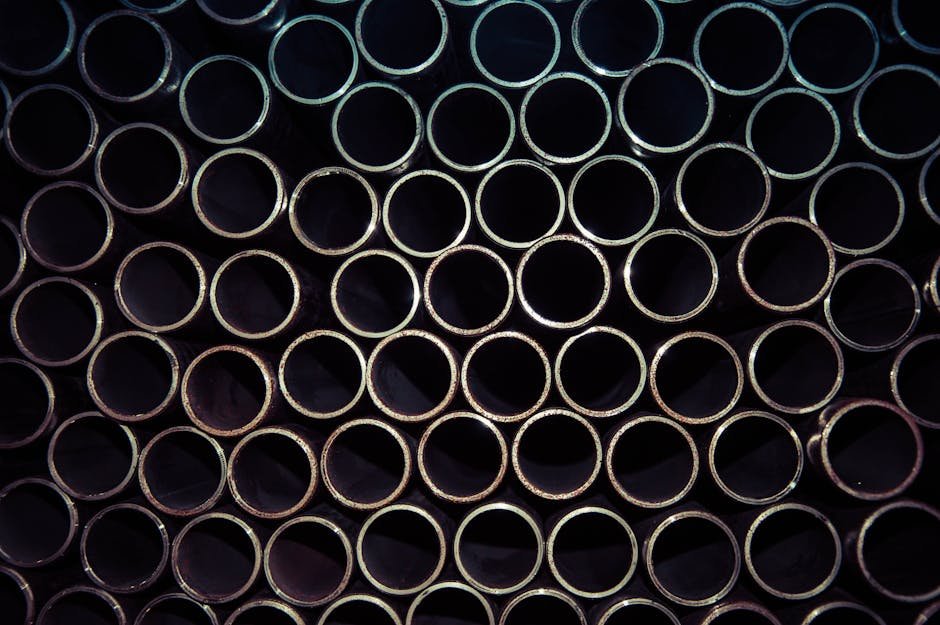
- Seamless: Hollow billet is rotary-pierced and cold-drawn to final size. Zero weld seam means maximum corrosion fatigue strength—preferred for high-pressure chemical lines and hydraulic tubing.
- Longitudinally welded (HF/ERW): Strip is roll-formed and laser-welded, then solution-annealed and sized. Cost is 20–30% lower than seamless; stocked in 6 m lengths from 12×1 mm to 219×4 mm.
- Spiral-weld: Used for large-diameter stacks and ducts over 406 mm; rarely seen in 316 because price premium outweighs benefit.
Surface finishes range from pickled (Ra≈1.0 µm) to polished 320-grit mirror (Ra≤0.1 µm). Dairy and pharmaceutical plants specify “OD polished, ID pickled” to maintain cleanability while containing costs. If you are recycling off-cuts, remember that polished tube carries a small weight of abrasive belt residue—mills discount 1–2¢/kg for excessive polishing media. Before you sell, check the Stainless Steel Scrap Calculator Estimate Your Material Value to separate high-value 316 from lower 304 stainless bundles.
3. Australian Standards, Sizes and Procurement Tips
Buyers typically reference:
- AS 1528: Food-grade tube, OD-controlled, 6 m lengths, common sizes 25.4×1.2, 38×1.2, 50.8×1.6 mm.
- ASTM A269: General service, imperial and metric, heavier walls up to 6.35 mm.
- ASTM A554: Structural, tolerance H-band, architectural handrail systems.
When requesting a mill certificate, always demand “MTC to EN 10204 3.1” which shows heat number, chemical analysis and mechanical tests. Spot-check molybdenum with a handheld XRF gun—if it reads below 2.0%, you have been supplied 304 stainless or a 316/304 hybrid. Authentic 316 stainless tube will also show magnetic permeability ≤1.05, so a strong permanent magnet should barely stick.
Domestic mills such as Outokumpu Newcastle coil and Valloureuseamless in Perth carry 4–6 week lead times. If you need 10×1 mm 316 coil tube next day, most Perth, Sydney and Brisbane stockists hold ~2–3 t in popular diameters. Book early in November—stainless surcharges spike when Finnish mills switch to winter power contracts, pushing Stainless Steel Scrap Price higher across the Pacific basin.
4. Price Drivers and Market Cycles
316 stainless tube is sold on a base-plus-surcharge model. The base covers conversion; the surcharge tracks nickel, chrome and moly prices on the London Metal Exchange. Over the past decade, nickel has swung from US$8,000 to US$34,000/t; molybdenum from US$12 to US$90/kg. A 1¢ shift in nickel adds ~A$22/t to the surcharge; the same move in moly adds ~A$70/t. When Russian or Chilean supply tightens, surcharges can jump A$400/t within a month.
Scrap discounts follow a parallel but lagged curve. Recyclers pay 70–80% of the contained alloy value minus processing cost. Clean 316 solids (no steel, no plastic) currently fetch ~A$2.40–2.70/kg in Melbourne, while 304 stainless clips trade at ~A$1.60–1.80/kg. If your stock is mixed, use the Stainless Steel Recycling How To Sell Scrap For Maximum Profit guide to segregate by grade and capture an extra 15–20¢/kg.
5. Fabrication and Welding Best Practice
316 stainless tube work-hardens rapidly; use sharp HSS or carbide tools with slow speeds and heavy feeds. For circumferential welds:
- Back-purge with 99.99% argon; root oxidation drops corrosion resistance to below 304 levels.
- Use 316L filler (ER316L or 316LSi) to match low carbon; avoid 308L which lacks moly.
- Inter-pass temperature ≤150°C to prevent sigma phase embrittlement.
- Post-weld pickling paste (nitric+HF) restores the passive film; electropolish for critical heat-exchanger duty.
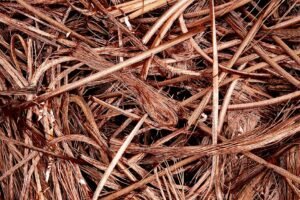
When recycling welded off-cuts, snip away steel backing bars and carbon steel tack-weld tabs. Even 1% Fe contamination can downgrade your load from clean ss316 stainless steel solids to 304 stainless clips, costing you 30–40¢/kg.
6. Recycling, Identification and Profit Maximisation
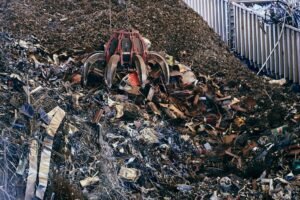
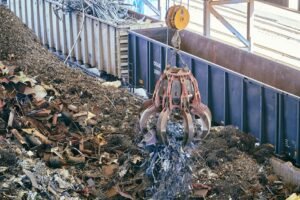
Scrap yards classify 316 stainless tube into four streams:
- 316 solids: Bar, plate, tube >3 mm wall, no coatings.
- 316 turnings: Machine swarf, usually coated in cutting oil; price discounted 10–15%.
- 316 mixed non-ferrous: Includes pumps, valves, fasteners; yards hand-sort and pay lower rate.
- 316 with Cu or Al attachments: Downgraded to 304 stainless or general non-ferrous if heavily contaminated.
Quick identification on the yard floor:
- Spark test on a grinder: 316 gives short, orange-red sparks with rare forklets; 304 sparks are longer and straw-coloured.
- Spot of copper sulfate solution: 316 remains bright for >30 min; carbon steel turns copper-coloured in seconds.
- Handheld XRF: look for Mo 2.0–3.0%, Ni 10–14%, Cr 16–18%.
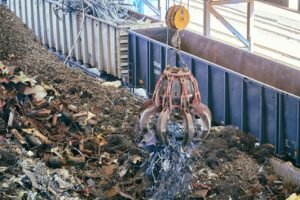
Bundle your 316 stainless tube off-cuts separately from 304 stainless and other non-ferrous. Remove rubber gaskets, plastic valve seats and Teflon tape; they incur penalties and can trigger landfill fees. Deliver in open-top bins so the buyer can inspect; sealed drums are opened and weighed in front of you anyway—refusing inspection is a red flag for a dishonest scale.
Finally, track the nickel and moly markets. When the Indonesian ore export ban hits the headlines, prices spike within days. Lock in a price over the phone, deliver within 48 h and you can pocket an extra A$100–150/t before the yard adjusts. For full tactics, download the free Scrap Trade handbook on negotiating with Australian dealers.
7. Common Applications Across Australian Industries
316 stainless tube is the default when failure is not an option:
- Marine: Boat railings, pulpits, swim-platform supports, rod-holders. Even in the splash zone, 316 survives decades of salt spray.
- Architecture: Curtain-wall spider arms, coastal balustrades, CBD laneway pergolas. Specifiers choose mirror-polished 50×1.6 mm for its “bright silver” longevity.
- Food & Beverage: Brewery heat-exchanger coils, dairy transfer lines, winery must pipes. AS 1528 compliance guarantees clean-in-place (CIP) chemical resistance.
- Medical & Pharmaceutical: Autoclave racks, chromatography columns, WFI (water-for-injection) ring mains. 316L variant prevents carbide precipitation during orbital welding.
- Mining: Gold-leach solution lines, pressure-oxidation autoclave dip tubes. Molybdenum resists chloride stress-corrosion cracking at 180°C.
- Oil & Gas: Hydraulic control-line tubing 6–12 mm OD, 1–2 mm wall, seamless cold-drawn, strapped to flexible flowlines on the North West Shelf.
If you maintain any of these assets, schedule a replacement before wall thickness drops below 70% of original. Used tube still has scrap value; call a licensed stainless steel sa recycler to cut, remove and pay you on the spot.
8. Design Life-Cycle Cost and Sustainability
Specifiers often baulk at the 25–30% price premium of 316 stainless tube over 304 stainless, yet whole-of-life analysis favours 316 in aggressive environments. A Sydney coastal balustrade (50×1.6 mm, 500 m length) costs ~A$38,000 in 316 versus A$29,000 in 304. Factor in ten-yearly maintenance blasting and re-coating for 304, plus replacement at year 20, and 316 saves A$12,000 over 30 years. Add the resale value of scrap at end-of-life and the gap widens further.
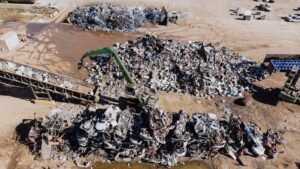
From a carbon standpoint, 316 contains ~65% recycled content. Recycling a tonne of 316 stainless saves 4.3 t CO₂ compared with virgin ore. Australia recycles ~1.5 Mt of stainless annually, yet only 30% is segregated by grade. By correctly identifying and selling your 316 stainless tube as clean solids, you directly reduce landfill and lower the nation’s embodied carbon footprint.
Conclusion
316 stainless tube remains Australia’s premier corrosion-resistant tubing thanks to its molybdenum boost, wide standardisation and high recyclate value. Knowing how to specify, fabricate, maintain and ultimately recycle it turns an everyday commodity into profit and environmental gain. Bookmark the live Stainless Steel Scrap Price page, separate your off-cuts by grade, and partner with reputable dealers to keep the loop—and your cashflow—spinning.
Frequently Asked Questions
How can I tell 316 stainless tube from 304 in the scrap yard?
Use a handheld XRF analyser to check for 2–3% molybdenum; 304 has none. A spark test also helps—316 sparks are shorter and redder. Finally, the 316 grade is virtually non-magnetic, whereas 304 may show slight magnetism after cold work.
What is the current scrap price difference between 316 and 304 stainless per kilo?
Clean 316 solids fetch A$2.40–2.70/kg, while 304 stainless clips trade around A$1.60–1.80/kg. The gap widens when nickel or moly surcharges rise, so segregate your loads and check the live price link before delivery.
Does 316L tube cost more than standard 316 stainless tube?
Commodity 316L and 316 are priced almost identically because mills now produce low-carbon as standard. You only pay a small premium for dual-certified 316/316L that carries tighter chemistry windows required for nuclear or pharmaceutical specs.
Can I weld 316 stainless tube without a purge gas?
Technically yes, but the root will oxidise and lose corrosion resistance below that of 304. For critical applications—especially food, pharmaceutical or marine—always back-purge with argon and use 316L filler to maintain the full alloy performance.