
The scrap steel market underpins Australia’s circular economy, turning everything from mild steel beams to sheet metal off-cuts into new billet, bar and coil. In 2026, national collections exceed 6.5 million tonnes and contribute over A$2.3 billion in export revenue, yet many suppliers still lose value through poor sorting or mistimed sales. This pillar guide walks you through every stage—grades, collection, processing, environmental upside, pricing levers and profit timing—so you can extract maximum value whether you are a demolition contractor, fabricator or local collector.
1. How Scrap Steel Is Classified In Australia
Steel is a ferrous metal, meaning it contains predominantly iron plus carbon and small alloying additions. Recyclers separate it from non-ferrous streams using magnets, density and visual inspection, then grade it under national specifications set by the Australian Metal Recycling Industry Association (AMRIA). The three most commonly traded specifications are:
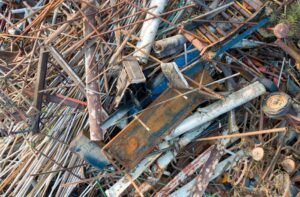
- 1 Prepared: Clean mild steel or sheet metal off-cuts, maximum 1 m x 600 mm x 600 mm, no residual concrete, wood or plastic. It is the premium grade and typically sets the top steel price per tonne.
- 2 Prepared: Light-gauge material such as roofing, ducting and car body panels, sheared to 600 mm x 400 mm and free of excessive galvanised coating. Density above 1.2 t/m³.
- Shredded: Auto hulks and white goods shredded to fist-sized pieces, with copper, aluminium and plastics removed downstream. Density 0.8–1.0 t/m³, priced lower but moves in high bulk volumes.
Heavy steel (over 6 mm thick and cut to 1.5 m) is often referred to as “HMS” and trades at a small discount to 1 Prepared because mills must crop it again. Turnings and borings generated by machine shops are acceptable only if oil-free and briquetted; otherwise they incur a yard reclamation fee. For a deeper dive into visual examples and tolerances, see our dedicated page on Steel Scrap Grading 1 Prepared 2 Prepared Shredded.
Stainless steel fallbacks are priced separately because of their nickel and chromium units. If you carry mixed non-magnetic grades, check today’s Stainless Steel Scrap Price before blending loads; cross-contamination can downgrade an entire shipment.
2. Collection & Processing: From Bin To Billet
Commercial demolition and fabrication sites generate the largest arisings. Best-practice contractors place colour-coded bins under roof to keep 1 Prepared dry, segregate rebar by size, and shear over-length beams on-site to avoid double handling. Transport costs can erode 8–12% of gross proceeds, so many suppliers use 50-foot walking-floor trailers that tare at 12 t and carry 26 t payloads into the yard.
Once tipped, material passes through a quality-control lane where handheld XRF guns check for residual copper, tin or lead that would penalise the meltshop. After inspection, the flowchart is:
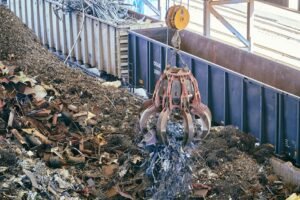
- Shear/baling: Hydraulic alligator shears crop light scrap to spec, while balers compress sheet metal into 350 kg biscuits to save furnace space.
- Shredding: 6 000 hp hammer mills shred cars and appliances into 150 mm fragments. Downstream drum magnets recover ferrous metal; eddy-current separators eject aluminium and zinc.
- Media separation: Float-sink tanks separate heavier steel from plastics and foam. The resulting “shred” product assays 95% Fe, 0.15% Cu, 0.05% Al.
- Load-out: Recyclers stockpile by grade, then blend to meet mill chemistry targets. Trains haul 3 800 t rakes to Port Kembla or Whyalla where basic-oxygen or electric-arc furnaces remelt at 1 600 °C.
One tonne of scrap replaces 1.1 t of iron ore, 0.6 t of coking coal and 0.25 t of limestone. Energy savings approximate 1 400 kWh per tonne, enough to power an average Australian house for 70 days. Slag volume falls by 300 kg, and CO₂ emissions drop 1.5 t when electricity is renewable-sourced.
3. Environmental Benefits: Why Recycled Steel Wins
Using recycled ferrous metal rather than virgin ore reduces water consumption by 40%, mining waste by 85% and greenhouse gases by 75%. Australia’s steel recycling rate is now 87%, the highest of any material stream. Each car recycled keeps 1.2 t of mixed materials out of landfill and recovers 10 kg of copper wiring, 7 kg of aluminium and 75 kg of mild steel that can re-enter construction rebar, sheet metal cladding or appliance housings.
Because steel is 100% recyclable without loss of metallurgical properties, today’s beam can become tomorrow’s car door. End-of-life ships, rail tracks and oil rigs are routinely harvested; even storm-damaged roofing iron is re-melted if the galvanised layer is stripped. The environmental upside is so compelling that regulators in Victoria and NSW offer landfill levy discounts for source-separated scrap, while the federal government’s Safeguard Mechanism credits steelmakers that lift recycled feed above 30% of total metallic input.
4. Price Drivers In The Scrap Steel Market
Domestic steel price per tonne quotes track Turkish import CFR HMS 80/20 because Australia is a net exporter. When Turkish mills retreat, domestic docks lower bids overnight. The key levers are:
- Iron ore spot (62% Fe Qingdao): Every US$10/t move drags scrap ±A$8/t.
- Coking coal: High premium pushes mills toward more scrap, lifting demand.
- Exchange rate: A 1¢ fall in AUD/USD adds ~A$4/t to export realisations; yards pass part to suppliers.
- Shipping freight: A US$5/t jump in Handysize rates docks Australian exporters A$5–6/t.
- Seasonality: Northern winter and Chinese New Year tighten supply, pushing prices up February–April; southern winter (June–August) depresses construction demolition inflow.
Local premiums exist for 1 Prepared because mills need clean charge material. In 2026, Perth traders report a A$35–40/t spread over shredded, partly driven by limited regional supply. If you are based in WA, contact a reputable steel scrap buyer in perth to compare gate prices before committing to interstate freight.
Timing sales correctly can add 10–15% annual margin. For tactical guidance, read our article on How To Time The Scrap Market For Maximum Profit.
5. Practical Tips For Maximising Value
Sort at source: Keep 1 Prepared off the ground with timber dunnage, remove rubber gaskets and copper wiring, and avoid cutting with oxy torches that leave slag. One 2 t skip of clean grade can fetch A$120/t more than mixed, paying for labour within two hours.
Understand yard specs: Ask for a written specification sheet and take photos of rejected loads to train staff. Some yards downgrade if any piece exceeds 600 mm; others allow 1 m if density is above 1.4 t/m³.
Weighbridge protocol: Always tare your truck after unloading to verify net weight. Ask for a print-out and photograph scale display; reputable yards like Scrap.Trade archive records for seven years.
Contract versus spot: Large generators (>500 t/month) can lock 30-day floating contracts linked to Turkish CFR plus basis; smaller traders benefit from spot if prices are rising. Use a rolling four-week average to smooth volatility.
Store smart: Pile shredded under roof to prevent rusting; every 1% Fe loss through oxidation erodes A$3/t. Galvanised sheet metal stored outdoors for six months can lose 3% zinc by volatilisation, downgrading chemistry and price.
6. Safety, Regulations & Quality Assurance
Scrap yards must comply with Workplace Health & Safety Act 2011, Dangerous Goods codes and EPA licencing. Gas cylinders, asbestos roofing and radioactive sources are “zero-tolerance” items; detection systems include portal radiation monitors and fluoroscopic cameras. Fines reach A$250 000 for illegal dumping of regulated waste.
Since 2023, the Recycling and Waste Reduction Act mandates that exporters of processed ferrous scrap obtain a licence and submit quarterly mass-balance reports. Paperwork must show that material is at least 95% metallic and that residual plastics are below 1%. Yards achieve this by installing air-classification systems and near-infrared optical sorters.
Quality assurance is increasingly digital. Platforms such as ScrapTrade.com.au allow suppliers to upload photos, receive provisional quotes and track truck scheduling, reducing dwell time and carbon footprint.
7. Outlook For The Australian Scrap Metal Recycling Market
Australia generates 11 million tonnes of ferrous scrap annually, and the volume is projected to grow 2.4% CAGR through 2030 as urban buildings erected in the 1970s reach end-of-life. Simultaneously, domestic steelmakers are investing in electric-arc furnaces that can consume 100% scrap, reducing reliance on coal-fed blast furnaces. BlueScope’s planned 1.5 Mtpa EAF in Port Kembla and InfraBuild’s upgrade to its Sydney mill will add 3 Mt of incremental scrap demand by 2027.
Export markets remain vital. India surpassed Vietnam as the largest buyer of Australian shred, taking 2.1 Mt in 2023 as its government targets 300 Mt of domestic steel output by 2030. Freight corridors are improving: the new Inland Rail project will cut Melbourne-to-Brisbane transit from 32 to 18 hours, lowering containerised scrap landed cost by A$12/t. Overall, analysts forecast the scrap metal recycling market revenue will top A$4.8 billion by 2028, supported by carbon border tariffs that favour low-emission recycled content. For more statistics, visit our scrap metal recycling market dashboard.
8. Conclusion: Turning Knowledge Into Margin
The scrap steel market rewards suppliers who understand grades, control preparation costs and time sales against global cues. By segregating 1 Prepared, limiting contamination and leveraging digital pricing tools, contractors can add A$15–20/t on average. Recyclers benefit from lower emissions, reduced landfill liability and access to fast-growing Asian mills. Meanwhile, policymakers advance circular-economy targets and carbon commitments. Whether you operate a demolition site in Brisbane, a fabrication shop in Adelaide or a regional yard in Kalgoorlie, disciplined sorting and market timing will keep you consistently profitable while helping Australia build a greener, self-reliant steel future.
Frequently Asked Questions
- What is the current steel price per tonne in Australia?
- Gate prices for 1 Prepared averaged A$425/t ex-yard in May 2026, while shredded traded A$385/t. Prices move daily with Turkish CFR and AUD/USD; check your local yard’s live list or the Scrap.Trade app for real-time updates.
- How can I distinguish 1 Prepared from 2 Prepared?
- 1 Prepared is clean mild steel or sheet metal cut to ≤600 mm, thickness 3–6 mm, free of plating or insulation. 2 Prepared is lighter, may carry galvanising and is denser than 1.2 t/m³ after shearing. When in doubt, shear smaller and keep grades separate.
- Is stainless steel included in ferrous scrap pricing?
- No. Stainless contains nickel and chromium, so it trades on its own schedule. Mixed loads should be segregated; otherwise the yard prices everything at the lower stainless rate. Review today’s Stainless Steel Scrap Price before blending.
- What paperwork do I need to export scrap overseas?
- You need a licence under the Recycling and Waste Reduction Act, a quarterly mass-balance report, radiation and quarantine clearance, plus a destination-control certificate. Most exporters work with a licensed broker to handle AQIS and shipping documentation.
Frequently Asked Questions
What is the current steel price per tonne in Australia?
Gate prices for 1 Prepared averaged A$425/t ex-yard in May 2026, while shredded traded A$385/t. Prices move daily with Turkish CFR and AUD/USD; check your local yard’s live list or the Scrap.Trade app for real-time updates.
How can I distinguish 1 Prepared from 2 Prepared?
1 Prepared is clean mild steel or sheet metal cut to ≤600 mm, thickness 3–6 mm, free of plating or insulation. 2 Prepared is lighter, may carry galvanising and is denser than 1.2 t/m³ after shearing. When in doubt, shear smaller and keep grades separate.
Is stainless steel included in ferrous scrap pricing?
No. Stainless contains nickel and chromium, so it trades on its own schedule. Mixed loads should be segregated; otherwise the yard prices everything at the lower stainless rate. Review today’s Stainless Steel Scrap Price before blending.
What paperwork do I need to export scrap overseas?
You need a licence under the Recycling and Waste Reduction Act, a quarterly mass-balance report, radiation and quarantine clearance, plus a destination-control certificate. Most exporters work with a licensed broker to handle AQIS and shipping documentation.