
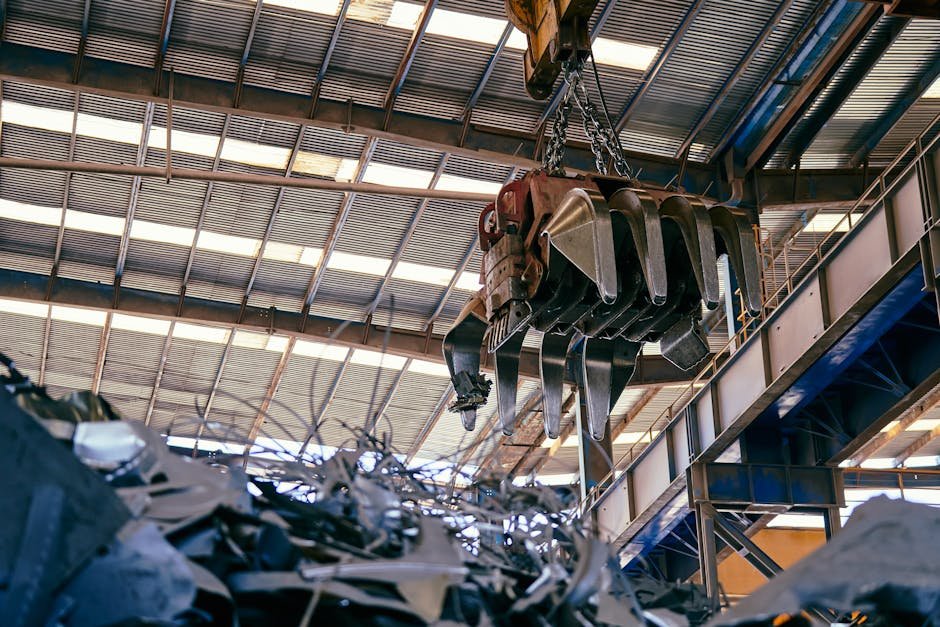

If you need to buy, sell, or simply track scrap steel prices nsw, this pillar guide gives you the exact dollars-per-kilogram, explains why quotes shift hour-by-hour, and walks you through every grade from mild steel to heavy melt so you can maximise returns or lower raw-material costs.
How Scrap Steel Prices NSW Are Calculated (Per Kg vs Per Tonne)
Scrap yards from Wollongong to Newcastle quote in AUD $ per kg for small trade deliveries and $ per tonne for 20-tonne truckloads. The arithmetic is simple: 1 tonne = 1,000 kg, so a $0.30 per kg quote equals $300 per tonne. Yet the actual number on your weigh-bridge docket depends on a sequence of globally linked steps:
- Export parity: Port Kembla traders benchmark against the latest South Korean or Bangladeshi tender; if the seaborne price rises US$15/tonne, local current scrap steel prices follow within 24 h.
- Freight differential: Rail haulage to the port costs ~$18/tonne from western Sydney; if diesel surcharges climb, inland yards lower gate prices to preserve margin.
- Yard handling fees: Shearing, baling, radiation scanning and freight-forwarding margins typically strip $20–$35/tonne off the headline export figure you see on Scrap Prices.
- Grade bonuses & penalties: 100 mm+ structural scrap free of alloy attachments commands a $30–$40/tonne premium over light-gauge sheet metal.
Keep these mechanics in mind when a buyer says “metal prices today are $280” — ask whether that figure is ex-yard or delivered-to-port, and always confirm if it is for a specific grade such as HMS 1/2 or shreddable mild steel.
Current Scrap Steel Prices NSW by Grade (May 2024)
Below are representative spot rates collected from Sydney, Newcastle and Port Kembla yards on 8 May 2024. Prices are in AUD $ per kg and include GST where applicable.
| Grade | Description | Price per kg | Price per tonne |
|---|---|---|---|
| HMS 1 (80 cm×50 cm, 6 mm+) | Clean structural off-cuts, no reo-bar | $0.32–$0.35 | $320–$350 |
| HMS 1/2 mix | Heavy + lighter gauge, max 3 mm plate | $0.28–$0.31 | $280–$310 |
| Sheet metal (roofing, ducting) | Light-gauge ferrous metal, under 3 mm | $0.18–$0.22 | $180–$220 |
| Turnings / borings | Machine-shop swarf, 85% yield | $0.10–$0.15 | $100–$150 |
| Rebar (cut <1 m, no concrete) | Construction demolition scrap | $0.24–$0.27 | $240–$270 |
| Busheling (new factory clippings) | Clean mild steel, mill-grade | $0.34–$0.37 | $340–$370 |
These numbers move in 5–$10/tonne swings when Turkish import bookings or Indonesian billet prices shift. Bookmark our live Scrap Metal Prices portal to track intra-day changes.
Key Market Drivers That Move Scrap Steel Prices NSW
Unlike copper or aluminium, steel is a ferrous metal whose scrap value is driven more by finished-steel demand than by LME speculation. The following variables explain 90% of weekly volatility:
- Overseas finished-steel prices – When Shenzhen rebar spikes, Chinese mills buy more Indonesian scrap, tightening supply chains and pushing steel scrap metal prices higher across NSW.
- Port Kembla blast-furnace schedule – BlueScope’s No. 5 furnace relines reduce internal scrap demand for 45 days; yards lower gate rates 10–$15/tonne during those windows.
- AUD:USD exchange rate – A 1 ¢ fall in the Aussie lifts export returns roughly AU$3/tonne, allowing domestic yards to raise bids.
- Rail & road freight – Newcastle–Sydney rail shutdowns force trucks, adding $8–$10/tonne to freight and depressing ex-yard bids.
- Scrap generation flows – Post-demolition season (March–April) and end-of-financial-year clean-outs (June) create temporary oversupply, softening prices.
Monitor these macro signals to time large deliveries. For micro movements (daily to weekly), follow our steel scrap metal prices feed which is updated twice a day with port bookings and currency adjustments.
Understanding Grades: From Mild Steel to Stainless Contamination
Grade mis-identification is the single biggest reason suppliers get downgraded and paid less. Here is a practical field guide:
HMS (Heavy Melting Steel)
- HMS 1: thickness ≥ 6 mm, length ≤ 0.6 m, no galvanised, no alloy plate.
- HMS 1/2: may include 3–6 mm sheet metal; must be cut to ≤ 1 m for container loading.
Busheling
Clean new factory clippings, generated by automotive stampers. Density > 1.2 t/m³ and prized by electric-arc furnaces for its low residuals. Often fetches $20/tonne above HMS 1.
Turnings & Borings
Machine-shop chips contain 3–8% oil and 5–10% oxide; yards pay less because they must squeeze and briquette before furnace charging. Separate your turnings from solids to avoid cross-contamination.
Rebar & Reinforcing Bar
Cut to <1 m, free of concrete, cable and timber. If the inspector spots composite rebar (FRP), the whole 20 t load drops to shredder grade and you forfeit ~$60/tonne.
Stainless Steel Contamination
Even 1% 304 mixed into a carbon-steel box can cost a yard the entire furnace heat. Always isolate stainless fixtures and check with a spark test or portable XRF. For current Stainless Steel Scrap Price premiums, see our dedicated page.
Tip: Photograph each pile before pick-up; if a dispute arises you have time-stamped evidence of grade.
Recycling Pathway: How Your Scrap Becomes New Rebar
NSW’s 300-plus licensed scrap facilities feed three main outlets:
- Electric-Arc Furnace (EAF) mini-mills – InfraBuild at Rooty Hill and Laverton melt 95% scrap to produce billet and rebar; energy use is 75% lower than virgin blast-furnace steel.
- Blast-Furnace/BOF route – BlueScope Port Kembla uses 15–20% scrap as cooling agent, the rest is iron ore and coke.
- Export – Bulk carriers haul 25,000–30,000 t shipments to Vietnam, Bangladesh and Turkey where EAF plants buy NSW scrap for CFR US$410–430/tonne.
Once weighed, your truckload follows these steps:
- Sorting: Grapples, magnets and manual picking remove copper, aluminium and stainless.
- Shearing/baling: Over-size feedstock is cropped to ≤ 0.6 m for dense container packing.
- Shredding: Auto-shredders create fist-size frag that mills can conveyor-feed.
- Separation: Drum magnets pull ferrous metal; eddy currents eject non-ferrous for separate sale.
- Quality sampling: Lab tests check copper, nickel and tin residuals; bonuses or penalties apply.
- Furnace charging: Scrap melts at 1,600 °C; slag removes impurities; continuous casting forms billet.
- Rolling: Billet is rolled into plate, structural sections or rebar within 4 h of tapping.
The entire loop — from your yard to new beam — takes 6–8 weeks, making steel the most recycled engineering material on earth.
Environmental & Economic Benefits of Recycling Steel
Every tonne of scrap steel recycled in NSW saves:
- 1,131 kg of iron ore
- 633 kg of coal
- 54 kg of limestone
- 1.5 t of CO₂ equivalent compared with virgin production
Multiply this by the 4.5 million tonnes of ferrous scrap handled in-state last year and the saving equals taking 1.8 million cars off the road. Landfill diversion also cuts the $145/t NSW waste levy, saving councils an estimated $190 million annually. For industry, the lower energy intensity of EAF mills translates into reduced Scope 2 emissions, helping builders earn Green Star points and comply with the federal Safeguard Mechanism.
Practical Tips to Maximise Value When Selling Scrap Steel in NSW
- Segregate at source: Keep turnings, rebar and sheet metal in separate bins; mixed loads default to the lowest grade.
- Cut to spec: HMS 1 pieces >0.6 m attract shearing charges of $15/tonne.
- Remove contaminants: Plastics, concrete and wood add weight but sink the grade; a clean 20 t load can fetch $60/tonne more.
- Time the market: Prices soften in June (EOFY clean-outs) and strengthen September–October when construction restarts. Check live ferrous market data at Scrap.Trade before booking trucks.
- Negotiate freight: If you are within 40 km of a port, ask for delivered-to-port pricing; you may capture the freight saving.
- Verify weighbridge tickets: Use a public weighbridge and retain dockets; reputable yards like ScrapTrade.com.au allow witnessed weighing.
- Payment terms: Cash same-day is common for <5 t; for larger volumes, ask for 3-day cleared EFT to reduce counter-party risk.
Where to Get Same-Day Quotes for Scrap Steel Prices NSW
Phone apps are convenient, but the most reliable method is still a weigh-bridge booking with a licensed facility. Most yards will hold a quote for 24 h provided you deliver before noon. For instant visibility, our Scrap Prices portal aggregates gate prices from 45 NSW sites and updates twice daily. If you need container-load export pricing, forward your packing list to a broker who can lock in a Turkish or Vietnamese CFR rate within 6 h; expect a provisional booking note and a 10% deposit before vessel arrival.
Frequently Asked Questions (FAQ)
Q: Do scrap steel prices nsw include GST?
A: Yard gate prices are usually quoted GST inclusive, but export contracts are US$ CFR and GST exempt. Always clarify before invoicing.
Q: How often do prices change?
A: Major yards adjust at least weekly; export-linked facilities move daily when Turkish or Vietnamese bookings shift by more than US$5/tonne.
Q: Can I sell painted roof sheeting?
A: Yes, as light gauge sheet metal; the paint fraction is tolerated up to 1%. Heavily coated or plastic-laminated colourbond may be downgraded to shredder grade.
Q: What is the minimum yard will buy?
A) Most metro yards accept 100 kg lots, but you need >3 t for price negotiation and 10 t+ for a weigh-bridge docket. For smaller lots, use a ute or cage trailer and call ahead.
Conclusion: Stay Ahead of the Curve on Scrap Steel Prices NSW
Whether you are a demolition contractor sitting on 500 t of rebar or a fabricator paying for new steel, understanding scrap steel prices nsw per kg and per tonne lets you lock in margin instead of gambling on volatile markets. Bookmark this guide, grade your material correctly, and check our live feeds daily. The difference between average timing and smart timing can easily swing $40/tonne — on a 25 t truck, that is $1,000 straight to your bottom line.
Frequently Asked Questions
Do scrap steel prices nsw include GST?
Yard gate prices are usually quoted GST inclusive, but export contracts are US$ CFR and GST exempt. Always clarify before invoicing.
How often do prices change?
Major yards adjust at least weekly; export-linked facilities move daily when Turkish or Vietnamese bookings shift by more than US$5/tonne.
Can I sell painted roof sheeting?
Yes, as light gauge sheet metal; the paint fraction is tolerated up to 1%. Heavily coated or plastic-laminated colourbond may be downgraded to shredder grade.
What is the minimum yard will buy?
Most metro yards accept 100 kg lots, but you need >3 t for price negotiation and 10 t+ for a weigh-bridge docket. For smaller lots, use a ute or cage trailer and call ahead.