
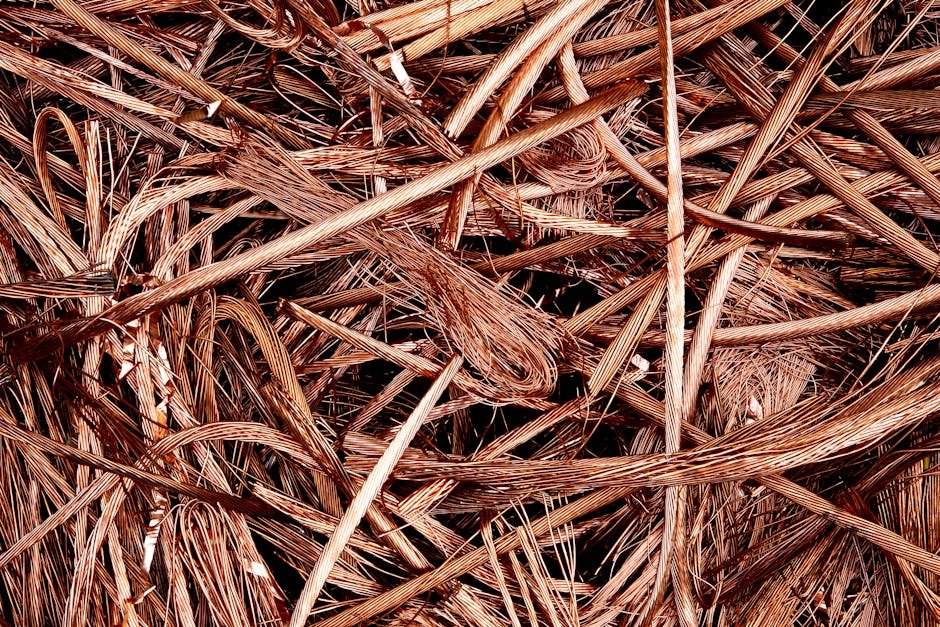

Understanding current scrap copper prices is critical for electricians, plumbers, demolition contractors and household recyclers who want maximum return on every kilo. Copper is the third-most-consumed industrial metal on earth, and its value fluctuates hourly on the London Metal Exchange (LME), flowing straight through to the price you receive at the weighbridge. This definitive guide explains exactly how the Australian market sets the copper price per kg, which grade your material falls into, how copper recycling works, environmental benefits and practical tactics to lock in the best price every time you sell.
How Today’s Scrap Copper Market Works
Scrap yards do not invent prices in isolation. They hedge against the spot price on the LME, adjust for the AUD/USD exchange rate, then apply a brassage (processing and freight) discount. The result is the Current Scrap Metal Prices screen you see posted at the gate. Most yards update twice daily; larger processors stream live quotes to their phones and websites.
Because copper wire, copper pipe and bare bright copper trade globally in U.S. dollars, a 1 ¢ move in the currency equals roughly 1.3 ¢ per kg at the yard. On top of that, domestic factors such as port congestion, energy surcharges and even FIFO labour rates in regional WA or NT can widen the gap between Sydney and Darwin quotes by 40 ´ per kg for the same grade.
Finally, volume matters. A plumber delivering 20 kg of number 2 copper in a ute will receive the public price. A demolition company backing in with 5 t of granulated bare bright in stillages will negotiate a premium that is often 4–6 % above the published rate. If you want to see what the premium looks like in your city, visit scrap copper prices near me and toggle between commercial and public tiers.
Copper Grades Explained: From Bare Bright to Number 2 Copper
Not all copper scrap is equal. Australian yards follow the ISRI specifications used worldwide. Know your grade before you rock up; mis-sorting can cost you dollars per kg.
Bare Bright Copper
- Clean, unalloyed, uncoated copper wire > 1.5 mm diameter
- No solder, paint or oxidation
- Top of the price ladder; usually quoted as the benchmark copper price per kg
Number 1 Copper
- Clean copper pipe, busbar or wire with minor patina allowed
- Paint or solder must cover < 5 % of surface
- Trades at 4–6 % discount to bare bright
Number 2 Copper
- Copper pipe with heavy solder, paint, brass fittings or significant oxidation
- Wire that is tinned or has > 5 % insulation by weight
- Current scrap prices sit roughly 20 % below bare bright
Copper Birch/Cliff
- Roofing sheet, copper alloy turnings, impure burnt wire
- Price spread can exceed 30 % below bare bright
Sorting tip: a handheld spectrometer gun (XRF) costs under AUD $30 k and lets large yards test in seconds. If your load is borderline, strip insulation, remove brass fittings and keep alloys separate to avoid being downgraded to number 2 copper.
For photos and a downloadable spec sheet, head to the Copper Scrap Group resource page.
What Drives Daily Copper Price Moves?
Copper is often called “Dr Copper” because it diagnoses the health of the global economy. The following factors move the needle on the copper price per kg:
- LME Cash Price: Trades on the London exchange 24 h a day; Australian yards mirror moves within hours.
- Shanghai Futures Night Session: Asian demand is 70 % of global consumption; a spike in Chinese construction PMI can add 2 % to local quotes overnight.
- Exchange Rate: A 1 % drop in the AUD versus USD adds roughly 1 % to AUD-denominated prices, all else equal.
- Freight & Energy: Diesel up 20 ¢/L? Expect a 1 ¢/kg freight surcharge on deliveries to smelters in Townsville or Port Kembla.
- Scrap Supply Gluts: Post-holiday demolition booms flood yards with copper wire; oversupply can shave 3–5 % off spot quotes for a fortnight.
- Refinery Shutdowns: When Pasar or Hamburg smelters go offline, treatment charges fall and scrap discounts tighten, pushing current scrap copper prices higher.
Traders hedge using the LME three-month contract plus a scrap swap spread. If you want to track the daily trend, bookmark the current price of scrap copper dashboard updated at 09:00 and 16:00 AEST.
Recycling Process: From Your Bin to 99.99 % Cathode
Copper recycling is a closed-loop success story: 80 % of all copper ever mined is still in use. Here is the step-by-step journey once you hand over your material at the weighbridge:
1. Weighing & Sampling
Your load is weighed on calibrated digital bridges accurate to ±0.1 %. A 200 g sample is taken for moisture and content analysis.
2. Processing
Bare bright copper wire goes straight to baling. Number 2 copper pipe is shredded, magnetically separated and passed through a granulator that chops insulation into 4 mm flakes while preserving the metal core.
3. Density Separation
Sink-float tanks separate copper from aluminium, brass and plastic. Result: 96 % Cu granules ready for smelter.
4. Smelting & Fire Refining
The granules head to copper recycling smelters such as Glencore’s Townsville or Aurubis Hamburg. At 1 200 °C oxygen blows remove sulphur and iron, yielding 98.5 % blister copper.
5. Electrolytic Refining
Blister is cast into anodes and electrolysed in sulphuric acid. After 14 days 99.99 % pure copper cathode is harvested and sold back to rod mills for new copper wire, copper pipe and EV components.
Energy saving: recycling copper uses 85 % less energy than mining, cutting 3.2 t CO₂ per tonne of metal. That is the equivalent of planting 160 trees for every tonne you recycle.
Environmental & Economic Benefits of Copper Recycling
Recycling copper is not just a revenue stream; it underwrites Australia’s net-zero goals. Consider these hard numbers:
- Every tonne of recycled copper avoids mining 200 t of rock.
- Reduces water usage by 4 000 L per tonne compared to open-pit extraction.
- Keeps 65 kg of SO₂ out of the atmosphere per tonne processed.
- Supports 1 600 direct and 3 800 indirect Australian jobs in collection, processing and logistics.
- Generates AUD $1.2 billion in export revenue annually, second only to aluminium among non-ferrous scrap streams.
Policy tailwinds are strong: the Victorian landfill levy rose to $125/t in July 2023, making metal recovery cheaper than disposal. Meanwhile, the NSW Circular Copper Grant offers 50 % rebates on cap-ex for granulators under 10 mm screen size. If you operate a yard, check eligibility at Scrap.Trade and tap into federal clean-energy subsidies.
Practical Tips to Maximise Your Scrap Copper Returns
- Strip Insulation: A $140 automatic wire stripper pays for itself after 30 kg of 2.5 mm cable. Stripped bare bright copper fetches up to $3.20/kg more than insulated number 2 copper.
- Separate Alloys: Keep brass fittings off copper pipe. Mixed loads default to the lowest grade, costing you 15 % in value.
- Drain & Clean: Water in copper pipe adds weight. A 30 L drum of trapped glycol can cost $80 in downgraded price.
- Bundle & Bale: Dense bales reduce freight cost and qualify you for commercial premiums.
- Time the Market: Track weekly Chinese PMI releases. A beat above 50 often triggers a 2–3 % jump in current scrap copper prices within 48 h.
- Use Local Tools: The Scrap Copper Prices Near Me map shows 200+ verified yards with real-time spreads so you can cherry-pick the best deal before you drive.
Remember, payment terms matter. Some yards pay on weighbridge ticket; others hold 3 % until lab moisture results clear. Ask up front, and request EFT same-day if possible.
Regional Price Variations Across Australia
Metal prices today can differ by 60 ¢/kg between capital cities and remote towns. The table below shows indicative spreads for bare bright copper per kg (AUD) as of 06:00 AEST this morning:
| City | Public Price/kg | Commercial Premium/kg |
|---|---|---|
| Sydney | $11.20 | +$0.45 |
| Melbourne | $11.10 | +$0.40 |
| Brisbane | $10.90 | +$0.35 |
| Perth | $10.80 | +$0.30 |
| Adelaide | $10.70 | +$0.25 |
| Darwin | $10.50 | +$0.20 |
Distance to port, local competition and state levies explain the gaps. If you are near a regional centre, consider a 24 h containerisation service offered by ScrapTrade.com.au; freight is pooled and you still capture metro-level pricing.
Frequently Asked Questions
How often do scrap copper prices change?
Most Australian yards adjust quotes twice daily at opening and again after the 16:30 LME kerb close. Volatile sessions can trigger intra-day updates every hour.
Is stripping copper wire worth it?
Yes. Stripped bare bright copper currently commands up to $3.20/kg more than insulated number 2 copper. A handheld stripper pays for itself after roughly 30 kg of 2.5 mm cable.
What is the difference between number 1 and number 2 copper?
Number 1 copper is clean pipe or wire with < 5 % solder or oxidation. Number 2 copper has heavier contamination, brass fittings or significant insulation and trades roughly 20 % lower.
Where can I find the most accurate current scrap copper prices near me?
Use the interactive map at Scrap Copper Prices Near Me; it pulls live feeds from 200+ verified yards every hour and displays both public and commercial tiers.