
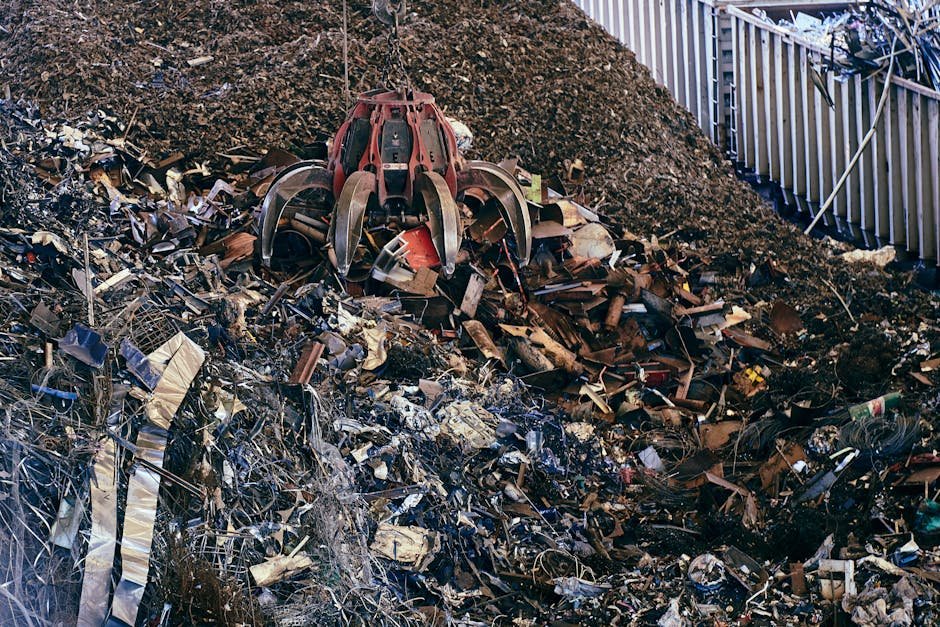

Scrap metal Griffith is a vital part of the Riverina economy and Australia’s circular-resource network. This pillar guide explains every grade you can trade, how each metal is reprocessed, and why recycling in Griffith slashes emissions more than any other household action.
1. Griffith’s Scrap Landscape: What Makes It Unique?
Griffith’s agricultural processing plants, wineries and irrigation workshops generate steady streams of stainless-steel drums, copper cable, brass valves and mild-steel structural offcuts. Because the town sits midway on the Kidman Way freight corridor, collectors can bulk-up loads and freight south to Port Adelaide or north to Newcastle without back-loading, keeping Scrap Metal Prices competitive with metro yards.
Three traits set scrap metal Griffith apart from coastal centres:
- High copper content: Vineyard trellis wires, electric fence reels and irrigation pumps yield #1 and #2 copper that consistently outperforms mixed brass on price.
- Seasonality: Post-harvest (May–July) brings an influx of damaged picking bins and conveyor parts, temporarily depressing stainless 304 pricing.
- Transport efficiency: Back-loading citrus trucks return to Adelaide empty; savvy traders negotiate freight credits that boost net returns 4-7 ¢/kg.
If you are new to the game, read Sell Scrap Metal Near Me In 2026 to learn how digital weighbridge tickets and e-payments are streamlining regional yards.
2. Standard Grades You Will Encounter in Griffith Yards
Australian processors follow the ISRI (Institute of Scrap Recycling Industries) specification, but Riverina yards simplify signage into everyday language. Below is the definitive list you will see on the scales at griffith scrap metal sites.
Ferrous Grades
- HM #1: Heavy melting steel over 6 mm thick, clean of concrete and copper. Think grape-steel girders or tractor axles. Current indicative: $320–$350/t.
- HM #2: Light gauge steel, < 6 mm, may contain galvanising. Roof sheeting, vineyard posts. Price spread $220–$260/t.
- Cast Iron: Harvester blocks, irrigation pump housings. $300/t average.
- Rebar and Mesh: Concrete-free offcuts qualify for HM #1; concrete-contaminated loads are downgraded to #2 and attract landfill levy of $35/t.
Non-Ferrous Grades
- #1 Copper: Clean pipe or wire > 1 mm diameter, no solder, no paint. $10.80–$11.20/kg.
- #2 Copper: Painted, soldered or coated, still > 94 % Cu. $9.40/kg.
- Copper Wire (low-grade): Plastic insulated, > 30 % Cu recovery. $3.20/kg equivalent after granulation yield.
- Brass (Honey): Plumbing valves, tapware, 65 % Cu / 35 % Zn. $6.50/kg.
- Aluminium Extrusion: Window frames, irrigation channel. $2.40/kg.
- Aluminium Cans (UBC): Post-consumer beer cans. $1.60/kg. Collect 1 t and the processor pays freight.
- Stainless 304: Food-grade bins, tanks, conveyor screws. $2.80/kg.
- Stainless 316: Winery heat-exchanger plates. $4.10/kg.
- Lead: Wheel weights, pump seals. $2.20/kg (must declare if > 100 kg to EPA).
- Mix Insulated Wire: Harvester looms. $1.10/kg.
Prices swing daily; bookmark the live dashboard on ScrapTrade or compare directly at ScrapTrade.com.au before you haul.
3. The Recycling Chain: From Farm Gate to New Product
Understanding the full chain helps you capture maximum value and avoid downgrades.
Step 1: Collection and Segregation
Top operators keep a five-bin system on-farm: #1 Cu, #2 Cu, Brass, Aluminium, Ferrous. Segregation increases revenue by 18–30 % versus mixed buckets.
Step 2: Transport
Griffith’s location gives two logical freight corridors:
- South-West: MIA–Hay–Mildura–Port Adelaide (containerised, 9 h drive).
- South-East: MIA–Wagga–Hume Hwy–Port Kembla (bulk tippers, 7 h drive).
Freight is charged “per tonne-km” but back-loading citrus trucks accept $0.09/t·km versus $0.19/t·km for dedicated freight. If you produce > 5 t/month, negotiate standing bookings post-harvest.
Step 3: Weighing and Payment
Public weighbridges at Hanwood, Yoogali and Griffith City Council landfill accept third-party tickets. Bring photo ID and ABN if you want cash same-day; otherwise EFT within 24 h.
Step 4: Processing
- Shearing: Over-sized cane bins cut into 1 m lengths for furnace charging.
- Baling: Light steel compressed into 1 m³ bales, raising bulk density from 250 kg/m³ to 950 kg/m³ and cutting freight cost 35 %.
- Granulation: Copper wire chopped and air-separated, yielding 99.9 % Cu chops.
- Hot-dip melting: Aluminium UBCs melted at 750 °C, fluxed, degassed and cast into 15 kg ingots.
Step 5: Remelt and Manufacture
Griffith’s scrap steel is remelted at Port Kembla’s basic-oxygen furnace, blended with iron ore to make construction rebar. Copper chops are exported to South Korean smelters, refined to cathode and returned as EV wiring loom. Aluminium ingots feed the Yennora extrusion mill, coming back as vineyard trellis posts—closing the loop.
Need a processor right now? Use the interactive map at Scrap Metal Recycling Near Me to locate the closest licensed facility and view current queuing times.
4. Environmental Benefits: Why Griffith Residents Recycle
Every tonne of recycled steel saves 1.4 t of iron ore, 0.8 t of coal and 1.2 t of CO₂-e. In Griffith terms, recycling the annual 4 200 t of farm scrap equates to removing 1 120 cars from the road.
- Energy savings: Aluminium remelting uses 5 % of the energy required to mine bauxite; that keeps Liddell power station output for 1 900 homes.
- Landfill diversion: Metal is inert but occupies 12 % of C&I landfill volume. Diverting it extends the Griffith landfill life by 6.5 years.
- Water protection: Copper in landfill leachate is toxic at 0.5 mg/L. Recycling eliminates that pathway.
- Soil health: Clean fill is increasingly scarce; removing steel allows inert concrete to be crushed and reused on-farm for track building.
5. Maximising Dollar Return: Practical Tips for Riverina Traders
1. Strip insulation: A handheld wire stripper pays itself off after 80 kg of #2 copper becomes #1, adding $1.80/kg profit.
2. De-valve brass: Steel screws downgrade brass to “irony” and cost you $1.20/kg. Five minutes with an impact driver recovers that margin.
3. Keep stainless separate: 316 is worth 46 % more than 304; a spark test or portable XRF gun removes guesswork.
4. Bundle aluminium: Soda cans packed in 20 kg potato sacks avoid UBC down-grade. Loose bags attract dirt and moisture surcharges.
5. Time the market: Copper peaks when the USD/AUD > 0.76 and LME stock < 120 kt. Watch the macro or subscribe to price alerts on Scrap Metal Prices.
6. Regulatory Snapshot: NSW EPA Rules That Affect You
Scrap is classified waste under the NSW POEO Act. Key obligations:
- Any site storing > 1 000 t must hold an Environment Protection Licence (EPL).
- Trucks carrying > 250 kg of copper or > 500 kg of aluminium must hold a consignment note (CN).
- Cash payments > $1 000 require a customer declaration under the Anti-Money Laundering Regulation 2022.
Griffith Council’s Development Control Plan 2024 mandates 1 m concrete berms around outdoor scrap yards to stop storm-water run-off. If you are considering a new collection site, factor that cost at $120/m.
7. Comparing Regional Markets: Griffith vs. Sydney vs. Hawkesbury
Griffith’s distance from ports adds ~$28/t freight, yet the district’s high copper share offsets that penalty. Average net returns per tonne of mixed non-ferrous:
- Griffith: $4 060
- Sydney West: $4 180
- scrap metal hawkesbury: $4 110
The 2–3 % differential is often erased when Sydney yards apply higher contamination deductions. For small producers, the convenience of local yards and personalised service outweighs the tiny spread.
8. Future Trends: Where Scrap Metal Griffith Is Heading
By 2027, the NSW circular-economy policy will require 80 % diversion of C&I waste. Griffith’s agri-processors are piloting “zero-waste” plants where every conveyor belt, motor and valve is inventoried for end-of-life recovery. Blockchain material passports will track alloy chemistry, making closed-loop recycling seamless. Early adopters who tag bins with QR codes are already receiving 3 % price premiums from advanced processors.
Electric vehicles will increase demand for Griffith’s high-purity copper, while aluminium extrusion from vineyard redevelopment will supply lightweight vehicle chassis. Analysts forecast a 28 % rise in aluminium demand by 2032, underpinning long-term price support.
Finally, expect tighter EPA monitoring. The newly funded Riverina Compliance Squad will inspect every yard within 200 km twice yearly. Ensure your site has impermeable surfaces, GPS tracking on trucks, and digital weighbridge integration to avoid fines up to $250 000.
Conclusion: Turning Scrap into Value
Scrap metal Griffith is more than a side-hustle; it is a strategic resource stream that underpins regional jobs, cuts carbon emissions and returns high-grade metal to the global supply chain. By understanding grades, timing the market, and meeting regulatory standards, you can convert waste on your farm or worksite into reliable cash flow while protecting the Murrumbidgee landscape for future harvests.
Frequently Asked Questions
What is the highest paying scrap metal in Griffith right now?
#1 bare copper wire tops the list at ~$11/kg. Clean vineyard wire and thick irrigation pipe qualify as long as you remove solder and paint.
Do I need a licence to sell scrap metal in Griffith?
No licence is required for occasional sellers. If you operate a collection site storing >1 000 t, you need an EPA Protection Licence and comply with the 2024 DCP storm-water rules.
How can I check scrap metal prices daily?
Bookmark the live dashboard at Scrap Metal Prices. Prices update at 09:00 AEST and include regional freight adjustments for Riverina.