
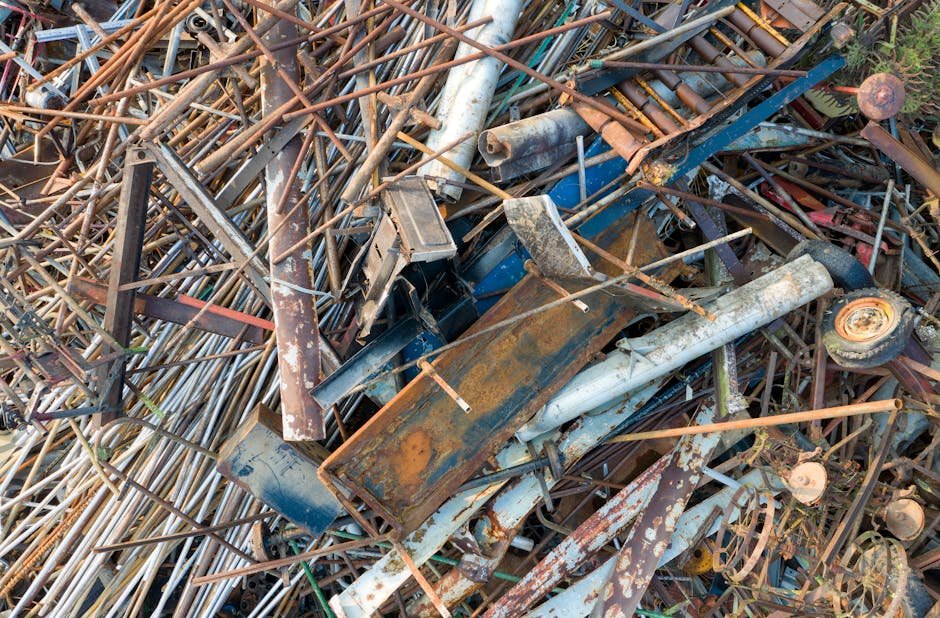

Today scrap metal prices fluctuate daily, driven by global commodity exchanges, local yard inventories, and the grade of material you bring in. Whether you’re a tradie cleaning out a worksite, a recycler looking to monetise household metal, or a business with regular industrial offtake, understanding how prices are set, how to sort your scrap, and how recycling works can add hundreds of dollars to every tonne you sell.
How Today Scrap Metal Prices Are Set
Scrap metal is a globally traded commodity. London Metal Exchange (LME) contracts for copper, aluminium, nickel and steel set the baseline, but regional premiums or discounts are applied by Australian yards based on freight, port costs, and domestic demand. The published price per kg you see online is therefore a snapshot taken at the start of the trading day and can move by the hour.
Key drivers:
- LME spot and 3-month futures: A sudden jump in copper futures can add 30 c/kg to local current scrap prices within 24 h.
- USD–AUD exchange rate: Because metals are priced in US dollars, a weaker Aussie dollar raises the local price per tonne.
- Port backlog: If Asian buyers delay vessels, oversupply pushes metal prices today down; prompt shipments lift them.
- Yard inventory: When yards are full, they lower gate prices; when they need feedstock for rolling mills, they raise them.
- Grade differentials: Clean, segregated copper wire trades at a premium to contaminated or insulated wire.
Bookmark our live dashboard for Scrap Metal Prices to compare daily movements. If you need to find the closest buyer, use Scrap Metal Prices Near Me to filter yards by postcode, accepted grades, and opening hours.
Grades of Scrap and How They Affect Price Per Kg
Not all scrap is equal. Australian yards classify material under National Metals Recycling Guidelines. The cleaner and more segregated your load, the higher the market rate you receive.
Ferrous (Iron & Steel)
- HMS 1/2 (Heavy Melting Steel): 6 mm+ thick, no galvanised, max 0.3 m × 0.6 m. Current gate price: $280–$320 per tonne.
- Shreddable car bodies: Fuel tanks, batteries, and plastics removed. $190–$230 per tonne.
- Light gauge: Roofing, whitegoods skins, ducting. $90–$150 per tonne.
Non-Ferrous
- Bare bright copper wire: 99.9 % Cu, 16 mm+ diameter, uncoated. Up to $11.20 per kg.
- #1 Copper: Clean tubing, busbar, free of solder. $9.50–$10.20 per kg.
- #2 Copper: Painted, soldered or coated. $7.50–$8.50 per kg.
- Aluminium extrusion 6063: Clean, no steel inserts. $2.30–$2.70 per kg.
- Aluminium cans (UBC): Baled, washed. $1.60–$1.90 per kg.
- Stainless 304 solids: 8 % Ni, 18 % Cr. $2.00–$2.40 per kg.
- Lead: Clean sheets or wheel weights. $2.10–$2.40 per kg.
- Brass: Rod, shells, borings. $5.00–$5.80 per kg.
Always separate metals before you arrive. Mixed loads are downgraded to the lowest component, costing you hundreds per tonne. For a live list of Current Scrap Metal Prices by region and grade, check the link before you load the ute.
Where to Check Today’s Scrap Metal Prices in Australia
Because prices shift intraday, reputable yards now publish live feeds. The most reliable sources are:
- Scrap.trade national dashboard: Aggregates 120+ yards, updates every 15 min.
- Individual yard websites: Many list today’s scrap metal prices but only for their gate.
- Industry WhatsApp groups: Brokers send bid/offer alerts; good for large volumes.
- ABC Bullion & ASX futures: For precious and base metals, useful when negotiating high-grade copper or silver-bearing scrap.
When comparing quotes, confirm whether the figure is GST inclusive, delivered or ex-yard, and if there are any weightbridge fees. A low price per kg with hidden $30 weighbridge fee can erode profit on small loads.
Need to know scrap metal prices today in Sydney, Melbourne, Brisbane, Perth or regional centres? Our city-specific pages update at 9 am AEST and again at 3 pm to reflect shifts in Asian trading. Visit today’s scrap metal prices for the latest numbers.
Step-by-Step: How Scrap Metal Recycling Works
Recycling is more than tossing copper into a bin. A streamlined process maximises both environmental benefit and dollar return.
1. Collection & Sorting
Bring scrap sorted by grade. Use magnets to separate ferrous from non-ferrous. Remove plastic fittings from aluminium window frames and steel screws from copper tubing.
2. Weighing & Pricing
At the yard, your vehicle is weighed on a certified weightbridge. After unloading, a tare weight is taken. Net weight multiplied by the published price per kg gives the settlement. Ask for a printed docket and check the grade code against the national guidelines.
3. Processing
Metals are shredded, sheared or baled for furnace efficiency. Copper and aluminium go to smelters in Korea or India; steel heads to Port Kembla or overseas mills.
4. Melting & Refining
Electric arc furnaces (EAF) melt scrap using 90 % less energy than virgin ore. Advanced spectroscopes adjust alloy chemistry to meet new-product specs.
5. Re-manufacture
Recycled aluminium becomes new window frames or UBC cans within 60 days. Copper is re-drawn into wire or rod. Steel is rolled into rebar, coil and car panels.
By keeping scrap out of landfill, the sector saves 7.5 million t of CO₂-e each year in Australia alone, equivalent to taking 1.6 million cars off the road. For deeper data, read ScrapTrade Australia’s annual recycling report.
Environmental & Economic Benefits of Recycling
Recycling scrap metal is one of the highest-impact climate actions available to cities and industry.
- Energy savings: Recycled aluminium uses 95 % less energy than bauxite mining.
- Water conservation: Copper recycling cuts water use by 85 %.
- Reduced mining: Every tonne of steel scrap avoids 1.4 tonnes of iron ore, 0.8 t of coal and 0.3 t of limestone extraction.
- Landfill diversion: Metal is infinitely recyclable; landfill space is finite.
- Green jobs: The sector employs 13,000 Australians, many in regional areas.
Governments are tightening regulations. The NSW EPA now requires metals over 2 t to be tracked via the RIDonline system. Victoria’s circular economy policy targets an 80 % recovery rate for construction metals by 2030. Selling to licensed recyclers ensures compliance and maximises your rebate under Scrap Trade’s sustainable marketplace.
Practical Tips to Maximise Cash for Your Scrap
- Strip copper cable: Removing plastic insulation upgrades #2 to #1, adding up to $2.50 per kg.
- Drain fluids: Engines and gearboxes with oil attract downgrades or rejection. Drain and remove filters.
- Cut to size: Oversized HMS blocks may be rejected or incur shearing fees. Keep under 0.6 m any side.
- Separate alloys: 304 vs 316 stainless differ by 30 % in nickel value. Use a spark test or XRF gun if available.
- Time the market: Copper often peaks in March–April and September–October when Chinese factories restock. If storage is secure, hold small lots for higher market rate windows.
- Negotiate freight: Full 24 t truckloads attract back-loading rates; small loads may cost more to deliver than they yield.
- Use local yards: Check scrap metal prices today close to you to cut diesel and toll costs.
- Keep theft records: NSW and QLD require photo ID for copper sales. Keep receipts to prove ownership if questioned.
Conclusion: Turning Scrap into Cash and Carbon Savings
Today scrap metal prices reward those who understand grades, market drivers, and timing. By sorting your load, comparing live quotes, and delivering to licensed recyclers, you can earn top price per tonne while cutting emissions and conserving finite ores. Visit the links throughout this guide to monitor today’s scrap metal prices, locate yards, and lock in the best deal for your metal.
Frequently Asked Questions
What is the average price per kg for copper scrap today?
Bare bright copper trades around $10.50–$11.20 per kg, while #2 copper averages $7.50–$8.50 per kg. Check live rates each morning because today scrap metal prices move with global exchanges.
Do scrap yards pay cash on the spot?
Licensed Australian yards must pay via EFT or cheque for copper and aluminium over 10 kg to comply with anti-theft laws. Steel payments under $200 may still be cash at some regional sites.
How can I increase the value of my aluminium scrap?
Remove steel screws, plastic trim, and rubber seals. Upgrading UBC cans to extrusion 6063 segregated clean can raise the price per kg by 30–40 c.
Why do prices differ between yards in the same city?
Each yard sets a gate rate based on current inventory, freight contracts, and mill orders. Comparing scrap metal prices near me before you leave home can add $20–$50 per tonne.