
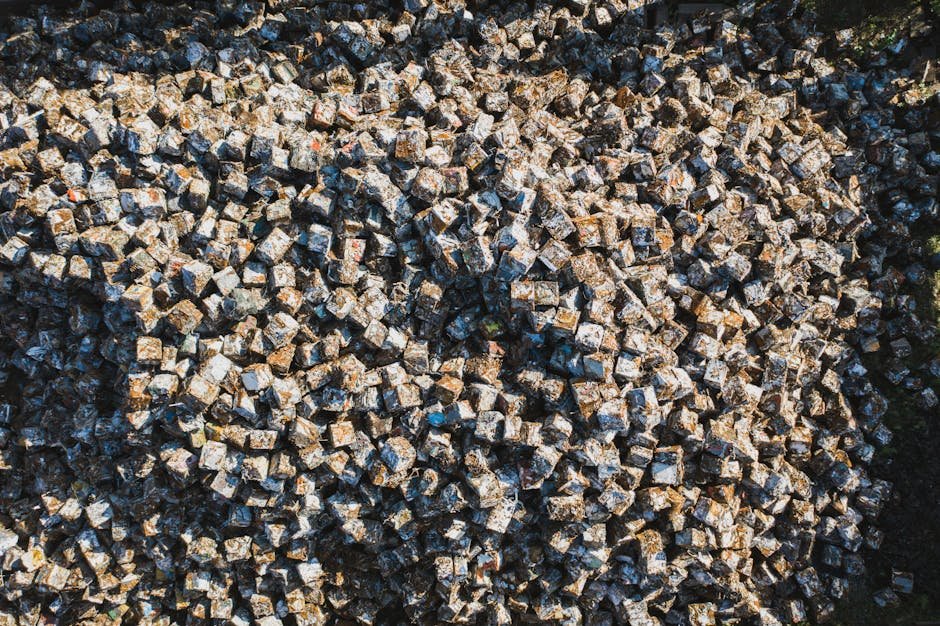

SS 316 scrap is the workhorse of the Australian stainless recycling sector. Found in coastal rails, chemical tanks and food machinery, it commands premium pricing because its 2–3 % molybdenum content resists chlorides better than common 304 grades. In this pillar guide we unpack every angle—how to identify, grade, recycle and profit from ss 316 scrap while slashing CO₂ emissions and landfill.
1. What Is SS 316 Scrap and Why It Matters
Stainless steel grade 316 (UNS S31600) is an austenitic alloy. When products reach end-of-life they become ss 316 scrap—an internationally traded secondary raw material. Australian processors collected 102 000 t of stainless scrap in 2023; industry data show 316 fractions averaged 18 % of that volume yet contributed 29 % of total stainless scrap value. The alloy’s nickel and molybdenum make it immune to pitting in marine environments, so it is recycled rather than down-cycled, preserving high-value metals.
2. Chemical Composition and Grades Within 316 Scrap
Strict chemistry drives price. The Institute of Scrap Industries (ISRI) code “SABETTE” covers solids, but Australian yards split 316 into four domestic grades:
- 316 Solids: Clean solids & turnings, Ni ≥ 10 %, Mo ≥ 2 %, Cu ≤ 0.5 %, no foreign attachments.
- 316 Turnings/Borings: Machining chips, oil < 1 %, free of Ti or Mg inclusions.
- 316L Low-carbon: Carbon ≤ 0.03 %, preferred by mills remelting for plate or surgical steel.
- 316DQ (Dairy Quality): Low sulphur, certified food-grade, attracts 5–7 c/lb premium.
Portable X-ray fluorescence (XRF) guns let recyclers verify Mo content on the spot; a 0.2 % Mo shortfall can drop offer price by 8 %. When in doubt, ask your yard for a spectrometer print-out.
3. How to Identify and Sort SS 316 Scrap from 304 & Other Alloys
Fast identification saves money. Use this field checklist:
- Spark test: 316 produces short, reddish sparks with few forks; 304 gives longer white sparks.
- Magnetic check: Both grades are nominally non-magnetic in annealed form, but cold-worked 316 fasteners show slightly higher permeability—use a neodymium magnet to separate work-hardened 304 bolts.
- Moly test drops: Commercially available potassium thiocyanate reagent turns amber within 30 s when molybdenum is present.
- Weight: 316 density is 7.99 g/cm³ versus 7.93 g/cm³ for 304—small but measurable on large loads.
Train your team to keep 316 segregated; mixed 304/316 is priced at the lower 304 rate, costing sellers roughly $0.90 kg⁻¹ in lost revenue.
4. The Australian SS 316 Scrap Recycling Process
Recycling stainless is a closed-loop triumph. Here is the step-by-step journey from wharf to re-melt:
4.1 Collection and Transport
Coastal demolition sites, sugar mills and breweries generate most of Australia’s 316 feedstock. Licensed collectors document source to satisfy the Scrap Metal Act 2016 (Qld) and similar state laws.
4.2 Sorting and Shearing
Material is visually inspected, then processed through shear/baler to < 600 mm fractions. Automatic colour sorters paired with XRF remove copper, titanium and plastic.
4.3 Thermal De-coating
Paints and PVC coatings are baked off at 450 °C in oxygen-reduced kilns; volatiles feed after-burners achieving 850 °C to destroy dioxins.
4.4 Melting
Electric arc furnaces (EAF) at Outokumpu in San Diego or ThyssenKrupp in Germany melt 316 scrap with 30 % virgin alloying additions. Every tonne of scrap used avoids 1.52 t of CO₂ compared with virgin ore-based production.
4.5 Refining and Casting
Argon-oxygen decarburisation lowers carbon; molybdenum briquettes trim chemistry before casting into slabs. Final composition is certified to ASTM A240.
Pro tip: When you deliver clean, sorted 316 solids, recyclers waive the typical $40 t⁻¹ thermal treatment fee, putting more profit in your pocket.
5. Environmental Benefits of Recycling SS 316 Scrap
Stainless is 100 % recyclable and suffers no property loss. Recycling one tonne of ss 316 scrap:
- Saves 4.5 t of iron ore, 1.2 t of coal and 0.3 t of limestone.
- Redvents 1.8 t of solid waste going to landfill.
- Abates 4.3 t of CO₂-e, equal to taking 1 900 cars off the road for a week.
- Recovers 11 kg of nickel and 6 kg of molybdenum—critical minerals on Australia’s strategic list.
The federal RECycling and CLimate Efficiencies (RECLE) scheme, slated for 2025, will issue carbon credits for documented stainless recycling. Traders who book material through Scrap Trade will automatically receive blockchain-based certificates that heavy-emitting manufacturers can buy to offset scope-3 emissions.
6. Pricing, Contracts and Market Outlook for SS 316 Scrap
Prices track London Metal Exchange (LME) nickel plus molybdenum oxide surcharges. In June 2024 Australian yard prices averaged:
- 316 solids: AUD $3.05–$3.20 kg⁻¹
- 316 turnings: AUD $2.75–$2.90 kg⁻¹
- 316L: additional 8 c kg⁻¹ premium
Contracts fall into three categories:
- Spot: Cash against weightbridge ticket, best for small lots.
- Quarterly Formula: Linked to average LME nickel plus Mo oxide with 30-day lag; favoured by mills needing certainty.
- Back-to-back: Exporters hedge container sales to Asian mills, locking in margin.
Industry analysts forecast global stainless demand will grow 4.2 % CAGR through 2028, driven by desalination plants and hydrogen infrastructure—both specify 316. Australian yards that invest in XRF sorting and export logistics will capture upside. For hyper-local collection trends, see our interactive map of Scrap Near Me In 2026.
7. Practical Tips for Maximising Value When You Sell SS 316 Scrap
- Keep It Dry: Moisture adds weight but evaporates at furnace, so yards discount 2 % for every 1 % moisture.
- Remove Brass Inserts: A single 5 % brass contamination can downgrade the entire load to “mixed non-ferrous” losing $1.40 kg⁻¹.
- Bundle Small Pieces: Place turnings into 200 L drums with sealed lids to prevent oil loss and reduce yard handling fees.
- Photograph Loads: Time-stamped photos of sorted 316 solids protect against grade disputes.
- Negotiate Tolling: Some mills accept 316 scrap as credit against finished plate; you earn LME-linked pricing plus conversion margin.
8. Comparison With Other Stainless and High-Temperature Grades
Understanding relative value helps sourcing decisions:
| Grade | Nickel % | Mo % | Typical Price/kg | Key Uses |
|---|---|---|---|---|
| 304 | 8 | 0 | $2.20 | Kitchenware |
| 316 | 10–14 | 2–3 | $3.15 | Marine, chemical |
| 2205 Duplex | 5 | 3 | $2.80 | Desalination |
| 310 | 20 | 0 | $2.60 | Heat treatment |
| 330 | 35 | 0 | $4.10 | Petrochemical |
Note that while 330 carries higher nickel, 316 commands better value per kg due to balanced Mo and wider mill demand.
9. Regulatory Landscape and Compliance in Australia
Since 2018 cash payments for scrap are banned in Victoria, Queensland and Western Australia. Sellers must present photo ID and provide ABN if claiming over $75. The hs scrap classification code under the Australian Harmonised Export system requires exporters to certify radiation-free status. Fines reach $450 000 for false declarations. Keep copies of the What Is Scrap Trade compliance checklist to streamline border clearance.
10. Tools and Resources for Traders and Recyclers
- XRF Rental: Niton and Olympus units rent for $550 week; payback after 5 t of correctly sorted 316.
- Mo Calculator App: Free iOS/Android tool from the International Molybdenum Association to estimate surcharge.
- Export Licence: Apply through the Australian Border Force; typical turnaround 30 days.
- Insurance: Marine cargo policy covering nickel price volatility; premiums 0.35 % of shipment value.
- Market Intel: Subscribe to ScrapTrade.com.au weekly stainless report for delivered China prices.
11. Future Trends: Green Steel and SS 316 Scrap
Global producers committed to Science-Based Targets need 90 % recycled content by 2040. Hydrogen-based direct reduction still requires 10 % scrap as coolant, ensuring long-term demand. Australia’s proximity to Asian EAF mills gives freight advantage; average Darwin–Shanghai capes freight is US$11 t versus US$23 t from U.S. Gulf. Investing in pierside stockpiles and shears positions local yards for growth. The scrap e marketplace module now supports carbon credit tagging, letting buyers bid higher for verifiable low-carbon units.
12. Conclusion: Turning Knowledge Into Profit
Mastering ss 316 scrap means understanding chemistry, market drivers and compliance. Clean sorting, Mo verification and timely sales maximise returns. Recyclers who integrate environmental data will win both margin and carbon credits as green steel mandates tighten. Bookmark this guide, share it with your yard team, and keep Australia’s stainless loop truly circular.
FAQs
- How can I tell if my stainless is 316 or 304? Use a moly test drop; amber colour within 30 s indicates 316. Alternatively an XRF gun will read 2–3 % Mo.
- Why does 316 scrap cost more than 304? Higher nickel (10–14 %) and molybdenum (2–3 %) content plus superior corrosion resistance drive mill demand and price premium.
- Is 316 magnetic? Annealed 316 is essentially non-magnetic; cold-worked bolts may show slight permeability but far less than carbon steel.
- What is the current Australian price for 316 turnings? June 2024 yard averages range $2.75–$2.90 kg⁻¹, fluctuating with LME nickel and Mo oxide surcharges.