
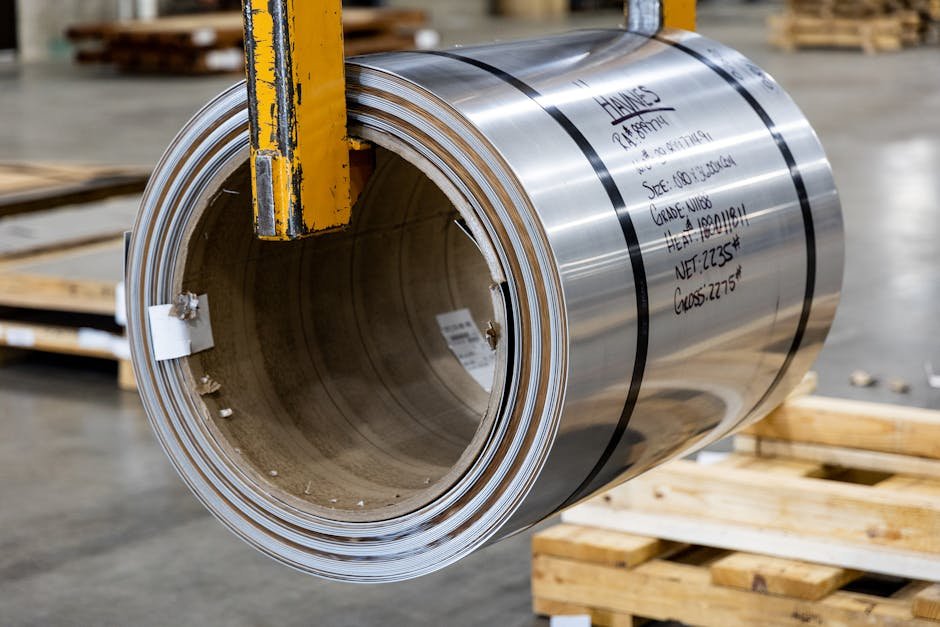

Whether you are fabricating chemical tanks, specifying coastal balustrading or weighing up scrap bins, understanding the properties, market value and recycling channels for ss 316 sheet can save—or earn—you thousands of dollars. This pillar guide explains everything Australian engineers, architects, welders and scrap traders need to know.
What Exactly Is SS 316 Sheet?
SS 316 sheet is an austenitic chromium-nickel stainless steel that contains molybdenum, boosting resistance to chlorides and industrial solvents. The “316” designation under ASTM A240 and AS 1554.6 confirms a composition window: 16–18 % chromium, 10–14 % nickel, 2–3 % molybdenum, <0.03 % carbon (L-grade) and the balance iron. This chemistry produces a stable austenitic structure that is non-magnetic in the annealed condition yet can be work-hardened.
Compared with 304, the added molybdenum lifts pitting corrosion resistance by a factor of three in marine splash zones, making ss 316 sheet the default for coastal architecture, food processing and chemical plants. Australian warehouse stock is normally supplied in cold-rolled 0.4 mm to 6 mm thickness and in standard 1219 × 2438 mm (4 × 8 ft) or 1500 × 3000 mm plates. If you have off-cuts left after laser cutting, you can Sell Metal Coil Scrap Sheet Metal In Coil Form through the same marketplace.
Grades, Finishes and Australian Standards
Buyers encounter multiple sub-grades:
- 316L – low carbon (max 0.03 %) prevents sensitisation during welding; mandatory for pressure vessels under AS 1210.
- 316H – controlled carbon 0.04–0.10 % for elevated-temperature creep strength.
- 316Ti – titanium stabilised, sometimes used in exhaust systems to combat weld decay.
- 316LN – nitrogen added to raise proof stress while keeping low carbon.
Finishes are coded by ASTM and AusTube Mills as follows:
- No. 1 – hot-rolled, annealed, pickled; dull grey, used in heavy industrial tanks.
- No. 2B – cold-rolled, annealed, skin-passed; semi-bright, the workhorse for fabrication.
- No. 4 – polished 120-320 grit, linear grain; preferred for architectural panels.
- BA – bright annealed, mirror-like; popular in food display equipment.
- HL – hair-line, long scratch pattern; hides fingerprints on lifts and doors.
Always request test certificates to AS 1554.6 or ISO 10204 3.1 when buying new stock; recyclers should inspect for copper contamination because some 316 scrap is indistinguishable from 304 without PMI (positive material identification). For a quick check, handheld XRF guns read the molybdenum peak—316 averages 2.5 % Mo, 304 shows <0.5 %.
Fabrication, Welding and Machining Tips
SS 316 sheet work-hardens rapidly; use sharp HSS or carbide tools with slow speeds and positive rake. When laser cutting, nitrogen assist gas leaves an oxide-free edge ready for welding. Water-jet avoids heat tint but costs more in abrasive.
For TIG welding, ER316L filler rod matches base chemistry; purge backs with argon to stop sugar formation. Interpass temperature must stay below 150 °C to prevent carbide precipitation. Pickle with 2–5 % nitric-hydrofluoric gel after welding to restore corrosion resistance. Fabricators who accumulate skeleton sheets and punching waste often combine them into 1-tonne stillages and sell mixed 316 stainless sheet offcuts through specialised stainless scrap buyers rather than general steel recyclers, capturing an extra 20-30 ¢/kg.
Weight Calculator, Pricing and Market Drivers
Calculate theoretical weight: kg = length (m) × width (m) × thickness (mm) × 8.0. Example: a 2 m × 1 m × 3 mm ss 316 sheet weighs 48 kg. Warehouse prices track the London Metal Exchange (LME) nickel price plus mill premium; expect $4.20–$4.80 AUD/kg for 2B 3 mm sheet when nickel is USD 18 000/t. Scrap prices lag primary by 4–6 weeks but respond faster to nickel volatility. In 2023, nickel swung from USD 21 000 to USD 34 000/t within a month, lifting clean 316 turnings from $1.60 to $2.40 AUD/kg.
Other cost drivers:
- Currency AUD/USD—imported plate priced in US dollars.
- Inventory at port—Asian mills destock aggressively in Q4.
- Energy surcharge—annealing furnaces rely on natural gas.
- Speculative stainless stockpiles in China visible via SMM data.
For current Light Steel Scrap Price Sheet Metal Appliances trends, monitor the weekly index published on Scrap.Trade which separates light gauge domestic appliances from industrial nickel-bearing grades.
Recycling Value and Trading Channels in Australia
Clean ss 316 sheet scrap is a premium grade. Melbourne dealers quote $2.20–$2.90 AUD/kg delivered, while regional yards 150 km inland pay $1.90–$2.40 because of freight. Contamination penalties apply for:
- Magnetic pieces (304 mixed in).
- Paint, rubber or plastic attachments.
- Copper inserts (brazed fittings).
- Oil-soaked turnings (>1 % oil).
Best-practice preparation: shear off welds, remove bolts, segregate by alloy and keep dry. Stainless does not rust like carbon steel, yet salt spray can initiate pitting that lowers visual grade. Store indoors or tarp.
Who buys? Specialist stainless recyclers such as AMR, Sims Stainless or smaller boutique dealers on the Scrap.Trade marketplace. Large generators—tank manufacturers, food processors—often lock in 6-month contracts tied to the LME nickel monthly average plus a fixed premium. Smaller workshops list lots online and accept spot bids. If you generate mixed automotive trim, consult the Car Door Panel Scrap Body Parts Sheet Metal 2026 Guide to understand how contamination limits affect pricing.
Applications Across Australian Industry
Coastal architecture: Gateway Bridge visitor deck balustrade, 2 mm No. 4 finish 316 sheet, electropolished for salt-spray immunity. Food & beverage: Bundaberg Rum fermentation tanks, 6 mm 316L plate, TIG welded with X-ray inspection. Medical: Melbourne lab autoclave chambers, 4 mm BA sheet to prevent chloride stress corrosion from sterilising chemicals. Mining: Pressure acid leach vessels in Western Australia, 316Ti clad to 16 mm carbon steel shell.
Domestic uses are growing—coastal swimming pools now specify 316 grade heaters and ladder rungs instead of 304 to avoid tea staining. Even household kitchen splashbacks in No. 8 mirror finish are ordered as sheet stainless steel because consumers accept the 15 % price premium for life-cycle corrosion performance.
Storage, Handling and Safety
Although ss 316 sheet will not rust in the ordinary sense, it can pick up free iron from carbon-steel storage racks. This “iron contamination” later oxidises and shows brown streaks. Use dedicated timber or PVC separators, and never chain with mild steel slings. After cutting, passivate with citric or nitric acid to restore the chromium oxide film. For heavy plate stacks, band with stainless or nylon strapping; avoid steel banding. When loading containers for export, interleave 0.1 mm plastic film so sheets slide apart without scratching.
Environmental and Circular Economy Benefits
Producing virgin 316 stainless consumes 8.3 MWh per tonne and emits 3.2 t CO₂-e. Recycling via electric arc furnace melting uses 75 % less energy and dramatically lowers the carbon footprint. Australia recycles roughly 65 000 t of stainless annually, yet only 55 % is segregated 316; the remainder is down-cycled into 200-series. Better sorting lifts value and resource efficiency. Governments are moving towards stewardship schemes—WA already offers a small business grant for installing handheld XRF sorters to keep 316 separate. Traders who document carbon savings can on-sell “green credits” to ESG-minded mills in South Korea and Taiwan.
Future Outlook and Innovation
Nickel price volatility is pushing research into lean duplex grades, but 316 remains irreplaceable for critical chloride service. Additive manufacturing is now printing 316L powder at Sandvik’s Brisbane facility; the scrap generated—unused powder and support structures—still assays 11 % Ni and 2.2 % Mo, commanding stainless scrap prices rather than alloy steel. Expect greater use of QR-coded test certificates that travel with the plate, simplifying resale and recycling verification. If you want to list surplus material or find verified stainless buyers on ScrapTrade.com.au, the platform now supports digital mill-certificate uploads, accelerating bids.
Conclusion
From specifying new plate to monetising off-cuts, understanding ss 316 sheet chemistry, finishes and market dynamics protects your bottom line and supports Australia’s circular economy. Keep alloys segregated, watch nickel trends and partner with specialist recyclers to realise the full value of this marine-grade workhorse.
Frequently Asked Questions
- Q: How can I tell 316 from 304 stainless quickly on site?
- A: Use a handheld XRF gun; 316 shows ~2.5 % Mo, 304 has almost none. Alternatively, moly-drop test solution turns dark brown on 316 within 30 s, while 304 stays colourless.
- Q: Does 316 sheet need painting for coastal use?
- A: No. The molybdenum content resists salt spray; painting is counter-productive because any breach accelerates localised corrosion.
- Q: What is the typical scrap price spread between 304 and 316?
- A: Dealers pay 45–65 ¢/kg more for 316 because of the higher nickel and molybdenum content; spreads widen when nickel prices rally.
- Q: Is laser-cut skeleton worth more if I remove the slats?
- A: Yes. Sheared skeleton free of slag and mixed steel fetches the clean 316 sheet rate; otherwise it downgrades to “mixed stainless” and loses ~30 ¢/kg.
Related: 316 stainless sheet