
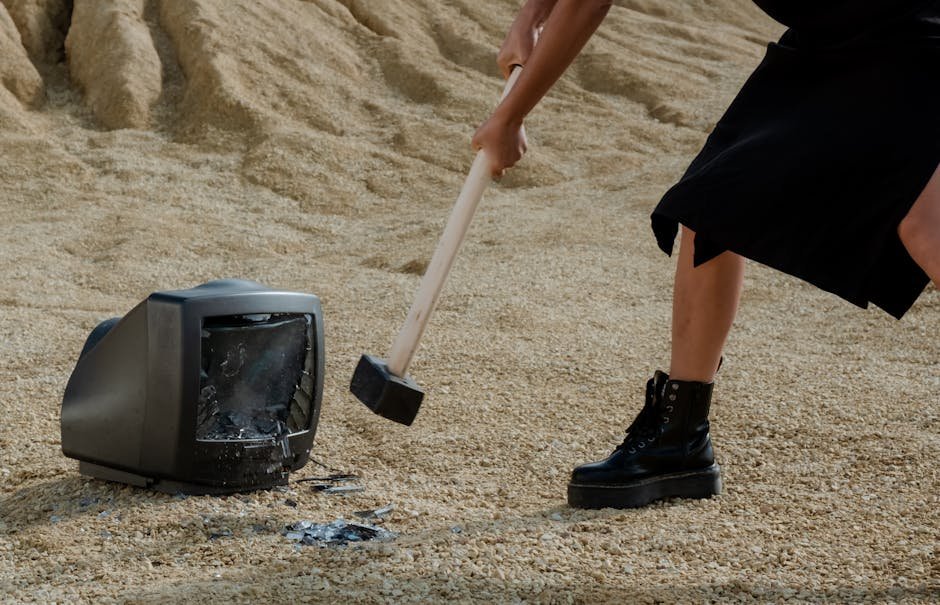

When you decide to sell broken tv for cash, you are entering the world of e-waste management and precious metal recovery. Unlike traditional scrap metal like copper or steel, televisions are complex assemblies of plastics, glass, and high-value printed circuit boards (PCBs). To successfully sell broken tv for cash, you must understand that the value lies not in the screen itself, but in the internal components that contain gold, silver, and palladium. If you are looking for a broader understanding of the industry, our How to Sell Old TV for Cash: The Ultimate Australian Guide provides the necessary context for navigating local regulations. Many people assume that a broken television is strictly landfill waste, but for those who know how to sell broken tv for cash, it represents a small but recoverable asset stream.
Understanding the Value of Electronic Scrap
The Australian e-waste market is rapidly evolving as local governments tighten regulations on hazardous waste disposal. A standard LCD or LED television contains several valuable components. The power supply board is often rich in copper-wound transformers and heat sinks made of high-grade aluminium. The mainboard, or logic board, is the ‘gold mine’ of the unit, containing integrated circuits and connectors that are highly sought after by specialized refiners. When you approach a Sell Scrap facility, they are not looking at the television as a whole unit; they are looking at the weight of the circuit boards and the purity of the cabling. For those interested in other high-value items, you might also want to learn how to Sell My Catalytic Converter, which often offers significantly higher returns than consumer electronics.
To get the best price, you must separate the components. A whole TV is often considered ‘low-grade’ scrap because the plastic housing and heavy glass screen provide no value and actually cost the recycler money to dispose of safely. By removing the back casing and extracting the boards, you increase the density of the valuable material. This is the core principle taught in our guide on Cash For Metal Near Me How To Sell Scrap For Maximum Profit. Recyclers pay based on the ‘yield’ of precious metals, so the cleaner your scrap, the higher your payout.
Where to Sell and Finding a Reputable Dealer
Finding the right scrap dealer is critical. Not every facility is equipped to process electronics. You need to look for recyclers that specifically mention e-waste, PCB recovery, or ‘computer and television dismantling.’ In Australia, you can visit Scrap Trade Australia to find verified facilities that adhere to environmental standards. When calling a yard, ask specifically if they accept ‘boards’ or ‘e-waste’ rather than just ‘scrap metal.’ If you arrive with a whole TV, they may charge you a recycling fee. If you arrive with a box of circuit boards, they will pay you by the kilogram.
The best price is usually found at specialized refineries. These companies process the boards to extract gold and palladium. While you won’t get rich off a single TV, if you are clearing out an office or a warehouse, the volume makes a significant difference. Always ask for their current ‘buy’ price for ‘high-grade boards’ or ‘low-grade boards.’ High-grade boards, typically found in older, heavier TVs, contain more gold. Modern, lightweight LED TVs have much lower precious metal content, which impacts their overall scrap value.
Preparation and Safety: What You Need to Know
Before you attempt to dismantle a TV, safety is paramount. Televisions, especially older CRT (cathode ray tube) models, contain capacitors that can hold a lethal electrical charge even when unplugged. Do not attempt to open a CRT tube. If you are not comfortable with tools, it is safer to sell the unit to a recycler that accepts whole electronics, even if the payout is lower. For modern flat-screens, the process is safer, but you still risk breaking the screen, which contains mercury and other hazardous materials. Always wear cut-resistant gloves and eye protection.
When preparing to sell, document your items. If you are selling in bulk, keep a spreadsheet of the weight and the type of boards. This professionalism often leads to better relationships with scrap dealers, who are more likely to offer you a premium rate if they know you are a consistent, organized supplier. You do not typically need complex documentation for small quantities, but if you are selling as a business, you may need an ABN and a photo ID to comply with local ‘cash for scrap’ regulations designed to deter the trade of stolen goods.
Maximizing Profit: The Economics of E-Waste
The market for e-waste is tied to global commodity prices. When the price of gold or copper rises, the value of your scrap boards increases. Timing your sales can be a strategy, but for most individuals, the goal is simply to clear space while recouping some costs. To maximize your profit, focus on volume. Accumulate enough material to make the trip to the scrap yard worthwhile. If you have only one TV, the fuel cost to drive to the facility might exceed the scrap value. Consider gathering other scrap metals—copper pipes, aluminium cans, or brass fittings—to bundle your load. This is the standard advice found on Scrap Trade for anyone looking to optimize their scrap runs.
Competing solutions include donation or municipal e-waste drop-off points. While these are ‘free,’ they do not put money in your pocket. If your goal is to sell broken tv for cash, you must avoid these ‘convenience’ options and go directly to the source of the recycling chain. Many scrap yards have a minimum weight requirement, so check their website or call ahead before loading your vehicle. By treating your broken electronics as a commodity rather than trash, you shift your perspective from ‘disposal’ to ‘resource recovery,’ which is the foundation of the circular economy.
Legal Requirements and Environmental Compliance
In Australia, the recycling of electronics is governed by both state and federal environmental laws. When you sell broken tv for cash, you are participating in a system that prevents toxic heavy metals like lead and cadmium from entering the groundwater. Reputable scrap dealers are licensed to handle these materials. Never sell your scrap to ‘backyard’ operators who cannot provide information on how they dispose of the non-recyclable remnants, such as the glass and plastic. Dealing with certified professionals ensures you are not inadvertently contributing to illegal dumping.
Keep records of your transactions. If you are selling large quantities, the dealer is legally required to record your details. This is not just a regulatory hurdle; it is a protection for you as a seller. It proves you sold the items to a legitimate business. If you are ever asked to sell to someone who refuses to provide a receipt or record the transaction, walk away. Legitimate scrap trading is a transparent, professional industry that values compliance and safety above all else.
The Future of TV Recycling in Australia
As technology advances, televisions are becoming lighter and more integrated. This actually makes them harder to recycle, as the components are often glued together rather than screwed. However, the demand for recycled gold and rare earth metals is skyrocketing. This means that even as TVs change, the scrap industry will continue to find ways to extract value. Staying informed about these trends will help you continue to sell broken tv for cash effectively in the future. Keep an eye on industry reports from groups like the Australian Council of Recycling to understand how policy changes might affect your ability to sell scrap metal and electronics in the coming years.
Ultimately, the decision to recycle your old electronics is a win-win. You clear your home or business of clutter, you support the recovery of vital natural resources, and you earn a bit of extra cash. By following the steps outlined in this guide—preparing your materials, finding the right partner, and staying safe—you can turn what most people see as waste into a profitable and environmentally responsible activity. Remember that the market is always shifting, and the best way to stay ahead is to build a relationship with a local, reputable scrap dealer who values your business and provides honest, market-based pricing for your materials.
Frequently Asked Questions
Is it worth selling a broken TV for scrap?
For a single modern LED TV, the scrap value is often quite low, sometimes only a few dollars. However, if you have multiple units or older, heavier models, the value of the circuit boards and copper content makes it worthwhile.
Do I need to dismantle the TV before taking it to a scrap yard?
It is highly recommended. Most scrap yards pay significantly more for ‘clean’ circuit boards than they do for a whole, intact television unit, which often incurs a disposal fee.
What documentation do I need to sell scrap metal in Australia?
You generally need a valid government-issued photo ID, such as a driver’s license. If you are selling as a business, you may also need your ABN for tax and regulatory compliance purposes.
Where can I find a legitimate scrap dealer for my electronics?
You should look for specialized e-waste recyclers or scrap yards that explicitly state they accept circuit boards. You can find verified local facilities through the directory at Scrap Trade Australia.