
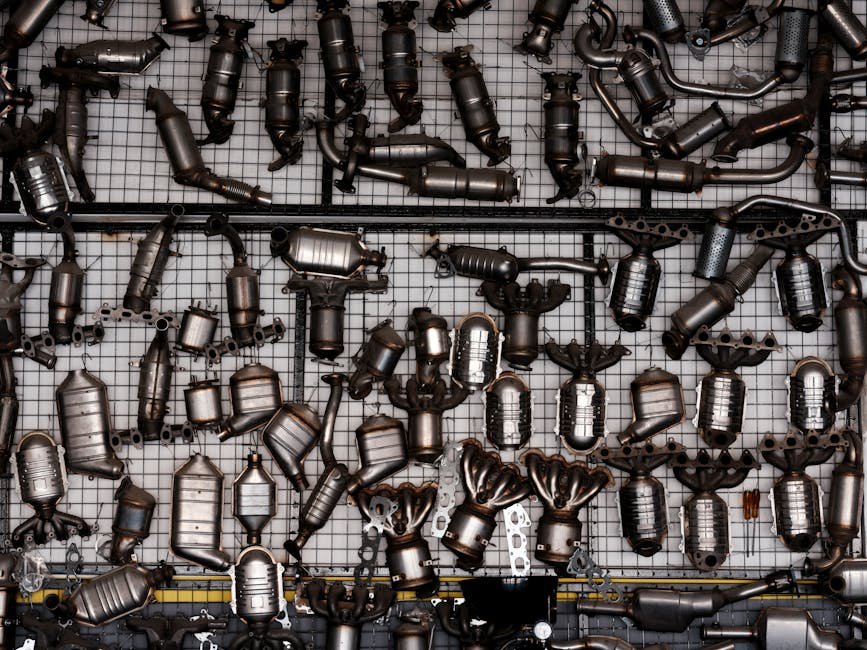

When you decide to recycle catalytic converters in Israel, you are participating in a sophisticated global supply chain that recovers essential platinum group metals (PGMs) from automotive exhaust systems. The Israeli automotive market, characterized by a mix of European and Asian vehicle imports, presents a unique landscape for PGM recovery, requiring specialized knowledge of converter serial numbers and internal honeycomb ceramic density. For those looking to understand the broader market dynamics, the Ecotrade Group Catalytic Converters network offers a global benchmark for valuation and processing standards that apply even within the local Israeli context.
The Science of PGM Extraction in Israel
The core value of any catalytic converter lies in its washcoat—a ceramic substrate coated with a thin layer of platinum, palladium, and rhodium. In Israel, the recycling process begins with the physical de-canning of the unit, where the stainless steel shell is removed to access the ceramic honeycomb. This material is then milled into a fine powder, creating a homogeneous sample that allows for precise assaying. Unlike traditional scrap metal processing, this requires high-temperature smelting or chemical leaching to separate the microscopic particles of precious metals from the ceramic matrix.
Understanding the value of your scrap is the first step in the process. If you are preparing your inventory, our guide on Selling Catalytic Converters How To Maximize Your Profit Safely provides the necessary protocols to ensure you are not losing money due to poor grading or improper storage. The extraction efficiency in modern Israeli facilities is high, often exceeding 95% recovery rates for platinum, provided the material is not contaminated with excessive engine oil or rust.
Logistics: Drop-off vs. Pickup Services
For businesses and individual collectors, choosing between a drop-off at a recycling centre and a scheduled pickup service depends on volume and location. In major industrial hubs like Haifa, Ashdod, and Tel Aviv, many refineries offer dedicated pickup services for bulk quantities. This is often the preferred route for auto wreckers and garages, as it minimizes the risk of theft and ensures that the material is transported under proper hazardous waste manifests.
Conversely, individual sellers or small-scale hobbyists often find that a direct drop-off at a licensed recycling centre is more efficient. This allows for an on-site evaluation and immediate payment based on the current market price of the specific PGM content. Regardless of the method, always ensure that your recycler provides a weight receipt and a certificate of destruction, which is critical for environmental compliance in Israel. For those looking for broader regional comparisons, you might find it useful to review how to Recycle Catalytic Converters in Greece: Complete Guide, as many logistical challenges regarding hazardous waste cross-border transport are similar across the Mediterranean region.
Market Trends and Future Outlook for 2026
The industry is shifting rapidly toward more sustainable and transparent sourcing. As we look toward the future, the Sell Platinum Scrap Jewelry Catalytic Converters Industrial 2026 Guide highlights how industrial demand for PGMs is decoupling from internal combustion engines and moving toward hydrogen fuel cell technology. This shift means that the recycling infrastructure in Israel must adapt to process different types of catalysts, including those used in stationary industrial applications.
Investors and scrap traders should be aware that the price of rhodium, in particular, remains highly volatile. Because Israel imports a vast array of vehicle models, the PGM content per converter varies significantly. A converter from a high-end European import will have a vastly different PGM profile than a mass-market vehicle from the Far East. Keeping track of these variations is essential for anyone serious about the trade.
Environmental Impact and Regulatory Compliance
Recycling catalytic converters is not just a financial endeavor; it is a critical environmental necessity. Catalytic converters contain heavy metals that, if left in landfills, can leach into the groundwater. By choosing to recycle, you prevent these toxins from entering the ecosystem. In Israel, the Ministry of Environmental Protection enforces strict guidelines on the handling of automotive waste. Facilities must prove that they possess the technology to capture emissions during the smelting process, ensuring that the act of recycling does not contribute to air pollution.
Furthermore, the circular economy is gaining traction in the Middle East. By returning refined platinum and palladium back into the manufacturing cycle, Israel reduces its reliance on primary mining, which is significantly more energy-intensive and environmentally damaging than recycling. For those interested in the global standards of this industry, visit Scrap Trade Australia to see how international best practices in metal recovery are being implemented to drive sustainability in the scrap metal sector.
Best Practices for Inventory Management
To maximize your returns, you must treat your catalytic converters as high-value assets. Store them in a dry, secure location to prevent the ceramic honeycomb from crumbling, as a damaged substrate will result in a lower payout. Label your converters by serial number whenever possible. Many professional buyers use proprietary software to look up the exact PGM content of a unit based on its serial number. If you are unable to provide this, the buyer will likely offer a lower ‘bulk price’ to account for the uncertainty of the contents.
Never attempt to remove the ceramic material yourself. Not only is it dangerous due to the inhalation of fine particulates, but it also makes the material impossible to assay accurately, effectively destroying its value. Always keep your inventory sorted by type—be it ‘high-grade’, ‘mid-grade’, or ‘low-grade’—to streamline the valuation process when you reach out to a refinery.
Strategic Partnerships in the Israeli Market
The most successful players in the Israeli scrap market are those who build long-term relationships with refineries. Rather than chasing the highest spot price on a single unit, focus on finding a partner who offers transparency in their assaying methods. A trustworthy recycler will allow you to witness the sampling process or provide a detailed breakdown of the PGM content found in your batch. This level of transparency is the hallmark of a professional operation and ensures that you are consistently getting paid for the true market value of your scrap.
As the automotive fleet in Israel continues to transition toward hybrid and electric vehicles, the supply of traditional catalytic converters will eventually peak and begin to decline. Smart traders are already diversifying their portfolios to include other types of electronic waste and industrial catalysts. By staying informed and maintaining high standards of safety and environmental responsibility, you can ensure that your operations remain profitable in this evolving market. Remember, the goal is to create a sustainable stream of material that benefits both your bottom line and the planet’s health.
Frequently Asked Questions
Is it legal to recycle catalytic converters in Israel?
Yes, it is legal and encouraged, provided you work with licensed facilities that comply with the Ministry of Environmental Protection’s hazardous waste regulations. Ensure your chosen partner provides documentation for the disposal and recovery process.
How do I determine the value of my catalytic converter?
Value is determined by the specific PGM content (platinum, palladium, and rhodium) based on the converter’s serial number. Professional recyclers use these numbers to cross-reference current market prices for these metals.
Should I choose a pickup service or drop-off?
Drop-off is generally better for smaller quantities, while pickup services are ideal for bulk commercial volumes. Pickups are more convenient for businesses but may incur logistical fees depending on the service provider.
Why is it important to keep the ceramic honeycomb intact?
The ceramic honeycomb holds the precious metal washcoat; if it is crushed or removed, the material becomes difficult to assay accurately. This significantly lowers the value of the converter because the buyer cannot verify the PGM content.