
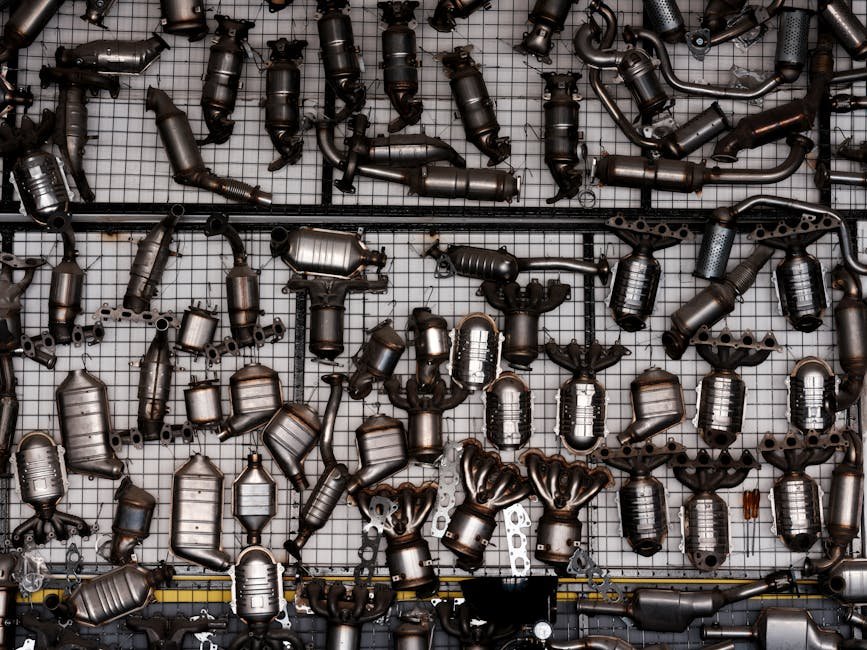

Understanding where to sell catalytic converters online is the first step toward turning automotive waste into significant profit. Because these components contain precious metals like platinum, palladium, and rhodium, their market value fluctuates based on global commodity trends. If you are looking to How to Sell Catalytic Converter Online: The Ultimate Guide, you must first recognize that the industry is heavily regulated to prevent the trade of stolen goods. Navigating this market requires a blend of technical knowledge regarding metal concentrations and a strict adherence to local legal requirements. Whether you are a mechanic, a salvage yard operator, or an individual enthusiast, knowing the right channels ensures you receive a fair payout rather than a predatory offer from an unlicensed buyer.
The Economics of Precious Metals in Catalytic Converters
The core value of a catalytic converter lies in its honeycomb structure, which is coated with a washcoat containing platinum, palladium, and rhodium. These metals serve as catalysts to convert harmful exhaust gases into less toxic pollutants. In the current Australian market, the value of these metals is at an all-time high due to supply chain constraints and increased demand for emission control technology. When you search for where to sell catalytic converters online, you are essentially participating in a global commodity market. Prices are dictated by the weight and purity of these metals, which vary significantly between vehicle makes and models. A large diesel truck converter, for instance, will almost always command a higher price than a small passenger vehicle unit due to the sheer volume of precious metals contained within the substrate. To maximize your return, you must understand that not all converters are created equal. Professional buyers use X-ray fluorescence (XRF) analyzers to determine the exact metal content of a unit. If you are selling in bulk, this technology is your best friend, as it eliminates the guesswork and ensures you are paid based on scientific data rather than an arbitrary estimate.
Identifying Reputable Buyers and Platforms
Selecting the right partner is critical to securing the best price. Many online platforms act as aggregators, while others are direct refineries. For Australian sellers, it is vital to work with entities that demonstrate transparency. You can Ecotrade Group Catalytic Converters to see how industry leaders handle the valuation process using comprehensive online catalogs. These catalogs allow you to input your serial number and receive an instant quote based on real-time market data. Avoid platforms that refuse to provide a valuation until they have the product in hand, as this often leads to ‘bait and switch’ tactics where the buyer lowers the offer once the item is already in their possession. A legitimate scrap dealer will always provide a clear breakdown of how they arrived at their pricing, including current spot prices for platinum, palladium, and rhodium. Furthermore, look for companies that provide secure shipping or local drop-off points, as transporting hazardous automotive parts requires compliance with environmental regulations. If you are unsure where to start, you might want to Learn How To Sell Used Products Online to understand the logistics of shipping heavy automotive components safely and legally.
Documentation and Legal Compliance in Australia
Australia has stringent laws regarding the trade of scrap metal, particularly catalytic converters, due to the prevalence of theft. When you decide to Sell My Catalytic Converter, you must be prepared to provide documentation that proves the item was legally acquired. This typically includes a tax invoice for the vehicle from which the part was removed, or a declaration of ownership if the part was sourced from a private scrap collection. Reputable buyers will require your driver’s license or a valid government-issued ID to record the transaction in a logbook, which is a mandatory requirement under state-based scrap metal industry acts. Failure to provide this documentation is a red flag and often indicates that the buyer is operating illegally. By maintaining a clean paper trail, you protect yourself from potential legal liability and ensure that your transaction is recognized by the Australian Taxation Office (ATO). Always keep copies of your receipts and transaction records for at least seven years, as these are essential for audit purposes and verifying the origin of your scrap inventory.
Maximizing Your Payout: Valuation Strategies
Getting the best price for your catalytic converter is not just about finding a buyer; it is about timing and preparation. Market prices for precious metals fluctuate daily. Savvy sellers monitor these trends and wait for peaks before liquidating their inventory. Additionally, the physical condition of the converter matters. A unit with a broken or pulverized ceramic substrate is worth significantly less because the precious metal dust can be lost during processing. When storing your converters, keep them in a dry, secure location to prevent corrosion and physical damage. If you are selling in bulk, sorting your converters by ‘grade’—high, medium, and low—can help you negotiate better rates. Large-scale buyers often offer volume discounts or higher premiums for sorted loads because it reduces their labor costs in the processing facility. If you are dealing with a scrap metal trading expert, ask them about their specific grading criteria. Some buyers prefer to purchase by weight, while others prefer to purchase by individual serial number. Understanding the buyer’s preference allows you to tailor your presentation for maximum profit.
The Logistics of Shipping and Handling
Shipping catalytic converters can be complex due to their weight and the fact that they are considered automotive parts. Many online buyers provide pre-paid shipping labels, which simplifies the process significantly. However, you must ensure the items are packed securely to prevent damage to the substrate. Use heavy-duty cardboard boxes and plenty of padding. If you are shipping multiple units, ensure they are not rubbing against each other, as this can cause the ceramic honeycomb to crack. In Australia, some courier services have specific restrictions on shipping automotive parts that contain hazardous residues. Always check with your chosen carrier before dropping off your parcel. If you are selling locally, consider the cost of fuel and time against the price offered by an online buyer. Sometimes, a slightly lower price from a local scrap yard is more profitable than a higher price from an online buyer once shipping and insurance costs are factored in. Always calculate your net profit after all expenses to get a true picture of your financial return.
Avoiding Common Scams in the Online Scrap Market
The online scrap market is unfortunately rife with scammers who prey on inexperienced sellers. A common scam involves ‘lost’ shipments, where the buyer claims the package never arrived or that the contents were damaged upon arrival. Always use tracked and insured shipping methods. Another common tactic is the ‘low-ball’ offer after the item has been shipped. To avoid this, always get a written quote based on the serial number before you send the item. If a buyer insists on ‘inspecting’ the item before giving you a price, be extremely cautious. A professional buyer should be able to provide a firm price based on the serial number and a photo of the unit. Furthermore, be wary of buyers who offer to pay in untraceable methods, such as cryptocurrency or gift cards. Legitimate businesses will always pay via bank transfer or business check, leaving a clear financial trail. If a deal sounds too good to be true—for example, if a buyer is offering 50% above the current market spot price—it is almost certainly a scam. Stick to established, well-reviewed platforms that have a proven track record in the Australian market.
Future Trends in Catalytic Converter Recycling
The transition toward electric vehicles (EVs) is changing the landscape of the catalytic converter market. While the demand for internal combustion engines is expected to decline over the coming decades, the supply of catalytic converters will remain high for years to come as existing vehicles are retired. This creates a unique window of opportunity for those involved in the scrap trade. Furthermore, the technology for extracting precious metals is becoming more efficient, which may lead to higher payouts for sellers as refineries are able to recover a greater percentage of the platinum, palladium, and rhodium. Staying informed about these industry shifts is essential for anyone looking to make a long-term business out of scrap metal trading. Keep an eye on automotive industry reports and environmental regulations, as these factors directly influence the demand for recycled precious metals. By staying ahead of the curve, you can adapt your business model to remain profitable even as the automotive market evolves. The shift toward a circular economy means that recycling is no longer just an environmental choice; it is a fundamental pillar of the global manufacturing supply chain.
Frequently Asked Questions
Why do catalytic converter prices vary so much?
Prices are primarily determined by the specific concentration of platinum, palladium, and rhodium inside the unit. Since different vehicle models have different engine sizes and emission standards, the amount of these precious metals varies, leading to significant price differences.
Do I need a license to sell catalytic converters in Australia?
In most Australian states, you are required to provide proof of identity and ownership to the scrap dealer. While you may not need a formal business license for one-off sales, professional traders must comply with state-specific scrap metal industry acts.
How can I verify if an online buyer is legitimate?
Check for a physical business address, a valid ABN (Australian Business Number), and positive reviews on independent platforms. Legitimate buyers will provide clear terms, transparent pricing based on serial numbers, and secure payment methods.
Is it better to sell locally or online?
Local sales save on shipping costs and provide immediate payment, while online sales often provide access to a wider market and higher prices for rare or high-value units. Compare the net return, including shipping and insurance, before making your decision.