
Finding the right stainless supplier can make or break a fabrication project, maintenance budget or recycling return. This authoritative guide walks engineers, procurement officers and trades recyclers through everything you need to know about sourcing, pricing and recycling stainless steel in Australia.
What Defines a Premium Stainless Supplier in Australia?
Premium stainless suppliers differentiate themselves on four fronts: material breadth, technical literacy, pricing transparency and downstream support. They hold large inventories of 304 stainless (food-grade, 18 % Cr / 8 % Ni) and 316 stainless (marine-grade with 2–3 % Mo) in sheet, plate, bar, pipe, fittings and welding consumables. Mill certificates to ASME, ASTM and EN standards accompany every batch, while in-house spectrometers verify chemistry before dispatch.
Look for suppliers who publish live Stainless Steel Scrap Price indices. This signals they understand both sides of the supply chain—newly produced and recycled stainless steel scrap—so you can hedge purchases against future scrap returns. A quality stainless supplier also provides cut-to-size services with plasma, water-jet and laser tolerances down to ±0.3 mm, reducing your weld prep time and costly off-cuts that become Stainless Steel Scrap Calculator Estimate Your Material Value candidates later.
Finally, evaluate logistics. Suppliers with multiple east-coast warehouses can deliver overnight to Brisbane, Sydney and Melbourne, while regional distributors often service mines in WA or SA within 24 h. Ask whether they ship non-ferrous metals alongside stainless; combining orders of copper nickel, monel or duplex in the same truck lowers freight per kilo.
304 vs 316 Stainless—Which Grade Should Your Supplier Prioritise?
Choosing between 304 stainless and 316 stainless hinges on environment, welding methodology and lifecycle cost. 304 stainless offers adequate corrosion resistance for indoor food equipment, architectural panels and low-chloride exterior façades at roughly 30 % lower price per kilogram. 316 stainless, distinguished by molybdenum additions, survives coastal salt spray, swimming-pool atmospheres and aggressive chemicals used in chemical dosing skids.
When requesting quotes, specify surface finish: 2B cold-rolled for paint adhesion, #4 polish (120 grit) for handrails or mirror 8K for decorative lifts. Reputable stainless suppliers list separate SKUs for 316L low-carbon (max 0.03 % C) to minimise carbide precipitation during multi-pass welding. If you fabricate 316 stainless tube for heat-exchanger headers, insist on dual certification to ASTM A269 and AS 1528 to satisfy both pressure-vessel and food-dairy codes.
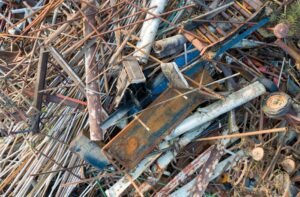
Remember that off-cuts of either grade retain value as stainless steel scrap. Segregate 316 clippings from 304 to fetch higher Stainless Steel Scrap Price. Mixed-contamination penalties can erase 8–12 c/kg, so label bins clearly and keep grinding dust out.
Pricing & How a Stainless Supplier Calculates Your Rate
Stainless suppliers price mill products using London Metal Exchange (LME) nickel surcharges plus base price. Nickel represents ~60 % of the alloy value in 316 stainless, so expect weekly fluctuations. For example, a 3 mm 316 stainless sheet base might be AUD $4.20/kg, but a +$2.10/kg nickel surcharge lifts the transactional price to $6.30/kg. Always ask for a three-month surcharge graph to time purchases.
On the recycling side, a stainless supplier or scrap processor quotes basis delivered-to-warehouse. Typical 2024 ranges (GST excluded): 304 stainless solids 180–210 c/kg, 316 stainless solids 260–290 c/kg, 2205 duplex 220–250 c/kg. Turnings are discounted 20–30 c/kg for oil content and lower density. Use the Stainless Steel Scrap Calculator Estimate Your Material Value to plug in weight, grade and contamination level for an instant estimate.
Negotiate freight pass-through. If you deliver scrap directly to the stainless supplier’s facility, you net an extra 5–7 c/kg compared with roadside pick-up. Conversely, when buying new material, request a “scrap buy-back guarantee” that locks in future scrap value; this hedges against nickel crashes and reassures finance teams auditing life-cycle costing.
Recycling Loop—How to Sell Scrap Back to Your Stainless Supplier
Recycling stainless is not a side hustle; it is a core profit lever. Australian workshops generate on average 12 % off-cut ratio per job. Instead of paying landfill levies (> AUD 150/t in NSW), segregate, clean and return to your stainless supplier under a credit note. Follow these steps:
- Cut large skeletons into 300 × 300 mm pieces for easy handling.
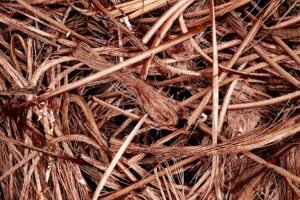
- Remove copper tags, plastic film and mild-steel fasteners—these are contaminants.
- Keep 304, 316 and duplex in separate drums; colour-code lids.
- Drain soluble oil from turnings, then bag in geotextile to avoid moisture.
Before dispatch, photograph each drum and email weights. The stainless supplier will issue a weighbridge docket on arrival and settle within 5–7 days via EFT. For high-volume demolition jobs, request an on-site analyser; XRF guns grade-verify in seconds so you can contest any downgrade. Read the full process in Stainless Steel Recycling How To Sell Scrap For Maximum Profit.
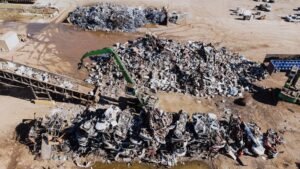
Remember that stainless is 100 % recyclable without loss of properties. About 500 kt of stainless steel scrap is re-melted each year in Australia, saving 1.1 Mt CO₂ compared with virgin ore. By selling back to a stainless supplier who also operates an electric-arc furnace melt shop, you close the loop and qualify for green-building credits under the GreenStar protocol.
Quality Assurance & Traceability When Buying From a Stainless Supplier
Traceability under ISO 9001 and EN 10204 3.1 is non-negotiable for defence, pharmaceutical and LNG projects. Ask your stainless supplier for:
- Original mill test certificates (MTC) showing heat number, chemical composition and mechanical yield.
- Positive Material Identification (PMI) report for each plate or pipe length.
- Statement of Compliance to AS 4041 (pressure piping) or ASTM A312.
For critical applications, request a third-party inspection agency such as Lloyd’s or TUV. Budget roughly AUD 600–800 per day, but the cost offsets potential re-work. If you buy surplus or secondary stock, ensure the stainless supplier re-tests using optical emission spectrometers; surface rust does not mean the alloy is bad, but chemistry never lies.
Value-Added Services That Separate an Average Stainless Supplier From a Great One
A transactional stainless supplier cuts and ships. A strategic partner provides:
- Design optimisation: nesting algorithms to reduce off-cut scrap by 8 %.
- Welding procedure qualification (WPQ): assistance so your 316 stainless passes AS 1210 pressure-vessel review.
- Consignment stock: hold inventory at your site, pay only when used—ideal for maintenance shutdowns.
- Scrap bins on loan: maximise return via scheduled pick-ups without capital spend.
Ask if they offer dual-certified ss316 stainless steel that meets both high-temperature and low-temperature impact specs. This simplifies documentation for multi-discipline projects. Also, verify whether they stock complementary non-ferrous metals like aluminium bronze or titanium so you can bundle procurement and reduce vendor lists.
Online vs Local Stainless Supplier—Pros, Cons and Hybrid Models
Digital platforms such as Scrap.Trade aggregate national inventories, letting you compare 304 stainless coil from Melbourne against Perth stock in real time. Online stainless suppliers often publish live weights, certificates and automated checkout, saving procurement hours. However, local suppliers offer same-day pickup, face-to-face metallurgical advice and lower freight for urgent jobs. The best strategy is a hybrid: tender large-volume mill purchases online to compress surcharges, while relying on nearby stainless suppliers for JIT cut pieces and emergency repairs.
Future Trends—What Australia’s Stainless Supplier Market Will Look Like in 2030
By 2030, more than 55 % of stainless steel consumed domestically will come from recycled feedstock, up from 40 % today. Carbon border adjustment tariffs will reward stainless suppliers who verify low-carbon scrap melt. Expect blockchain-based heat-number tracking from furnace to end user, giving fabricators immutable proof of origin. Robotics will automate plasma cutting, reducing off-cut scrap generation by a further 6 %. To stay competitive, partner early with a stainless supplier who invests in these technologies and can pass savings back to you.
Key Takeaways for Buyers and Recyclers
Whether you are specifying handrails for a Sydney rail upgrade or recycling 316 stainless cladding from a refinery, choose a stainless supplier who offers transparent pricing, verifiable certification and integrated recycling services. Lock in nickel surcharge caps, segregate scrap by grade and leverage digital calculators to time your sales. By treating your stainless supplier as a long-term supply-loop partner instead of a one-off vendor, you reduce project risk, capture higher scrap returns and meet Australia’s tightening sustainability mandates.
For deeper insights into stainless steel scrap dynamics, visit ScrapTrade.com.au for daily market analysis and regional buyer listings.
Frequently Asked Questions
What is the current Stainless Steel Scrap Price in Australia?
As of 2024, clean 304 stainless solids trade at 180–210 c/kg ex GST, while 316 stainless solids fetch 260–290 c/kg. Prices move with LME nickel; check the live Stainless Steel Scrap Price page for weekly updates.
How can I separate 304 from 316 stainless scrap?
Use a handheld XRF analyser or spark test: 316 stainless produces a shorter, reddish spark due to molybdenum. Alternatively, apply copper sulfate solution—316 stays bright, 304 darkens slightly.
Does a stainless supplier buy back off-cuts from my project?
Yes, most stainless suppliers accept segregated 304 or 316 off-cuts, turnings and plate remnants. Clean scrap earns up to 30 c/kg more; request a scrap bin and schedule pick-up for convenience.
Is 316 stainless tube worth more as scrap than sheet off-cuts?
No, scrap price depends on chemistry and contamination, not form. Clean 316 stainless tube fetches the same 260–290 c/kg as equivalent gauge sheet, provided oil and insulation are removed.