
Turning leftover copper pipe or an old stainless sink into cash for scrap metal is one of the fastest ways to declutter, get paid and help the planet—all in one trip to the yard. This authoritative guide walks you through every step: how grades are classified, how recyclers calculate price, what happens once you unload, and why every kilo you divert matters for Australia’s carbon budget.
How Scrap Metal Is Graded and Priced
Not all metals are created equal. Australian dealers use internationally recognised Institute of Scrap Recycling Industries (ISRI) specs plus local variants such as AS 1501. Knowing the difference puts real dollars in your pocket.
Non-Ferrous Grades (Higher Value)
- Bare Bright Copper Wire: >99.9% Cu, uncoated, unburnt. Often $9–12 per kg.
- #1 Copper: Clean pipe, bus bar, no solder, paint or brass fittings.
- #2 Copper: May have solder, paint or up to 5% other metal. Lower price tier.
- Aluminium Extrusion 6063: Window frames, screen doors. Fetches ~$1.80–2.40 per kg.
- Aluminium Cans UBC: Loose or densified drinks cans, 7000-series alloy. Expect 90¢–$1.20 per kg.
- Stainless 304 Solids: Kitchenware, commercial benches. Magnetic test must be negative. Around $1.70–2.10 per kg.
- Stainless 316: Marine fittings, medical. Higher nickel content commands 15–25¢ premium over 304.
- Batteries: Lead-acid automotive. Paid by the unit or ~50¢ per kg. Drained units only.
Ferrous Grades (Volume Game)
- Heavy Melting Steel (HMS) 1&2: Thickness ≥ 6 mm, no galvanised, no attachments. Yard price $280–400 per tonne.
- Shred (Fragmentised): Whitegoods, roofing, mixed thin gauge. $220–320 per tonne.
- Reo Bar: Clean construction offcuts. Usually tracks HMS less $10–20.
- Cast Iron: Engine blocks, grates. Higher density but lower demand; expect $200–260 per tonne.
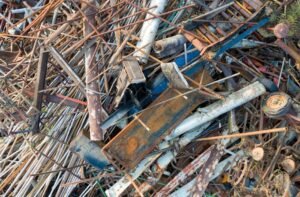
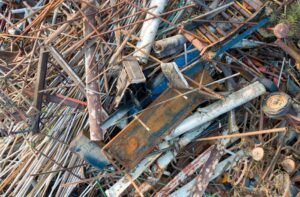
Tip: Sort before you load. Contamination—wood, plastic, rubber—drops you into a lower grade and erodes profit. If you need help identifying, read our Pick Up Scrap Metal For Cash Near Me page for field checklists and photo references.
The Recycling Process: From Your Ute to New Product
Understanding the journey helps you prepare material correctly and negotiate confidently.
Step 1: Collection & Weighbridge
Drive onto the public weighbridge, receive a gross weight, unload in designated area, then re-weigh for tare. The difference equals payable weight. Bring photo ID; Australian law requires a copy for each transaction under the Second-Hand Dealers & Pawnbrokers Act.
Step 2: Visual Inspection & Grade Confirmation
Yard inspectors use spectrometers for alloys, magnets for ferrous classification. If you disagree with a downgrade, ask for an on-site spark test or lab ticket number. Keep copper ends in a separate bucket to prove cleanliness.
Step 3: Shearing, Baling & Shredding
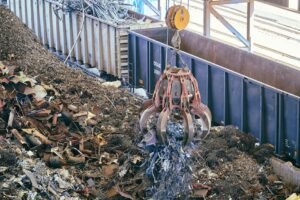
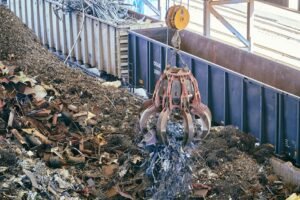
Non-ferrous goes into dedicated bins; ferrous is sheared, torched or shredded to <75 mm for furnace efficiency. Modern shredders use 4 000 hp rotors with eddy-current separators to split metals from fluff (non-metallics).
Step 4: Melting & Refining
Electric arc furnaces (EAF) melt steel at 1 600 °C in under 45 minutes. Secondary aluminium smelters run at 750 °C with salt flux to remove oxides. Each recycled tonne of steel saves 1 130 kg of iron ore, 630 kg of coal and 54 kg of limestone.
Step 5: Rolling & Re-manufacture
Molten metal is cast into billets, slabs or ingots, then rolled into rebar, sheet or wire rod. Recycled aluminium can be back on a supermarket shelf as a new can in 60 days.
Curious where your nearest shredder is? Visit Scrap Metal Recycling Near Me for an interactive map of licenced facilities.
Environmental Benefits: Why Cash for Scrap Metal Matters
Recycling isn’t just a feel-good activity; it’s a frontline climate solution. Australia generates ~13.5 Mt of metal waste annually. Diverting even half reduces emissions equivalent to taking 2 million cars off the road.
Energy Savings
- Recycled aluminium uses 95% less energy than bauxite mining.
- Recycled copper saves 85% compared with virgin ore extraction.
- Every tonne of recycled steel avoids 1.8 tonnes of CO₂.
Resource Preservation
Iron ore grades are declining. BHP’s average ore is down from 61% Fe in 2000 to 58% today. Recycling extends mine life and reduces land disturbance.
Landfill Diversion
Metal in landfill can leach zinc, lead and cadmium into groundwater. Recyclers capture these metals and convert them back into feedstock, meeting the National Waste Policy’s 80% resource recovery target by 2030.
Green Jobs
The recycling sector employs over 50 000 Australians, many in regional areas. Each additional 10 000 tonnes of metal recycled supports ~15 full-time jobs compared with landfill.
Ready to do your part and earn? Discover competitive pricing at Scrap Trade or compare state-specific rates on ScrapTrade.com.au.
Best-Practice Tips to Maximise Cash for Scrap Metal
- Strip Bare: Remove rubber, wood and plastic from copper, aluminium and brass. Clean material often doubles the price.
- Keep Alloys Separate: 304 vs 316 stainless, 6063 vs 6061 aluminium. Mixed loads default to the cheapest grade.
- Drain Fluids: Petrol tanks, gearboxes and radiators must be punctured and drained; otherwise yard may reject or heavily downgrade.
- Cut Out Welded Bolts: A single steel bolt in an aluminium extrusion can drop the load into “aluminium with steel” pricing (minus 40–50¢ per kg).
- Weigh In vs Pick-Up Service: If you have >500 kg of heavy steel, many yards waive freight and pay yard price. Check Pick Up Scrap Metal For Cash Near Me to compare options.
- Track Market Indices: London Metal Exchange (LME) and Australasian Scrap & Metal Report publish weekly spot prices. Sell when copper spikes above US$10 000 per tonne.
- Photograph Receipts: Digital copies help with ATO substantiation if scrap income exceeds $75 000 and GST registration is required.
Regional Spotlights: Perth & Hobart
Prices fluctuate by port proximity, mill demand and freight. Here’s a snapshot.
Perth
Thanks to Rio Tinto and Alcoa refineries, aluminium demand is robust. Expect 5–10¢ premium over east-coast cities. For current gate rates, see cash for scrap metal perth.
Hobart
Tasmania’s smaller population means lower shred demand yet limited competition. Copper often tracks Melbourne minus freight (~15¢ per kg). Full price list at cash for scrap metal hobart.
Legal Compliance & Safety
Australia has strict rules to curb metal theft. Expect:
- Photo ID requirement and statutory declaration for copper >10 kg.
- Three-day cooling-off payment holds for copper and bronze in many states.
- Prohibition on buying burnt copper; must be re-melt sampled.
- PPE: high-vis vest, steel caps, gloves. Yards can refuse entry without them.
Future Outlook: What 2026 Holds
By 2026, the federal government’s $15 billion National Reconstruction Fund will prioritise “green metals” processing. New aluminium and steel plants in QLD and NSW will demand more scrap feedstock, pushing prices higher. If you stockpile non-ferrous now, you could capitalise. For a step-by-step roadmap, read Sell Scrap Metal Near Me In 2026.
Conclusion
Consistent sorting, real-time price tracking and responsible recycling turn piles of “junk” into reliable cash flow. Whether you’re a tradie cleaning out the van, a manufacturer off-cutting aluminium, or a renovator pulling copper wire, the opportunity to earn cash for scrap metal, shrink your carbon footprint and feed Australia’s circular economy is bigger than ever. Use the links above to find your nearest licenced yard, compare prices and lock in top-dollar returns today.
Frequently Asked Questions
What is the highest paying scrap metal grade?
Bare bright copper wire (>99.9% Cu, uncoated) consistently earns top dollar, often $9–12 per kg in Australia. Clean aluminium extrusion 6063 and 316 stainless follow.
Do I need ID to sell scrap metal?
Yes. Australian law requires photo ID for every transaction. Copper loads over 10 kg may also need a statutory declaration and a three-day cooling-off period.
How can I get more money for steel scrap?
Cut to ≥ 6 mm thick, remove non-metal attachments and deliver in bulk (≥ 500 kg) to avoid downgrades. Monitor local HMS prices and sell when construction demand peaks.
Is pick-up service cheaper than driving to the yard?
For large volumes the yard often waives freight and pays gate price, increasing profit. Compare options on the Pick Up Scrap Metal For Cash Near Me page linked above.