
Commercial scrap underpins Australia’s $4.3 billion metals recycling industry. Whether you run a fabrication shop, demolition firm or HVAC business, understanding grades, recycling flows and market dynamics turns waste into profit while meeting EPA obligations.
1. What Counts as Commercial Scrap?
Commercial scrap differs from household scrap by volume, source and value. It originates from:
- Manufacturing off-cuts, punchings and turnings
- Construction beams, reo-bar and cladding
- End-of-life machinery, motors and transformers
- Demolition copper pipe, aluminium windows, stainless tanks
- Obsolete vehicles, forklifts and shipping containers
Because these streams arrive in tonnes, not kilos, recyclers pay scrap price premiums for clean, sorted loads. Contamination (wood, plastic, concrete) downgrades the load and erodes margins. Knowing how to segregate on-site is the fastest way to boost returns.
2. Major Grades of Commercial Scrap Metal
Scrap yards classify metal by purity, density, alloy content and physical form. The Institute of Scrap Recycling Industries (ISRI) codes are quoted in every What Is Scrap Trade contract. Below are the grades most relevant to Australian businesses:
2.1 Ferrous Grades
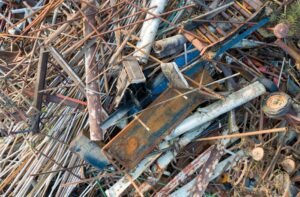
- HMS 1/2 (200-206): 6 mm+ structural steel, clean of concrete and tyres. Current spread over Turkish export sets the baseline for domestic scrap.
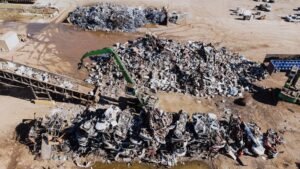
- Shredded (210): Auto hulks shredded and magnetically separated. Density > 70 lb/ft³, preferred by electric-arc furnaces.
- P&S (211): Prompt industrial off-cuts, mill-grade, nil copper, tin or chrome. Premium of AUD 30–40/t over HMS.
- Re-bar (243): Cut to 1 m, cleaned of concrete. Can be sold as “busheling” if cropped and baled.
2.2 Non-Ferrous Grades
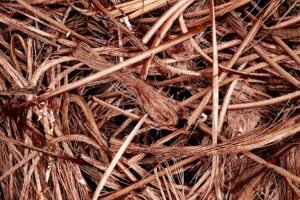
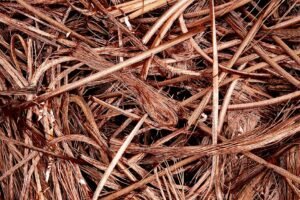
- Bare Bright Copper (Millberry): 99.9% Cu, uncoated, unalloyed, 16 mm+ strand. Pays 95–98% LME cash.
- #1 Copper: Clean tube, wire > 1 mm, paint < 1%. Avoid solder joints or you drop to #2.
- #2 Copper: Painted, soldered or coated. Still worth 3–4× aluminium.
- Aluminium Extrusion 6061/6063: Separate from 7000-series to avoid silicon penalty.
- Stainless 304 Solids: 8% Ni, 18% Cr. Keep free of 316 fittings; the molybdenum difference swings price by AUD 300/t.
- Scrap Lead: Batteries, sheet flashings and anodes. Always bag and tag; scrap lead commands top dollar when free of acid and plastic.
2.3 Specialty & High-Temp Alloys
- Nickel-copper (Monel): Used in marine valves. XRF verification essential.
- Titanium 6-4: Aerospace swarf must be briquetted and free of steel inserts.
Tip: Photograph each load, attach ISRI code and email ahead; yards pre-price and guarantee no re-weigh surprises.
3. How Commercial Scrap Recycling Works
Recycling is more than dropping metal at the gate. A compliant, profitable process follows five tightly linked stages:
3.1 Collection & On-Site Segregation
Place colour-coded bins for each alloy. Use hydraulic shears to size 1 m lengths and keep ferrous/non-ferrous apart. This step alone lifts revenue 12–18%.
3.2 Transportation
Engage a licensed EPA transporter with scrap-specific insurance. B-double tippers haul 30 t of HMS; flat-beds carry bundled aluminium. Use chain of custody dockets to satisfy the new Australian recycling traceability standards.
3.3 Weighing, Sampling & Assaying
Public weighbridges issue tare tickets. For non-ferrous, cores are drilled and analysed by handheld XRF; results determine final invoice.
3.4 Processing
- Shear/bale: HMS cropped to 500 mm, baled to 0.6 t/m³.
- Shred: Hammer mills reduce auto bodies to fist-size fractions, separate non-metallics.
- Media separation: Eddy-current, sink-float and hand-picking upgrade aluminium, copper and zinc streams.
- Briquetting: Swarf is centrifuged to remove coolant, then cold-pressed into pucks that melt 25% faster.
3.5 Melting & Re-manufacture
Steel heads to electric-arc or basic-oxygen furnaces; aluminium to reverb or rotary. Each tonne of recycled steel saves 1,130 kg iron ore, 630 kg coal and 55 kg limestone. Energy saving is 74% for steel and 95% for aluminium versus virgin mining.
Finally, molten metal is cast into billets, slabs or rods and sold back to mills, closing the loop. The entire cycle can be completed in 6–8 weeks.
4. Pricing Drivers for Commercial Scrap
Prices hinge on global supply-demand, FX swings, freight and purity. Key indicators:
- Turkish import HMS: Sets global ferrous floor. Track daily on Scrap index.
- LME cash settlement: Copper, aluminium, nickel. AUD price = LME × FX − freight − TC/RC.
- Container freight: AUD 1,600/TEU to Asia equals 6 c/lb on copper.
- Spread between primary and scrap: Wider spreads encourage mills to melt more recycled units.
Lock-in forward prices with processors if you expect AUD appreciation or Chinese buying lulls. Most yards offer 7-day quotes; large generators negotiate quarterly contracts with floor prices.
Remember that grade misclassification is the #1 reason payments are downgraded. Keep a copy of ISRI specs on the workshop wall and train staff.
5. Environmental & Economic Benefits
Recycling commercial scrap delivers measurable triple-bottom-line wins:
- Carbon: Each tonne of recycled steel avoids 1.85 t CO₂; aluminium avoids 9 t CO₂.
- Energy: 60% less energy for copper, 74% for steel.
- Landfill: Metal occupies 8% of landfill but is 100% recyclable.
- Jobs: Recycling creates 9× more jobs per tonne than landfill.
- Revenue: A mid-size fabricator producing 20 t/month of 6063 off-cuts earns ~AUD 24,000/yr at current scrap price.
Under the federal Safeguard Mechanism, big emitters can claim Scope 3 offsets by buying recycled billet instead of virgin. Documenting scrap consumption helps brands hit ESG targets and attract green finance.
6. Compliance & Safety for Generators
WorkCover and EPA impose strict rules:
- Lead: Cap at 0.1% in domestic paint waste. Always store scrap lead in sealed drums, label as “controlled waste”.
- Gas cylinders: De-valve and purge before transport; otherwise classed as explosive.
- PCB capacitors: Separate and consign to chemical treatment facilities.
- Chain of custody: From 2025 every load over 5 t must be logged on the National Waste Data Hub.
Provide PPE: cut-resistant gloves, safety boots, face shields. Use non-ferrous grabbers to avoid hand injuries around razor-sharp swarf.
7. Practical Tips to Maximise Commercial Scrap Returns
- Segregate at source: Colour-code bins and train apprentices—copper in red, aluminium in blue.
- Clean your scrap: Remove rubber gaskets from aluminium plates; strip plastic insulation from copper wire with a stripping machine (pays for itself in 3 months).
- Size for density: Cut re-bar to 1 m and bale to 0.6 t/m³ to avoid “light iron” penalties.
- Photograph & document: Attach photos and weights to dockets; speeds up payment disputes.
- Time the market: Copper peaks March–May when Chinese refiners restock after Lunar New Year.
- Bundle contracts: Offer 3-month volume contracts to processors in exchange for floor pricing.
- Audit your processor: Check EPA licence, insurance and weighbridge calibration.
- Reclaim coolant: Centrifuge aluminium swarf to recover 80% of machining fluid, then sell briquettes for 15% premium.
- Monitor exchange rates: A 1 c AUD/USD move swings copper by ~AUD 70/t.
- Join associations: Membership in the Australian Metal Recycling Industry Association gives access to export quotas and market intelligence.
When you’re ready to monetise your stockpile, list your material on Sell Scrap to receive competitive bids from verified buyers nationwide.
8. Future Trends: Decarbonisation & Digital Marketplaces
Green steel is driving scrap demand. BlueScope, Liberty and GFG have committed to 90% recycled feed by 2030, tightening supply and lifting prices. Simultaneously, online platforms now connect generators with processors in real time, reducing transaction costs and enabling dynamic pricing. Expect blockchain-based “scrap passports” that track origin, carbon savings and alloy content—valuable for OEMs proving recycled content to export markets.
Conclusion
Commercial scrap is no longer a disposal problem; it is a tradable commodity that rewards those who understand grades, pricing and recycling best practices. By segregating at source, documenting compliance and marketing material through reputable channels, Australian businesses can convert waste into a reliable revenue stream while advancing national sustainability targets. Bookmark this guide, share it with your operations team and put these tactics to work—your next bin of off-cuts could fund your next equipment upgrade.
Frequently Asked Questions
What is the difference between HMS 1 and HMS 2?
HMS 1 is thicker than 6 mm and must be clean steel; HMS 2 can include thinner material and minor contamination. Processors pay a premium for HMS 1 because it melts faster in electric-arc furnaces.
How can I get the best scrap price for my copper?
Strip insulation, separate soldered joints, and deliver dry, clean #1 copper. Photograph and pre-book with yards to lock quotes when LME is high.
Is commercial scrap regulated in Australia?
Yes. EPA requires transport certificates for loads over 5 t, and WorkCover mandates PPE and safe handling plans. Lead and PCB items have additional controlled-waste rules.
How quickly can I sell scrap and get paid?
Most processors weigh, assay and pay within 24–48 h via EFT. Online platforms such as Scrap Trade offer same-day bids and instant payout options for verified suppliers.