
Metal recycling Campbelltown NSW is more than a side-of-road collection; it is a regulated, revenue-ready industry that diverts over 1.2 million tonnes of metal from Sydney landfills every year. Whether you are a plumber, auto dismantler, factory manager or a household with a pile of old appliances, understanding how the local market works can add thousands to your bottom line and keep you compliant with both POEO Act and WorkCover NSW codes. This pillar guide walks you through every step: legal obligations, accepted materials, price drivers, preparation techniques, yard locations and future trends. Bookmark it, share it with your team and link back whenever you need authoritative data.
1. Why Campbelltown is a Recycling Hotspot
Campbelltown sits inside the South-West Sydney growth corridor, home to 1,700+ manufacturing businesses and 180,000 residents generating an estimated 22,000 t of scrap metal each year. Three major freeways—M5, M7 and Appin Road—feed the region, allowing collectors to reach the Port Botany export terminal in 45 minutes. That proximity to deep-water berths means local yards can pay export-linked prices rather than discounted inland rates. The area also hosts the Sydney Metro & South-West Rail upgrade, producing constant demolition and track replacement scrap. In short, supply is high, transport is cheap and demand from Asian mills is steady, so scrap metal recycling campbelltown yards can afford to pay spot prices that often beat Parramatta or Penrith by $20–$40 per tonne.
2. What Metals Can You Recycle in Campbelltown?
Local facilities accept almost every metallic item, but knowing the grade is what separates top dollar from pocket change. Below is a concise reference you can screenshot and keep in your glovebox.
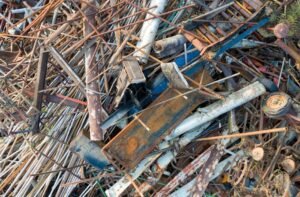
- Ferrous: mild steel rebar, beams, car bodies, whitegoods, cast iron bath tubs, roofing. Magnetic and priced per tonne.
- Non-Ferrous: copper pipe (bare bright & #2), PVC wire (graded by copper content), aluminium extrusion, 6063 profile, aluminium/copper radiators, brass valves, lead-acid batteries, zinc anodes, nickel alloys, stainless 304 & 316, electric motors.
- High-Value Exotics: tungsten carbide inserts, titanium bike frames, monel marine fittings, silver-plated cutlery, e-waste circuit boards with gold pins.
Not accepted: radioactive gauges, gas cylinders with valves intact, asbestos brake pads, sealed compressor tanks over 255 mm unless tagged by a competent person. If you are unsure, call the yard and text a photo; most managers reply inside five minutes.
3. How Scrap Prices Are Calculated in NSW
Prices are driven by the London Metal Exchange (LME), Shanghai Futures (SHFE) and the $A/$US cross-rate, but local yards add or subtract three premiums: transport distance, contamination penalty and yard throughput. Tuesday mornings traditionally see the freshest gate rates because Monday night offshore trading has settled. Bring your scrap mid-week and you could gain an extra 3–5 %. For households, the easiest way to lock a fair price is to separate metals before arrival. A clean drum of copper tube labelled “bare bright” can fetch $11.20 / kg, whereas mixed copper/brass may drop to $6.80 / kg. Contractors with 5 t plus should negotiate a 30-day rolling contract linked to LME minus a fixed basis; most Campbelltown yards are happy to fix volumes because it guarantees furnace feed for their downstream processors.
4. Legal Requirements & Safe Handling
NSW EPA enforces the Waste Regulation Act 2014. Anyone transporting over 750 kg of scrap commercially must hold a Waste Transport Licence (EX01) and use a GPS-logged vehicle. Sites receiving more than 1,000 t per year are classified “scheduled activities” and must maintain fire-suppression systems, 1.5 m windrows and 24-hour CCTV. As a supplier you need to: 1) record your driver’s licence on the Waste Manifest, 2) declare any radiological sources, 3) ensure refrigerants are removed by a licensed ARC technician and tagged with a ARC-tick sticker. Non-compliance fines start at $750 for individuals and $15,000 for corporations. WorkCover adds another layer: gloves, cut-resistant sleeves, steel-toe boots and eye protection are mandatory inside the weighbridge yellow line. Keep your PPE on; inspectors love surprise visits and on-the-spot fines hurt.
5. Where to Recycle in Campbelltown: Yards & Hubs
Campbelltown has six main scrap facilities within a 12 km radius. Each offers different specialisations:
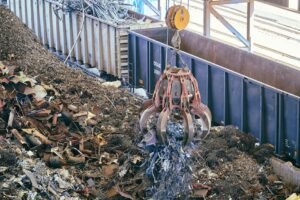
- Scrap Trade Ingleburn: 3 ha site, 90 m outbound weighbridge, specialises in Core Metal Recycling of structural steel and rebar. Open 6 am–4 pm Mon–Fri, 6 am–12 pm Sat. EFT same day.
- Minto Metal Recovery: family-owned, strong on aluminium siding and car rims. Offers drive-through ATM-style cashcard if you prefer instant money.
- Macarthur Resource Recovery Park: council-run, free drop-off for household scrap under 100 kg, but no payment. Great for weekend clean-ups.
- Menangle Bridge Scrap: 18 km south but pays Port-linked export rates, favoured by demolition crews. 140 t daily shredder throughput means faster unloading.
Before you leave, check traffic on Appin Road; afternoon quarry trucks can add 25 min to your return trip. Most facilities close at 4 pm sharp and will not process trucks after 3:30 pm, so arrive early.
6. Step-By-Step: How to Sell Ferrous Metal for Top Cash
Follow this field-tested workflow and you will consistently beat the average yard price:
- Sort with a magnet: ferrous sticks, non-ferrous drops.
- Strip attachments: remove wood, plastic, rubber. One metre of threaded rod embedded in a timber pallet can downgrade the entire 1 t bundle to “light gauge” costing you $45.
- Cut oversized pieces to under 1.2 m; shredders charge a “sizing premium” for anything longer.
- Weigh on a certified farm scale or forklift scale so you know your own tonnage before the bridge.
- Photograph each pile and the truck rego; if there is a weight discrepancy you have evidence.
- Book an arrival slot online; many yards give 2 % extra for pre-booked deliveries because it smooths their logistics.
- At the gate, request the “mill spec” price list, not the “general” list. Haggle if you have 2 t plus.
- Ask for laboratory assay if you believe your stainless is 316 not 304; the Ni content alone swings price by $700 / t.
- Choose EFT over cheque to avoid the $7 clearance fee.
Repeat weekly and you will build rapport with the buyer, unlocking priority unloading and first look at specials such as discounted bin hire. For a deeper dive on local ferrous sales, read our dedicated page sell ferrous metal campbelltown.
7. Non-Ferrous Maximisation Tactics
Copper and aluminium pay the bills, but only if you avoid the common downgrades. Never leave solder on copper tube; the yard will classify it as #2 copper, a 35 % haircut. Use a propane torch and a mesh tray to wick off solder, then rinse with bicarb and water to remove flux. For aluminium, separate 6063 extrusion from 5005 sheet; the former is car-door grade and fetches $1.85 / kg while mixed can drop to $1.10 / kg. If you have a mountain of household cable, invest in a stripper machine—$380 at Hare & Forbes pays itself off after 120 kg of 2.5 mm cable. Store non-ferrous in a dry cage; aluminium oxide creates a 2 % weight loss and some yards deduct an extra 3 % “oxidation penalty”. Finally, watch the Asian arbitrage window: when SHFE copper trades $400 above LME, local yards raise gate prices within 48 hours. Track the spread on investing.com and time your delivery accordingly.
8. Services That Make Recycling Easier
Modern yards compete on service, not just price. Look for:
- Same-day bins: 1 m³ to 30 m³, drop-tarp or chain-lift, free delivery if you keep the bin 7 days.
- On-site cutting: oxy-torch teams for demolition plant, saves you transport of oversized structures.
- Compliance paperwork: EPA-licensed weighbridge docket doubles as waste manifest, accepted by Site Audit Statements.
- Scrap management software: cloud portal shows bin weights, photos, certificates—perfect for ISO 14001 reporting.
- 24-hour emergency pickup: essential after a plant breakdown or fire clean-up.
Ask for a 12-month service agreement; many yards will fix a floor price for the first 100 t and provide free bins, saving you up to $5,000 in annual haulage.
9. Environmental Impact & Carbon Credits
Every tonne of recycled steel saves 1,131 kg of iron ore, 633 kg of coal and 54 kg of limestone. In climate terms, that equals 1.85 t of CO₂-e avoided. NSW’s Energy Savings Scheme (ESS) now grants PRCs (Peak Reduction Certificates) for energy recovered during metal re-melt. Although scrap suppliers cannot directly create PRCs, partnering with an accredited reprocessor can earn a shared 2–3 % rebate on revenue. Ask your yard if they are ESS-accredited and negotiate to split the certificate income. Aluminium recycling is even more dramatic: remelting used beverage cans uses 5 % of the energy required for virgin smelting. For businesses reporting under the National Greenhouse & Energy Reporting Act, purchasing scrap-based metal instead of primary metal lowers Scope 3 emissions, a metric increasingly scrutinised by institutional investors.
10. Future Trends: Digital Marketplaces & AI Sorting
The scrap industry is embracing digitisation. Apps now publish live gate prices and allow you to book a slot with Apple Pay. Handheld XRF guns with AI alloy libraries can identify 1,000+ grades in three seconds, eliminating human grading disputes. Expect blockchain dockets that track metal from kerb to furnace, ensuring ethical sourcing and child-labour-free copper. In Campbelltown, the new Ingleburn Materials Innovation Hub plans a pilot plant for sensor-based colour-sorting of shredded aluminium, potentially lifting recoverable yield by 7 %. For suppliers, this means cleaner material will command an even higher premium. Start video-recording your scrap loads; digital provenance could become a tradable attribute, much like certified sustainable palm oil.
11. Quick Resources & Next Steps
Ready to monetise your scrap? Use the interactive map on Scrap Trade to locate the highest-paying yard today, or download the ScrapTrade.com.au app for live push notifications when copper spikes. If you need a broader search beyond the Macarthur region, check Scrap Metal Recycling Near Me or Metal Recycling Near Me for state-wide options. Bookmark this guide and share it with apprentices, facility managers and council waste officers; it is updated monthly to reflect regulatory changes and price shifts.
Metal recycling Campbelltown NSW is profitable, regulated and environmentally critical. Separate your metals, follow the safety code, build relationships with reputable yards and you will convert waste into a reliable revenue stream while slashing emissions. See you at the weighbridge.
Frequently Asked Questions
Do I need a licence to transport scrap metal in Campbelltown?
If you carry under 750 kg domestic scrap, no licence is needed. Commercial loads above 750 kg require an EPA Waste Transport Licence (EX01) and a waste manifest.
Why do copper prices change daily?
Copper is traded globally on the LME and SHFE. Currency swings, Chinese factory demand and even port strikes instantly affect local yard prices.
Can I get cash on the spot?
NSW anti-money-laundering rules ban cash for scrap metal. Payment is by EFT or cheque, usually settled the same day.
Is there a minimum quantity?
No minimum for household drop-off, but commercial ferrous loads under 200 kg may incur a $35 processing fee. Call ahead to confirm.