

The current price of scrap steel is posted daily on trading floors from Port Kembla to Kwinana, but the headline number rarely tells the full story. Whether you are a demolition contractor with 50 t of structural beams or a hobbyist stripping white-goods, understanding how ferrous metal is priced, graded, and recycled can add hundreds of dollars to every load you deliver. This pillar guide covers live market values, cost drivers, steel grades, the recycling loop, and environmental benefits—plus practical tips to squeeze every cent from your next sale.
1. How Scrap Steel Prices Are Set in Australia
Scrap steel is a globally-traded commodity priced in US dollars per tonne on platforms such as the London Metal Exchange (LME) and the Shanghai Futures Exchange. Domestic consumers—BlueScope, InfraBuild, Liberty Primary Steel—then convert that base figure into an Australian steel price per tonne, subtract freight, processing margins, and GST to arrive at a price per kg delivered to their yard.
Key reference points:
- Turkey import CFR (80/20 heavy melt) is the bellwether for bulk seaborne scrap.
- Domestic billet prices in Tangshan influence Chinese buying appetite.
- Iron ore futures (62% Fe) act as a competing feedstock; when ore rallies, mills lower scrap buying prices.
The above variables are recalculated twice daily by major brokers, so metal prices today can swing 5–10% inside a week. For smaller sellers, the easiest way to stay ahead is to bookmark Scrap Price Forecast Guide for weekly commentary and forward curves.
Contracts are typically quoted ex-yard, meaning the seller pays haulage. If you can deliver 25 t or more in a single truck-and-dog, mills will often add a $10–$15 per tonne delivery premium, pushing the current scrap prices above published spot levels.
2. Current Scrap Steel Price per kg by Grade (2024 Snapshot)
All figures are GST-exclusive, median Sydney–Melbourne–Brisbane corridor, June 2024:
| Grade (AS 1416) | Description | Price per kg | Price per tonne |
|---|---|---|---|
| 1A Heavy Melting Scrap (HMS) | Clean structural >6 mm, no re-rollable | $0.33 | $330 |
| 1B HMS | Light gauge 3–6 mm, max 0.3% cu | $0.28 | $280 |
| Turnings & Borings | Oil-free machine swarf, 85% yield | $0.17 | $170 |
| Rebar off-cuts (grade 500) | Min 10 mm, cropped <1 m | $0.31 | $310 |
| Shredded fragment (density 1 t/m³) | Post-shredder auto bodies | $0.24 | $240 |
| Cast Iron scrap | Clean automotive or municipal | $0.25 | $250 |
Sheet metal off-cuts from fabrication shops trade at a $20 discount to HMS because of their lower density and higher risk of paint contamination. If you can shear or bale sheet into 1 m cubes, processors will reassess your load as light gauge HML and raise the payout by roughly 7 ¢/kg.
Need prices for non-ferrous? Compare with the current price of scrap copper to see why separating your metals matters.
3. Factors That Move Steel Scrap Prices Day-to-Day
Understanding the following levers lets you time your sale and avoid leaving money on the table.
3.1 Iron Ore and Coking Coal Spreads
When 62% Fe ore climbs above US$130/t and premium hard coking coal breaches US$260/t, mini-mills raise scrap consumption to protect margins. Conversely, a slump in ore makes virgin iron units cheaper and drags scrap bids lower.
3.2 Turkish Import Bookings
Turkey is the world’s largest scrap importer. A single US$15/t swing in Turkish HMS bids transmits almost instantly to Australian scrap metal steel price quotes because traders arbitrage freight differentials.
3.3 AUD/USD Exchange Rate
Scrap is priced in US dollars, so a 1 ¢ move in the Aussie dollar shifts local bids by roughly A$3/t for the same international quote.
3.4 Domestic Mill Maintenance Windows
Scheduled blast-furnace relines (every 8–10 years) cut scrap demand for 45–60 days. Sellers who anticipate these outages can hold inventory until restarts lift prices.
3.5 Freight and Fuel Surcharges
A US$10 rise in Brent crude adds ~A$2.50/t to road freight and can wipe out the profit on a short-haul load. Deliver when diesel dips if you have storage flexibility.
4. Grades, Specifications, and How to Up-grade Your Load
Australian processors use AS 1416 “Classification of Scrap.” Falling into a higher grade can be worth $40/t—often more than the labour cost of cleaning.
4.1 HMS 1A vs 1B
1A must be free of galvanised coatings, alloy plates, and re-rollable material longer than 0.6 m. A quick pass with an angle-grinder to lop off protruding rebar can shift a load from 1B to 1A and earn an extra 5 ¢/kg.
4.2 Shearing Light Gauge
Loose sheet metal under 3 mm is downgraded to “light gauge” and priced at a 30% discount. Shear to 500 mm, band for density above 0.8 t/m³, and most yards will re-classify as HML, closing 60% of that gap.
4.3 Copper Content Penalty
Anything above 0.3% Cu triggers a rejection or heavy penalty. Remove radiator ends, copper-wound motors, and M12 earth tags before you load.
4.4 Cast vs Malleable
Cast iron borings carry 30% more value than mild steel turnings because mills use them as a carbon additive. Keep them separated.
For a deeper dive into grading and negotiation tactics, read Scrap Steel Price Per Kg A Complete Guide For Sellers.
5. The Australian Steel Recycling Loop Step-by-Step
Recycling steel saves 74% of the energy and avoids 1.6 t of CO₂ for every tonne of virgin iron replaced. Here is how the loop works from kerbside to rebar.
5.1 Collection
Scrap is generated at demolition sites, fabrication shops, municipal transfer stations and households. Roll-on/roll-off bins (12–30 m³) are the dominant collection mode for C&D waste.
5.2 Sorting
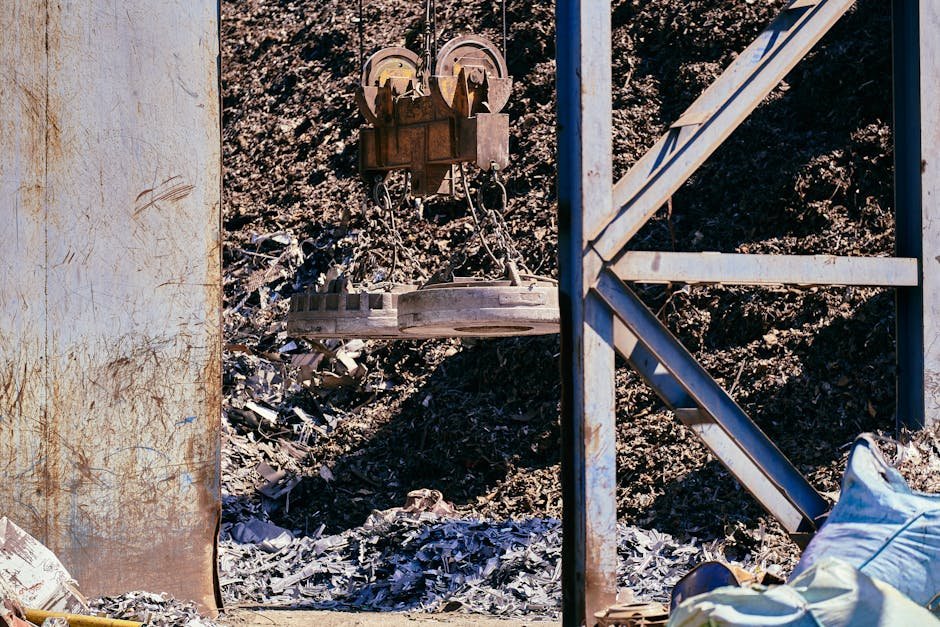
Excavator magnets pull out ferrous metal; the remainder goes to eddy-current separators for non-ferrous recovery. Manual picking extracts copper windings, motors and stainless steel components that downgrade the shred if left in.
5.3 Shredding and Shearing
Auto bodies and white goods enter the 6 000 hp shredder, emerging as fist-sized fragment. Heavy beams are sheared into 500 mm lengths for furnace charging.
5.4 Baling and Export
Fragment is screened to 50 mm minus, then baling presses squeeze it into 1.2 m cubes weighing 700 kg. Containerised scrap heads to Taiwan, Vietnam, and occasionally Bangladesh when Turkish bids soften.
5.5 Furnace Charging
Electric arc furnaces (EAF) at InfraRoot, Laverton add 35–40% scrap to the charge; basic oxygen furnaces (BOF) at BlueScope Port Kembla run ~20%. Higher scrap ratios lower the carbon intensity of finished slab.
5.6 Re-rolling
Molten steel is cast into billet, reheated to 1 200 °C, and rolled into rebar, merchant bar, or sheet metal coil. The loop closes when that coil is fabricated into a product that will re-enter the waste stream decades later.
Processing plants that meet National Pollutant Inventory reporting can document carbon savings for clients chasing green-star ratings. Ask your recycler for a certificate if you need Scope-3 offsets.
6. Environmental Benefits Beyond the Carbon Number
Every tonne of recycled scrap steel:
- Saves 1 130 kg of iron ore, 630 kg of coal, and 55 kg of limestone.
- Redves water consumption by 40% versus virgin production.
- Keeps 1 tonne of material out of landfill; Australia still landfills 3 Mt of ferrous waste each year.
- Redves energy use by 16 GJ, enough to power an average home for 4.5 months.
Governments are taking notice. Victoria’s new Circular Economy (Waste Reduction) Act 2021 lists ferrous metal as priority material, requiring 80% recovery from C&D by 2025. Contractors who deliver clean, sorted loads can claim green-star points and win more tenders. For processors, meeting AS 3996 and EPA best-practice guidelines is now a licence condition, not a marketing flourish.
7. Practical Tips to Maximise Your Scrap Steel Return
1. Track the Turkish HMS quote: Add US$10 freight to get an indicative landed price; convert at daily FX for a quick local benchmark.
2. Cut to length before you load: Shearing HMS to 500 mm removes the “oversized” penalty and can lift returns by 4 ¢/kg.
3. Keep cast iron separate: Foundries pay a premium for high-carbon borings. Mixed loads default to the lowest grade.
4. Deliver Monday-Wednesday: Mills set weekly purchase budgets; early-week deliveries are more likely to hit quota at top prices.
5. Negotiate on tonnes, not kilos:
Large lots (25 t+) give you leverage for a freight rebate or assay-based pricing.
6. Store under cover:
Rust oxidation adds weight but lowers yield; a 1% Fe loss equals roughly $3.30/t.
7. Use sealed buckets for turnings:
Oil drippage is an EPA fine and a price penalty. Spin-dry swarf to <3% oil before sale.
8. Check competitor bids:
Platforms such as Scrap.Trade let processors bid on your lot in real time, pushing the current price of scrap steel closer to export parity.
9. Monitor forward curves: When the spread between spot and three-month futures exceeds $25/t, defer sale if storage is cheap.
10. Bundle with non-ferrous: Mixed consignments can attract a trucking discount. Compare your non-ferrous bonus against Stainless Steel Scrap Price to ensure you still come out ahead after sorting labour.
8. Forward Outlook: Where Scrap Steel Prices Are Headed
BlueScope’s Metals Recycling Monitor expects Turkish HMS to average US$385/t CFR in the second half of 2024, up 7% on H1, driven by restocking after a mild EU winter and resilient rebar demand in the Middle East. Locally, the restart of Port Kembla’s No. 5 blast furnace in October will add 400 ktpa of incremental scrap consumption, tightening the domestic balance and supporting current scrap prices above $300/t through the December quarter.
Risks to the upside include a weaker AUD (consensus 0.68 by Q4) and any further Chinese stimulus in property steel-intensity. Downside risks centre on faster Indian export flows and a surprise lift in Brazilian scrap supply. For detailed scenario analysis, download the Scrap Price Forecast Guide.
9. Frequently Asked Questions
9.1 What is the current price of scrap steel per kg in Australia?
Clean 1A HMS is trading at $0.30–$0.35 per kg ex-yard in Melbourne and Sydney. Prices dip by 3–4 ¢/kg in regional centres due to freight differentials.
9.2 How often do scrap steel prices change?
Major processors adjust bids twice daily on weekdays, tracking Turkish import bookings and currency moves. Weekend deliveries are priced off the Friday 4 pm close.
9.3 Does paint or rust lower the price?
Light surface rust is acceptable in HMS, but loose mill-scale and excessive oil will trigger a downgrade. Painted sheet metal is tolerated up to 2% by weight; above that, processors apply a penalty or reject the load.
9.4 Is there a minimum quantity to sell?
Most metro yards accept 100 kg minimum for walk-in trade, but you need 5 t or more to negotiate assay-based pricing or freight assistance. Bulk tippers with 25 t reliably achieve top-tier rates.
Conclusion
The current price of scrap steel is more than a number on a whiteboard—it is a moving matrix of Turkish bids, iron-ore spreads, FX gyrations, and domestic mill schedules. Sellers who understand grading rules, freight curves, and environmental incentives can consistently beat the published spot quote by 5–10%. Whether you’re a builder stripping a roof or a recycler feeding an EAF, treat this guide as your living reference. Keep it handy, share it with your team, and link back to ScrapTrade.com.au for state-specific rebates and bin-booking tools. Recycle smart, sell smarter.
Related: scrap metal steel price
Frequently Asked Questions
What is the current price of scrap steel per kg in Australia?
Clean 1A HMS is trading at $0.30–$0.35 per kg ex-yard in Melbourne and Sydney. Prices dip by 3–4 ¢/kg in regional centres due to freight differentials.
How often do scrap steel prices change?
Major processors adjust bids twice daily on weekdays, tracking Turkish import bookings and currency moves. Weekend deliveries are priced off the Friday 4 pm close.
Does paint or rust lower the price?
Light surface rust is acceptable in HMS, but loose mill-scale and excessive oil will trigger a downgrade. Painted sheet metal is tolerated up to 2% by weight; above that, processors apply a penalty or reject the load.
Is there a minimum quantity to sell?
Most metro yards accept 100 kg minimum for walk-in trade, but you need 5 t or more to negotiate assay-based pricing or freight assistance. Bulk tippers with 25 t reliably achieve top-tier rates.











