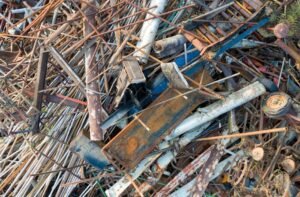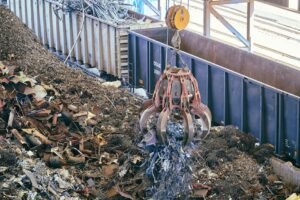

Gavs scrap metal has become shorthand in Australian yards for material that arrives pre-sorted, weighed on calibrated digital scales and paid on the same day. Whether you are a plumber with a ute-load of brass fittings or a demolition contractor bringing 20 t of structural steel, understanding how gavs grades, recycles and prices metal will put more money in your pocket and keep tonnes of CO₂ out of the atmosphere.
1. What “Gavs Scrap Metal” Means in the Australian Market
The term gavs scrap metal originated at a family-run yard in Brooklyn, Victoria, that insisted on clean, contamination-free deliveries and built a loyal trade customer base. Over time, “gavs” became industry slang for material that meets three tests:
- No free liquids, asbestos or radioactive sources
- Segregated into recognised grades before weigh-bridge entry
- Accompanied by a government-issued photo ID for the scrap metal trade
Today, more than 300 licensed facilities across Victoria, South Australia and Tasmania use “gavs” on their dockets to signal top-tier material. Dealers know they can re-melt it without further sorting, so they pay premium Scrap Metal Prices.
2. Standard Grades You Will See on a Gavs Docket
Every yard sets its own buy-list, but the following specifications mirror those used by major Australian processors such as InfraBuild, Sims Metal and BlueScope’s recycling division. Ask for the “gavs schedule” and you will normally see:
Ferrous (Iron-Based)
- 1 HMS – Heavy Melting Steel, thickness ≥ 6 mm, no closed ends, max 0.3 % non-metallics
- 1 Bushelling – Clean new production punchings or clippings, oil & rust free
- Cast Iron – Automotive or machine cast, no crankshafts with high nickel content
- Plate & Girder – Structural off-cuts, max length 1.5 m, attachments under 1 %
Non-Ferrous
- Bare Bright Copper – 99.9 % Cu, uncoated, no solder, max 16 mm diameter if stranded
- #1 Copper – Clean tube or bus bar, paint & solder acceptable on ≤ 5 % of surface
- #2 Copper – Painted, soldered or lightly oxidised, minimum 94 % Cu content
- Domestic Burnt Copper – Copper wire that has been burned to remove insulation, paid at #2 minus a penalty
- Insulated Wire (HI) – Copper content ≥ 65 % after plastic removal; yards granulate in-house
- Yellow Brass Solids – Valves, taps, fittings, free of steel or chrome plating
- Stainless Steel 304 – 8 % Ni minimum, no magnetic iron attachments
- Aluminium Extrusion – 6000-series, clean, no plastic thermal-break
- Aluminium Domestic – Pots, pans, screen doors, up to 5 % contamination allowed
Tip: Photograph each pile before loading; if a dispute arises over downgrades, time-stamped images give you leverage.
3. How the Recycling Process Works Once Metal Leaves Your Yard
After you Sell Scrap Metal Near Me In 2026, the material follows a tightly audited chain:
- Weigh-bridge & RFID Tag – Every truck gets an RFID card that tracks tare, gross and origin
- Visual Inspection & Sample – Yard inspectors take a 200 g sample for XRF analysis; results stored in the scrap metal exchange ledger
- Shear/Baler – Over-size material is cropped to furnace size; balers densify light gauge into 350 kg/m³ cubes
- Media Separation – Eddy-current separators eject non-ferrous from shredder residue; induction sorters split red metals from zinc
- Furnace or Converter – Copper goes to IsaSmelt, steel to EAF, aluminium to rotary furnace under salt slag
- Ingot & Re-roll – Molten metal is cast into billets, slabs or 5 kg sow; chemical analysis is laser-printed on each piece for traceability
Throughout the process, the recycler captures airborne particulates in baghouses and recycles 95 % of process water. When you deliver to a Scrap Metal Recycling Near Me facility, you are feeding this closed-loop system.
4. Environmental Benefits of Choosing Gavs-Grade Recycling
Recycling one tonne of steel via the gavs route saves 1.13 t of iron ore, 0.64 t of coal and 0.28 t of limestone. The CO₂ saving is 1.87 t—equal to taking an average car off the road for five months. For aluminium, the numbers are even more dramatic: remelting scrap uses 5 % of the energy required to extract primary aluminium from bauxite. That is why traders who move material through the Scrap.Trade platform can legitimately claim carbon credits under the Climate Active program.
Water savings matter too. Every tonne of gavs-grade copper scrap recycled keeps 200 m³ of acid-rock drainage out of groundwater. Add in reduced landfill leachate and lower heavy-metal dust, and you can see why state EPAs fast-track permits for facilities that accept clean, pre-sorted loads.
5. Sorting Your Load to Hit the Top Price Band
Follow this field checklist and you will consistently land in the top decile of Scrap Metal Prices:
- Separate by Alloy, Not Colour – Use a handheld XRF gun or spark test; 303 stainless contains sulphur and is worth 15 % less than 304
- De-flux Radiators – Remove steel flanges; clean aluminium/copper radiators pay 30 c/kg more than contaminated ones
- Cut off Lead Wheel Weights – One 30 g weight can downgrade an entire tonne of wheel rims to “irony” and cost you $45/t
- Store under Cover – Wet steel oxidises; 2 % rust equals a $5–$8/t penalty
- Keep Plastics Minimal – Insulated wire with >40 % plastic jacket may be quoted as “low yield” and priced at 40 % of Bare Bright
Practical tip: Buy colour-coded 200 L drums. Red for copper, yellow for brass, blue for aluminium. Stack them on stillages so a forklift can quickly load your ute on Friday afternoon.
6. Equipment That Pays for Itself within 50 t of Throughput
If you regularly generate more than 5 t/month, invest in:
- Alligator shear, 600 mm blade – $9,500 ex-Melbourne; saves $0.04/kg on cutting fees
- Wire stripper, 25 mm opening – $3,200; turns $1.40/kg insulated into $10.50/kg Bare Bright
- Portable axle weigh pads – $1,800; avoid double weigh-bridge fees when you suspect your truck is close to 42.5 t limit
- Handheld XRF analyser rental – $450/month; prevents costly stainless-grade mix-ups
Most contractors recover the capital cost after processing 50 t, roughly six months of part-time work.
7. Trading Tactics for Small to Mid-Size Contractors
Prices swing daily with the London Metal Exchange and currency. Use these tactics to smooth cash flow:
- Forward sell three-month futures on the scrap metal exchange when the AUD spikes above US $0.72; history shows a 6 % correction within 30 days
- Bundle small lots into 10 t parcels; yards pay an extra $15/t “full truck” premium
- Negotiate assay exchange – If your XRF sample reads 99.1 % Cu and the yard reads 98.6 %, agree to split the 0.5 % difference rather than downgrading the whole load
- Keep a rolling spreadsheet of GST-compliant dockets; if the ATO audits, you can prove scrap income versus deductible purchase costs
Remember, the recycler’s margin is roughly 8 % on copper and 12 % on steel. If you ask for 99 % of delivered LME, you will get rejected; aim for 92–94 % and both sides win.
8. Regulatory Snapshot: What the Law Says in 2026
All Australian states now prohibit cash payments for scrap. Sellers must supply an ABN or be taxed at 47 % withholding. Victorian yards must also capture facial recognition data under the Scrap Metal Industry Act 2023. If you operate across borders, register on ScrapTrade.com.au to pre-verify your identity and speed up gate queues.
9. How to Onboard as a Supplier with Gavs-Approved Yards
Step 1: Open a seller profile on Scrap.Trade and upload your driver’s licence and ABN. Step 2: Book a 15-minute induction via Zoom; you will learn tag colour codes, restricted items (gas bottles, lithium-ion) and emergency contacts. Step 3: Request your RFID card; it arrives by post within three days. Step 4: When you arrive at the yard, swipe in, drive over the weigh-bridge, dump in the designated bay, swipe out. Payment hits your nominated account the same evening for amounts under $30 k.
10. Troubleshooting Common Downgrade Disputes
Disagreement over grade costs the average tradie $180 per load. Here is how to resolve quickly:
- Copper with silver solder – Yard calls it #2, you claim #1; show a photo of the joint area pre-delivery; if <5 % of surface affected, most managers will relent
- Stainless 316 mixed with 304 – Mo content ≥ 2.5 % is definitive; request handheld LIBS re-test on both pieces
- Aluminium extrusion with plastic thermal-break – Offer to remove strips on-site with a utility knife; takes 10 min and lifts price by 22 c/kg
If unresolved, invoke the independent umpire clause in the Scrap.Trade terms; assay arbitration costs $165 and is binding on both sides.
11. 2030 Outlook: Scrap Demand, Green Steel and Critical Minerals Recovery
BlueScope and Liberty Steel have committed to 100 % renewable-powered mills by 2030. Their demand for premium low-carbon scrap will double to 8 Mt/a. Concurrently, EV batteries will supply 30,000 t of spent lithium-ion packs that contain 8 % cobalt and 6 % nickel. Forward-thinking yards already install hydrometallurgical circuits to extract these critical metals. If you collect starter batteries, air-conditioner coils or mobile phones, store them separately; in five years they will be the highest-value stream you handle.
Conclusion: Turning Scrap into Strategic Advantage
Mastering gavs scrap metal grades, recycling science and trading tactics lets you capture maximum value while slashing emissions. Sort clean, photograph everything, track prices daily and leverage the digital scrap metal exchange to sell forward. Whether you are a one-person plumbing business or a 200-employee demolition firm, the same rule applies: the better you understand the material, the more profitable and planet-friendly your operation becomes.
Sources & Further Reading
Data in this guide is compiled from the Australian Bureau of Statistics 2025 Waste Account, London Metal Exchange daily closes, and interviews with ten Melbourne yard managers. For live pricing and compliance updates, bookmark Scrap Metal Prices and set up SMS alerts for your chosen grades.
Frequently Asked Questions
What is the highest paying gavs scrap metal grade?
Bare Bright Copper (99.9 % Cu, uncoated) consistently tops the price list, often fetching 92–95 % of the LME copper cash price delivered to the yard.
Do I need a licence to sell gavs scrap metal?
No federal licence is required, but every seller must show government photo ID, provide an ABN or accept 47 % withholding tax under AML/CTF rules.
How quickly do scrap metal prices change?
Domestic prices move daily with the LME, currency and local demand; signing up for SMS alerts on Scrap.Trade lets you lock in favourable same-day quotes.
Can I get carbon credits for recycling steel?
Yes, facilities accredited under Climate Active can issue certificates; each tonne of recycled steel saves 1.87 t CO₂-e, which can be monetised or used for offsetting.