
Global metals recycling is now a USD 360 billion industry that diverts more than 400 million tonnes of material from landfill each year. This guide explains how the supply chain works, which materials attract the highest prices, and how Australian businesses can align with international standards while staying competitive.
1. Global Metals Recycling in Numbers
Understanding the scale of global metals recycling helps traders spot opportunity and manage risk. The Bureau of International Recycling (BIR) estimates recycled metal supplies:
- 40% of the world’s steel demand
- 50% of copper consumption
- 80% of lead production
- 30% of aluminium supply
These percentages are trending upward because recycled units emit 1.5–5 t less CO₂ per tonne of metal than virgin ore. This carbon arbitrage is now monetised through carbon credits in the EU, UK and several Asian exchanges, giving Australian exporters an indirect pricing edge if they can verify low-carbon scrap.
2. Supply Chain: From Bin to Furnace
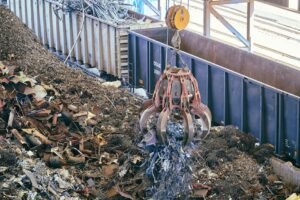
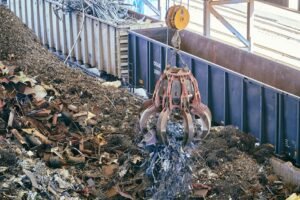
Global metals recycling starts at metal recycling yards that grade, shear, bale and load material for export or domestic mills. The critical steps are:
- Collection—municipal, industrial, obsolete and prompt (new off-cuts) scrap streams
- Sorting—manual, magnetic, eddy-current and sensor-based sorting; X-ray fluorescence (XRF) guns verify alloy in seconds
- Processing—shears, granulators, shredders and plasma cutters reduce size for furnace specifications
- Trading—sales priced against LME, SHFE, COMEX and regional indices; payment terms range from CAD (cash against documents) to 30-day credit
- Consumption—electric arc furnaces (EAF), secondary aluminium smelters, copper refineries and foundries convert scrap into ingot, billet or finished product
The most profitable participants are those that control purity and deliver shredded, briquetted or baled material that meets mill specs with minimal contaminants.
3. Ferrous Versus Non-Ferrous Profit Margins
Global metals recycling is often split into ferrous and non-ferrous segments. Ferrous grades such as HMS 1/2 or shredded scrap move in bulk and are priced in $/tonne. Gross margins are thin—3%–8%—but turnover is rapid. In contrast, non-ferrous grades (copper, aluminium, nickel, zinc, brass, stainless) command:
- Higher unit value—copper bright bare can exceed USD 9,000/t
- Tighter specifications—#1 copper must be 99.9% clean, free of solder, paint or excessive oxidation
- Volatile but wider spreads—traders can capture 10%–25% margins if they time the market and maintain purity
To benchmark current gate prices in Australian cities, visit the Scrap Metal Recycling Near Me portal. Sorting mixed copper into #1, #2 and insulated grades can lift revenue by 18%–30%, so onsite stripping or granulation is usually worth the labour cost.
4. Environmental Drivers and Policy Pressures
Global metals recycling is accelerating because governments face mounting waste and climate obligations. The EU’s Carbon Border Adjustment Mechanism (CBAM) will require importers to report embedded carbon in aluminium and steel from 2026. Recycled feedstock with verified low-carbon attributes will therefore trade at a premium. Australian exporters that can:
- Document scrap origin
- Provide spectrographic assay
- Offer carbon certificates
…stand to secure long-term offtake contracts with EU and US buyers. Domestically, the federal Recycling and Waste Reduction Act 2020 set recycled content targets for packaging, while NSW and WA have landfill levies above AUD 140/t, making metal diversion not only ethical but economic.
5. Technology Trends and Digital Trading
Modern global metals recycling relies on automation to offset labour shortages and tighten quality control. Key innovations include:
- Hyperspectral cameras—sort aluminium by alloy series at 3 t/h with 95% accuracy
- Laser-induced breakdown spectroscopy (LIBS)—separates cast from wrought aluminium, adding USD 40–60/t to product value
- Blockchain documentation—creates immutable records from weighbridge to furnace, reducing the risk of stolen scrap entering the chain
- Digital marketplaces—platforms such as Scrap.Trade connect generators, processors and traders, replacing voice brokering with transparent bids and analytics dashboards
Adopting these tools can raise EBITDA by 5–12% because mills pay premiums for chemically consistent feedstock with verifiable carbon attributes.
6. Pricing Mechanisms and Hedging
Global metals recycling prices are driven by the interaction of primary metal prices, exchange inventories, freight and currency. Benchmarks include:
- LME Official Settlement—used for copper, aluminium, nickel, zinc and lead
- SHFE and COMEX—provide arbitrage signals; Chinese import restrictions on Category 7 scrap shifted regional premiums to Southeast Asia
- American Metal Market (AMM) and FastMarkets—publish daily scrap indices for US hubs; Australian traders often apply a freight factor to relate these prices back to port
- Regional premiums—Midwest aluminium P1020 premium, CIF South Korean HMS indicators, and European copper grade A refining charges
Forward selling via LME futures or options is common for non-ferrous units, while ferrous exporters sometimes use iron ore swaps as a proxy. Traders should also account for currency hedging; a 5% swing in AUD/USD can erase thin ferrous margins.
7. Key Quality Specifications and Downgrading Risks
Buyers of global metals recycling commodities issue strict specs. Deviations trigger:
- Price penalties—USD 50–100/t for excessive copper in steel scrap
- Rejection—containerised loads returned at seller’s cost
- Contract cancellation—mills can blacklist suppliers for repeat non-compliance
Typical thresholds include:
| Material | Max Cu | Max Oil | Max Radioactivity |
|---|---|---|---|
| HMS 1/2 | 0.35% | 0.3% | 0.5 μSv/h |
| Aluminium Tense | 1.0% | 0.5% | nil |
| Copper #1 | 99.9% | 0.05% | nil |
Suppliers should invest in radiation portals, oil extraction units and trained sorters to avoid costly returns. Maintaining photo evidence and lab assays also streamlines insurance claims if a dispute arises.
8. Logistics, Freight and Container Packing
Global metals recycling moves predominantly by sea. Shredded scrap is usually bulk, while non-ferrous units are containerised. Best-practice packing includes:
- 20′ GP containers—max gross 28 t; baled aluminium tight stacked to avoid voids
- 40′ HC containers—for lower-density briquettes; line floor with plywood to prevent bag tears
- Break-bulk—used for oversized plate or beams; requires dunnage and tarping
Freight rates on the Australia–South Korea route averaged USD 25/t in 2023 but spiked to USD 55/t during Red Sea disruptions. Booking long-term contracts or FAK (freight-all-kinds) slots can smooth volatility. Always declare IMSBC Code requirements for ores and concentrates when shipping nickel sludges or turnings to avoid port-state control penalties.
9. Transition Metals and Battery Recycling
One of the fastest-growing niches in global metals recycling is transition metals recovery from lithium-ion batteries. The metal recycling transition metals market australia report shows cobalt, nickel and lithium values can exceed USD 10,000/t contained, but black mass requires hydrometallurgy and carries fire hazards. Best practice includes:
- Inert atmosphere storage—nitrogen blanketing reduces thermal runaway risk
- Discharge to <0.5 V—prevents sparking during shredding
- Compliance with UN38.3—for transport of dangerous goods
Australian processors can capitalise on the 1.6 million EVs expected by 2030 by setting up regional collection points and partnering with Korean and Japanese refineries that already accept mixed-chemistry black mass.
10. Compliance, Shipping Restrictions and Basel Code
Global metals recycling intersects with environmental law. The Basel Convention categorises some metal-bearing wastes as hazardous (e.g., lead dross, cadmium sludge). Exporters must:
- Check if waste code A1010 or A1030 applies
- Secure Prior Informed Consent (PIC) from destination countries
- Use licensed recovery facilities listed on Environment Australia’s waste tracker
Non-compliance penalties can reach AUD 2 million and imprisonment. Keep incinerator bottom ash and e-waste glass separate from clean scrap to avoid unnecessary red listing.
11. Practical Tips for Australian Traders
Whether you run a small yard or a national brokerage, these tactics improve returns:
- Join the Recycling Community—networking events share intel on export quotas and freight deals
- Publish assays online—buyers bid more aggressively when chemistry is transparent
- Optimise logistics—back-load containers with timber or paper to reduce empty repositioning costs
- Lock in FX forwards—AUD volatility can erase margin faster than scrap price moves
- Insure trade receivables—credit insurance is cheap compared to exposure from a single default
Also review the Metal Recycling Near Me directory to benchmark gate prices across regions. Often a 200 km haul is profitable if inland yards are oversupplied.
12. Future Outlook and Investment Opportunities
Global metals recycling will outpace mined supply growth. Wood Mackenzie forecasts secondary aluminium output to rise 5.2% CAGR through 2035, while copper scrap availability lags demand at 3% CAGR, implying widening premiums. Investors should watch:
- Green premium contracts—mills offering USD 30–40/t extra for verified low-carbon scrap
- Urban mining of data centres—server heat sinks yield high-grade copper and aluminium
- Ship recycling—Alang and Chattogram yards face stricter HKC compliance, shifting tonnage to Turkey and EU yards
- Scrap trading platforms—marketplaces such as ScrapTrade.com.au democratise price discovery and reduce counterparty risk through escrow and logistics services
State governments are co-funding advanced facilities. Victoria’s Recycling Modernisation Fund covers 30% of capex for plants that process >30,000 t/y. Applying for such grants can shorten payback from five to three years for shredders or non-ferrous separation lines.
Conclusion
Global metals recycling is no longer a niche waste activity—it is a strategic feedstock channel that influences commodity prices, corporate Scope 3 emissions and national resource security. Australian businesses that master grading, environmental compliance and digital trading will capture higher margins and future-proof supply chains. Use the practical links in this guide to locate nearby processors, compare prices and engage with the national Recycling Community. The next decade belongs to traders who treat scrap not as waste, but as a high-value currency in the circular economy.
Frequently Asked Questions
What metals yield the highest recycling margins?
Copper #1 bright bare and nickel-bearing stainless steel 316L typically offer the strongest spreads, with margins up to 25% if sorted and processed to mill-grade purity.
How do I find a licensed scrap buyer near me?
Visit the Metal Recycling Near Me directory to locate EPA-approved facilities, compare current gate prices, and read customer reviews before booking a pick-up.
Is shredded steel scrap considered hazardous for export?
No. Shredded ISRI 210/211 is not Basel-listed, but you still need a waste export licence from the Department of Climate Change and must prove the importing facility meets recovery standards.
Can I hedge scrap prices?
Yes. Non-ferrous grades can be hedged using LME futures or options; ferrous traders often use iron ore swaps or Turkish rebar as a proxy to lock in forward prices.