Global Strategic Report on the Secondary Materials and Scrap Commodity Markets
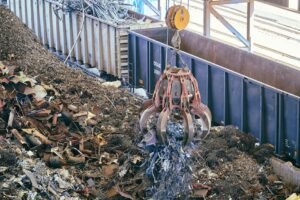
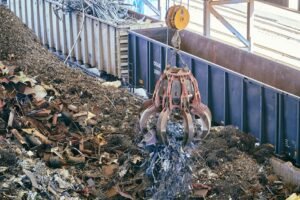
The global scrap and recycling industry is currently undergoing a structural transformation, evolving from a secondary waste-management function into a primary pillar of industrial strategy, decarbonization, and resource security. As of 2026, the global market for steel scrap alone is valued at 543.2 million metric tons, with projections indicating a rise to 727.1 million metric tons by 2030, representing a compound annual growth rate (CAGR) of 5%. This expansion is mirrored in the broader metal recycling market, which reached a valuation of USD 850.04 billion in 2023 and is poised to hit USD 1,135.28 billion by 2030.2 This trajectory is not merely a reflection of increased waste generation but a fundamental shift in the valuation of secondary materials driven by stringent environmental regulations, the volatility of virgin raw material prices, and the urgent mandate for circular economy models.
The Strategic Ascendance of Ferrous Scrap in Green Metallurgy
The ferrous scrap market serves as the vanguard of the transition toward a low-carbon industrial base. In 2024, recycled ferrous scrap accounted for over 40% of global steel production, reflecting its critical role in reducing the carbon intensity of the metallurgical sector.3 The core of this transition lies in the technological shift from traditional blast furnace-basic oxygen furnace (BF-BOF) production to electric arc furnace (EAF) methods. Traditional steelmaking relies heavily on iron ore and coking coal, whereas EAF production utilizes steel scrap as its primary resource. This shift is economically and environmentally significant; producing steel via the EAF route using scrap reduces carbon emissions by approximately 75% compared to ore-based routes.4
| Market Segment | 2024 Volume (Million MT) | 2030 Projection (Million MT) | CAGR (2024-2030) |
| Global Steel Scrap | 543.2 | 727.1 | 5.0% 1 |
| Obsolete Scrap | ~280 | 407.2 | 6.2% 1 |
| Prompt Scrap | ~263 | ~320 | 3.5% 1 |
| China Steel Scrap | 190 | 282.6 | 6.4% 1 |
The regional distribution of this market underscores the dominance of the Asia Pacific region, which contributed over 55% of global scrap metal recycling volume in 2024.3 China, as the world’s largest producer and consumer of steel, is the primary driver of this demand. The Chinese government’s 2024 revision of the “Resource Recycling Industry Development Plan” and guidelines from the Ministry of Industry and Information Technology aim to increase the use of recycled metals in industrial production by 20% by 2025.3 China’s annual crude steel production via EAFs already stands at 151 million tons as of early 2024, and the country is forecasted to grow its steel scrap segment at an impressive 6.4% CAGR to reach 282.6 million metric tons by 2030.1
This demand is increasingly colliding with a trend toward resource nationalism. As scrap is recognized as a strategic raw material for “green” steel, nations are moving to restrict its export. By March 2025, 48 countries had already restricted the export of ferrous scrap, with 38% of them implementing outright bans.5 The European Union is a focal point of this regulatory tightening; the amendment to the Waste Shipment Regulation will ban scrap exports to non-OECD countries that cannot demonstrate the ability to manage the waste in an environmentally sound manner, a policy taking effect in May 2027.5 This shift suggests that scrap will no longer be a common export commodity but rather a domestic asset, potentially leading to a 15 million ton global deficit by 2030 as demand (3.3% CAGR) outpaces supply (3% CAGR).5
Non-Ferrous Metals and the Economics of Substitution
The non-ferrous scrap sector, encompassing aluminum, copper, titanium, and nickel, represents a higher value-density market where the benefits of recycling are even more pronounced in terms of energy savings and greenhouse gas mitigation.
Aluminum and the Automotive Lightweighting Drive
The global market for aluminum scrap recycling reached 38 million metric tons in 2024 and is projected to expand to 57 million metric tons by 2030, growing at a CAGR of 7.0%.6 The primary catalyst for this growth is the automotive industry, which increasingly utilizes recycled aluminum for its lightweight properties to enhance fuel efficiency and lower emissions in both internal combustion and electric vehicles.6 In the United States, recycled aluminum already makes up more than 80% of total domestic aluminum production.7 The energy dynamics are compelling: producing recycled aluminum requires only 5% of the energy needed for primary production from bauxite ore, resulting in a 95% reduction in carbon emissions.7
| Commodity | Energy Saved (Recycled vs. Virgin) | CO2 Reduction Benchmark |
| Aluminum | 95% | 95% 7 |
| Copper | 85% | 65% – 80% 8 |
| Steel | 60% – 74% | 75% 4 |
| Titanium | 70% | 60% 11 |
Copper: The Infrastructure and AI Nexus
Copper scrap remains the most in-demand secondary non-ferrous metal due to its critical role in electrical, construction, and industrial applications. Global copper scrap imports reached USD 3.55 billion in the 2024-2025 period, with India emerging as the leading importer.10 The demand for copper is being further accelerated by the expansion of digital infrastructure, particularly AI data centers, which are projected to increase global copper demand by 3% by 2030.12 This structural deficit in copper supply, which analysts expect to persist through 2030, contrasts with the iron ore market, which faces oversupply pressures from new mining capacity like the Simandou project in Guinea.14
Titanium and High-Performance Alloys
The global titanium scrap recycling market is projected to reach USD 2.47 billion by 2030, growing at a CAGR of 5.8%.11 This segment is heavily driven by the aerospace and defense sectors, which held over 40% of the market share in 2024.11 The market is bifurcated into “revert” scrap (industrial offcuts) and “obsolete” scrap (end-of-life components). While revert scrap currently accounts for 58% of the market, obsolete scrap is growing faster as original equipment manufacturers (OEMs) in the aerospace and medical sectors demand full-lifecycle material traceability and ethically recycled titanium for surgical implants.11
The E-Waste Crisis and the Potential for Urban Mining
Electronic waste (e-waste) represents the most significant failure and simultaneously the greatest opportunity in the global circular economy. In 2022, the world produced a record 62 million tonnes of e-waste, an 82% increase from 2010.15 This volume is on track to rise another 32% to reach 82 million tonnes by 2030.15 Despite the immense value contained within these discarded devices, only 22.3% of global e-waste was documented as formally collected and recycled in 2022.16
The economic consequences of this recycling gap are profound. An estimated USD 91 billion in valuable metals is lost annually due to insufficient e-waste recycling, with an additional USD 62 billion in recoverable natural resources left unaccounted for.15 Particularly alarming is the fact that just 1% of the global demand for rare earth elements (REEs) is currently met by recycling, despite these materials being crucial for renewable energy and e-mobility.15
| E-Waste Dynamics (2022) | Value/Volume | Global Status |
| Total Generated | 62 Million MT | 7.8 kg per capita 15 |
| Formally Recycled | 13.8 Million MT | 22.3% of total 15 |
| Lost Material Value | USD 91 Billion | Primarily precious/base metals 15 |
| Rare Earth Recovery | < 1% | Critical strategic gap 15 |
| Europe Generation | 17.6 kg per capita | Highest regional rate 15 |
| Africa Recycling | < 1% | Lowest regional rate 17 |
The trade in e-waste is also expanding, reaching USD 3.83 billion in 2024, a 14.7% increase from the previous year.18 The United States is the leading exporter, shipping USD 1.3 billion of e-waste and scrap, while Japan (USD 900 million) and South Korea (USD 592 million) are the primary importers.18 The complexity of recovering materials from electronics is reflected in the Product Complexity Index (PCI), where e-waste ranks 940th out of 1058 products, highlighting the need for advanced, high-tech sorting and refining processes.18
Plastics and the Shift to Advanced Chemical Recycling
The plastics recycling market is undergoing a fundamental technological pivot. Mechanical recycling, while established, is often limited by its inability to handle contaminated, mixed, or multilayer plastic waste without significant quality degradation. Chemical recycling—comprising technologies such as pyrolysis, gasification, and depolymerization—offers a pathway to convert plastic waste back into its constituent monomers, producing virgin-quality resin.19
The global chemical recycling market is valued at approximately USD 1.2 billion in 2025 and is projected to grow to USD 18.5 billion by 2034, exhibiting an extraordinary CAGR of 36.1%.21 Pyrolysis is currently the dominant technology, accounting for 44% of the market share in 2025 due to its flexibility in handling diverse plastic waste streams, particularly polyolefins (PE & PP), which make up 58% of the volume in this segment.19
| Plastic Recycling Technology | 2025 Market Share | Key Characteristics |
| Pyrolysis | 44% | Oxygen-free heating; produces liquid oils and char 19 |
| Gasification | 31% | High-temp reaction; produces syngas for fuels/chemicals 19 |
| Depolymerization | ~15% | Breaks polymers into monomers; highest growth CAGR 19 |
| Solvent-based/Other | ~10% | Dissolution and purification of polymers 19 |
In the United States, the residential recycling system faces significant hurdles. Only 21% of recyclable material is currently being recycled, with 76% of the loss occurring at the household level due to lack of access or engagement.23 Despite these domestic challenges, the U.S. remains a net importer of scrap plastic as of 2024, with imports totaling 1.085 billion pounds, largely sourced from Canada and Mexico.24 This shift is partly due to changing international regulations that have restricted the export of raw plastic bales, favoring the import of processed flakes.24
Fiber and Paper: Enzymatic Innovations and Resource Savings
The paper recycling industry, while mature, continues to innovate to improve yield and reduce environmental impact. The global market for paper and pulp enzymes is valued at USD 351.1 million in 2025, with growth driven by the need for more sustainable manufacturing processes.25 Traditional chemical deinking processes generate large volumes of polluted wastewater; however, new enzymatic deinking methods using composites of lipase, cellulase, amylase, and xylanase have shown superior results.26
Enzymatic deinking has been shown to increase pulp brightness by 3.52% and decrease effective residual ink concentration (ERIC) by 9.12 ppm compared to traditional chemical methods.26 Furthermore, the economic benefits of paper recycling are substantial. Recycling one ton of paper saves approximately 30 million Btu of energy if made from virgin pulp, but requires only 10 million Btu if made from recycled newsprint, a 67% saving.8 Manufacturing one ton of office paper with recycled stock can save between 3,000 and 4,000 kilowatt hours and prevent the destruction of 15 to 17 mature trees.9
| Material | Virgin Energy (Million Btu/ton) | Recycled Energy (Million Btu/ton) | Energy Saved |
| Paper | 30 | 10 | 67% 8 |
| PET Plastic | 98 | 12 | 88% 8 |
| HDPE Plastic | 98 | 22 | 77% 8 |
| Glass | 16 | 15 | 6% 8 |
| Aluminum | 250 | 12.5 | 95% 8 |
Technological Paradigm Shifts in Sorting and Processing
The scrap industry’s transition to a high-efficiency model is predicated on the integration of Industry 4.0 technologies. Advanced automated sorting has moved beyond traditional manual labor to utilize AI-driven vision systems and robotic precision.
Artificial Intelligence and Machine Learning
AI-driven vision systems enable facilities to analyze the size, shape, color, and chemical composition of materials simultaneously, outperforming human operators in both speed and accuracy.27 Deep learning neural networks allow these systems to learn from operational data, refining their ability to handle increasingly complex waste streams.27 These technologies are particularly vital for the e-waste sector, where detecting minute amounts of precious metals is otherwise cost-ineffective.29
Advanced Analytical Instruments
Handheld X-ray Fluorescence (XRF) and Laser-Induced Breakdown Spectroscopy (LIBS) have revolutionized field-based analysis. XRF provides elemental identification in seconds, while LIBS is particularly effective for distinguishing between similar alloy compositions by generating high-temperature plasma for surface analysis.27 These tools ensure that materials meet stringent purity standards before processing, which is critical for high-value applications in aerospace and medical devices.11
Hydrometallurgy and Plasma Arc Technology
A significant shift is occurring from traditional high-temperature smelting to aqueous-based hydrometallurgical processes. These techniques operate at , compared to smelting at
, achieving higher recovery rates (up to 98%) with high purity for metals like lithium, cobalt, and precious metals.27 Plasma arc technology offers another advanced route, using extreme temperatures in inert atmospheres to break down complex structures like electronic waste while preventing oxidation and vitrifying hazardous residues.27
Trade Dynamics and the Regulatory Landscape
The global trade in scrap is governed by an increasingly complex set of international agreements and national policies, most notably the Basel Convention. As of 2024, 190 countries and the European Commission are parties to the Basel Convention, which regulates the transboundary movement of hazardous and other wastes through the Prior Informed Consent (PIC) procedure.30
The United States, while a signatory, has not ratified the Basel Convention, which creates a significant “enforcement gap”.31 Under Basel rules, parties cannot trade covered waste with non-parties unless a separate bilateral or multilateral agreement exists. This has led to specialized arrangements, such as the 2020 U.S.-Canada bilateral agreement for non-hazardous scrap and waste.30 However, the 2025 amendments to Basel have further restricted trade, specifically prohibiting parties from trading certain plastic waste and all types of e-waste with non-parties like the U.S. without the PIC procedure.32
| Global Trade Role (2024-25) | Country/Company | Trade Value/Share |
| Leading Scrap Importer | India | USD 12.74 Billion 10 |
| Leading Scrap Exporter | United States | USD 5.57 Billion 10 |
| Top Global Trader | Indicaa Group Ltd | 5.79% (Imp) / 4.49% (Exp) 10 |
| Leading E-Waste Exporter | United States | USD 1.3 Billion 18 |
| Leading E-Waste Importer | Japan | USD 900 Million 18 |
The geopolitics of scrap are also defined by “National Sword” style policies. Since China’s ban on waste imports, trade flows have shifted toward Southeast Asia. However, countries like Malaysia, Thailand, and Vietnam are seeing substantial variation in their ability to manage these flows, with the Basel Convention’s effectiveness tied heavily to national regulatory capacity and institutional readiness.33
Economic Drivers and Investment Outlook
The fundamental economic justification for recycling is the disparity between the cost of virgin and recycled materials, factored against energy consumption and carbon pricing. Lifecycle Assessments (LCA) demonstrate that recycled plastic pellets (PET, HDPE, PP) have significantly lower environmental burdens than virgin pellets.35
For instance, 100% virgin PET resin produces 2.23 kg , while recycled resin produces only 0.91 kg
, a 67% reduction.35 For HDPE and PP, the reduction is even more pronounced at 71%.35 These environmental savings are increasingly translating into economic incentives as carbon taxes like the EU’s Carbon Border Adjustment Mechanism (CBAM) begin to affect global trade.5
Investment Opportunities 2025-2030
The circular economy is emerging as a distinct asset class for investors, characterized by defensive, long-term, and often inflation-linked cash flows. Goldman Sachs identifies circular economy infrastructure—such as material recovery facilities (MRFs) and bio-resource depots—as providing mission-critical services with low correlation to traditional commodity cycles.36
The International Finance Corporation (IFC) has been a major mover in this space, with USD 1.9 billion in financing committed to circular projects since 2015.37 Recent investments include Brazil’s first aluminum can plant to boost local manufacturing and West Africa’s plastic recycling initiatives.37 The social upside is also significant; the shift to circular resource flows could generate more than 6 million net new jobs globally by 2030, providing a pathway to formalize the estimated 15-20 million informal waste collectors in developing countries.36
Future Trajectory: Towards a Regenerative Economy
The global scrap market is transitioning from a period of “waste management” to an era of “resource management.” By 2030, the scarcity of quality scrap, combined with rising decarbonization mandates, will likely lead to a permanent restructuring of the commodity markets.
First, scrap will lose its status as a common export commodity as nations move to secure domestic supplies for “green” manufacturing. This will force traditionally import-reliant nations to invest heavily in their own collection and sorting infrastructure.
Second, the “Circularity Metric,” which currently measures the global economy as only 6.9% circular, will become a key performance indicator for national economies.38 Bridging this “Circularity Gap” will require moving beyond just recycling to focus on product redesign, the “product-as-a-service” model, and enhanced material traceability via digital twins and blockchain.27
Third, the integration of AI and advanced robotics will reach a level of maturity where automated, autonomous plants handle mixed waste streams with minimal human intervention, dramatically lowering the cost of secondary material recovery and making “urban mining” more economic than traditional mining for several key metals.28
The convergence of these trends suggests that the scrap report of 2030 will not be a report on waste, but a strategic inventory of the world’s most valuable and renewable industrial assets. The nations and corporations that successfully navigate this transition will secure a significant competitive advantage in a world where the linear “take-make-waste” model is no longer tenable.
Comparative Analysis of Secondary Material Performance
The performance and quality of recycled materials have reached a point where they can match virgin standards for many demanding applications. This is critical for the “plastic-to-plastic” and “green steel” markets.
Material Consistency and Quality
| Material Type | Virgin Property | Recycled Achievement | Gap/Constraint |
| Steel | High purity; predictable | Low residual (EAF) | Tramp elements (Cu/Sn) 4 |
| Aluminum | Consistent alloy specs | Infinite recyclability | Sorting accuracy for alloys 6 |
| PET Plastic | Uniform strength/color | Food-grade (Chemical) | Collection contamination 21 |
| Paper/Fiber | High strength fibers | 25-75% energy save | Fiber degradation after 5-7 cycles 8 |
| Titanium | Traceable; high purity | Ethical/Full-lifecycle | Separation of Ti-6Al-4V 11 |
Advanced sorting and chemical recycling have largely addressed the quality gap for plastics, while the focus for metals has shifted toward the removal of “tramp elements” like copper from steel scrap, which can embrittle the finished product.5 The use of LIBS and AI-driven sorting is the primary solution to these contamination challenges, ensuring that the circular economy does not result in a “down-cycling” of material value.
The Geopolitical Risks of Supply Concentration
While recycling offers a path to self-sufficiency, the world remains “stunningly dependent” on a few countries for the primary materials that will eventually become scrap. For instance, up to 60% of global copper, REE, and lithium reserves are located outside the top three supply countries, yet today’s mining and refining are highly concentrated.12 This concentration makes the development of domestic “scrap loops” a matter of national security, particularly as geopolitical focus on materials intensifies with new tariffs, incentives, and export barriers.12
The “Lobito Corridor” and similar initiatives in Africa aim to transform mining routes, but the long-term goal for most advanced economies is to reduce reliance on these routes by increasing the efficiency of their internal circular systems. The success of this transition is evidenced by companies like POSCO, which announced a USD 1.2 billion eco-friendly steel mill in 2024 specifically focused on scrap-based production.3
In conclusion, the global scrap market is no longer a peripheral industry but a central engine of the global economy. Its evolution is characterized by high-tech innovation, strategic geopolitical maneuvering, and a fundamental reassessment of what constitutes a “resource.” The next decade will determine which actors successfully close their resource loops and which remain vulnerable to the volatility of an increasingly fragmented global commodity market.
Works cited
- Steel Scrap Market Size, Competitors & Forecast to 2030, accessed on March 30, 2026, https://www.researchandmarkets.com/report/steel-scrap
- Metal Recycling Market Size, Share & Growth Report, 2030, accessed on March 30, 2026, https://www.grandviewresearch.com/industry-analysis/metal-recycling-market
- Scrap Metal Recycling Market Size, Share, and Global Growth Trends, accessed on March 30, 2026, https://www.skyquestt.com/report/scrap-metal-recycling-market
- Steelmaking Raw Material Price Trends: Iron Ore … – Steelonthenet, accessed on March 30, 2026, https://www.steelonthenet.com/advisory/trends/economics.html
- Global scrap exports restrictions 2025 – GMK Center, accessed on March 30, 2026, https://gmk.center/wp-content/uploads/2025/04/Scrap-Restrict-2025_eng-2.pdf
- Aluminum Scrap Recycling Global Industry Report 2024-2030: – GlobeNewswire, accessed on March 30, 2026, https://www.globenewswire.com/news-release/2025/02/11/3023949/28124/en/Aluminum-Scrap-Recycling-Global-Indus
- Sustainability – Recycling | Aluminum Association, accessed on March 30, 2026, https://www.aluminum.org/Recycling
- Energy in Waste Scenarios, accessed on March 30, 2026, https://des.sc.gov/sites/des/files/Documents/BLWM/Recycling/WORKSHEETS_Recycling-Energy.pdf
- Environmental Factoids | WasteWise | US EPA, accessed on March 30, 2026, https://archive.epa.gov/epawaste/conserve/smm/wastewise/web/html/factoid.html
- Scrap Import Market Guide: Trends, Growth And Key Global Players – The Dollar Business, accessed on March 30, 2026, https://in.thedollarbusiness.com/blogs/scrap-import-market-guide-trends-growth-and-key-global-players/251903234761
- Titanium Scrap Recycling Market Report, Industry and Market Size & Revenue, Share, Forecast 2024–2030, accessed on March 30, 2026, https://www.strategicmarketresearch.com/market-report/titanium-scrap-recycling-market
- Global Materials Perspective 2025 – McKinsey, accessed on March 30, 2026, https://www.mckinsey.com/~/media/mckinsey/industries/energy%20and%20materials/our%20insights/global%20materials%20perspective%202025/global-materials-perspective-2025.pdf
- Global Materials Perspective 2025 – McKinsey, accessed on March 30, 2026, https://www.mckinsey.com/industries/energy-and-materials/our-insights/global-materials-perspective
- Iron Ore and Copper Prices: Market Forces & Trends – Discovery Alert, accessed on March 30, 2026, https://discoveryalert.com.au/iron-ore-copper-markets-economic-forces-2025/
- Global e-Waste Monitor 2024: Electronic Waste Rising Five Times Faster than Documented E-waste Recycling | UNITAR, accessed on March 30, 2026, https://unitar.org/about/news-stories/press/global-e-waste-monitor-2024-electronic-waste-rising-five-times-faster-documented-e-waste-recycling
- The global E-waste Monitor 2024 – Electronic Waste Rising Five Times Faster than Documented E-waste Recycling: UN, accessed on March 30, 2026, https://ewastemonitor.info/the-global-e-waste-monitor-2024/
- The Global E-waste Monitor 2024 – ITU, accessed on March 30, 2026, https://www.itu.int/en/ITU-D/Environment/Pages/Publications/The-Global-E-waste-Monitor-2024.aspx
- E-waste and scrap (HS: 8549) Product Trade, Exporters and Importers | The Observatory of Economic Complexity, accessed on March 30, 2026, https://oec.world/en/profile/hs/e-waste-and-scrap
- Chemical Recycling Market Size, Share Analysis, Report, 2034, accessed on March 30, 2026, https://www.fortunebusinessinsights.com/chemical-recycling-market-114155
- Chemical Recycling of Plastics Market – Industry Analysis – Stellar Market Research, accessed on March 30, 2026, https://www.stellarmr.com/report/chemical-recycling-of-plastics-market/2432
- Chemical Recycling Market Size, Share & Forecast Report, 2034, accessed on March 30, 2026, https://www.gminsights.com/industry-analysis/chemical-recycling-market
- Chemical Recycling of Plastics Market Volume to Worth 11.90 Million Tons by 2035, accessed on March 30, 2026, https://www.globenewswire.com/news-release/2026/01/07/3214681/0/en/Chemical-Recycling-of-Plastics-Market-Volume-to-Worth-11-90-Million-Tons-by-2035.html
- State of Recycling 2024, accessed on March 30, 2026, https://recyclingpartnership.org/wp-content/uploads/dlm_uploads/2024/01/Recycling-Partnership-State-of-Recycling-Report-1.12.24.pdf
- Paper and plastic exports decline again in 2024 – Resource Recycling, accessed on March 30, 2026, https://resource-recycling.com/recycling/2025/02/19/paper-and-plastic-exports-decline-again-in-2024/
- Paper & Pulp Enzymes Market Size & Share 2026-2035, accessed on March 30, 2026, https://www.gminsights.com/industry-analysis/pulp-and-paper-enzymes-market
- The Study on the Optimization of Composite Enzyme Preparations for Deinking of Old Newsprint Paper – MDPI, accessed on March 30, 2026, https://www.mdpi.com/2071-1050/17/23/10702
- Tech Advances Transform Metals Recycling Industry 2025, accessed on March 30, 2026, https://discoveryalert.com.au/advancements-metals-recycling-technology-2025/
- Technological Advancements in Metal Recycling: Smarter Sorting for a Greener India, accessed on March 30, 2026, https://www.attero.in/blog/technological-advancement-metal-recycling
- The Rise of AI-Powered Smart Sorting Systems – ScrapWare, accessed on March 30, 2026, https://www.scrapware.com/blog/the-rise-of-ai-powered-smart-sorting-systems/
- International Agreements on Transboundary Shipments of Hazardous Waste | US EPA, accessed on March 30, 2026, https://www.epa.gov/hwgenerators/international-agreements-transboundary-shipments-hazardous-waste
- Towards a Circular Economy: Why U.S. Waste Law Falls Behind the EU and Risks Development in the Global Waste Industry – Vermont Law Review, accessed on March 30, 2026, https://lawreview.vermontlaw.edu/towards-a-circular-economy-why-u-s-waste-law-falls-behind-the-eu-and-risks-development-in-the-global-waste-industry/
- SYNERGIES BETWEEN CIRCULARITY, LIFE … – Basel Convention, accessed on March 30, 2026, https://www.basel.int/Portals/4/download.aspx?d=UNEP-FAO-CHW-RC-POPS-PUB-InfoNote-Synergies-CircularEconomy-2026.English.pdf
- The Basel Convention: From Hazardous Waste to Plastic Pollution – CSIS, accessed on March 30, 2026, https://www.csis.org/analysis/basel-convention-hazardous-waste-plastic-pollution
- The evaluation of economic impact of the Basel Convention on the trade of waste electrical and electronic equipment – IDEAS/RePEc, accessed on March 30, 2026, https://ideas.repec.org/a/eee/asieco/v100y2025ics1049007825001204.html
- The Association of Plastic Recyclers White Paper: – Virgin vs …, accessed on March 30, 2026, https://plasticsrecycling.org/wp-content/uploads/2024/08/APR-Recycled-vs-Virgin-LCA-May2020.pdf
- Circular Economy Investments Diversification, Resilience, and Growth, accessed on March 30, 2026, https://am.gs.com/en-us/advisors/insights/article/2025/rethinking-resources-circular-economy-investments-offer-diversification-resilience-growth
- Accelerating Circular Economy Finance in Emerging Markets, accessed on March 30, 2026, https://www.ifc.org/en/what-we-do/sector-expertise/climate-business/mobilizing-climate-finance-for-emerging-markets/accelerating-circular-economy-finance-in-emerging-markets
- Circularity Gap Report 2025 – European Circular Economy Stakeholder Platform, accessed on March 30, 2026, https://circulareconomy.europa.eu/platform/sites/default/files/2025-09/CGR%202025%20complete%20document.pdf
- Cost-Benefit Analysis: Recycled vs. Virgin Plastics – Tradepro, accessed on March 30, 2026, https://tradepro.com/blog/blog-cost-benefit-analysis-recycled-vs-virgin-plastics-for-manufacturers/