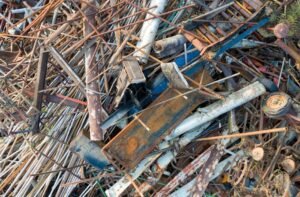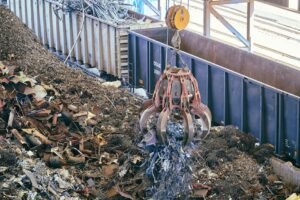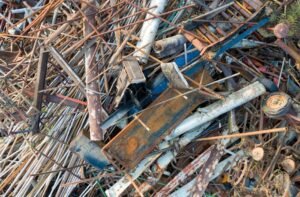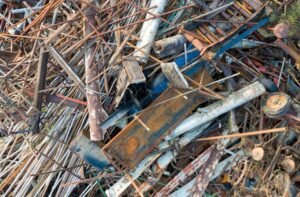

Every year Australian homes, farms, mines and workshops generate millions of tonnes of independent scrap metal that never reaches council kerbside bins. When you understand the grades, pricing levers and environmental upside, that “waste” becomes a revenue stream instead of a landfill cost. This pillar guide walks you through how metal is graded, how it flows through the recycling chain, and how to capture maximum value while slashing carbon and energy use.
1. What Counts as Independent Scrap Metal?
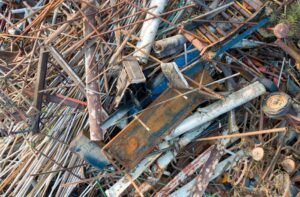
Independent scrap metal is any ferrous or non-ferrous material sourced outside large commercial contracts—think household clean-ups, farm clean-outs, small fabrication shops, auto enthusiasts and demolition hobbyists. Because it bypasses major corporate supply agreements, it is price-sensitive, highly variable in grade and the main feedstock for scrap metal collectors who on-sell to merchants or directly to mills.
Key characteristics:
- Ownership: You hold legal title and can sell to whoever pays best.
- Volume: Usually under 5 t per pickup, but can be pooled for better pricing.
- Grade mix: Often combined ferrous/non-ferrous, requiring manual or mechanical sorting.
Understanding these traits is the first step to monetising your pile instead of paying council tip fees.
2. Australian Scrap Metal Grades Explained
Grades determine price. Mills and foundries publish weekly buy rates tied to global LME, COMEX or Steel Index benchmarks, then apply discounts or bonuses based on purity, density, chemistry and physical size. Below are the grades most traded on the metal scrap industry spot market.
2.1 Ferrous Grades (Iron & Steel)
- HMS 1&2 (200 mm × 600 mm, 6 mm thick min): The workhorse of international trade. Heavier, cleaner HMS commands top price.
- shredded fragment (shred, 0–150 mm): Dense auto shred, zorba separated; priced off TSI shredded index.
- Plate & Girder (P&G, 5 mm+ structural steel): Popular with electric-arc furnaces; no concrete rebar attached.
- Rebar off-cuts: Downgraded if bent, coated or embedded with concrete.
- Bushelling (factory new, under 6 mm): Clean factory punchings, bonus over HMS.
- Cast Iron: Manhole covers, engine blocks; higher carbon content, lower price than bushelling.
2.2 Non-Ferrous Grades
- #1 Copper (98 %+ conductivity, no solder, paint, brass fittings): Benchmark grade; tracks LME Grade-A.
- #2 Copper (94–96 %, max 0.3 % oil, solder allowed): 5–8 % discount to #1.
- Copper wire (bare bright, > 99 %): Highest payout; must be free of tarnish and coating.
- 6063 Extruded Aluminium (clean, no plastic thermal-break): Window profiles, priced off LME primary.
- 6061 Alclad & Mixed Alloy Turnings: Downgraded for oil or steel inserts.
- Stainless 304 Solids (8 % Ni min): Ni and Cr content set price; 316 commands 15 % premium.
- Brass (C260 cartridge, C280 Muntz): Copper-zinc ratio drives discount to pure copper.
- Lead (clean soft, wheel weights excluded): Environmental controls add logistics cost, reducing buy rate.
- CAT converters: Ceramic or foil, priced on grams Pt/Pd/Rh recovered.
Always separate alloys. One misplaced stainless bolt in your aluminium box can drop an entire load from 6063 extrusion price to “aluminium breakage” worth 40 % less. Use a handheld XRF analyser (many recyclers provide free testing) or a simple spark test to confirm grade before you Sell Scrap Metal Near Me In 2026.
3. How Scrap Metal Recycling Works Step-by-Step
Recycling is not just tossing everything into one bin. A profitable, environmentally sound system follows a strict sequence:
3.1 Collection & Logistics
Independent scrap usually starts in a pile on a farm, worksite or backyard. Scrap Metal Recycling Near Me directories list licenced collectors who provide bins, flatbeds or hook-lift trucks. Ask for EPA transport licence numbers to ensure legal chain-of-custody.
3.2 Sorting & Downstream Separation
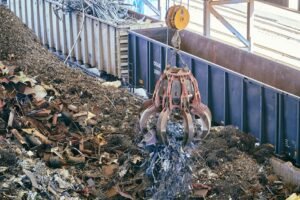
At the yard, material passes over weighbridge, then manual pick-lines remove copper from steel, stainless from aluminium, and contaminants like plastic or timber. Eddy-current, X-ray and induction colour-sort technologies boost purity to furnace-ready levels.
3.3 Size Reduction
Shears guillotine oversize plate into 300 mm pieces. Shredders hammer material into fist-sized fragments that liberate coatings and allow density optimisation for container shipping. Fragmented shred has 15 % higher melt yield per cubic metre than loose plate.
3.4 De-coating & De-oiling
Aluminium UBC (used beverage cans) passes through 520 °C de-coater; volatiles power the burner, cutting gas use 40 %. Steel turning drums spin off cutting oil, which is filtered and re-used in yard machinery.
3.5 Baling & Containerisation
Bales sized to 0.6 m³ achieve maximum container payload (typically 26 t for HMS). Proper bale density lowers freight per tonne and improves furnace charging efficiency.
3.6 Re-melt & Re-casting
Australian steel mills (InfraBuild, Bluescope) and aluminium smelters (Gove, Tomago) blend scrap with virgin feed. Electric arc furnaces melt 100 % scrap at 1 600 °C in 45 min; aluminium reverberatory furnaces re-melt at 750 °C using 5 % of the energy required for bauxite refining.
3.7 Rolling & Re-introduction to Market
Recycled steel becomes rebar, railway track and colourbond roofing. Recycled aluminium is back on shelves as new cans within 60 days, demonstrating closed-loop efficiency.
4. Environmental Benefits of Recycling Independent Scrap Metal
Recycling is not a feel-good side project—it is Australia’s simplest path to meet its Paris Agreement target of 43 % emissions reduction by 2030. Here are the hard numbers:
- Energy saving: 74 % for steel, 95 % for aluminium, 85 % for copper.
- CO₂-e avoided: 1.8 t per tonne of steel recycled; 9.2 t per tonne of aluminium.
- Water saving: 40 000 L per tonne of aluminium versus bauxite refining.
- Mining footprint: Every tonne of copper scrap displaces 200 t of overburden rock.
- Landfill space: 1 m³ of steel scrap in landfill wastes the same volume as 1 000 aluminium cans that could be recycled indefinitely.
By choosing to recycle, you also avoid the methane that ferrous scrap generates when buried and rusts, and the leachate of heavy metals from e-waste that contaminates groundwater. In short, independent scrap metal recycling is the fastest lever households and SMEs have to shrink Scope 3 emissions.
5. How to Maximise Your Scrap Metal Prices
Pricing is dynamic; Scrap Metal Prices change daily based on currency, LME, ocean freight and domestic mill demand. Use the following tactics to stay ahead:
5.1 Clean Your Material
Strip copper wire insulation with an automatic stripper; 30 min labour can lift $3.20/kg to the $11.50/kg bare-bright rate. Remove brass fittings from aluminium extrusion; one fitting can cost $150 per bin.
5.2 Separate Alloys
Keep 304 and 316 stainless in separate drums. A 200 kg drum mis-sorted forfeits the 15 % Ni premium worth $180.
5.3 Watch the Unit
Copper is priced per kg, while heavy steel is per tonne. A simple maths error can wipe your margin. Always confirm with the yard scale ticket.
5.4 Time the Market
Copper peaks during northern hemisphere construction season (Apr–Aug). If storage is secure, hold 1–2 months and sell into strength.
5.5 Pool Volume
Partner with neighbours or your sporting club. A 20 t container lot can command $30–$50/t over yard gate price because mills save on logistics.
5.6 Negotiate Freight
Many collectors quote “free pickup” but embed $40/t in the buy rate. Ask for ex-yard price plus separate freight quote; you may save $25/t if you deliver.
5.7 Verify Licences
Only deal with EPA-licenced merchants. Illegal operators pay below-market, then fold, leaving you unpaid. Ask for public liability and payment bonds.
6. Practical Tips for Households and Tradies
Whether you are renovating a bathroom or replacing an HVAC system, these field-tested hacks convert rubbish into cash:
- Kitchen renovation: Keep 304 sink shells separate from brass tapware; bag screws to avoid downgrade.
- Auto repair: Store cat converters in sealed drums (EPA requirement) and quote serial numbers online for instant price.
- Plumbing upgrade: Cut copper pipe into 300 mm lengths; remove soldered elbows to stay within #1 grade.
- Rural clean-up: Wire-brush old farm equipment to remove paddock dirt; dirt counts as non-metallic weight.
- Electrical trade: Sell data-cable (Cu 26 %) as #2 insulated wire; strip only when margin exceeds $1.20/kg labour cost.
- Rooftop solar swap-out: Separate aluminium rail from stainless fasteners; rails qualify for 6063 extrusion price.
- Safe handling: Wear cut-resistant gloves, safety glasses and steel-cap boots. Copper edges are razor-sharp after shearing.
Remember, yards are obliged to ask for photo ID to comply with the National Second-Hand Dealers Act. Bring your driver’s licence and expect cash-less payment (EFT or cheque) for amounts over $60.
7. Future Trends: Where Independent Scrap Metal Is Heading
Australia’s independent scrap marketplace is digitising rapidly. Expect:
- App-based price discovery: Real-time bids linked to LME, similar to Uber surge pricing.
- Carbon credit monetisation: Recyclers issuing Australian Carbon Credit Units (ACCUs) that flow back to suppliers as bonuses.
- Micro-recycling hubs: 20 ft container modules housing induction melters in regional towns, slashing freight for remote farms.
- Product stewardship expansion: Federal government considering GST rebates for verified recycled content in new steel.
- Green aluminium premiums: Buyers paying 3–5 % over LME for low-carbon billet traced via blockchain.
Suppliers who invest in proper sorting today will be first in line when these premiums roll out. For deeper analytics on market structure, visit the dedicated portal at scraptrade.com.au.
8. Conclusion
Independent scrap metal is more than a backyard pile—it is a tradeable commodity that rewards knowledge. By learning the grades, preparing your material and timing the market, you can turn waste into hundreds or thousands of dollars while cutting carbon, water use and mining pressure. Keep this guide bookmarked, share it with your tradie mates, and start monetising every kilo of metal you touch.
Frequently Asked Questions
What is the highest paying independent scrap metal grade in Australia right now?
Bare bright copper wire (> 99 % purity, no coating) consistently tops the list, trading around $11.50 per kg ex-yard, or roughly 97 % of the LME Grade-A copper price.
Do I need to strip insulation from copper cable before selling?
Only if the time-cost is lower than the price differential. For example, if insulated wire pays $4.20/kg and bare bright $11.50/kg, stripping 10 kg/hr yields $73/hr—well above minimum wage.
How much CO₂ can I save by recycling one tonne of aluminium?
About 9.2 tonnes of CO₂-equivalent, equal to driving the average car 22 000 km or planting 420 eucalyptus trees.
Is an EPA licence required to sell independent scrap metal?
No—sellers do not need a licence, but the buyer (yard or collector) must hold a Second-Hand Dealer licence and EPA transport permit for certain materials like lead or batteries.