
Managing industrial batteries Mount Druitt requires a sophisticated understanding of logistics, environmental compliance, and commodity market fluctuations. As Western Sydney continues to expand its industrial footprint, the volume of decommissioned energy storage systems—ranging from forklift lead-acid units to large-scale lithium-ion arrays—has surged. For businesses operating in this region, treating these batteries as mere waste is a missed financial opportunity. Instead, integrating them into a professional Industrial Scrap Trading Platform B2b Marketplace allows companies to recapture significant capital while adhering to strict Australian hazardous waste standards.
The Lifecycle of Industrial Batteries in Mount Druitt
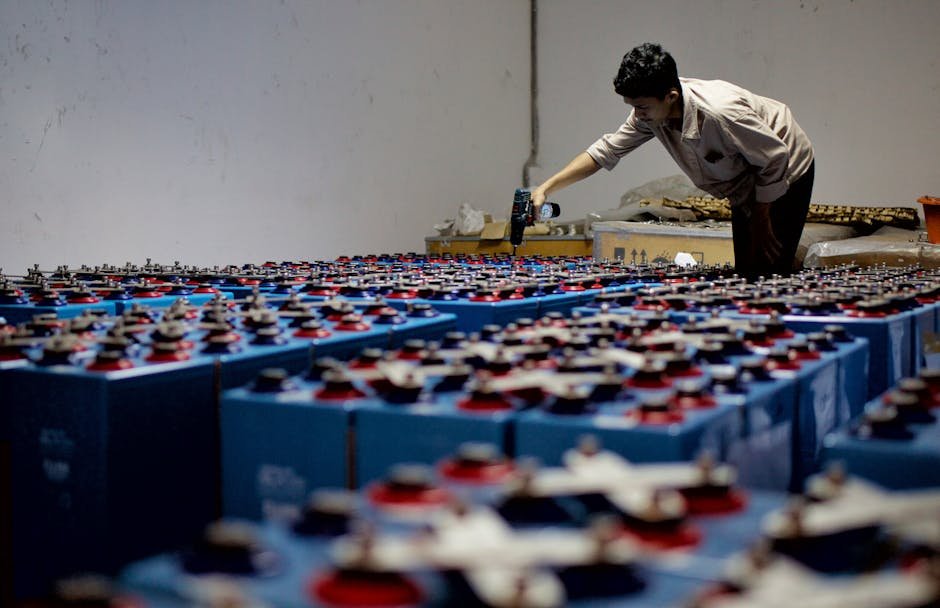
Industrial batteries are the backbone of modern logistics, manufacturing, and data centre operations in Mount Druitt. However, their lifespan is finite. Once a battery reaches the end of its cycle—typically defined by a 20% loss in capacity—it transitions from a functional asset to a hazardous liability. The management of these units is governed by the National Environment Protection (Movement of Controlled Waste between States and Territories) Measure. Businesses must ensure that their disposal partners are fully licensed to handle these specific chemistries.
When dealing with industrial batteries Mount Druitt, the primary concern is the safe extraction of hazardous materials such as lead, sulphuric acid, and lithium-ion electrolytes. Improper handling not only invites heavy regulatory fines but also poses catastrophic fire risks. Professional recyclers use specific containment protocols to prevent thermal runaway in lithium units and acid leakage in lead-acid systems. By leveraging an Industrial Scrap Procurement Strategy Guide, facility managers can streamline the collection process, ensuring that batteries are moved from the warehouse floor to the furnace with minimal downtime.
Navigating Regulations and Compliance
In New South Wales, the Environment Protection Authority (EPA) maintains rigorous oversight of industrial waste. If you are involved in demolition mount druitt projects, you are likely to encounter large-scale battery banks that require specialized decommissioning. Compliance is not optional; it is a legal requirement under the Protection of the Environment Operations Act 1997. Failure to track the chain of custody for hazardous batteries can lead to significant liability for the waste generator, regardless of who physically transports the material.
Expert recyclers provide a ‘Certificate of Destruction’ or ‘Certificate of Recycling,’ which serves as your audit trail. This documentation is essential for ISO 14001 certification and corporate sustainability reporting. Furthermore, when you scrap industrial components, ensuring that the recycling facility operates a closed-loop system is vital. A closed-loop system ensures that the lead, plastic, and electrolyte components are repurposed into new products, thereby reducing the carbon footprint of your supply chain.
Maximising Financial Returns on Battery Assets
Many industrial operators view battery disposal as a cost centre. However, by applying the principles outlined in our Industrial Scrap Margin Optimisation Guide, you can transform these assets into revenue streams. The value of your scrap batteries is determined by the London Metal Exchange (LME) prices for lead, copper, and lithium. Because these markets are volatile, timing your disposal can significantly impact your bottom line.
To maximise your returns, consider the following strategies:
- Batching: Accumulate enough volume to justify a dedicated transport run, reducing per-unit logistics costs.
- Sorting: Separate lead-acid batteries from lithium-ion or nickel-cadmium units at the source. Mixing chemistries often leads to a lower ‘mixed scrap’ valuation.
- Conditioning: Ensure terminals are protected and batteries are palletised according to dangerous goods transport requirements.
- Direct Trading: Bypass middlemen by using a professional scrap metal trading platform to connect directly with smelters and certified recyclers.
For those looking for a comprehensive overview of the market, our Australian scrap metal recycling portal offers real-time data and market insights tailored to the local industrial sector.
Logistics and Safety Protocols for Battery Transport
Transporting industrial batteries Mount Druitt is a high-stakes logistical operation. Under the Australian Dangerous Goods (ADG) Code, these batteries are classified as Class 8 Corrosive Substances (for lead-acid) or Class 9 Miscellaneous Dangerous Goods (for lithium-ion). You cannot simply load these onto a standard flatbed truck. The transport vehicle must be placarded, and the driver must hold the appropriate dangerous goods license.
Effective logistics involve the use of acid-resistant, heavy-duty plastic tubs or crates that prevent leakage. For large-scale battery racks, onsite disassembly by trained technicians is often required. This reduces the weight of the individual units for transport and ensures that the structural integrity of the battery housing is maintained during the lifting process. Always perform a site risk assessment before the commencement of any battery removal project to identify potential hazards such as overhead power lines or restricted access points.
Understanding Battery Chemistries and Recycling Pathways
Not all industrial batteries are created equal, and their recycling pathways differ significantly. Lead-acid batteries, which are common in forklifts and UPS systems, have a highly efficient recycling rate in Australia, often exceeding 95%. The lead is melted down and refined, while the plastic casing is granulated for reuse in new battery housings.
Lithium-ion batteries, conversely, are more complex. They contain valuable metals like cobalt, nickel, and manganese, but the extraction process is more energy-intensive. Technologies are currently being scaled in Australia to recover these ‘black mass’ materials. Understanding the specific chemistry of your battery bank is crucial for selecting the right recycling partner. If you are unsure about the chemistry, always consult the Material Safety Data Sheet (MSDS) provided by the manufacturer. This document contains critical information regarding the internal components and the necessary emergency response measures in the event of a breach.
The Role of Technology in Modern Scrap Management
The digital transformation of the recycling industry has simplified the way industrial sites manage their scrap. Digital marketplaces now allow for transparent bidding on scrap lots, ensuring that you receive the best market price for your batteries. By using a digital platform, you gain access to a network of vetted recyclers, eliminating the uncertainty associated with traditional ‘cold-calling’ scrap yards. This level of transparency is essential for large enterprises that require a clear audit trail for their ESG (Environmental, Social, and Governance) reporting.
Furthermore, IoT-enabled tracking can help manage the inventory of batteries across multiple sites. By tagging your battery assets with QR codes or RFID, you can monitor their age, condition, and expected retirement date. This proactive approach allows for better budget forecasting and ensures that you are never caught off-guard by a sudden failure of a critical backup power system.
Sustainability and the Circular Economy
The transition to a circular economy is no longer a choice; it is a necessity for industrial survival. By recycling industrial batteries, you are contributing to a closed-loop system that reduces the need for virgin mining. This is particularly important for critical minerals like lithium, which are becoming increasingly scarce. When your company chooses to recycle responsibly, you are not only complying with local Mount Druitt regulations but also actively participating in the global effort to reduce industrial waste.
Investing in sustainable practices also enhances your brand reputation. Clients and stakeholders are increasingly looking for partners who demonstrate a commitment to environmental stewardship. By documenting your recycling efforts and ensuring that your industrial batteries are processed through legitimate, high-standard facilities, you build trust and demonstrate corporate responsibility. This is a competitive advantage in the modern industrial landscape, where sustainability metrics are often a prerequisite for winning government tenders and large-scale private contracts.
Expert Tips for Facility Managers
To ensure a seamless recycling process, facility managers should implement a permanent ‘battery station’ on-site. This station should be clearly marked, ventilated, and equipped with spill containment kits. Train your staff on the basics of battery safety—such as checking for bulging casings, thermal heat, or leaking fluid. Regular inspections can prevent a small issue from becoming a major environmental incident.
Furthermore, establish a relationship with a reliable recycling partner before you actually need them. Having a pre-vetted contractor on speed dial ensures that when a battery bank fails, you can initiate the removal process immediately. This reduces the time that hazardous materials spend on your site, thereby lowering your risk profile. Remember, the goal is to treat your scrap batteries as a valuable commodity that requires careful management, not as rubbish to be discarded.
Conclusion
The management of industrial batteries in Mount Druitt is a multi-faceted challenge that requires a balance of safety, regulatory compliance, and economic strategy. By treating your end-of-life batteries as high-value assets rather than waste, you can unlock hidden capital and improve your company’s environmental performance. Whether you are dealing with lead-acid forklift batteries or advanced lithium-ion storage systems, the key to success lies in partnering with the right experts and utilising the right digital tools. As you move forward, remember that the goal is to create a seamless, compliant, and profitable recycling loop that benefits your bottom line and the planet alike.
Frequently Asked Questions
What is the most common type of industrial battery found in Mount Druitt?
The most common type is the lead-acid battery, typically used in forklifts, pallet jacks, and uninterruptible power supply (UPS) systems. These are highly recyclable and have a well-established recovery pathway in Australia.
Are there specific EPA requirements for storing batteries on-site?
Yes, batteries must be stored in a bunded, dry, and well-ventilated area to prevent chemical leaks and fire hazards. You must also comply with the Protection of the Environment Operations Act, which dictates how hazardous waste is contained and tracked.
How do I determine the value of my scrap industrial batteries?
The value is primarily based on the weight of the lead or other precious metals, adjusted for current London Metal Exchange (LME) commodity prices. It is best to use a professional trading platform to get competitive, real-time quotes.
Can I transport industrial batteries in my own vehicle?
Generally, no. Industrial batteries are classified as dangerous goods. Transporting them requires a vehicle with appropriate placarding and a driver with a dangerous goods license to comply with the Australian Dangerous Goods (ADG) Code.