

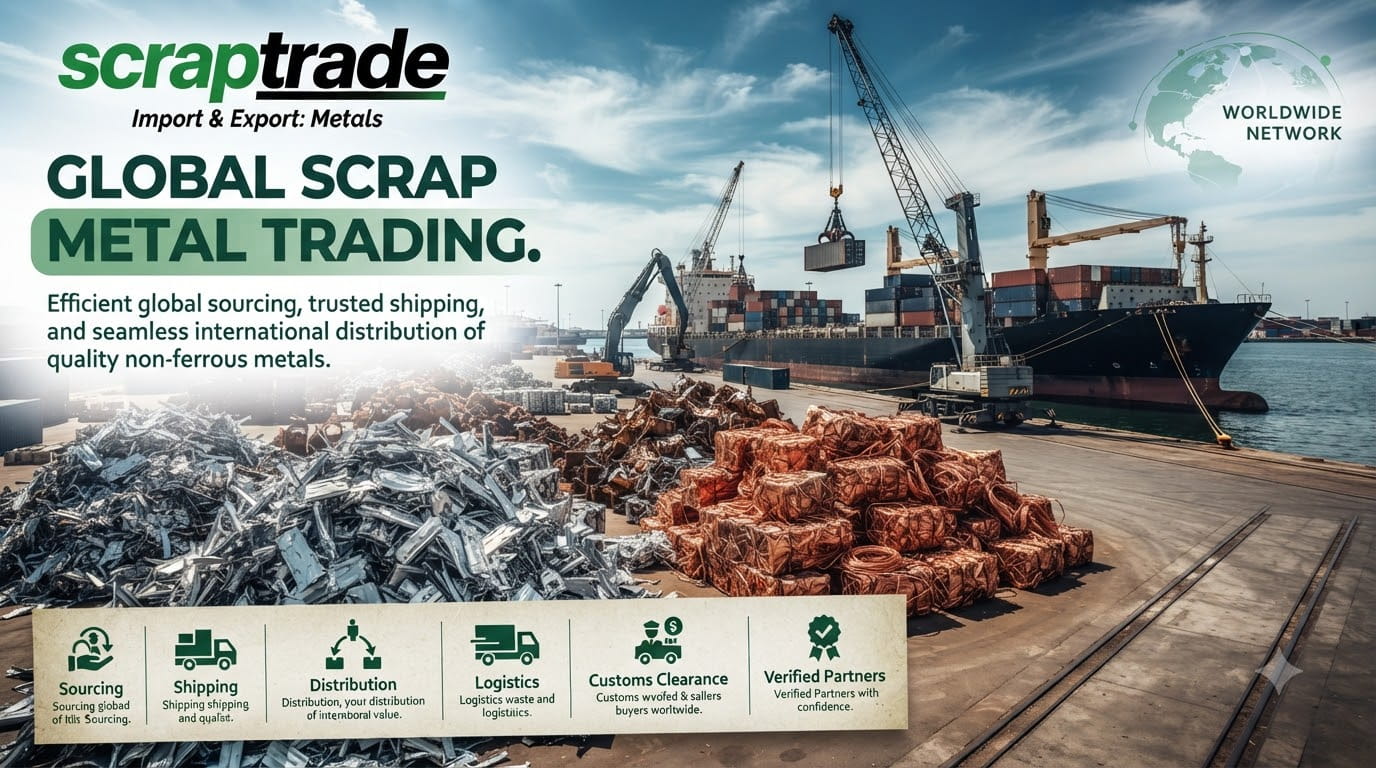
Exporting and importing scrap metal can connect businesses with new suppliers, buyers, recycling companies, and industrial markets around the world. But international scrap trading involves more than finding a buyer and agreeing on a price. Businesses also need to consider material specifications, documentation, transportation, customs procedures, payment terms, and the regulations that apply to the shipment.
For companies involved in export and import scrap metal, understanding the basic trading process can make cross-border transactions easier to plan and manage.
Why Businesses Export and Import Scrap Metal
Scrap metal is an important secondary raw material for recycling, processing, manufacturing, and metal production. Because supply and demand differ between markets, businesses may look beyond their domestic market to find suitable buyers or suppliers.
A scrap seller may have a large quantity of copper, aluminium, steel, brass, stainless steel, HMS, or another recyclable material. If local demand is limited, international buyers can provide additional market opportunities.
On the other side, an importer may need a particular grade or quantity of scrap that is difficult to source locally. International sourcing can give that business access to a wider supplier network.
The commercial decision, however, should not be based on the material price alone. Freight, handling, insurance, documentation, customs-related costs, payment conditions, and other transaction expenses can influence the overall economics of a cross-border deal.
International scrap trading can therefore be useful when the complete transaction makes commercial sense for both parties.
What's Involved in Exporting Scrap Metal
Exporting scrap metal generally starts with finding a suitable international buyer and providing enough information for that buyer to evaluate the material.
A professional listing should clearly explain what is being offered. Material type, grade, quantity, condition, location, availability, photographs, and relevant specifications can all help buyers understand the opportunity.
For example, a listing for copper scrap should provide more information than simply saying "copper available." The seller can describe the grade, quantity, condition, location, photographs, and other details that are relevant to the buyer.
Once a potential buyer is identified, the two businesses can discuss price, quantity, payment, delivery, inspection, shipping responsibilities, and other commercial conditions.
Documentation and Compliance Basics
Documentation is one of the most important parts of international scrap trading.
The exact documents required depend on the countries involved, the type of scrap, the shipment, the transaction structure, and the regulations that apply. Businesses should therefore avoid assuming that the requirements for one shipment automatically apply to another.
Commercial and logistics documentation may include information about the seller, buyer, material, quantity, value, packaging, transportation, and delivery.
Depending on the transaction, businesses may also need documentation relating to customs, regulatory requirements, inspections, or the classification of the material.
The safest approach is to confirm current requirements before shipment with the relevant customs authorities, regulators, freight providers, customs professionals, or other qualified advisers.
Packaging and Shipping
Once the commercial terms and documentation requirements are understood, the seller and buyer need to plan how the material will move from the origin location to the destination.
Packaging requirements can vary depending on the type and physical characteristics of the scrap. The parties should establish how the material will be prepared, loaded, transported, and delivered.
International shipments may involve several logistics participants, including trucking companies, freight forwarders, shipping companies, ports, customs brokers, and other service providers.
Before shipment, the buyer and seller should clearly establish who is responsible for transportation, loading, shipping arrangements, insurance, documentation, and delivery.
This is particularly important for bulk scrap transactions because transportation costs can have a significant impact on the final transaction value.
Common Challenges in Cross-Border Scrap Logistics
International scrap transactions can involve more logistical complexity than domestic transactions. The material may travel through several locations and involve multiple service providers before reaching the final buyer.
Transportation Costs
Freight and handling costs can significantly influence the economics of a scrap transaction.
A buyer may agree to a competitive material price, but the total delivered cost can be considerably different after transportation and other expenses are included.
Both parties should therefore consider the complete transaction cost rather than looking only at the scrap price.
Shipment Delays
International shipments can encounter delays caused by transportation issues, documentation problems, inspections, port conditions, or other circumstances.
Clear communication and realistic delivery expectations can help businesses manage these situations.
Documentation Problems
Missing, inconsistent, or inaccurate documentation can create complications during transportation and border procedures.
This is why businesses should prepare and review relevant documents before the shipment moves.
Material Quality Disputes
Quality disputes can occur when the delivered material does not match the buyer's expectations.
Clear material descriptions, photographs, specifications, inspection arrangements, and written quality requirements can reduce this risk.
Regulatory Requirements
Import and export rules can differ between jurisdictions and may also vary according to the type of material.
Businesses involved in international scrap trading should confirm the requirements that apply to their specific transaction before committing to shipment.
How a Digital Marketplace Simplifies Export and Import Trading
Traditionally, finding international scrap buyers and suppliers has often involved personal contacts, trade directories, phone calls, emails, brokers, and industry events.
These methods can still be useful, but they can also make buyer and supplier discovery time-consuming.
ScrapTrade provides a digital marketplace where businesses can discover scrap trading opportunities and connect with potential buyers and sellers.
Create and Discover Scrap Listings
Sellers can publish available materials with information such as the material type, quantity, specifications, location, photographs, and other relevant details.
Buyers can use marketplace listings to discover materials that may match their requirements.
This creates a more structured approach to international scrap trading than searching for potential suppliers or buyers individually.
Businesses interested in available materials can explore the ScrapTrade marketplace.
Submit and Browse Requirements
Not every buyer starts with a specific supplier in mind. Sometimes a business knows exactly what material it needs but needs to find a company that can supply it.
An RFQ can help communicate that requirement to potential trading partners.
Businesses can use ScrapTrade RFQs to submit or explore relevant buying requirements.
Compare Potential Trading Opportunities
Digital marketplaces can also make it easier to compare different trading opportunities.
Instead of focusing only on the offered price, businesses can consider quantity, location, payment conditions, delivery requirements, material specifications, and other commercial factors.
The marketplace does not remove the need for due diligence. Buyers and sellers should still verify the businesses they are dealing with and confirm all applicable legal, regulatory, payment, and logistics requirements before completing an international transaction.
Preparing for an International Scrap Metal Transaction
Good preparation can make a significant difference when buying or selling scrap internationally.
Start by defining the material accurately. The grade, quantity, condition, and specifications should be clear before discussions begin.
Next, identify a suitable buyer or supplier. Digital marketplaces can make this process easier by bringing potential trading partners together in one environment.
After finding a potential counterparty, verify the relevant business information and discuss the transaction requirements.
The next stage is commercial negotiation. Price is important, but it should be considered alongside quantity, payment terms, shipping responsibilities, delivery location, quality requirements, and other costs.
Before shipment, confirm the applicable export, import, customs, environmental, and documentation requirements for the specific transaction.
Finally, coordinate the logistics and maintain clear communication between the buyer, seller, and relevant transportation providers.
Export vs Import Scrap Metal
Although exporting and importing are parts of the same international supply chain, the responsibilities are different.
| Factor | Exporting Scrap Metal | Importing Scrap Metal |
|---|---|---|
| Main objective | Sell and ship material to another market | Source and receive material from another market |
| Primary concern | Preparing compliant shipment | Receiving acceptable material |
| Material information | Grade, quantity, condition, origin | Grade, quantity, quality requirements |
| Logistics | Origin-side preparation and shipping | Destination-side receiving and delivery |
| Documentation | Export and shipment documentation | Import and receiving documentation |
| Commercial focus | Finding suitable buyers | Finding suitable suppliers |
Both sides need to communicate because the exporter's responsibilities can directly affect the importer's ability to receive the shipment.
FAQs
How do I export scrap metal internationally?
Exporting scrap metal generally involves finding a suitable buyer, confirming the material specifications, agreeing on commercial terms, preparing the required documentation, arranging transportation, and completing the applicable export and customs procedures.
Can I import scrap metal from another country?
Yes, businesses can source scrap metal internationally when the material and transaction meet the applicable requirements of the destination market. Importers should verify current customs, environmental, documentation, and other regulatory requirements before arranging a shipment.
What documents are required for scrap metal export?
The required documents depend on the material, countries involved, shipment, and transaction. Commercial, transport, customs, business, and material-related documents may be relevant. Businesses should confirm the exact requirements for their specific shipment.
What are the main challenges when importing scrap metal?
Common challenges include freight costs, shipment delays, documentation, customs procedures, quality differences, payment arrangements, and regulatory requirements. Careful planning and clear agreements can help reduce avoidable problems.
Conclusion
Export and import scrap metal trading can give businesses access to international buyers, suppliers, recycling companies, and industrial markets. However, cross-border transactions require careful planning because the material price is only one part of the overall deal.
Successful international scrap trading depends on accurate material information, suitable trading partners, clear commercial terms, reliable logistics, proper documentation, and compliance with the requirements that apply to the specific transaction.
Digital marketplaces can simplify the discovery stage by helping buyers and sellers find potential trading partners online.