

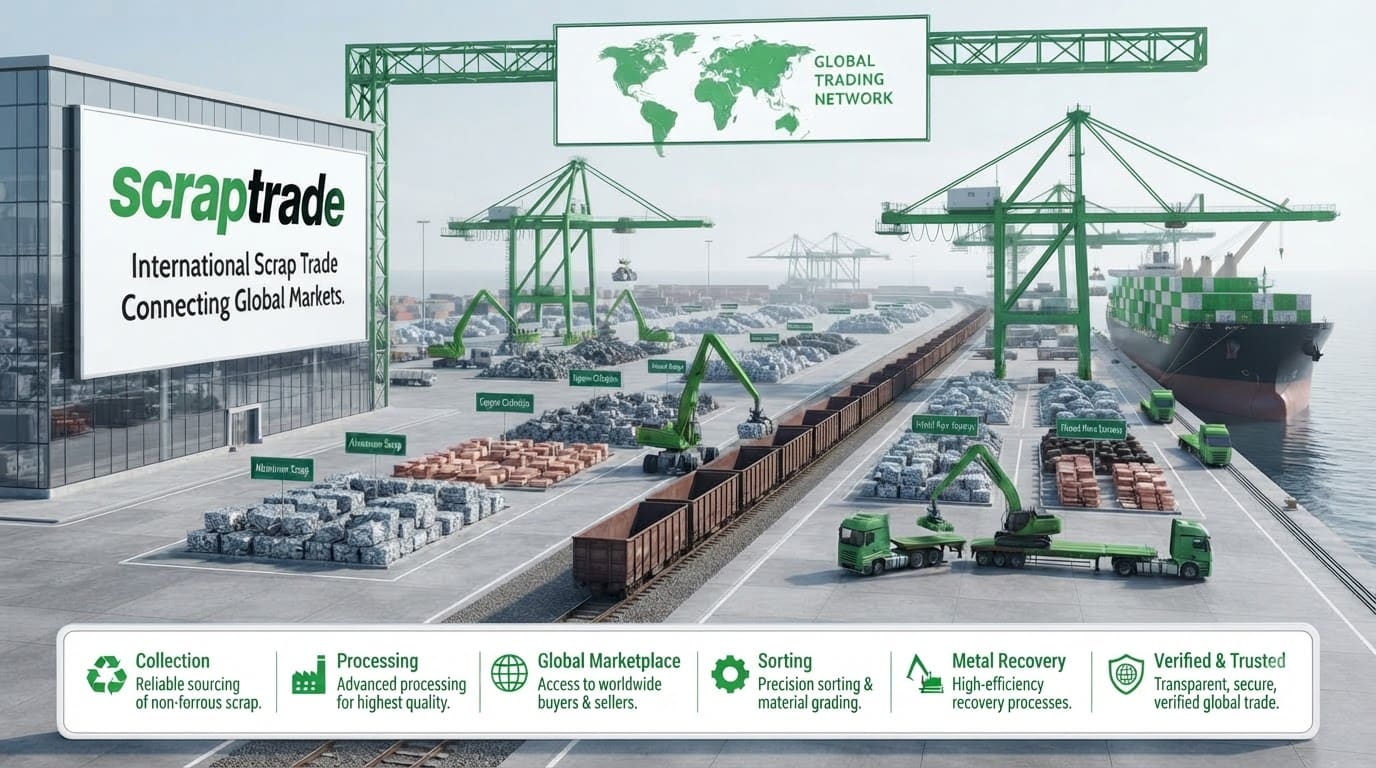
International scrap trade connects businesses that have recyclable materials with buyers in different countries. Instead of selling scrap only to nearby yards or local dealers, businesses can access a wider global market for materials such as steel, copper, aluminium, brass, e-waste, machinery, plastics, and other recyclable commodities.
But how does international scrap trade actually work? What happens between listing scrap and completing a cross-border transaction?
This guide explains the process step by step, including material listing, buyer discovery, verification, negotiation, payment, logistics, and risk management. It also explains how a digital marketplace such as ScrapTrade can help businesses manage international scrap trading more efficiently.
What Is International Scrap Trade?
International scrap trade is the buying and selling of recyclable materials between businesses located in different countries.
A seller may have a large quantity of copper scrap, aluminium scrap, steel scrap, machinery, e-waste, or another recyclable material. Instead of limiting the sale to local buyers, the seller can reach buyers in international markets.
The process can involve:
- Scrap sellers and exporters
- International scrap buyers
- Recycling companies
- Manufacturers
- Scrap yards
- Traders and importers
- Logistics providers
- Inspection and verification services
International scrap trading can be conducted through traditional business relationships, direct negotiations, brokers, or increasingly through digital B2B marketplaces.
The key difference from a local scrap transaction is that cross-border deals require additional consideration of shipping, documentation, customs, payment terms, import requirements, and compliance.
Why Businesses Trade Scrap Across Borders
Businesses trade scrap internationally for several reasons.
Access to More Buyers
A local market may have a limited number of buyers for a particular grade or quantity of scrap. International markets can provide access to a broader buyer network.
For example, a business holding a large quantity of non-ferrous scrap may want to reach buyers outside its domestic market rather than depending on one or two local purchasers.
Larger Trading Opportunities
International buyers may purchase larger volumes, particularly when they require scrap as a raw material for manufacturing or recycling operations.
This can make international markets relevant for businesses handling commercial and industrial quantities.
Different Market Demand
Demand for individual scrap materials varies by market.
Copper, aluminium, stainless steel, brass, steel, e-waste, plastics, machinery, and other recyclable materials can have different levels of demand depending on local recycling capacity and industrial requirements.
Global Market Access
Digital marketplaces have made it easier for businesses to discover potential trading partners outside their immediate geographic area.
For businesses looking to trade scrap metal internationally, the ability to present material information clearly and connect with relevant buyers can simplify the initial discovery process.
How International Scrap Trade Works Step by Step
International scrap trading involves several stages, from listing the material to finding buyers and completing the transaction. While every deal can be different, the basic process follows a similar structure.
Listing and Discovery
The process usually begins with a clear and accurate scrap listing. Sellers should provide key details such as:
- Material type and scrap grade
- Quantity and location
- Photos or videos
- Material specifications
- Packaging and loading details
- Available date
- Target price or bidding requirements
- Relevant documentation
Accurate information helps buyers quickly determine whether the material meets their requirements.
On a digital B2B marketplace, sellers can reach potential international scrap buyers beyond their local market, while buyers can search and compare available scrap listings based on material, quantity, location, and specifications.
This makes global scrap trading more organized and can simplify the first step of connecting buyers with suitable sellers.
Verification and Negotiation
Once a potential buyer shows interest, the next stage is verification and negotiation. Both parties need to confirm that the buyer, seller, material, and trading terms are clearly understood before moving forward.
Key details may include:
- Business identity and contact information
- Material type, specifications, and grade
- Available quantity
- Material quality and condition
- Current location
- Price and currency
- Payment terms
- Delivery or shipping arrangements
- Required import and export documentation
For larger international scrap transactions, buyers may request additional photographs, videos, inspection reports, certificates, or other evidence to verify the material before committing to a deal.
Negotiations can cover the scrap price, minimum quantity, payment schedule, loading arrangements, shipping costs, inspection requirements, and delivery terms. The final price may depend on material quality, quantity, prevailing market conditions, freight costs, and the agreed commercial terms.
Clear verification and negotiation help both parties understand their responsibilities before the transaction moves to the shipping and payment stage.
Payment and Logistics
After both parties agree to the commercial terms, the transaction moves toward payment and logistics.
Cross-border scrap transactions can involve:
- Contract or digital agreement
- Payment arrangement
- Material preparation
- Loading
- Transportation
- Export documentation
- Customs procedures
- International shipping
- Delivery
- Final confirmation
The exact requirements depend on the countries involved, the material being traded, and the agreed commercial terms.
For this reason, sellers and buyers should confirm applicable import, export, customs, environmental, and compliance requirements before completing a transaction.
Materials Commonly Traded Internationally
Many recyclable materials can participate in international scrap markets.
| Scrap Material | Common Trading Applications |
|---|---|
| Copper scrap | Manufacturing and metal recycling |
| Aluminium scrap | Foundries and aluminium production |
| Steel scrap | Steel mills and metal processors |
| Stainless steel scrap | Metal recycling and manufacturing |
| Brass scrap | Foundries and metal recovery |
| HMS | Steelmaking and recycling |
| E-waste | Component and material recovery |
| Machinery scrap | Equipment recovery and metal recycling |
| Plastic scrap | Recycling and manufacturing |
| Paper and cardboard | Pulp and paper recycling |
| Batteries | Material recovery and specialist recycling |
| Vehicle scrap | Automotive recycling and material recovery |
The actual suitability of a material for international shipment depends on its grade, condition, destination-country rules, documentation, and commercial requirements.
How ScrapTrade Supports International Scrap Trade
ScrapTrade is a digital marketplace designed to connect scrap buyers and sellers across markets.
Instead of depending entirely on traditional offline networks, businesses can use a digital platform to present available materials and discover potential trading partners.
Create Scrap Listings
Sellers can list available scrap with relevant material and transaction information.
This gives potential buyers a structured way to review available materials.
Connect With Buyers
A global marketplace can help sellers reach buyers beyond their immediate local market.
This is particularly useful for businesses handling commercial quantities of recyclable materials and looking for potential international trading partners.
Compare Buyer Offers
Digital trading can make it easier for sellers to receive and compare offers instead of negotiating with only one buyer.
The seller can evaluate offers based on factors such as price, quantity, payment terms, location, and transaction requirements.
Business and User Verification
Verification can help establish greater transparency between marketplace participants.
For international transactions, businesses should still conduct appropriate commercial and regulatory due diligence before completing a deal.
Digital Transaction Management
Digital platforms can bring different parts of the trading process into one environment, including listings, buyer interactions, offers, transaction information, and supporting documentation.
Businesses can also explore the ScrapTrade marketplace to discover available scrap trading opportunities.
For businesses that want to submit a specific requirement, the ScrapTrade RFQ system can provide another route for connecting with potential suppliers or buyers.
You can also learn more about the platform through the ScrapTrade About Us page.
International Scrap Trade vs Local Scrap Trading
The fundamental buying and selling process is similar, but international transactions involve additional considerations.
| Factor | Local Scrap Trade | International Scrap Trade |
|---|---|---|
| Buyer location | Usually domestic | Different countries |
| Transportation | Local/regional | International logistics |
| Documentation | Usually simpler | More extensive |
| Customs | Usually not applicable | May be required |
| Market reach | Limited | Global |
| Payment considerations | Domestic | Cross-border |
| Regulatory requirements | Local | Multiple jurisdictions |
| Logistics complexity | Lower | Higher |
The right approach depends on material quantity, buyer requirements, location, transportation economics, and applicable regulations.
How to Prepare Scrap for International Buyers
Before listing scrap internationally, sellers should prepare accurate information.
1. Identify the Material
Determine the correct material category and grade.
Avoid using broad descriptions when more specific information is available.
2. Confirm Quantity
Provide the available quantity and appropriate unit of measurement.
For bulk materials, buyers may also need information about the number of containers, loads, or shipments.
3. Document the Material
Use clear photographs and, where appropriate, videos or inspection documentation.
4. Define Commercial Terms
Specify the expected price or bidding requirements, location, availability, and relevant transaction terms.
5. Check Export Requirements
Before accepting an international order, confirm that the material can legally be exported and that the destination country permits its import.
6. Choose Suitable Logistics
Determine who will arrange loading, transportation, shipping, insurance, customs clearance, and delivery.
FAQs
What is international scrap trade?
International scrap trade is the buying and selling of recyclable materials between businesses in different countries. It can involve metals, e-waste, plastics, machinery, paper, vehicles, and other recyclable materials.
How can I sell scrap to international buyers?
You can list your scrap with detailed material, quantity, location, photos, and commercial information on a B2B scrap marketplace. Potential buyers can then review the listing and submit inquiries or offers.
What scrap metals are commonly traded internationally?
Common internationally traded materials include copper, aluminium, steel, HMS, stainless steel, brass, and other recyclable metals. E-waste, plastics, machinery, vehicles, and paper products can also be traded depending on market and regulatory requirements.
What documents are needed for international scrap trading?
Documentation varies according to the material, origin, destination, trading terms, and applicable laws. Exporters and importers should verify current customs, environmental, shipping, and regulatory requirements before completing a transaction.
Conclusion
International scrap trade allows businesses to move beyond local markets and connect with buyers and sellers across international markets. However, successful cross-border trading requires more than finding a buyer. Material specifications, verification, pricing, payment, logistics, documentation, customs, and regulatory requirements all need to be considered.
Digital marketplaces can simplify the discovery and negotiation stages by bringing buyers and sellers together in a structured environment.