
Mechanical scrap underpins Australia’s recycled-metal sector, supplying steel mills, foundries and aluminium smelters with low-carbon feedstock. This guide explains the grades, recycling loops and environmental wins behind every tonne of mechanical scrap processed in Australia.
1. What Counts as Mechanical Scrap in Australia?
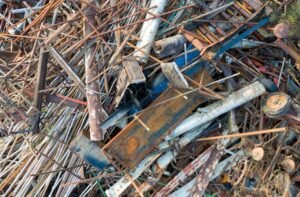
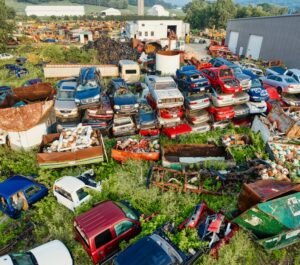
Mechanical scrap refers to end-of-life machines or their components that still contain recoverable ferrous and non-ferrous metals. Think of crushed excavators, shredded gearboxes, ship engines, farm tractors and entire production lines. The common thread is that the scrap cannot be reused in its original form and must be broken down into recyclable metals.
Because machines are built from multiple alloys, grading centres on metal density, contamination risk and processing cost. Australian Standard AS 1548–2021 categories are often used, but export yards also follow ISRI (Institute of Scrap Recycling Industries) codes when selling into worldwide scrap markets.
Typical sources include:
- Decommissioned mining trucks and shovels
- Manufacturing line robots and presses
- Power station turbines and condensers
- Shipping propulsion units
- Railway locomotive blocks
Understanding these streams helps recyclers price material accurately and choose the right shredder or shear. If you are unsure how to classify a load, read our explainer on What Is Scrap Trade to see how inspectors grade mixed mechanical scrap.
2. Industry Grades of Mechanical Scrap
Grades determine payment and environmental obligations. Below are the most traded Australian grades for mechanical scrap:
2.1 HMS 1 & 2 (Heavy Melting Steel)
HMS is the workhorse grade for demolition scrap thicker than 6 mm. Mechanical scrap from bulldozer booms or crusher frames often ends up here. ISRI code 200-202 applies and maximum copper content sits at 0.4%. Price is benchmarked off Singapore or Turkish HMS indices.
2.2 Shredded Scrap (210-211)
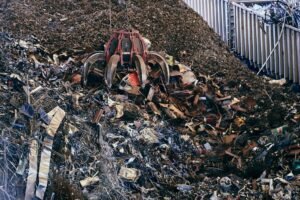
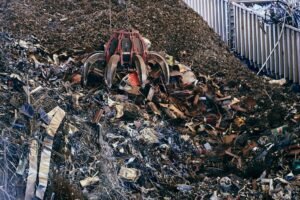
After fragmentisers rip mechanical scrap into fist-size pieces, magnetic separators pull out the steel fraction. Shred must be 98% metallic with ≤1% copper and ≤0.2% tin. Australian processors use this grade to feed electric-arc furnaces in Newcastle and Port Kembla.
2.3 Cast Iron Scrap (12-14)
Engine blocks, lathe beds and gear housings are high-carbon cast grades. Density exceeds 2.5 t/m³ and silicon sits around 1.8%. Mills blend this with low-residual shred to hit metallurgical targets.
2.4 Stainless Steel Mechanical Scrap (304/L, 316/L)
Food conveyors, chemical pumps and heat-exchanger shells fall into nickel-bearing grades. Prices track London Metal Exchange (LME) nickel plus a Cr/Ni ratio premium. Contamination with carbon steel is the biggest deduction.
2.5 Copper-Bearing Mechanical Scrap (Barley/Berry)
Motors, alternators and air-conditioning compressors contain 12-20% copper windings. ISRI Berry (high-density motors) trades at roughly 60% of the LME copper cathode price, minus processing loss.
2.6 Aluminium Mechanical Scrap (Taint/Tabor, Tense)
Aircraft landing gear, extrusion presses and ship propellers made of 6xxx or 7xxx series alloys fetch higher prices when free of steel inserts. An aluminium-specific eddy-current separator isolates this fraction after the steel shred line.
2.7 Titanium & Super-Alloy Scrap
Aerospace turbines and medical scanners can contain Inconel, Ti-6Al-4V or Waspaloy. These are traded in small, high-value lots. Prices are negotiated bilaterally because they do not clear on public exchanges.
Always request a mill test certificate (MTC) or handheld XRF assay before you Sell Scrap, because mis-classification can trigger rejections worth tens of thousands of dollars.
3. How Mechanical Scrap Is Recycled Step-by-Step
The journey from factory floor to molten metal takes six key stages:
3.1 Collection & Weighbridge
Premium mechanical scrap is sourced directly from mine sites or plant closures to avoid mixed municipal loads. Gross and tare weights are captured on certified weighbridges and automatically uploaded to the Scrap marketplace to start price discovery.
3.2 Hazmat Removal
Oil, coolants, PCBs and mercury switches are drained or popped out under EPA work plans. Failure to do this breaches the Hazardous Waste (Regulation of Exports and Imports) Act 1989 and can stop export permits.
3.3 Size Reduction
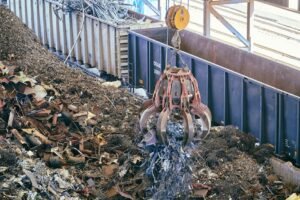
Mechanical scrap too big for the shredder is pre-cut by 1,000-tonne guillotine shears or oxy-propane lances. Fragmentisers then hammer material at 1,200 rpm until it passes a 150 mm screen.
3.4 Physical Separation
Magnets pull ferrous, eddy currents eject aluminium, and sensor sorters recover stainless and copper. Modern Australian plants recover >95% of contained metal, sending less than 5% to landfill as fluff.
3.5 Melting & Refining
Steel mechanical scrap is melted in 150-tonne EAFs at 1,600 °C. Oxygen lances and carbon injections adjust chemistry. Aluminium mechanical scrap is rotary-salt-fluxed at 750 °C to remove magnesium and oxidation loss.
3.6 Solidification & Rolling
Continuous casting turns the melt into billets or slabs that are hot-rolled into rebar, plate or coil. The loop closes when these products re-enter the economy and eventually return as mechanical scrap again.
Each tonne of recycled steel mechanical scrap saves 1.1 tonnes of iron ore, 0.6 tonnes of coking coal and 1.4 tonnes of overburden. That is why recyclers promote closed-loop scrap trading as the fastest path to Scope-3 emission cuts.
4. Environmental and Economic Benefits
Recycling mechanical scrap is not just a waste-management fix—it is a decarbonisation lever. The numbers speak for themselves:
- Energy saving: 74% for steel, 95% for aluminium versus virgin mining.
- CO₂-e reduction: 1.5 t per tonne of steel mechanical scrap melted in EAF.
- Water saving: 40% lower for steel recycling, 97% for aluminium.
- Landfill diversion: every 10,000 t of mechanical scrap recycled keeps 8,000 m³ of hazardous fluff out of tips.
On top of that, the sector employs 13,000 Australians directly and supports 35,000 indirect jobs in logistics and equipment supply. The Australian scrap metal marketplace estimates the industry contributed $3.9 billion in GDP in FY-23.
Policy tailwinds are strengthening. The Safeguard Mechanism (July 2023) forces 215 major emitters to cut net scope-1 emissions by 4.9% annually. Mills such as InfraBuild are responding by lifting recycled content in their billet mix to 90%, driving demand for clean mechanical scrap.
5. Pricing Drivers and Market Outlook
Mechanical scrap prices move on a matrix of global cues and local factors. Key drivers include:
5.1 Turkish Import Demand
Turkey is the world’s largest scrap importer and sets the reference price for Australian bulk HMS. When Turkish rebar prices fall USD 30/t, dockside prices in Melbourne normally drop AUD 20-25/t within a fortnight.
5.2 Iron Ore Volatility
When 62% Fe fines spike above USD 130/t, Chinese mills increase scrap charges to protect margins. This trickles back to Port Kembla bids for shredded scrap.
5.3 Exchange Rates
A five-cent drop in the AUD/USD lifts export parity in Australian-dollar terms, making it more attractive to ship to Southeast Asia rather than sell domestically.
5.4 Freight Spreads
Containerised scrap to India currently costs USD 38/t from Sydney versus USD 46/t from Los Angeles. Freight advantage keeps Australian mechanical scrap competitive.
5.5 Alloy Surcharges
Nickel prices feed directly into stainless mechanical scrap. With LME nickel averaging USD 21,000/t in Q1-24, 316 turnings are priced at roughly USD 3,000/t ex-yard.
5.6 Policy Shocks
Indonesia’s 2022 ban on nickel ore exports tightened scrap availability, pushing stainless scrap up 18%. Similar interventions in copper concentrate (Indonesia) and ferrous (Russia sanctions) continue to ripple through mechanical scrap markets.
To lock in forward pricing, many recyclers now hedge on the Shanghai Futures Exchange or use the CME’s Turkish scrap swap. Smaller yards can still get spot deals through scrap buying tenders that mirror exchange pricing.
6. Practical Tips for Sellers and Buyers
6.1 Separate Alloys Early
Pre-sorting stainless from carbon steel with handheld XRF avoids downgrades. A 1% copper contamination can slash HMS price by USD 50/t.
6.2 Document Hazmat Compliance
Keep certificates of oil drainage and mercury-switch removal. Buyers will pay up to AUD 15/t premium for clean loads.
6.3 Use Correct Containers
Export 21-tonne boxes for shred, 20 ft flats for HMS, and 40 ft high-cubes for aluminium. Wrong tare weight means higher freight and lower net price.
6.4 Time the Market
Export bookings are usually done two months ahead of shipment. Monitor Turkish rebar futures and lock pricing when backwardation appears.
6.5 Build Relationships
Long-term contracts with mills give volume certainty and reduce price volatility. List your weekly offerings on the Scrap Trade platform to reach multiple buyers without paying broker fees.
Whether you operate a demolition site or a regional scrap yard, these steps maximise margin and environmental benefit from every tonne of mechanical scrap.
7. Regulatory Landscape in Australia
Mechanical scrap crosses multiple regulatory regimes. Key obligations include:
7.1 Waste Export Controls
From July 2021, metal scrap is classified “waste” under the Recycling and Waste Reduction Act. Exporters must hold a licence and ship only to approved facilities listed on the Department of Climate Change, Energy, the Environment and Water (DCCEEW) database.
7.2 National Environment Protection (Movement of Controlled Waste) Measure
Movements above 200 km between states require a tracking certificate. Penalties reach AUD 1 million for illegal transport of oil-laden mechanical scrap.
7.3 Work Health and Safety
Cutting mechanical scrap with oxy-fuel or shear generates hexavalent chromium and fume. Yards must conduct atmospheric monitoring and provide powered-air-purifying respirators under the NSW WHS Code of Practice 2022.
7.4 PFAS Obligations
Scrap from defence sites or airport hangars may contain PFAS-contaminated firefighting foam. These loads must be tested and treated as contaminated soil, not scrap, until cleared.
Staying compliant avoids shipment detentions and costly demurrage. Engage a licensed inspector and upload compliance docs alongside your next Sell Scrap listing.
8. Future Trends and Technologies
Three innovations are reshaping mechanical scrap recycling:
8.1 AI-Driven Robotic Sorting
Hyperspectral cameras plus deep-learning algorithms now classify 120 pieces per second, beating manual picking accuracy by 15%. Melbourne start-up Scipher Technologies is piloting units that extract 98% clean aluminium from mixed mechanical scrap.
8.2 Hydrogen-Based Ironmaking
Projects like Rio Tinto’s 1 Mtpa hydrogen pilot in the Pilbara could lower demand for virgin iron ore and push mills towards higher scrap ratios—good news for mechanical scrap suppliers.
8.3 Blockchain Traceability
Digital passports record origin, carbon footprint and alloy content. Buyers in the EU and Japan are already paying a premium for verifiable low-carbon scrap, a trend Australian exporters expect to accelerate.
Adopting these technologies early will secure market share as global buyers tighten carbon standards. The Australian scrap metal marketplace is piloting a blockchain module for 2025 roll-out.
Conclusion
Mechanical scrap is more than leftover machinery—it is a high-value feedstock that cuts emissions, saves energy and powers Australian manufacturing. Knowing the grades, recycling loops and pricing levers lets sellers capture fair value while helping the planet. By integrating smart sorting, tightening compliance and leveraging digital platforms, the industry can double its contribution to Australia’s net-zero targets by 2035. List your next load, separate your alloys and turn yesterday’s machines into tomorrow’s metals.
Frequently Asked Questions
What is the difference between HMS and shredded mechanical scrap?
HMS is thick, cut structural steel sold by size and density, while shredded scrap is fist-size fragments with strict chemistry limits. Shred fetches higher prices because mills can feed it directly into electric arc furnaces without extra cutting.
How do I maximise the price of my mechanical scrap?
Pre-sort alloys, drain all fluids and keep loads under maximum copper limits. Provide assay certificates and ship in the correct container to minimise freight. List early on digital platforms to lock forward prices when global indices spike.
Is mechanical scrap regulated for export from Australia?
Yes. From 2021, scrap is classified as waste and exporters must hold licences issued by DCCEEW. Each shipment needs a waste export permit and may require prior informed consent from the destination country.
What environmental benefits come from recycling mechanical scrap?
Each tonne of recycled steel mechanical scrap saves 1.5 t CO₂-e, 1.1 t iron ore and 74% energy compared with virgin production. It also keeps heavy metals out of landfill and reduces mining-related land disturbance.