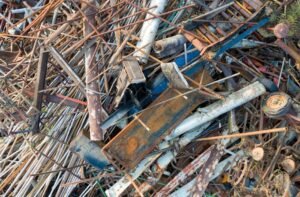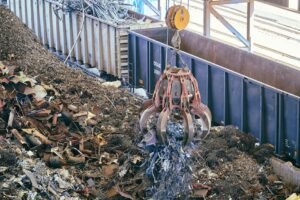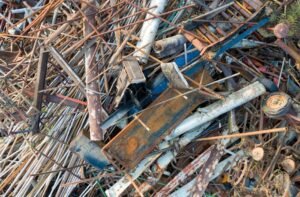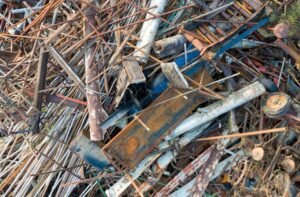

Australia’s metal scrap industry processes more than 5 million tonnes of ferrous and non-ferrous material every year, turning what many call “waste” into export-grade commodities worth over AUD $4 billion. This pillar guide walks you through every layer of the business—from backyard bins to port stockpiles—so you can buy, sell, recycle or regulate with confidence.
How the Global Metal Scrap Industry Works
Scrap is not a by-product; it is a primary feedstock for 40% of the world’s steel and 60% of copper output. Prices float on the London Metal Exchange (LME), Shanghai Futures Exchange (SHFE) and regional indices published daily by Scrap.Trade. Australian yards load 80% of non-ferrous into containers bound for Malaysia, South Korea and India, while ferrous barges head to Port Kembla and Whyalla for domestic remelt. The entire supply chain hinges on three pillars:
- Collection networks run by scrap metal collectors using weigh-and-pay apps that upload real-time photos to cloud grading desks.
- Processing plants that shred, shear, briquette or granulate to international size and density specs.
- Smelters, foundries and mills that substitute scrap for ore, cutting CO₂ emissions by up to 58%.
Because freight is 30-40% of landed cost, exporters on the east coast prefer 20-foot containers stuffed to 27 t gross; west coast yards favour bulk carriers when the Arabian Sea rates dip below USD 22 per tonne.
Scrap Metal Grades: The Universal Language of Trade
Grades protect both buyer and seller from expensive disputes. The Institute of Scrap Recycling Industries (ISRI) and the European Ferrous Recovery and Recycling Federation (EFR) publish codes, but Australian yards also use local shorthand. Below are the grades most commonly traded on scrap metal industry platforms.
Ferrous Grades (Iron & Steel)
- HMS 1&2 (200-500 mm): ¼ inch thickness minimum, no galvanised, no closed containers. Price differential to shred is AUD $25–40 per tonne.
- Shred (density > 0.85 t/m³): Auto bodies, appliances, off-cuts. Singapore mills pay a premium for 100% shred bundles under 400 mm.
- P&S (Plate & Structural): Clean plate scrap ≤ 1500 mm, 6 mm thick. Used in electric arc furnace (EAF) charge mix for high-tensile rebar.
- Busheling: New factory off-cuts, oil-free. Mills add 15% busheling to lower residuals like Cu, Cr, Ni.
Non-Ferrous Grades
- #1 Copper (97–99% Cu): Clean pipe or wire ≥ 1.5 mm. No silver-plating, no solder.
- #2 Copper (94–96% Cu): Painted, tinned or soldered; 10 c–20 c discount to #1.
- Bare Bright (99.9% Cu): Stripped wire ≥ 1 mm diameter; trades at LME Grade-A cathode minus freight.
- Aluminium Extrusion 6063: Unpainted, <1% Fe. Extrusion plants in Malaysia pay spot + premium for 6063 remelt billet.
- Aluminium UBC (Used Beverage Cans): Baled to 55 kg/m³, moisture <1%. Closed-loop can-to-can cycle is 60 days.
- Brass Honey: Clean valves and taps, 75% Cu / 5% Zn / 5% Pb; foundries pay Cu price minus 6–8%.
Stainless Steel Series
- 18/8 (304): 8% Ni, 18% Cr. XRF guns grade-check Mo >0.3% to avoid 316 mix-ups.
- 316: 2% Mo surcharge makes it worth AUD $300–400 more per tonne than 304.
- 400 Series: Magnetic, Ni-free; priced with ferrous shred plus Cr bonus.
Speciality Alloys
Inconel, Monel, Hastelloy and titanium fetch 5–20× LME prices but require positive-material-identification (PMI) guns and often laboratory ICP-OES certificates. A 500 kg lot of Inconel 625 turnings can return AUD $12 000 if verified 58% Ni, 22% Cr, 9% Mo.
Step-by-Step Recycling Process
Recycling is not just tossing metal into a furnace; it is a tightly-controlled sequence that preserves alloy value while slashing energy use.
- Collection & Sorting
Households, demolition crews and manufacturers deliver to Scrap Metal Recycling Near Me depots. Staff use XRF guns in <2 seconds to sort 3-series stainless from 316 and to separate Pb-contaminated brass.
- Preparation
Shears cut oversize to 600 mm; shredders hammer material into fist-size fractions. Eddy-current separators eject non-metallics; over-band magnets pull ferrous. Density after shred is 0.9–1.2 t/m³, ideal for containerisation.
- Baling & Briquetting
Aluminium UBC is baled under 350 bar to 55 kg/m³. Copper wire is granulated to 4 mm and separated electrostatically to achieve 99.9% purity.
- Transport
National heavy-vehicle mass rules cap trucks at 42.5 t GVM; 20 ft containers at 27 t gross. Freight rates from Sydney to Port Klang hover USD 650 per box for non-ferrous.
- Smelting & Refining
EAFs melt 95% scrap with 5% carbon to make new steel at 1 600 °C. Copper is fire-refined to 99.5% then electro-refined to cathode grade. Aluminium uses a twin-chamber melter with salt flux; dross is reprocessed to recover 60% metal.
- Remanufacture
Every 1 t of steel scrap saves 1 131 kg iron ore, 633 kg coal and 54 kg limestone. Aluminium remelt saves 95% electricity versus bauxite refining.
Environmental & Economic Benefits
The metal scrap industry is Australia’s easiest lever to reach net-zero. Key metrics:
- Energy savings: 58% for steel, 95% for aluminium, 85% for copper.
- CO₂ avoidance: 1.8 t CO₂ per tonne of recycled steel; 9 t CO₂ per tonne of recycled aluminium.
- Water savings: 40% less water use than virgin mining.
- Landfill diversion: 3 million m³ saved annually.
- Jobs: 4 500 direct jobs in collection and processing; multiplier effect to 12 000 including freight and equipment.
Government-backed studies show that for every AUD $1 million invested in scrap infrastructure, 9.2 t of CO₂ is avoided—cheaper than 80% of renewable generation per abatement dollar.
Trading Tips for Sellers & Buyers
For Sellers
- Clean your scrap. Removing plastic trims raises aluminium extrusion by 8 c per kg.
- Separate alloys. Mixed 304/316 can lose you AUD $200 per tonne.
- Time the market. Copper prices spike in April (air-con season) and October (Indian festival restocking).
- Take photos, tag weight and GPS coordinates; upload to Sell Scrap Metal Near Me In 2026 portals to attract multiple bids.
For Buyers / Foundries
- Insist on PMI certificates for stainless. A 2% Mo deviation can cost AUD $50 000 in a 200 t shipment.
- Book freight early. Container shortages push rates up 30% in Q4.
- Hedge using LME or SHFE forwards; 60-day swaps smooth margin volatility.
- Audit yards for radiation and explosive contamination; one incident shuts a whole furnace for weeks.
Policy & Compliance in Australia
The metal scrap industry must comply with:
- National Waste Policy 2018: mandates 80% resource recovery by 2030.
- Hazardous Waste (Regulation of Exports and Imports) Act 1989: requires permits for scrap containing >0.1% PCBs or asbestos.
- Chain-of-custody laws in NSW and VIC oblige photo-ID and vehicle rego for every cash transaction above AUD $75.
- Immobilise Payments System (QLD) forces electronic funds for scrap over AUD $50 to curb copper theft.
Exporters need a Waste Export License from the Department of Climate Change, Energy, the Environment and Water (DCCEEW). Validity is five years; renewal audits focus on radiation and explosive detection protocols. Failure can trigger fines up to AUD $2 million and jail terms of up to 7 years.
Future Trends: Smart Yards, Green Steel & Decentralised Finance
Smart Yards
AI-powered vision systems now grade copper at 120 pieces per minute, matching manual XRF accuracy at 96%. Data is shared via scrap metal industry blockchains so buyers can trace origin, carbon footprint and labour standards.
Green Steel
HyIron, a joint venture in Western Australia, will use 70% scrap and 30% iron ore, heated by renewable-powered hydrogen. The process aims for 95% CO₂ reduction compared with traditional blast furnaces.
Decentralised Finance
Tokenised scrap contracts let SMEs hedge price risk without a futures account. Each token equals 1 kg of verified scrap stored in bonded warehouses; smart contracts auto-settle when PMI certificates are uploaded.
Practical Checklist for First-Time Sellers
- Identify your metal using a smartphone magnet and spark test guide.
- Strip insulation from copper wire to qualify for Bare Bright; 30 minutes of labour can double value.
- Weigh on a certified scale; photograph the display with today’s newspaper for timestamp proof.
- Get at least three quotes via platforms like Solution For The Scrap Industry to benchmark local premiums.
- Request payment by EFT and keep dockets for seven years to satisfy EPA audits.
Conclusion: Turning Scrap into Strategic Advantage
Whether you manage a mega-yard or simply want to monetise old household wiring, the metal scrap industry rewards knowledge. Know your grades, track global prices daily, and insist on transparent documentation. The payoff is immediate: higher margins for traders, lower emissions for the planet, and a circular economy that keeps Australia’s manufacturing base competitive. Bookmark ScrapTrade.com.au for daily price alerts and compliance updates, and start treating every kilo of metal as a banknote that just needs the right sorting bin.
Frequently Asked Questions
What is the highest-paying scrap metal grade in Australia right now?
Bare Bright copper (99.9% Cu) consistently tops the list, trading at LME Grade-A cathode minus freight. Clean extrusion 6063 and 316 stainless with 2% Mo also fetch strong premiums.
How can I avoid downgrades when selling aluminium?
Remove plastic trims, rubber seals and steel screws. Separate 6063 extrusion from 6061 plate; mixed grades are priced at the lower 6061 rate, costing you 8–10 c per kg.
Do I need a license to export scrap overseas?
Yes. DCCEEW requires a Waste Export License for any scrap shipment. You must also pass radiation and explosive detection audits; penalties for non-compliance reach AUD $2 million.
Is it better to sell to local yards or list online?
List online first; platforms like Scrap.Trade aggregate bids from multiple yards so you can compare spot premiums. Finalise freight and payment terms before booking container slots.