
Understanding prices scrap metal is essential for anyone generating, trading or recycling ferrous and non-ferrous materials across Australia. This authoritative guide explains how current scrap prices are calculated, what drives daily fluctuations, and how to maximise returns while supporting the circular economy.
1. Current Market Snapshot: Metal Prices Today
Global commodity exchanges set the baseline for metal prices today, but regional premiums, freight and yard inventory levels determine what you actually receive. As of this week:
- Clean domestic copper wire (bare bright): AUD $11.40–$12.20 price per kg
- 6063 aluminium extrusion: AUD $2.40–$2.80 price per kg
- Stainless 316 solids: AUD $2.60–$3.20 price per kg
- Heavy structural steel (over 6 mm): AUD $0.26–$0.34 price per kg ($260–$340 price per tonne)
Contracts on the London Metal Exchange (LME) trade in US dollars per tonne; Australian yards convert to price per kg after applying the AUD/USD spot rate, adding domestic freight and margin. Bookmark our Scrap Metal Prices dashboard to track movements in real time.
2. How Prices Scrap Metal Are Set: Inputs, Formulas & Timing
Scrap valuations are not “plucked from thin air”. They follow a transparent sequence:
- Exchange Reference: LME, COMEX and SHFE publish three-month forward prices for primary metals each morning.
- Regional Differential: Australian yards apply a +/- premium based on port bottlenecks, road-rail costs and port queue times.
- Grade Adjustment: Contamination, insulation, steel attachments or alloy mix trigger a discount to the benchmark.
- Yard Inventory: When yards are overstocked, market rate bids fall; under-stock triggers bidding wars.
- Currency Conversion: AUD weakness raises local current scrap metal prices; AUD strength compresses them.
Most metropolitan yards update quotes twice per day—10:00 and 15:00 AEST. Rural sites often lag by four hours. To lock in a price, deliver before the next update cycle or request a 24-hour firm quote on larger volumes. For postcode-specific numbers, use Scrap Metal Prices Near Me.
3. Grades of Scrap: What Separates $0.20 from $12 per kg?
Grade classification follows the ISRI (Institute of Scrap Recycling Industries) specification. Mis-classifying by even one sub-grade can cost hundreds per tonne. Below are the high-value Australian categories you should know:
Copper Grades
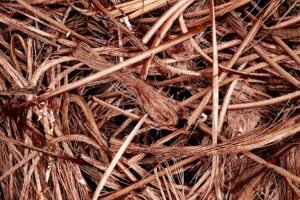
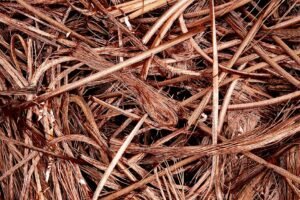
- Bare Bright (Millberry): >99.9% Cu, no plating, no oxidation, <0.1% insulation. Top price per kg.
- #1 Copper: Clean tubing, busbar, unalloyed solids. Paint or solder <1%.
- #2 Copper: Burnt wire with light solder, enamel-coated winding wire. 5–8% discount to #1.
- Copper/Steel (Trolley Wire): Railway cable, 30% steel. Paid at steel price plus small Cu bonus.
Aluminium Grades
- 6063 Extrusion, no plastic: Window frames, clean.
- 6061 Mixed Alloy: Lower Si/Mg ratio, automotive parts.
- Aluminium/Copper Radiators (clean): 55% Al, 45% Cu. Valuation uses a blended formula.
Steel Grades
- HMS 1&2 (80:20): Heavy Melting Steel over 6 mm thick.
- Plate & Girder: Structural offcuts, max 1500 mm, no concrete.
- Shred (frag feed): Auto bodies, whitegoods, shredded at 75 kg/m³ density.
Always separate contaminants on-site; one piece of wood or concrete can downgrade an entire 20-tonne bin. Photograph each load and request a grade receipt—these images protect you if the yard later reclassifies down. More grade examples are listed under prices of scrap metal on our reference page.
4. Recycling Workflow: From Bin to Billet
Recycling scrap metal consumes 60–95% less energy than producing virgin metal, slashing CO₂ and diverts millions of tonnes from landfill. The Australian workflow is:
- Collection: Trades, demolition sites and households place segregated bins.
- Weighbridge: Gross, tare and net weights captured electronically and synced to the yard ERP.
- Visual Inspection & Grade Confirmation: Trained operators sample every 500 kg.
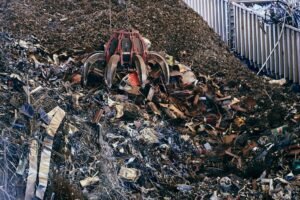
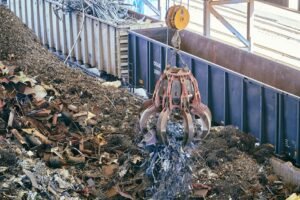
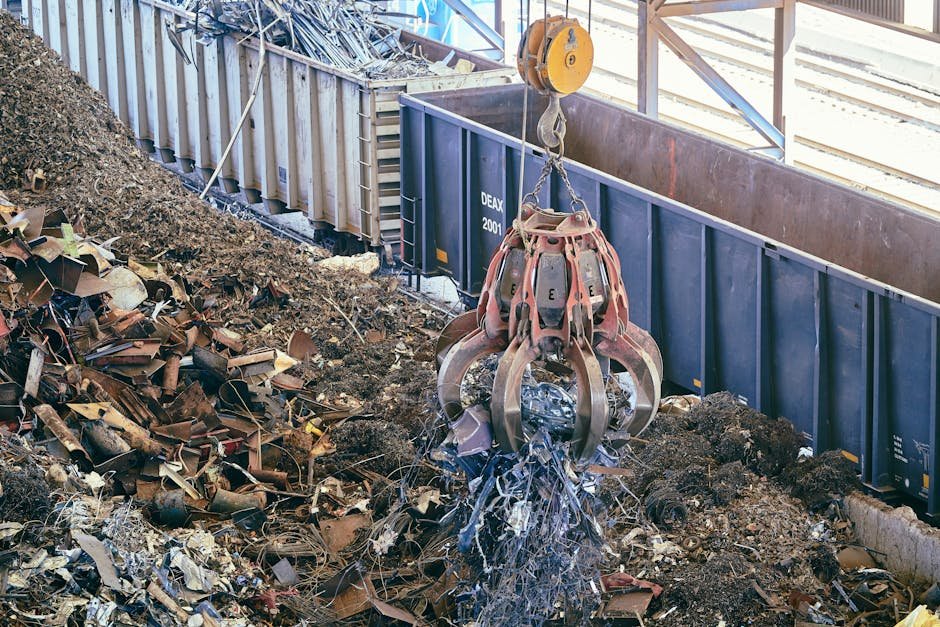
- Processing: Shearing, baling, shredding or media separation to ISRI size specs.
- Shipment: Containers rail-freighted to Port Melbourne, Brisbane or Fremantle for export, or trucked to domestic smelters such as Rio Tinto’s Bell Bay Aluminium or InfraBuild’s Laverdon Steel Mill.
- Remelt & Refining: Induction furnaces or electric arc furnaces produce new billet, slab or cathode.
Environmentally, every tonne of recycled steel saves 1.4 tonnes of iron ore, 0.8 tonnes of coal and 0.3 tonnes of limestone emissions. Aluminium recycling saves 9 tonnes of bauxite and avoids 16 tonnes of CO₂. These life-cycle benefits are quantified in the National Recycling Metrics Portal maintained by ScrapTrade.com.au.
5. Maximising Returns: Insider Tips for Sellers
- Time the Market: Copper and aluminium rally in Q2 when Chinese construction restocks after Lunar New Year; sell ahead of May.
- Strip Insulation: A $25 electric stripper pays for itself after 50 kg of #2 copper becomes #1.
- Keep Alloys Discrete: Mixed 304/316 stainless averages out; sort with a $40 nickel spot test kit and gain 15–20 c/kg.
- Bundle Wire: Tangled bird-nests are downgraded to shred; tie into 300 mm diameter coils.
- Watch Currency: Set up AUD/USD alerts; when the Aussie drops 1 cent, copper market rate usually lifts 2–3 c/kg within 24 h.
- Negotiate Tonnage Bonuses: Delivering 5-tonne plus loads often adds 2–4 c/kg loyalty top-up.
- Photograph Scales: Capture the weighbridge display and ticket number—keeps yards honest.
- Use Digital Payments: Ask for same-day EFT; some yards still delay cheques 3–5 days.
Our data show sellers who follow the above net 8–12% above average prices for scrap metal. For a printable checklist, see prices for scrap metal resources.
6. Environmental Benefits: Why Scrap Matters Beyond Cash
Recycling one tonne of aluminium saves 14 MWh of electricity—enough to power the average Adelaide home for 16 months. Steel recycling cuts 86% of air pollution and 76% of water pollution compared with blast-furnace production. Copper remelting emits 65% less CO₂ and avoids SO₂ gas that causes acid rain.
Government policy is aligning with these metrics. The 2023 National Waste Policy Action Plan targets 80% resource recovery by 2030; metals already exceed 90% because of their high price per kg. Carbon credit schemes are emerging: WA’s Pilbara Minerals and NSW’s Tomago Aluminium now issue tradable certificates for each tonne of CO₂ avoided via recycled feedstock. Expect these environmental incentives to underpin long-term demand and support robust current scrap metal prices even if LME dips.
7. Frequently Asked Questions (FAQ)
Q: How often do prices scrap metal change?
A: Major yards update quotes twice daily in line with LME and currency moves; smaller rural sites may adjust weekly.
Q: Do I need an ABN to sell scrap?
A: Households can sell under 200 kg without ABN. Commercial loads require ABN and photo ID to comply with the 2018 Scrap Metal Industry Act.
Q: What is the best way to transport heavy steel?
A: Use a 6 m hook-lift bin with 12 mm floor plate; keep individual pieces under 1 m to avoid manual sorting surcharges.
Q: Are plastic-coated copper cables worth stripping?
A: If the insulated diameter is >6 mm, strip when copper LME exceeds USD 9,000/tonne; below that, sell as #2 copper to save labour.
Conclusion
Staying on top of prices scrap metal is part maths, part market timing and part metallurgy. By understanding grades, exchange drivers and recycling benefits, Australian traders can confidently extract maximum value from every kilo while advancing national sustainability goals. Visit Current Scrap Metal Prices for up-to-the-minute data and start turning scrap into profit today.
Frequently Asked Questions
How often do prices scrap metal change?
Major yards update quotes twice daily in line with LME and currency moves; smaller rural sites may adjust weekly.
Do I need an ABN to sell scrap?
Households can sell under 200 kg without ABN. Commercial loads require ABN and photo ID to comply with the 2018 Scrap Metal Industry Act.
What is the best way to transport heavy steel?
Use a 6 m hook-lift bin with 12 mm floor plate; keep individual pieces under 1 m to avoid manual sorting surcharges.
Are plastic-coated copper cables worth stripping?
If the insulated diameter is >6 mm, strip when copper LME exceeds USD 9,000/tonne; below that, sell as #2 copper to save labour.