

What Is Scrap? Everything You Need to Know
The word scrap is one of the most versatile and widely searched terms in the English language. Depending on who is searching, “scrap” can mean the leftover food at the bottom of a pan, a physical fight in a playground, a government policy being cancelled, a beloved video game, or — most commercially significant of all — the multi-hundred-billion-dollar global industry built on recycling metals, materials, and end-of-life products back into productive use.
This guide covers every meaning of scrap that matters in 2026 — from the scrap metal prices that affect millions of businesses worldwide, to the digital revolution transforming how scrap is traded globally, to the political headlines using “scrap” to mean something else entirely. Whether you’re here to understand scrap metal prices, find a scrap yard near you, sell your car for scrap, calculate the value of your scrap gold, or buy and sell scrap through an online marketplace, you’ll find everything you need here.
Content
1. Scrap Meaning — What Does Scrap Actually Mean?
The word scrap originates from the Old Norse word skrap, meaning “trifles” or “remnants” — things left over after the main use is complete. In modern English, scrap carries several distinct meanings depending on context:
As a noun (material): Any discarded, leftover, or excess material that retains some value — most commonly metal. “The factory sold its scrap to the recycler.”
As a noun (food): Small leftover pieces of food, particularly meat — “Give the scraps to the dog.” In some regional British cooking traditions, scraps refers to the crispy leftover batter bits from a fish and chip shop.
As a verb (to cancel or abandon): To scrap something means to discard or abandon it entirely — “The government decided to scrap the policy.” This usage appears frequently in political headlines.
As a noun or verb (a fight): An informal term for a small physical altercation — “The boys got into a scrap outside school.”
In the scrap industry specifically, scrap refers to any metal, electronic component, vehicle, industrial equipment, or manufactured product that has reached the end of its useful life and can be recovered, recycled, or repurposed. This is the most commercially significant use of the word — and the focus of the global scrap trading industry that Scrap Trade has been built to serve.
2. Scrap Metal — The World’s Most Recycled Material
Scrap metal is the single most recycled material on the planet — more than paper, plastic, glass, and every other recyclable material combined. Every year, the world recycles over 500 million tonnes of scrap metal, preventing the need for that quantity of virgin ore to be mined, processed, and refined. The energy and environmental savings are staggering.
Why Scrap Metal Matters
Steel alone is recycled at a higher rate than any other material globally. In the United States, more than 80% of steel is recycled. In Europe, the figure is similarly high. Globally, scrap steel powers approximately 30% of all steel production — and in countries like Turkey, which relies almost entirely on electric arc furnaces fed by scrap, that figure exceeds 70%.
Scrap metal is not just environmentally important — it is economically essential. Without scrap, steel mills, copper refineries, aluminium smelters, and foundries worldwide would face dramatically higher raw material costs, reduced production capacity, and significantly larger carbon footprints.
Types of Scrap Metal
Scrap metal is broadly divided into two categories:
Ferrous scrap — metals that contain iron. This includes steel (the largest category), cast iron, wrought iron, and stainless steel. Ferrous scrap is attracted to a magnet, which is the simplest way to identify it. Major ferrous scrap categories include:
- Heavy Melting Scrap (HMS 1 & HMS 2) — large pieces of structural steel and iron
- Shredded steel — processed and compressed scrap from vehicle shredders
- Bushelling — clean industrial steel offcuts and stampings
- Cast iron — engine blocks, pipe, machinery
- Rebar and structural sections — from construction and demolition
- Turnings and borings — from machining operations
Non-ferrous scrap — metals that contain no iron. These are typically more valuable per tonne than ferrous scrap and include:
- Copper — one of the most traded and valuable scrap metals globally. Bare bright copper commands the highest price; insulated and mixed copper wire trades at a discount
- Aluminium — the second most traded non-ferrous scrap, with categories from clean extrusion to used beverage cans (UBCs) to cast aluminium
- Brass — yellow brass, red brass, and cartridge brass, commonly sourced from plumbing fittings and ammunition casings
- Stainless steel — grades 304, 316, and 430 are all actively traded
- Lead — primarily from lead-acid batteries and roofing sheet
- Zinc — from die castings, galvanised steel, and sheeting
- Nickel — from superalloys and industrial applications
- Titanium — high-value aerospace and medical scrap
Beyond these, there is a rapidly growing category of electronic scrap (e-scrap or WEEE) — printed circuit boards, servers, mobile phones, cables, and other end-of-life electronics that contain recoverable precious metals including gold, silver, palladium, and platinum, as well as base metals like copper and aluminium.
The Circular Economy and Scrap
Scrap metal is the circular economy’s greatest success story. Unlike many materials that degrade with recycling, metal retains its properties through endless recycling cycles. The copper wiring in a building demolished today could become the copper pipe in a new building tomorrow, and the copper cable in an electric vehicle in twenty years — without any loss of purity or performance.
The environmental case for maximising scrap recovery is overwhelming:
- Recycling aluminium uses up to 95% less energy than producing it from bauxite ore
- Recycling copper saves up to 85% of the energy of primary copper production
- Every tonne of steel recycled saves approximately 1.4 tonnes of iron ore, 0.7 tonnes of coal, and 0.3 tonnes of limestone
- Steel recycling cuts CO₂ emissions by approximately 58% compared to blast furnace production
Buy scrap or sell scrap online through Scrap Trade’s global marketplace to participate in this circular economy at scale.
3. Scrap Metal Prices — What Is Scrap Worth Today?
Scrap metal prices are among the most searched commercial terms in the scrap industry — and for good reason. The difference between selling at the right time and the wrong time can mean thousands of dollars per tonne on high-value non-ferrous metals.
How Scrap Metal Prices Are Set
Scrap metal prices are not arbitrary. They are anchored to global commodity benchmarks and adjusted for local supply-demand conditions, processing economics, and freight costs. The key price-setting mechanisms are:
London Metal Exchange (LME) — the global reference price for copper, aluminium, zinc, lead, nickel, and tin. Non-ferrous scrap prices worldwide are typically expressed as a discount to the LME cash price (e.g., “LME minus $200/tonne for #2 copper”). The LME operates in US dollars per metric tonne and publishes official settlement prices daily.
American Metal Market (AMM) — the most widely used US benchmark for both ferrous and non-ferrous scrap. AMM publishes regional dealer price assessments for dozens of scrap grades across US cities.
TSI / Platts Steel Scrap — global assessments for ferrous scrap, particularly HMS 1&2 export and domestic prices across key trading regions including Turkey, the US East Coast, and Asia.
iScrap App & regional platforms — consumer-facing price aggregators that compile dealer prices from local scrap yards, giving individual sellers and smaller businesses a reference point for local market rates.
Scrap Metal Price Ranges (Reference, 2025–2026)
Prices fluctuate daily. The following are indicative ranges based on recent market conditions:
| Metal / Grade | Approximate Price Range |
|---|---|
| Bare Bright Copper (#1) | USD $6.50 – $9.00 / kg |
| Copper #2 (mixed/insulated) | USD $4.50 – $6.50 / kg |
| Aluminium extrusion (6063) | USD $1.50 – $2.20 / kg |
| Aluminium cast | USD $0.80 – $1.30 / kg |
| Yellow Brass | USD $3.50 – $5.00 / kg |
| Stainless Steel 304 | USD $1.20 – $2.00 / kg |
| Steel HMS 1&2 (export) | USD $320 – $480 / metric tonne |
| Shredded steel | USD $280 – $430 / metric tonne |
| Lead (soft) | USD $1.20 – $1.80 / kg |
| Zinc (old/clean) | USD $1.80 – $2.60 / kg |
These figures are indicative only. Actual prices vary by region, grade, volume, and market conditions. Always check live market pricing before trading.
What Drives Scrap Metal Price Movements?
Global manufacturing activity — when steel mills, car manufacturers, and construction sectors are operating at high capacity, demand for scrap rises, pushing prices up. Recessions typically compress scrap prices as industrial activity falls.
LME and commodity markets — copper, aluminium, and other base metal prices on commodity exchanges are the primary driver of non-ferrous scrap values. Monitor LME movements to anticipate scrap price direction.
Energy prices — smelting and processing scrap is energy-intensive. High energy costs compress processor margins and tend to push scrap buying prices down. Low energy costs have the opposite effect.
Export demand and trade flows — major import markets like Turkey (for ferrous scrap), China (for non-ferrous), and India (for both) heavily influence global pricing. Export restrictions or tariff changes in any of these markets can move prices sharply.
Freight rates — the cost of shipping scrap from supply regions to demand centres directly affects the net-back price available to sellers. High freight rates compress export pricing.
Seasonal patterns — scrap markets often show seasonal price variations, with demand typically stronger in spring as construction seasons begin in major markets.
How to Get the Best Scrap Metal Prices
The most effective way to maximise the price you receive for scrap metal is simple: create competition among buyers. When you sell scrap online through a global B2B marketplace, multiple verified buyers compete for your material — driving prices toward fair market value rather than whatever a single local dealer wants to pay.
Scrap Trade provides live market access for sellers of any scale, from individual generators to large industrial operations.
4. The Digital Scrap Yard — How Online Trading Is Transforming the Global Scrap Industry
For most of the scrap industry’s history, the scrap yard was a physical place: a fenced yard, a weighbridge, a shredder, and a dealer who set the price. Sellers brought material in, got weighed, accepted the offered price, and left. The digital scrap yard changes every part of this model.
What Is a Digital Scrap Yard?
A digital scrap yard is an online platform where scrap generators, collectors, processors, traders, and buyers connect, list materials, bid, negotiate, and transact — without geographic limitations, without single-buyer price control, and with full market transparency. It’s what happens when the logistics of a traditional scrap yard are replaced by the reach and efficiency of a global digital marketplace.
Think of it this way: a traditional scrap yard can only buy from sellers who can physically deliver material to that location. A digital scrap yard can connect a demolition company in Brisbane with a copper recycler in Singapore, a steel mill in Turkey, and an aluminium smelter in Germany — simultaneously, in real time.
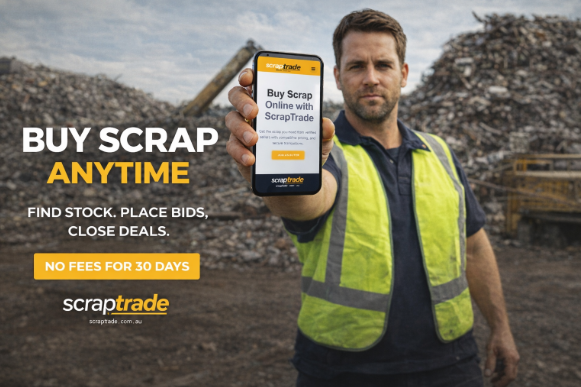
Scrap Trade is the world’s most comprehensive B2B digital scrap yard — connecting buyers and sellers globally across every major scrap category.
Why the Scrap Industry Needed to Go Digital
The traditional scrap trade had three structural weaknesses that digital platforms directly address:
Fragmentation. The global scrap market was dominated by thousands of disconnected local dealers, each operating in their own information silo. A seller in one region had no way to know what buyers in another region would pay for the same material. This fragmentation created massive pricing inefficiencies — and systematically disadvantaged sellers who lacked dealer relationships.
Information asymmetry. Scrap dealers who knew the current LME prices, export market conditions, and buyer demand could consistently buy low and sell high. Generators who didn’t have this information accepted whatever they were offered. Digital platforms democratise market intelligence — giving all participants access to the same pricing signals.
Geographic limitation. Traditional scrap trading was inherently local. Your options were limited to whoever could drive a truck to your site. The digital scrap yard removes geography as a constraint entirely.
How the Digital Scrap Yard Works for Buyers
When you buy scrap online through a digital scrap yard:
You see the whole market, not just your local market. Live listings from verified sellers across Australia, Asia, Europe, the Middle East, and the Americas are available simultaneously. If you need #1 copper in a specific grade and volume, you search — and see every available lot, from every verified seller, with prices attached.
You buy at market price. Competitive bidding ensures you’re paying what the market clears at — not what a single seller wants to charge.
You verify before you commit. Listings include material specifications, quantities, location, seller information, and photographs. You have full information before placing any bid or offer.
You reach sellers you’d never find locally. A foundry in Eastern Europe might need a specific aluminium alloy grade unavailable in their region but readily available from a manufacturer in Japan or Australia. The digital scrap yard makes that connection possible.
How the Digital Scrap Yard Works for Sellers
When you sell scrap online through a digital scrap yard:
You sell to the whole world, not just your neighbourhood. Instead of one buyer setting your price, the market sets your price. Global buyers competing for your material means you consistently achieve better returns than local dealer pricing.
You list on your terms. Fixed price, auction, or request-for-offer — you choose the transaction model that suits your material and your timeline.
You build relationships beyond your local market. Regular sellers on digital platforms build ongoing relationships with preferred buyers across geographies — creating supply chain certainty for buyers and consistent demand for sellers.
You access market intelligence. Digital platforms provide visibility into what comparable material is selling for, allowing you to price competitively and time your listings strategically.
The Future of the Digital Scrap Yard
The digitalisation of scrap trading is accelerating. As ESG reporting requirements mandate documented, traceable supply chains; as decarbonisation pressure increases demand for recycled materials; and as the generation of scrap continues to grow with urbanisation and industrial activity worldwide — the digital scrap yard becomes not just convenient but essential infrastructure for the global circular economy.
Register on Scrap Trade Now and access the global digital scrap yard — free to join, with verified buyers and sellers across every major market.
5. Scrap Yards Near Me — How to Find Your Local Scrap Yard
“Scrap yards near me” is one of the most frequently searched terms by individuals and small businesses looking to sell scrap metal locally. Here’s everything you need to know about finding, choosing, and getting the most from a local scrap yard.
What Is a Scrap Yard?
A scrap yard (also called a scrap metal yard, breaker’s yard, or auto salvage yard depending on context) is a facility that buys scrap metal and other recyclable materials from the public, businesses, and collectors. Scrap yards typically have a weighbridge to measure your material, staff who assess and grade the material, and a published or negotiated price per kilogram or per tonne for each category.
How to Find a Scrap Yard Near You
Online search: Searching “scrap yards near me” or “scrap metal dealers [your city]” in Google Maps returns local results with reviews, opening hours, and contact details. Always check reviews before visiting — pricing and service quality vary enormously between facilities.
Digital platforms: Scrap Trade connects sellers with verified scrap buyers locally and internationally. Rather than being limited to what physical yards near you will pay, you can access competitive offers from a broader buyer pool.
iScrap App and similar tools: Aggregator apps compile user-reported prices from local yards and allow you to compare rates across nearby facilities before you load up your vehicle.
Industry directories: Many industry associations publish directories of member scrap dealers, which can provide a starting point for finding legitimate, established facilities.
What to Expect When You Visit a Scrap Yard
Weigh-in: Your material will be weighed on a certified weighbridge. Note the tare weight (weight of your vehicle empty) and the gross weight (vehicle plus material) to verify the net weight you’re paid for.
Grading: Yard staff will assess the grade and quality of your material. Mixing high-grade material with contaminated or lower-grade material reduces your overall return — sort and separate where possible before you arrive.
Pricing: Most yards publish price lists (online or on a board at the entrance) that are updated regularly. Don’t be afraid to ask what the current price is for your specific material grade before you unload.
Payment: Reputable scrap yards pay by bank transfer, cheque, or (in some jurisdictions with appropriate limits) cash. Many countries have implemented regulations limiting or prohibiting cash payments for scrap metal to reduce metal theft.
ID requirements: Most countries now require scrap sellers to provide identification (driver’s licence or passport), vehicle registration details, and in some cases proof of ownership of the material. This is standard anti-theft regulation and applies to all sellers.
Tips for Getting the Best Price at a Scrap Yard
Sort your metal before you arrive — ferrous from non-ferrous, copper from aluminium, clean from contaminated. Mixed loads are always priced at the lowest-grade component.
Call ahead to confirm current prices for your material. Prices change daily, and making a wasted journey because prices dropped since you last checked is easily avoided.
Weigh your material at home before visiting if possible, so you can verify the yard’s weight measurement.
Consider whether the digital marketplace offers better pricing than your local yard — for larger volumes of valuable non-ferrous material in particular, selling scrap online through a global platform often delivers meaningfully higher returns.
6. Scrap My Car — How to Sell Your Vehicle for Scrap
“Scrap my car” is searched hundreds of thousands of times monthly by vehicle owners whose cars have reached the end of their useful life. Whether your car has been in an accident, failed its roadworthiness inspection, or simply isn’t worth repairing, scrapping it is a legitimate and often financially rewarding option.
When Should You Scrap Your Car?
Consider scrapping your vehicle when:
Repair costs exceed the vehicle’s value. A commonly cited rule of thumb is that when a repair costs more than 50% of the car’s current market value, scrapping becomes financially sensible.
The car fails emissions or roadworthiness standards and the cost of bringing it into compliance is prohibitive.
The car has been in a major accident and has been written off by your insurer. Even written-off vehicles retain scrap value in their metal content.
The vehicle is too old or unreliable to sell privately or trade in at a dealership.
How to Scrap Your Car
Step 1 — Get multiple quotes. Never accept the first offer. Contact multiple Authorised Treatment Facilities (ATFs) or licensed dismantlers and compare quotes. Online services allow you to enter your vehicle registration and receive instant quotes from multiple buyers simultaneously.
Step 2 — Check the buyer’s credentials. In most countries, you must scrap your vehicle through a licensed facility. In the UK, this means an ATF licensed by the Environment Agency. In Australia, regulations vary by state. Scrapping through an unlicensed operator can leave you legally liable for the vehicle even after you’ve handed it over.
Step 3 — Remove personal items. Check the boot, glove box, under seats, and all storage compartments before handing the vehicle over.
Step 4 — Cancel your insurance and notify the relevant authority. In the UK, notify the DVLA that your vehicle has been scrapped. In Australia, notify your state motor registry. Failure to do so can result in continued insurance charges or infringement notices.
Step 5 — Obtain a Certificate of Destruction (CoD). A licensed scrapper must issue you a Certificate of Destruction confirming the vehicle has been legally destroyed. Keep this document — it’s your proof that the vehicle is no longer your legal responsibility.
What Affects a Scrap Car’s Value?
Weight — scrap cars are primarily valued by weight. A heavier vehicle contains more metal and therefore fetches more. Large SUVs and vans typically achieve higher scrap prices than small hatchbacks.
Current scrap metal prices — since a car’s core value is its metal content (primarily steel, with smaller amounts of aluminium, copper wiring, and other non-ferrous metals), fluctuations in scrap metal prices directly affect what you’ll be offered.
Catalytic converter — if your vehicle has a catalytic converter (most petrol and diesel vehicles do), it contains platinum group metals (PGMs) — platinum, palladium, and rhodium — that have significant value. Some scrappers offer additional payment for the catalytic converter; others price it into their headline offer.
Demand for parts — if your vehicle model has strong demand for second-hand parts, a dismantler may offer more than a pure scrap price in exchange for the right to strip usable parts before crushing.
Location — transport costs to the nearest processing facility affect the net value of the vehicle to the buyer, and therefore the price they can offer.
Catalytic Converter Theft — A Note
Catalytic converters have become a major target for theft due to their high PGM content. If your vehicle’s catalytic converter has been stolen, this will reduce its scrap value. When selling scrap online or through a local yard, always disclose if the catalytic converter is absent.
7. Scrap Gold Calculator — What Is Your Gold Worth?
A scrap gold calculator is a tool that estimates the value of gold jewellery, coins, or other gold items based on their purity (carat) and weight. If you have old gold jewellery, broken chains, dental gold, or gold coins you want to sell, understanding how scrap gold value is calculated is essential to getting a fair price.
How Scrap Gold Value Is Calculated
Scrap gold value is determined by three factors:
Weight — measured in grams or troy ounces (1 troy ounce = 31.1035 grams)
Purity (carat) — gold purity is expressed in carats (or karats in the US):
- 24 carat (24K) = 99.9% pure gold (fine gold)
- 22 carat (22K) = 91.7% pure gold
- 18 carat (18K) = 75.0% pure gold
- 14 carat (14K) = 58.3% pure gold
- 9 carat (9K) = 37.5% pure gold
Spot price — the current market price of gold per troy ounce or per gram, which fluctuates daily based on global commodity markets
The Scrap Gold Formula
Scrap Gold Value = Weight (grams) × Purity (%) × Current Gold Spot Price (per gram)
Example: You have a 10 gram 18 carat gold chain. The current gold spot price is USD $65 per gram.
Scrap value = 10g × 75% × $65 = $487.50 (melt value)
Note: Buyers will offer below the melt value — typically 70–90% of it — to cover their processing costs and profit margin. The difference between the melt value and the offered price is called the “spread.”
Where to Find the Current Gold Spot Price
Gold spot prices are published in real time by commodity exchanges and financial data providers. Search “gold price today” or check:
- kitco.com — widely used precious metals price source
- goldprice.org — real-time gold spot prices in multiple currencies
- LME and COMEX exchange data
Gold prices are typically quoted in USD per troy ounce for international markets, then converted to local currency and per-gram figures for retail and scrap buyers.
Getting the Best Price for Scrap Gold
Get multiple offers. Like scrap metal, scrap gold prices vary significantly between buyers. Jewellers, gold dealers, pawnbrokers, online gold buyers, and refiners all offer different percentages of melt value.
Know your carat. Items are usually hallmarked with their gold content. Look for 375 (9K), 585 (14K), 750 (18K), 916 (22K), or 999 (24K) stamps. If you’re unsure, a reputable buyer will test the gold before offering.
Weigh it yourself. A kitchen scale accurate to 0.1 grams is sufficient to verify the weight your buyer quotes. Discrepancies in weight are the most common source of disputes in scrap gold transactions.
Sell to a refiner if volume warrants it. For larger quantities, selling directly to a gold refinery rather than through an intermediary typically yields a higher percentage of melt value.
The digital advantage. Just as buying and selling scrap metal online creates competitive pricing, the same principle applies to precious metals and e-scrap containing gold. Scrap Trade’s global marketplace connects e-scrap generators and precious metal scrap holders with verified refiners and buyers worldwide.
8. Benmet Scrap Metal Prices — What You Need to Know
Benmet Steel & Metal is an Ontario, Canada-based scrap metal recycling company founded in 1956, with facilities in Guelph, Stratford, and Owen Sound. Benmet is one of Ontario’s established scrap metal recycling companies, with its roots in recycling, brokerage, and all aspects of the scrap metal and steel industry.
Benmet publishes live price feeds on its website based on the latest market rates, allowing sellers to monitor prices and choose when to sell for maximum value. Prices are quoted in Canadian dollars and are subject to change without notice. The company advises calling ahead to confirm prices before visiting.
How Benmet Prices Compare
Benmet’s pricing, like all regional scrap dealers, reflects a combination of global LME benchmarks (for non-ferrous metals), regional supply and demand conditions in Ontario, processing costs, and the dealer’s margin. Prices vary between Benmet’s three locations (Guelph, Stratford, and Owen Sound), reflecting local logistics and demand conditions.
For sellers in Ontario looking to benchmark Benmet’s prices against the broader market, tools like iScrap App aggregate user-reported prices from multiple yards in the region, giving a clearer picture of the local competitive price range.
The Global Benchmark Comparison
While Benmet’s prices reflect the Ontario regional market, sellers with significant volumes of high-value non-ferrous material may find that selling scrap online through a global B2B platform unlocks access to export-grade pricing from international buyers — which in some market conditions can meaningfully exceed domestic dealer prices. The digital global marketplace creates competition that local dealer networks cannot replicate.
9. “Scrap the Equality Act” — Reform UK’s Policy Explained
One of the most searched phrases involving “scrap” in early 2026 is not about metal at all — it’s about UK politics. The phrase “reform criticised over plans to scrap equality act” has appeared widely in British news following announcements from the Reform UK political party.
What Happened?
Reform UK came under criticism after Suella Braverman, the party’s newly appointed education, skills and equalities spokesperson, announced that a Reform government would repeal the Equality Act on its first day in office.
The Equality Act 2010 aimed to simplify existing laws by bringing together existing anti-discrimination legislation, replacing the Equal Pay Act 1970, Sex Discrimination Act 1975, Race Relations Act 1976, and various other laws that followed.
What Is the Criticism?
Reform UK’s plans drew fierce criticism, with TUC General Secretary Paul Nowak saying the plan makes clear the party wants to “legalise discrimination.”
What Does Reform UK Actually Say?
The situation proved more complex in practice. In a BBC Newsnight interview, Reform’s Zia Yusuf indicated that Reform will scrap the Equalities Act while keeping all of the protections in it — including protections for pregnant women, disabled people, and other groups. This led to widespread questioning of what, precisely, was being “scrapped.”
Prime Minister Sir Keir Starmer described the plan as “shocking” and said it was anti-British, warning it could lead to women being overtly discriminated against.
This is an example of “scrap” used in its political sense — meaning to abolish or cancel a law or policy — entirely unrelated to the scrap metal industry. It appears here because it is a major trending search term using the word “scrap” in 2026.
10. Scrap Mechanic — The Game
Scrap Mechanic is a popular sandbox survival and building video game developed by Axolot Games. In Scrap Mechanic, players crash-land on a farm planet and must build vehicles, machines, and structures using scrap parts and found materials — with the twist that the farming robots have gone rogue and are trying to stop them.
The game is available on PC via Steam and has built a large global community of players who share their mechanical creations online. “Scrap Mechanic” is one of the most searched gaming terms that uses the word “scrap” — included here because it represents a significant slice of global “scrap” search volume that has nothing to do with metal recycling.
If you’re searching for Scrap Mechanic the game, you’ll find it on Steam at store.steampowered.com. If you’re searching for scrap metal trading or recycling — you’re in the right place.
11. Scraps — The Other Meanings
The word scraps (plural) appears in everyday language in several contexts that also drive significant search volume:
Food scraps: Leftover food material, particularly meat trimmings, vegetable offcuts, and kitchen waste. Food scraps are the subject of significant food waste and composting discussion.
Scrap paper: Small pieces of leftover paper used for notes — “I wrote it down on a scrap of paper.”
Fish and chip scraps: In northern England, “scraps” refers to the crispy leftover batter bits that fall off fish during frying, traditionally given away for free (or sold cheaply) with a portion of chips. This is a distinctly regional British usage.
Dog scraps: Food leftovers given to pets — “Save the scraps for the dog.”
Quilt scraps / fabric scraps: Small pieces of leftover fabric used in quilting and craft projects. Searching “scraps” in a crafting context typically returns quilting and sewing results.
All of these are distinct from the commercial scrap industry — but they explain why “scraps” appears as a high-volume, multi-intent search term.
12. Buy Scrap & Sell Scrap Online — The Global Marketplace
Across every category of scrap — metal, vehicles, electronics, industrial surplus — the most significant development of the past decade has been the ability to buy scrap and sell scrap online through global digital platforms that eliminate the limitations of local, phone-based trading.
Scrap Trade is the world’s leading B2B scrap trading marketplace, connecting verified buyers and sellers globally with real-time listings, competitive bidding, and transparent pricing.
For Buyers: Buy Scrap Online
Whether you need a tonne of copper or a thousand tonnes of steel, the buy scrap marketplace gives you live access to verified global inventory. Browse by material, grade, quantity, and location. Bid competitively. Buy at market price.
Register as a B2B scrap buyer for access to global listings and direct seller connections.
For Sellers: Sell Scrap Online
List any scrap material with full specifications and photos. Reach verified global buyers simultaneously. Accept the best offer — not the only offer. Sell scrap online through a platform designed for the full spectrum of commercial scrap trading.
Register as a B2B scrap seller and turn your scrap from a disposal problem into a revenue stream.
Getting Started
Registration at scrap.trade requires only email and phone verification to create listings and connect with buyers. Start trading in minutes — no complex onboarding, no unnecessary barriers. Just verify, list, and trade.
13. Frequently Asked Questions About Scrap
What does “scrap” mean?
Scrap has multiple meanings: discarded material with residual value (most commonly metal), food leftovers, a small fight, or (as a verb) to cancel or abandon something. In commercial contexts, scrap most commonly refers to recyclable metal and industrial materials.
What are the most valuable scrap metals?
By value per kilogram, the most valuable commonly traded scrap metals are: bare bright copper, stainless steel (300 series), brass, aluminium extrusion, and nickel alloys. Precious metals in e-scrap (gold, silver, palladium) are even more valuable per gram but traded in smaller quantities.
How do I find scrap metal prices?
Search “scrap metal prices [your city]” or use tools like iScrap App for local dealer rates. For LME-benchmarked non-ferrous prices, check kitco.com or lme.com. For live market pricing with competitive buying from global buyers, list your material on scraptrade.com.au.
How do I find scrap yards near me?
Search “scrap yards near me” in Google Maps, check the iScrap App, or search your local industry directory. Always call ahead to confirm current prices before travelling. For larger volumes or high-value material, consider selling scrap online to access better pricing from a wider buyer pool.
How much is my scrap car worth?
Scrap car values depend on the vehicle’s weight, current steel and metal prices, the presence of a catalytic converter, and local demand. As a rough guide, a typical passenger car in 2025-2026 might fetch between AUD $200–$800 depending on weight and market conditions. Get multiple quotes before accepting any offer.
What are Benmet scrap metal prices?
Benmet Steel & Metal is a Canadian scrap dealer operating in Ontario. Benmet publishes live price feeds on its website based on current market rates, with prices quoted in Canadian dollars and subject to change without notice. Visit benmetsteel.com or call your nearest location (Guelph, Stratford, or Owen Sound) to confirm current prices.
What is a scrap gold calculator and how do I use it?
A scrap gold calculator estimates the melt value of gold items based on weight and purity (carat). Multiply the item’s weight in grams by the purity percentage (e.g., 0.75 for 18K gold) by the current gold spot price per gram. Buyers will typically offer 70–90% of this melt value.
What is Reform UK’s plan to scrap the Equality Act?
Reform UK announced plans to repeal the Equality Act 2010 on its first day in office if elected, drawing widespread criticism from trade unions, disability groups, and the current government. The party stated it would replace the Act with new legislation while maintaining protections for disability and other characteristics — though critics questioned the coherence of this position. This is a political story using “scrap” in the sense of abolishing a law — unrelated to the scrap metal industry.
What is Scrap Mechanic?
Scrap Mechanic is a sandbox video game by Axolot Games where players build mechanical contraptions from scrap parts on a farm planet. Available on PC via Steam.
Can I buy and sell scrap online globally?
Yes. Scrap Trade connects verified buyers and sellers worldwide. Register at scrap.trade with just your email and phone to create listings, place bids, and connect with global buyers and sellers immediately.
What types of scrap can I sell on the online marketplace?
All categories of scrap are welcome: ferrous metals (steel, iron, cast iron), non-ferrous metals (copper, aluminium, brass, stainless steel, lead, zinc, nickel), electronic scrap (circuit boards, cables, servers), automotive scrap (vehicles, catalytic converters, aluminium wheels), industrial scrap (offcuts, turnings, surplus equipment), and construction/demolition scrap (structural steel, copper wiring, aluminium cladding).
Is scrap metal theft illegal?
Yes — stealing metal is theft and carries serious criminal penalties in all jurisdictions. All reputable scrap dealers are required to request ID and proof of ownership from sellers as a condition of purchase. Many countries have enacted specific legislation around scrap metal transactions to reduce theft, including restrictions on cash payments and mandatory record-keeping.
How does selling scrap online differ from a local scrap yard?
A local scrap yard is limited to what its local customer base will pay. When you sell scrap online through a global marketplace, you access buyers worldwide competing for your material — which consistently produces better pricing, particularly for non-ferrous metals and large volumes.
Start Trading Scrap Globally Today
Whether you’re looking to buy scrap, sell scrap, find a scrap yard near you, understand scrap metal prices, or access the world’s leading digital scrap yard — Scrap Trade has you covered.
👉 Browse Global Scrap Listings →
👉 Sell Your Scrap Online →
👉 Buy Scrap Online →
👉 Register Free at scrap.trade →
Related Articles: