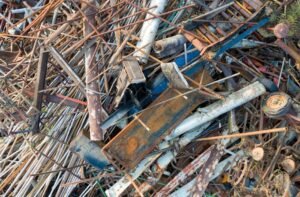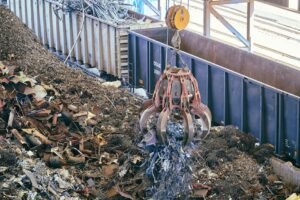

Scrap auction sites have become the dominant channel for trading recyclable metals in Australia, connecting generators, dealers and mills in real-time bidding environments that maximise returns and minimise landfill.
1. How Scrap Auction Sites Work
Every listing on reputable Online Scrap Auction portals starts with a standardised inspection. Sellers upload geo-tagged photos, weightbridge tickets and laboratory assays. Algorithms then suggest a reserve based on LME minus regional discount. Once approved, the lot is time-stamped and broadcast to verified bidders who must lodge a refundable deposit. Bids are sealed until the clock expires, at which point the highest compliant bid wins. Payment is escrowed until the buyer uploads a weighbridge docket proving the received tonnage is within 1 % of the advertised weight. This simple workflow eliminates the haggling and credit risk that once plagued scrap yards.
From a seller’s viewpoint, the biggest advantage is price discovery. Traditional “phone around” methods rarely reach more than a handful of domestic buyers. An auction scrap metal listing, by contrast, can attract 50+ bidders across Asia, driving premiums of 8–15 % above spot. For buyers, auction platforms aggregate fragmented supply, allowing a single procurement team to secure 5 000 t of HMS 1/2 from five different yards in Queensland without picking up the phone.
2. Ferrous Grades You Will Meet on Scrap Auction Sites
Australian recyclers adopt the ISRI 2023 specifications with local overlays. The lots you will see most often are:
- HMS 1/2 (80:20): 6 mm+ thickness, max 0.3 % Cu, 0.02 % S. Price differential to Shredded is currently –$35 t on the east coast.
- Shredded 211: Auto bodies processed through 150 mm grate. Density > 0.85 t m³, 0.15 % Zn max. Mills pay a premium because it melts faster.
- P&S 242: Prompt industrial clips, mostly new production off-cuts. Low residuals, ideal for electric arc furnaces aiming for low-carbon steel.
- Cast Iron Borings: Machine shop swarf, usually contaminated with cutting oil. Requires de-oiling and briquetting before furnace charging.
When comparing Auction Vs Marketplace For Scrap Sales you will notice that auctions force sellers to declare the exact grade, whereas marketplaces often allow looser descriptions such as “mixed steel” that can lead to disputes.
3. Non-Ferrous Grades and How to Bid Smart
Copper, aluminium, nickel and zinc are priced in $AUD per kilogram on scrap auction sites. Each grade has a tolerance window that triggers escalators or penalties:
- Bare Bright Copper Wire: 99.9 % Cu, 0 % insulation. If assays drop to 99.7 %, the bid is devalued by 1 % for every 0.1 % drop.
- Aluminium 6063 Extrusion: Clean, no steel inserts. Paint is allowed up to 5 % by weight; above that, a $200 t deduction applies.
- Ni-Cr Stainless 18/8: Must be free of copper attachments. Mo content > 2 % earns a $400 t bonus because mills need the molybdenum.
Bidders should insist on ICP-OES or XRF lab sheets before committing. Most disputes arise because sellers quote handheld XRF results which have ±0.3 % error on Cu. Reputable scrap metal auction lots include chain-of-custody samples that are retested by SGS at the port.
4. Environmental Benefits of Buying Through Scrap Auction Sites
Every tonne of steel produced from recycled feedstock saves 1.5 t of iron ore, 0.6 t of coking coal and 1.2 t of CO₂. When buyers source material through scrap auction sites, they are effectively diverting 11 million t of metal annually from Australian landfills. The online format also reduces transport emissions: platforms algorithmically match buyers with the nearest compliant lot, cutting average haul distance by 28 %. Finally, competitive bidding channels more margin to recyclers, incentivising additional investment in advanced separation technologies such as eddy-current and sensor-based sorters that raise recovery rates above 95 %.
Looking for verified carbon savings data? Scrap.Trade publishes monthly Scope-3 certificates that buyers can plug straight into their ESG reporting dashboards.
5. Step-by-Step Guide to Selling on Scrap Auction Sites
Step 1 – Grade Identification: Use the ISRI Spec Quick Cards to classify your material. Mis-declaration is the number-one cause of invoice adjustments.
Step 2 – Weighing and Sampling: Use a NATA-certified weighbridge and take a 500 g sample for every 5 t. Split the sample into three sealed bags: one for the buyer, one for the umpire and one retained.
Step 3 – Listing Creation: Upload high-resolution photos showing all four sides of the stockpile. Tag any outliers such as tyre wire or transformer cores.
Step 4 – Reserve Setting: Check the 14-day LME trend and set a reserve at 85 % of spot for ferrous, 90 % for non-ferrous. Data from ScrapTrade.com.au shows that lots with reserves set too high fail to sell 42 % of the time.
Step 5 – Logistics: Offer Incoterm options. FOB yard is cheapest; delivered mill commands a $35 t premium but shifts the transport risk to the seller.
Step 6 – Post-Audit: After discharge, upload the mill’s weight certificate. Any variance > 1 % triggers an automatic invoice adjustment handled by the platform’s escrow service.
6. Buyer Due Diligence Checklist
Before you click “Bid” on any Auction Vs Marketplace For Scrap Sales 2 listing, verify the following:
- Has the seller uploaded an EPA licence number? Cross-check with the state environment department.
- Does the assay include chlorine content? Anything > 0.1 % indicates PVC contamination that will foul furnace refractories.
- What is the payment term? Standard is 80 % within 3 days, 20 % after final weight. Avoid 100 % pre-pay unless the platform underwrites the risk.
- Is the lot near a port? Export buyers can save $25 t on wharfage if the material is already within 50 km of a container terminal.
Finally, read the arbitration clause. Reputable scrap auction sites adopt the AFRA (Australian Ferrous Recycling Association) standard terms, which nominate a single Melbourne arbitrator and cap costs at $7 500.
7. Future Trends: AI, ESG and Circular Economy
Machine-learning models now predict daily clearance prices within 2 % accuracy by analysing LME futures, currency moves and even weather forecasts that affect construction demolition rates. Expect to see dynamic reserve pricing become mainstream on every major Online Scrap Auction portal within two years. On the ESG front, the EU’s Carbon Border Adjustment Mechanism (CBAM) will require Australian exporters to embed carbon intensity data for each lot. Platforms that integrate blockchain-based material passports—linking scrap auction sites to original product serial numbers—will command a premium because they give offshore buyers the audit trail they now need.
8. Conclusion: Maximising Value and Sustainability
Whether you are a demolition contractor with 5 000 t of beam scrap or a foundry buyer seeking 100 t of low-copper shred, scrap auction sites deliver transparent price discovery, secure settlement and measurable environmental benefits. Master the grade specifications, insist on verifiable assays and leverage the logistics tools built into today’s platforms. Do that, and you will turn what was once a fragmented, opaque market into a reliable profit centre while keeping metal in the circular economy and carbon out of the atmosphere.
Frequently Asked Questions
What fees do scrap auction sites charge?
Most platforms levy 2–3 % on the buyer and 1 % on the seller. Additional weighbridge or escrow services may add $7 t, still far below the 8–10 % traditionally paid to brokers.
How do I know the metal grade is accurate?
Insist on NATA or SGS assay reports and look for listings that upload chain-of-custody samples. Reputable sites withhold 20 % payment until the buyer’s lab confirms the declared chemistry.
Can I export material bought on Australian scrap auction sites?
Yes, provided you hold an export licence and the material meets the Basel code for uncontaminated metal scrap. Platforms automatically generate the required AQIS inspection certificates.
What happens if the delivered weight is different?
Standard terms allow ±1 %. Beyond that, the invoice is adjusted pro-rata, or the buyer can reject the shipment and the seller pays for return freight.