
Whether you are a builder, demolition contractor or facility manager, understanding scrap building recycling is now a commercial necessity in Australia. Rising landfill levies, carbon reporting rules and volatile metal prices mean the way you handle, grade and sell scrap directly affects project margins. This definitive guide walks you through every grade you will meet on site, the exact recycling chain from bin to furnace, and the environmental wins that can help win tenders and green-star ratings.
1. Why Scrap Building Recycling Matters for Australian Construction
Australia generates about 27 million tonnes of commercial scrap each year, and at least 40 % originates from scrap building activity. Every tonne of steel that is melted from obsolete structures instead of virgin ore saves 1.13 tonnes of iron ore, 0.63 tonnes of coking coal and 0.05 tonnes of limestone. These savings translate into real money: Sydney heavy-melt structural (HMS1) has traded between $480–$610 per tonne in the past twelve months, and clean copper has averaged above $10,000 per tonne. Knowing how to isolate high-value grades on site can add tens of thousands of dollars to a medium-rise demolition contract.
Regulation is tightening too. The commercial scrap provisions of Victoria’s new Environment Protection Regulations 2021 require a documented waste classification before material leaves site. Similar rules are rolling out in NSW and Queensland. Contractors who can not prove proper sorting face on-the-spot fines and higher disposal costs.
2. Standard Grades You Will Find on a Scrap Building Site
Grading is the single biggest driver of revenue. Australian scrap yards use a hybrid of ISRI and domestic specs, so always confirm with your local processor. Below are the grades most relevant to scrap building projects.
2.1 Ferrous Grades
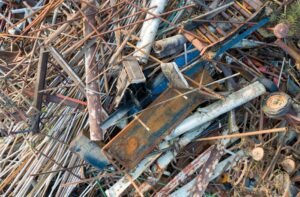
- HMS 1 & 1/2 (200 mm max, 6 mm min thickness): Heavy structural beams, columns, plate off-cuts. No rebar tie wire, no cladding. Price premium of $30–$60 over mixed.
- Rebar (Grade 300E, 400E, 500E): Must be free of concrete >5 % by weight. Bundle with wire or stacked in stillages. Contamination with mesh drops you into a lower grade.
- Light Gauge (< 3 mm): Roof sheeting, purlins, ducting. Usually classed as “light iron” and attracts the lowest price. Baling on site saves haulage.
- Plate & Girder (6 mm+, < 600 mm width, < 1.5 m length): Good for mini-mill feed. Cut with a cropper to spec and stack flat to avoid downgrades.
2.2 Non-Ferrous Grades
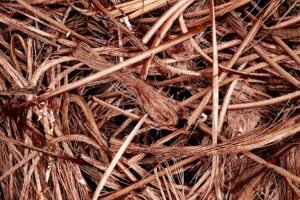
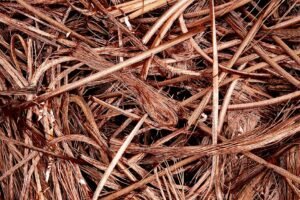
- Clean Copper Tube (Briery/ Candy): No solder, no paint. Achieve this by hand-stripping fittings before tossing into the bin.
- Mixed Copper #2: Includes soldered joints, paint, up to 5 % other metals. Price differential can be $1.50 per kg—worth the labour to segregate.
- 6063 Aluminium Extrusion (Tense): Window frames, shopfronts. Remove steel screws and rubber gaskets to stay in this grade.
- Aluminium Copper Radiators (ACR Clean): Separate the copper tubes from the aluminium fins with a alligator shear to upgrade from “dirty” to “clean”; value doubles.
2.3 Specialty Alloys
- Stainless 304/316: Handrails, kitchen benches. Use a spark test or portable XRF to separate 316 (Mo content) from 304 for the higher nickel pay-out.
- Lead Sheet from Roofing: Requires a special controlled waste permit in some states. Weigh and document separately.
Always photograph each grade and attach weigh-bridge dockets; this file builds your audit trail for both revenue and compliance.
3. Step-by-Step Recycling Chain: From Skips to Smelter
The moment demolition starts, time is money. A streamlined on-site system maximises both safety and return.
3.1 Site Set-Up
Provide colour-coded bins: red for HMS, yellow for light gauge, blue for non-ferrous. Place a lockable stillage for high-value copper and brass to prevent pilferage. Posters showing the difference between HMS and rebar grades reduce operator error.
3.2 Processing at the Scrap Yard
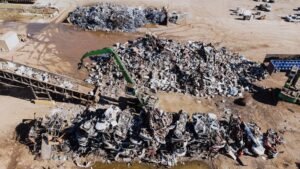
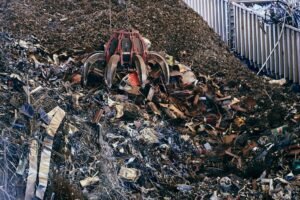
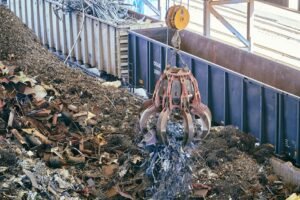
After collection, material is weighed on a certified 80-tonne bridge, inspected for radiation, and shredded or sheared. Modern facilities use 6,000 hp mega-shredders that can process a car body every 6 seconds; your scrap building beam takes even less. Magnets and eddy-current separators recover ferrous and non-ferrous streams. The shredded ferrous is blended into a furnace-ready pile that meets the mini-mill’s chemistry spec.
3.3 Melting and Remelt
Arc furnaces at Port Kembla, Laverton and Rooty Hill melt shredded scrap into new billet or slab. Energy use is roughly 770 kWh per tonne—about one-third of the energy needed for virgin steel. Slag is converted into road base, and bag-house dust is processed for zinc recovery.
3.4 Back into the Supply Chain
Recycled billet is rolled into rebar, merchant bar or structural sections and back on a building site within six weeks. This closed-loop keeps demand for your scrap building material constant, regardless of iron-ore price swings.
4. Environmental Benefits and Carbon Accounting
The numbers speak louder than words. Recycling a single 5-tonne structural beam avoids 4.5 tonnes of CO₂-e, equal to the annual emissions of 1.8 average cars. For developers chasing Green Star or NABERS ratings, these savings can be claimed under the “recycled content” and “waste diversion” credits.
- Water savings: 40 % less water compared with blast-furnace production.
- Air quality: 86 % reduction in airborne particulates.
- Habitat protection: Every tonne of recycled steel reduces iron-ore mining by 1.13 tonnes, preserving 0.3 hectares of Pilbara disturbance.
Document your diversion rates with weigh-bridge data and include them in your tender submissions; principals increasingly award points for proven circular-economy outcomes.
5. How to Maximise Revenue When You Sell Scrap from a Scrap Building Site
Price is only part of the equation. Here are field-tested tactics used by Australia’s largest demolition firms.
5.1 Timing the Market
Scrap prices track Turkish import CFR prices and AUD/USD swings. Hold small, high-value non-ferrous in a secure yard when the Turkish index is trending up; move heavy ferrous quickly because stockpiling burns cash.
5.2 Negotiating Tolls
Some processors offer “toll processing” where you retain ownership while they shear and load. You pay a fee but capture the upside if prices spike. This works best for mixed copper and brass loads.
5.3 Sorting Labour vs. Price Uplift
Australian processors currently pay on average $0.50 per kg more for clean 6063 extrusion versus mixed aluminium. Two labourers can sort one tonne per hour, so if their cost is $60/hr combined, you net an extra $440 per hour after labour—an ROI of 630 %.
5.4 Using a Trusted Platform
Listing your material on a transparent marketplace such as Scrap.Trade puts you in front of multiple processors and can lift gate revenue by 5–12 %. Upload photos, tonnage and preferred pick-up window; offers arrive within hours.
6. Compliance, Safety and Chain-of-Custody
Under NSW’s Waste Regulation 2014, any load over 200 kg of scrap metal must travel with a Waste Locate QR code. EPA officers can stop vehicles and request documentation. Fines start at $750 for a driver and $7,500 for the company.
Follow these steps:
- Weigh the vehicle on site and photograph the docket.
- Log the driver’s licence and vehicle rego into your app.
- Provide a clear description of the grade and estimated weight.
- Keep a copy of the processor’s receipt for seven years.
On the safety front, cut oversized pieces to <1.5 m to avoid over-width permits. Remove concrete from rebar within 24 h while it is still brittle; this reduces silica dust and manual-handling injuries.
7. Future Trends: Smart Sensors, Green Steel and Scrap Building 2.0
The next wave of innovation is already arriving. Hand-held LIBS guns now grade stainless in three seconds. Blockchain trials in Japan are tracking scrap carbon content from building site to car plant. In Australia, the federal government’s $1.3 billion “Modern Manufacturing” fund is underwriting electric-arc furnaces that can accept up to 100 % scrap building feed. As hydrogen-based “green steel” scales up, premium low-copper shred will be in even greater demand, pushing prices higher for clean grades.
Forward-thinking contractors are partnering with processors to install smart sensors in bins that alert when copper levels spike, allowing real-time sorting adjustments. Early pilots show a 7 % increase in copper recovery and a 4 % drop in labour hours.
8. Practical Checklist: From Site Strip to Final Payment
- ☐ Conduct a scrap building audit during pre-strip surveys and estimate tonnage by grade.
- ☐ Use colour-coded bins and lockable stillages for high-value non-ferrous.
- ☐ Photograph and weigh every load; upload data to your marketplace dashboard.
- ☐ Compare multiple bids on premier scrap lots before you accept.
- ☐ Confirm EPA or local waste codes for any lead, asbestos or hydrocarbon contamination.
- ☐ Issue driver with Waste Locate QR code and keep receipts for seven years.
- ☐ Track commodity indices and AUD/USD to time larger sales.
- ☐ Include diversion rates and carbon savings in your project close-out report for Green Star points.
By following the checklist you ensure every kilogram of scrap is accounted for, safely handled and profitably recycled.
Conclusion
Effective scrap building recycling is no longer a site-level afterthought—it is a strategic profit lever, a compliance requirement and a carbon headline all at once. Master the grades, understand the recycling chain, and document every tonne, and you convert what was once “waste” into a reliable revenue stream while helping Australia meet its 2030 emission targets. For more foundational knowledge, read our explainer on What Is Scrap Trade, or start listing material today on ScrapTrade.com.au to see real-time bids from verified processors.
Frequently Asked Questions
What is the highest-value grade I can expect on a demolition site?
Clean copper tube (‘Candy’) consistently returns $9–$11 per kg, followed by 6063 aluminium extrusion at $2–$2.60 per kg. Segregating these before mixed bins are filled is the fastest way to boost site revenue.
Do I need a special licence to transport scrap building steel in NSW?
Any load over 200 kg must travel with a Waste Locate QR code; the driver does not need a special licence, but the consignor must maintain documentation for seven years.
How much carbon can a mid-rise project divert by recycling scrap building steel?
A 300-tonne steel frame, if fully recycled, avoids roughly 1,350 tonnes of CO₂-e—equal to taking 585 cars off the road for a year.
Is stockpiling scrap on site worth it when prices are rising?
Ferrous grades burn cash when stockpiled due to space and haulage; high-value non-ferrous like copper or stainless can be securely stored for 30–60 days to capture price upswings without hurting cashflow.