
If you live or work south of Sydney, scrap metal rockdale is the fastest way to turn redundant steel, copper, aluminium and brass into cash while slashing your carbon footprint. This pillar guide walks you through every grade recognised by Rockdale recyclers, how the material is processed inside local plants, what prices you can expect in 2024, and the measurable environmental wins for New South Wales.
1. Why Rockdale Is a Scrap Metal Hotspot
Rockdale’s mix of light industry, rail workshops and high-density housing generates a constant stream of demolition scrap, car bodies and household whitegoods. Two licensed recyclers within three kilometres of Westfield Hurstville operate shear/baler facilities that can process 30 000 t of metal a month, keeping transport costs low for sellers. The suburb is also the first M5 off-ramp south of Sydney Airport, so trucking containers of processed scrap to Port Botany for export adds only 11 km of haulage. Those logistics savings flow back to suppliers in the form of Scrap Metal Prices that consistently sit $10–$25 per tonne above the national average.
Whether you are a plumber cleaning out a van, an electrician rewiring a shopping centre, or a homeowner recycling an old pool fence, you can Sell Scrap Metal Near Me In 2026 without leaving the St George area. Most Rockdale yards offer 30-minute in-and-out service, EFTPOS payment and digital weightbridge tickets that sync to your accounting package.
2. Standard Grades You’ll See at Rockdale Yards
Recyclers grade material to match global mill and foundry specifications. Grade determines price, so knowing the difference turns “dirty irony copper” into real dollars. Below are the categories accepted every day by rockdale scrap metal facilities.
Ferrous Grades (magnetic)
- HMS 1/2 (Heavy Melting Steel): structural steel over 6 mm thick, no wire rope, rebar or tinplate. Current indicator $260–$290/t.
- Rebar: steel bar with concrete residue. Downgraded to $230/t because mills must remove scale.
- Plate & Girder: clean off-cuts from construction, unpainted. Premium at $300/t.
- Cast Iron: engine blocks, storm-water grates. $270/t if free of oil and anti-freeze.
- Light Gauge: roof sheeting, whitegoods bodies. $120–$140/t. Remove plastic doors and motors to avoid penalties.
- Shreddable Cars: complete vehicle with fuel tank removed. Flat rate $180/car or $200/t equivalent.
Non-Ferrous Grades (non-magnetic)
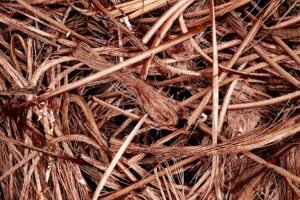
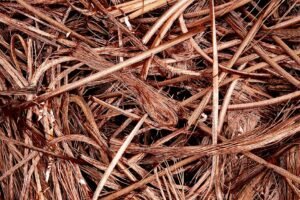
- Bare Bright Copper Wire: >99 % Cu, no oxidation, not smaller than pencil diameter. $11.20–$11.80/kg.
- #1 Copper: clean pipe, bus bar, no solder. $10.90/kg.
- #2 Copper: painted, soldered or coated. $9.70/kg.
- Insulated Copper Wire (ICW): price by recovery. 65 % recovery $5.80/kg; 40 % recovery $2.70/kg.
- Aluminium Extrusion: window frames, 6063 series. $2.20/kg. Remove steel screws to avoid downgrading to 6061 mix.
- Aluminium/Copper Radiators: clean, no steel flanges. $4.80/kg.
- Brass: taps, valves, shells. $6.10/kg. Gunmetal and chrome-plated accepted at lower rate.
- Stainless 304: kitchen equipment, non-magnetic. $2.50/kg; 316 (marine grade) $3.30/kg.
- Batteries: lead-acid auto. $0.45/kg. Lithium-ion quoted per chemistry, typically $1.20–$2.00/kg.
Rockdale facilities run handheld X-ray fluorescence (XRF) guns to verify alloy content, so attempting to “salt” aluminium with lead will be detected and rejected. Keep alloys separated in your ute or trailer to lock in top Scrap Metal Prices.
3. How Rockdale Recycling Facilities Actually Work
Understanding the back-end process helps you prepare material correctly and avoid costly surcharges.
Step 1: Weigh-in and ID Check
NSW EPA requires photo ID for every transaction. The yard records your vehicle rego and issues a unique ticket linked to CCTV footage. Expect a 30-second full-length body scan for safety before you enter the scrap pad.
Step 2: Unloading & Visual Inspection
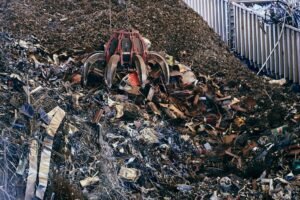
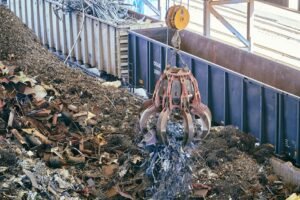
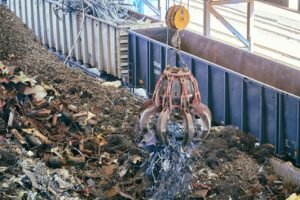
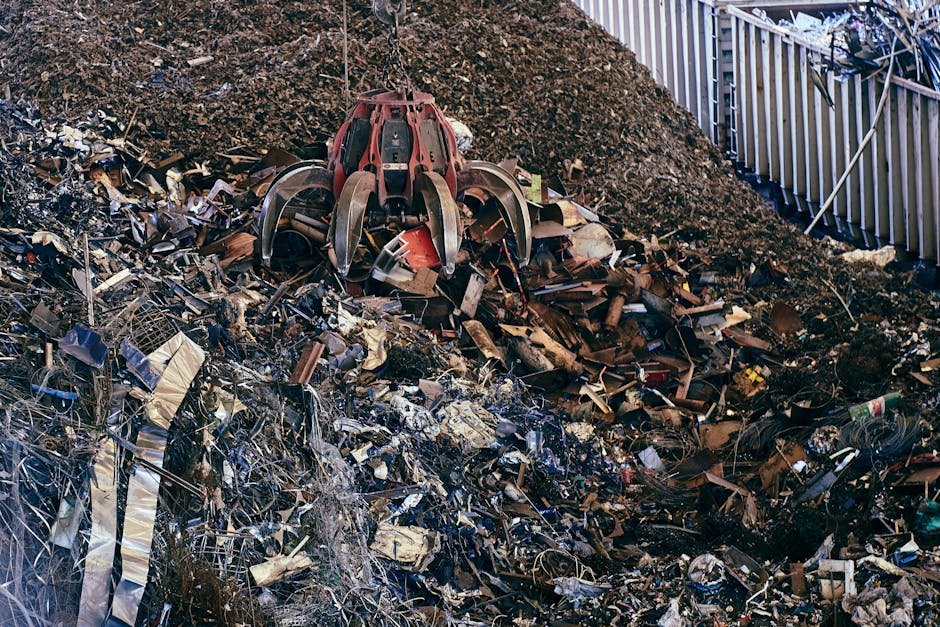
Staff use cranes and excavators with grapples to unload mixed loads. They spot contaminants—plastic, wood, concrete—that downgrade the grade. Sort on your own floor, not in the yard, to avoid double-handling fees.
Step 3: Shearing, Baling or Shredding
Heavy scrap passes through 6 000 t guillotine shears that cut HMS into 300 mm pieces for furnace feeding. Light gauge goes to 1 000 t balers that produce 350 kg cuboids. Non-ferrous cables are fed into granulators that chop insulation and separate copper through water tables and air tables.
Step 4: Quality Control & Containerisation
After size reduction, staff re-inspect and sample every 5 t. Material is loaded into 20 ft containers and weighed on certified bridges. Each container receives an RFID tag that tracks it to South Korean or Bangladeshi mills. The average Rockdale container holds 25 t of HMS or 22 t of aluminium extrusion.
Step 5: Payment & Environmental Reporting
Funds clear to your bank account within 30 minutes or cash up to $5 000 under AUSTRAML rules. The facility forwards tonnage data to the NSW EPA for Waste Less Recycle More reporting. In 2023 Rockdale recyclers diverted 188 000 t of metal, equal to removing 72 000 cars from roads in CO₂ terms.
For a deeper dive into downstream processors, read our national overview on how Australian scrap metal is turned into new steel and aluminium.
4. Environmental Benefits That Matter to NSW
Recycling one tonne of steel saves 1 131 kg of iron ore, 633 kg of coal and 54 kg of limestone. Using scrap instead of virgin ore cuts energy use by 75 % and CO₂ emissions by 1.8 t. Aluminium recycling is even more dramatic: a 95 % energy saving and 9 t of CO₂ avoided per tonne of secondary metal. Rockdale’s plants collectively abated 338 000 t of CO₂ in 2023, helping the state government meet its 2030 target of 50 % reduction on 2005 levels.
Metal recycling also preserves landfill airspace. Sydney’s putrescible landfill levy rose to $177.40/t in 2024. Every tonne of metal diverted avoids the levy and extends site life. Because metals recycle indefinitely, Rockdale’s 188 000 t represents a permanent environmental saving, unlike biodegradable waste that merely defers the next landfill cell.
Finally, local recycling keeps heavy trucks within the St George district instead of hauling to rural landfills, cutting diesel consumption and road wear. If you want to quantify your own impact, Scrap Metal Recycling Near Me has a carbon calculator that converts your kilograms of scrap into CO₂ saved and landfill space avoided.
5. Practical Tips to Maximise Cash in Rockdale
- Strip copper cable yourself if you have 20 kg plus. ICW with 65 % recovery pays $5.80/kg; selling it as 40 % recovery only $2.70/kg. Labour time is 4 min per kg—$3.10 gain for 4 min equals $46.50/hour.
- De-can aluminium rims. Steel valve stems and lead wheel weights downgrade rims to “irony aluminium” at $0.85/kg. Clean rims fetch $2.20/kg.
- Drain fluids. Cast iron engine blocks with oil or anti-freeze incur a $40/t deduction. Tilt on a stand overnight and save.
- Bring a valid ABN if you trade commercially. The yard will pay 10 % above public price and you claim GST input credits on transport.
- Watch the market. Copper follows Comex LME; a $100 move on the futures board equals $0.10/kg locally. Scrap Metal Prices updates live every trading day.
- Bundle small jobs. Diesel to Rockdale from Cronulla and back costs $12. Accumulate 300 kg of aluminium and the freight is only 4 c/kg.
6. Legal Requirements and Safety on Site
NSW WorkCover classifies recycling plants as “high-risk” because of moving plant and suspended loads. Every visitor must wear long trousers, enclosed shoes and high-vis vests (available free at the gate). Failure to comply voids insurance and can trigger a $1 000 on-the-spot fine.
Under the NSW Scrap Metal Industry Act 2016, cash payments are capped at $5 000 per day. Larger sums must be electronic. Sellers must produce photo ID and, for corporate accounts, an ASIC extract. The yard keeps records for seven years and uploads daily to the NSW Police database. Attempting to sell stolen copper or bronze memorial plaques is a criminal offence; every Rockdale yard has 24 h CCTV linked to Police in the spirit platform.
Firearms, ammunition, radioactive sources and asbestos are classified “prohibited waste”. If you uncover .22 shells during a shed clean-out, declare them; the yard will secure Police attendance. Never hide asbestos roofing in a steel bin—fines start at $15 000 for individuals and $30 000 for companies.
7. Comparing Rockdale to Other NSW Hubs
Scrap facilities north of Sydney Harbour pay similar prices but add a $15–$25/t freight premium to cover tolls and longer port haulage. The Central Coast offers lower gate fees, yet the round-trip drive from Rockdale to scrap metal woy woy burns $28 in fuel. For loads under 400 kg, staying local is more profitable. For 5 t plus of HMS, the Central Coast yards can justify the haul because their wharf levy is $5/t cheaper. Evaluate each load on size, grade and current Scrap Metal Prices.
Western Sydney yards have larger shredders, but they also have queue times up to 90 min on Saturdays. Rockdale averages 12 min from entry to exit, making it the fastest option for tradies who bill by the hour.
8. Future Trends: What 2025–2026 Holds
The NSW EPA will introduce a “waste-to-energy levy” on residual material, pushing mills to demand cleaner scrap. Rockdale facilities are installing optical sorters and AI robots to remove plastic and wood at scale. Sellers who pre-sort will earn an extra $10/t “clean load bonus”.
Electric arc furnace (EAF) steelmaking is expanding, lifting demand for shredded #1 HMS. Analysts forecast a $30/t price lift by mid-2025. Copper demand from battery EVs will push Bare Bright above $12/kg if LME inventories stay below 150 000 t.
Finally, digital payments will replace cash entirely by 2026. Download the Scrap Trade app to lock in a price before you leave the job site, book a weighbridge slot and receive instant funds.
Conclusion: Your Next Step
Rockdale’s scrap ecosystem offers some of the highest gate prices in NSW because of low freight, competitive yards and proximity to Port Botany. Understand the grades, prepare your material, and you can convert scrap into a serious revenue stream while slashing CO₂ and landfill. Whether you have a ute load of copper pipe or 20 t of demolition steel, the local facilities covered under rockdale scrap metal make the process fast, safe and profitable. Bookmark this guide, share it with your crew, and you’ll never leave money on the scrap pile again.
Frequently Asked Questions
Do I need to separate ferrous and non-ferrous before arriving?
Yes. Mixed loads are paid at the lowest grade price. Use a magnet to test; ferrous sticks, non-ferrous does not. Separate into buckets or cages to lock in top prices.
What ID is required to sell scrap in Rockdale?
Bring a current Australian driver’s licence or passport. Commercial sellers also need an ABN for higher rates and GST credits.
How quickly do scrap metal prices change?
Copper and aluminium track the London Metal Exchange, so prices can shift twice daily. Steel grades usually adjust weekly. Check live prices before you leave the site.
Can I sell scrap metal at Rockdale on weekends?
Yes, both major yards open Saturday 7 am–1 pm. Arrive early to avoid queues; gates close promptly for safety inspections.