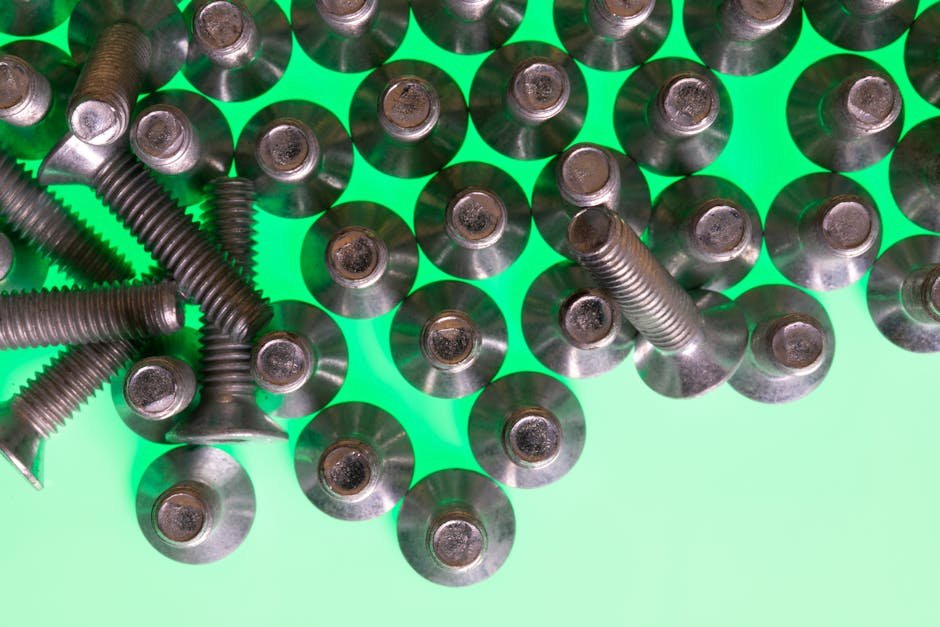

The term 316 stainless steel screws refers to a specific category of fasteners manufactured from an austenitic stainless steel alloy containing molybdenum, which significantly enhances its resistance to chloride-induced pitting corrosion. These screws are widely used in harsh environments such as marine construction, chemical processing, and offshore platforms where durability and long-term structural integrity are critical. Unlike standard mild steel or even 304 stainless, 316 stainless steel offers superior performance in chloride-rich atmospheres, making it the preferred choice for demanding industrial and architectural applications.
What Are 316 Stainless Steel Screws and Why Are They Important?
316 stainless steel screws are engineered fasteners designed for environments where corrosion resistance is non-negotiable. The alloy composition of 316 stainless steel includes approximately 16–18% chromium, 10–14% nickel, and 2–3% molybdenum. This molybdenum content is the key differentiator between 316 and the more common 304 stainless steel, providing enhanced resistance to chlorides, acids, and other corrosive agents.
Due to their robust chemical makeup, 316 stainless steel screws are frequently specified in marine infrastructure, food processing equipment, pharmaceutical manufacturing, and coastal architectural projects. Their ability to withstand salt spray, UV exposure, and temperature fluctuations makes them indispensable in outdoor and submerged applications.
These screws are available in various head types (such as flat head, pan head, and hex head), drive styles (Phillips, slotted, Torx), and sizes ranging from small #4-40 up to larger ¾-inch diameter fasteners. They can be found in both metric and imperial measurements and are often supplied with complementary washers and nuts made from the same alloy to prevent galvanic corrosion.
From a materials perspective, 316 stainless is classified as a non-ferrous metal due to its chromium-rich passive layer and low iron content relative to ferrous metal counterparts like carbon steel. However, technically speaking, stainless steel is still considered ferrous because it is primarily iron-based, but it behaves like a non-ferrous material in terms of corrosion resistance and magnetic properties—most 316 grades are non-magnetic or weakly magnetic after cold working.
Key Properties and Performance Advantages of 316 Stainless Steel
Understanding the metallurgical advantages of 316 stainless steel is essential when selecting fasteners for critical applications. The following properties make 316 stainless steel screws stand out in performance and longevity:
- Exceptional Corrosion Resistance: Thanks to molybdenum addition, 316 resists pitting and crevice corrosion far better than 304 stainless, particularly in saltwater and de-icing salt environments.
- High Temperature Tolerance: Maintains strength and oxidation resistance at elevated temperatures (up to 925°C intermittently, 870°C continuously).
- Excellent Formability and Weldability: Can be easily machined into precise screw threads and welded without compromising structural integrity.
- Non-Magnetic Characteristics: Especially important in sensitive electronic or medical equipment where magnetic interference must be avoided.
- Hygienic Surface Finish: Smooth, non-porous surface prevents bacterial growth—ideal for food-grade and medical applications.
The mechanical properties of 316 stainless steel screws typically include a minimum tensile strength of 515 MPa and yield strength of 205 MPa, meeting ASTM A479 and ISO 3506 standards for stainless steel fasteners. These specifications ensure reliable performance under load and environmental stress.
When compared to mild steel fasteners, which rust quickly in humid or saline conditions, or even galvanized steel that offers only temporary protection, 316 stainless provides a permanent solution. This longevity reduces maintenance costs, replacement frequency, and lifecycle expenses—making it cost-effective over time despite a higher initial price point.
Common Applications of 316 Stainless Steel Screws
The versatility and resilience of 316 stainless steel screws allow them to perform in some of the most aggressive environments across multiple industries. Below are key sectors where these fasteners are mission-critical:
Marine and Offshore Construction
In boat building, docks, piers, and offshore oil rigs, exposure to seawater demands extreme corrosion resistance. 316 stainless steel screws are routinely used to secure sheet metal components, railings, deck fittings, and engine mounts. Their ability to resist saltwater corrosion ensures structural reliability and safety over decades.
Architectural and Structural Engineering
Coastal buildings, bridges, and public infrastructure often use 316 stainless screws to fasten cladding, roofing, and façade systems. In urban environments with high pollution and de-icing salt usage, these screws prevent unsightly rust staining and maintain aesthetic integrity.
Food and Beverage Processing
Sanitation regulations require non-reactive, easy-to-clean fasteners. 316 stainless steel screws are used in conveyor systems, storage tanks, and processing machinery because they resist organic acids, cleaning chemicals, and high-pressure washdowns.
Pharmaceutical and Biotech Facilities
These industries demand contamination-free environments. The non-leaching, non-corroding nature of 316 stainless makes it ideal for cleanroom fixtures, HVAC systems, and equipment enclosures where particle generation must be minimized.
Chemical Processing Plants
Exposure to aggressive chemicals like chlorides, bromides, and sulfuric acid necessitates the use of 316 stainless fasteners. They maintain integrity in piping supports, reactor vessels, and instrumentation housings.
Additionally, 316 stainless steel screws are increasingly used in renewable energy installations such as solar panel mounts in coastal regions and offshore wind farms, where long-term reliability without maintenance is crucial.
Recycling 316 Stainless Steel Screws: Value and Process
When 316 stainless steel screws reach end-of-life or are removed during retrofitting or demolition, they represent a valuable stream of stainless steel scrap. Recycling these fasteners not only supports sustainability but also returns tangible financial value to contractors, fabricators, and industrial facilities.
The recycling process begins with proper sorting. Since stainless steel is often mixed with scrap steel and other metals on job sites, separating 316-grade material is essential for maximizing return. Use of a handheld XRF (X-ray fluorescence) spectrometer is the most accurate method to verify grade, though experienced recyclers may use spark testing or magnetic response as preliminary indicators—remember, 316 is generally non-magnetic, unlike many ferrous metal alloys.
Once sorted, 316 stainless steel screws can be processed through shredding, baling, or loose loading depending on volume. Clean, uncontaminated lots fetch higher prices per tonne, so removing dirt, plastic coatings, or mixed metals increases profitability.
For those looking to estimate potential returns, our Stainless Steel Scrap Calculator Estimate Your Material Value tool allows users to input weight and approximate grade to project market value based on current Stainless Steel Scrap Price trends.
Current steel price per tonne for 316 stainless scrap typically ranges between $2,800 and $3,600 AUD, depending on market conditions, geographic location, and purity of the load. This is significantly higher than 304 stainless (averaging $2,000–$2,600/tonne) due to the molybdenum content, which is a strategic and expensive alloying element.
To learn how to optimize returns, read our comprehensive guide: Stainless Steel Recycling How To Sell Scrap For Maximum Profit. It covers negotiation tactics, preparation standards, and timing sales to align with commodity cycles.
How to Identify and Test 316 Stainless Steel Screws
Accurately identifying 316 stainless steel screws is vital for both application suitability and scrap valuation. Misidentification can lead to premature failure in service or financial loss during recycling.
Here are proven methods to verify 316 stainless content:
- Mill Test Certificates (MTCs): Reputable suppliers provide MTCs confirming chemical composition and compliance with international standards such as ASTM, ASME, or ISO.
- Grade Markings: Many 316 stainless screws are stamped with identifiers like “A4” (ISO designation for 316), “316,” or “UNS S31600.”
- Magnetic Test: While not definitive, 316 is generally non-magnetic or only slightly magnetic after cold forming. Strong attraction suggests a mild steel or ferritic stainless grade.
- Chemical Spot Testing Kits: Affordable kits use reagents to detect molybdenum presence—turning pink indicates molybdenum, confirming 316 vs. 304.
- XRF Analyzers: Handheld devices used by scrap yards and metal service centers offer lab-grade accuracy in seconds.
It’s important to note that visually, 316 stainless steel screws look nearly identical to 304. Relying on appearance alone is unreliable. Always verify through documentation or testing, especially when selling scrap or using in critical applications.
Contamination with lower-grade steels or ferrous metal debris will reduce the effective value of a 316 lot. Therefore, meticulous segregation is required before delivery to a recycling facility.
Buying and Sourcing 316 Stainless Steel Screws in Australia
For businesses and contractors requiring new or surplus 316 stainless steel screws, sourcing reliable suppliers is essential. In Australia, numerous industrial suppliers, metal service centers, and online marketplaces offer these fasteners in bulk or small quantities.
When purchasing, ensure the product meets recognized standards such as AS 1554.6 (welding of stainless steels) or AS 2312 (guidelines for stainless steel use in buildings). Look for suppliers who provide traceability, including heat numbers and certification, particularly for large infrastructure or safety-critical projects.
If you’re looking to buy stainless steel in various forms—including screws, bolts, bars, or sheets—our platform connects buyers with verified Australian suppliers and recyclers. Whether you need a single box of M6x30mm 316 screws or a full container for a marine development project, we streamline access to quality materials.
For those exploring alternatives or complementary products, browse our catalog of stainless steel product offerings, including channels, tubes, and fabricated components commonly used alongside 316 fasteners.
We also recommend partnering with suppliers who practice responsible sourcing and support circular economy principles through take-back programs or recycling initiatives. For more information on sustainable procurement, visit Scrap Trade, Australia’s leading platform for industrial scrap metal exchange, or explore industry insights at Scrap Trade Australia.
Environmental and Economic Impact of Recycling 316 Stainless Steel Screws
Recycling 316 stainless steel screws contributes significantly to resource conservation and energy efficiency. Stainless steel is 100% recyclable, and modern production relies on up to 60–80% recycled content. Reusing old 316 fasteners reduces the need for virgin mining of chromium, nickel, and molybdenum—materials with high environmental extraction costs.
The energy savings are substantial: recycling stainless steel consumes only about 20–30% of the energy required to produce it from raw ore. This directly lowers greenhouse gas emissions and supports corporate sustainability goals.
From an economic perspective, the Australian scrap metal industry generates billions annually, with non-ferrous and specialty alloys like 316 playing a growing role. By properly recycling 316 stainless steel screws, businesses contribute to a domestic supply chain that reduces reliance on imported raw materials.
Moreover, the stable resale value of 316 scrap provides an incentive for proper disposal practices. Instead of landfilling decommissioned fasteners, companies can generate revenue while meeting ESG (Environmental, Social, and Governance) benchmarks.
Facilities managing large-scale retrofits—such as shipyards, desalination plants, or coastal resorts—should implement scrap tracking systems to quantify and monetize recoverable 316 stainless steel. This includes not just screws, but also associated nuts, washers, brackets, and trim pieces made from the same alloy.
Conclusion: Maximizing the Lifecycle of 316 Stainless Steel Screws
316 stainless steel screws represent a critical intersection of engineering performance, environmental responsibility, and economic value. From their unmatched corrosion resistance in marine environments to their high scrap recovery worth, these fasteners are more than just hardware—they are strategic assets in construction, industry, and recycling.
Understanding how to specify, identify, use, and ultimately recycle 316 stainless steel screws ensures optimal performance during service and maximum return at end-of-life. Whether you’re a fabricator, engineer, facility manager, or scrap metal trader, mastering the lifecycle of this material enhances both operational efficiency and profitability.
For those holding surplus or decommissioned 316 stainless steel, don’t let valuable material go to waste. Use tools like the Stainless Steel Scrap Calculator Estimate Your Material Value to assess potential returns, and follow best practices outlined in Stainless Steel Recycling How To Sell Scrap For Maximum Profit to secure the best market price.
By integrating smart procurement, rigorous identification, and responsible recycling, stakeholders across Australia can leverage the full value chain of 316 stainless steel screws—from initial installation to final reprocessing.
Frequently Asked Questions
What makes 316 stainless steel screws different from 304?
316 stainless steel screws contain molybdenum, which significantly enhances their resistance to chloride corrosion compared to 304 stainless. This makes 316 ideal for marine and chemical environments where salt or acids are present.
Can 316 stainless steel screws be recycled for money?
Yes, 316 stainless steel screws are highly recyclable and valuable due to their nickel and molybdenum content. Clean, properly sorted 316 scrap typically sells for $2,800–$3,600 per tonne in Australia.
How do I test if a screw is really 316 stainless steel?
Use a molybdenum test kit, check for grade markings like ‘A4’ or ‘316’, perform a magnetic test (316 is generally non-magnetic), or use an XRF analyzer for definitive identification.
Where can I sell 316 stainless steel screws as scrap in Australia?
You can sell 316 stainless steel screws to licensed scrap metal recyclers or through online platforms like Scrap Trade, which connects sellers with buyers offering competitive rates based on current stainless steel scrap prices.