
Understanding current scrap price steel trends is crucial for demolition contractors, fabricators and recyclers who need to monetise leftover mild steel, sheet metal off-cuts or structural beams. This pillar guide unpacks how ferrous metal prices are set, what grades attract a premium, and how recycling lowers emissions and landfill costs.
1. How Scrap Steel Prices Are Determined in Australia
Scrap yards do not pluck numbers from thin air. The national steel price per tonne is a derived figure anchored to:
- Global iron ore spot price — the benchmark 62 % Fe index published by S&P Global.
- Turkey & SE-Asia export contracts — 80 % of Australian containerised scrap steel is exported, so Turkish re-bar mill bids set the ceiling.
- Domestic mill intake — Whyalla, Port Kembla and Laverton Steel set weekly gate buying prices that yards must match to keep feedstock local.
- Freight & energy surcharges — bunker fuel and electricity account for 8–12 % of a recycler’s cost structure and are passed through.
- Exchange rate — because ore and coking coal are USD-denominated, a 1 ¢ shift in AUD/USD moves scrap valuations by ~AUD 2.50 per tonne.
Prices are normally quoted “ex-yard” and are for material delivered by the supplier. If you need scrap steel price per kg delivered to you, add AUD 0.04–0.06 per kg for road freight depending on region.
Traders watch the Singapore Exchange 62 % Fe futures curve for a two-week lead indicator. When the curve flips into backwardation, current scrap prices usually soften within 7–10 days because mills choose ore over scrap. Conversely, when the curve steepens, yards raise bids to secure volume ahead of the rally.
2. Live Scrap Price Steel – What You Can Expect Today
Below is a snapshot for metal prices today collected from major NSW, VIC and QLD yards (GST excluded, tonne converted to per kg):
- Heavy Scrap (HMS 1/2 80:20): AUD 0.42–0.46 per kg
- Medium Steel (P&S 5 mm+): AUD 0.35–0.39 per kg
- Light Gauge / Sheet Metal: AUD 0.25–0.30 per kg
- Re-bar off-cuts (≥12 mm): AUD 0.38–0.42 per kg
- Turnings & Borings: AUD 0.18–0.22 per kg
- Steel cans (tinned): AUD 0.12–0.16 per kg
Note that a “gross” price assumes no attachments. Copper-bearing motors, excessive plastic or wood will downgrade the load. Always ask for the scrap price for steel after deductions so you can compare yards honestly.
If you are a demolition contractor sitting on 50 t of structural beams, a AUD 10 per tonne difference equals AUD 500 in lost profit. Use the online scrap marketplace to post your material and let recyclers bid live, or check ScrapTrade.com.au for regional price indices updated twice daily.
3. Understanding Grades of Scrap Steel
Scrap steel is not homogenous. The Institute of Scrap Recycling Industries (ISRI) specifies more than 70 grades, but in Australia you will most commonly encounter the following ferrous metal categories:
HMS 1 & 2 (Heavy Melting Steel)
Thickness ≥ 6 mm, length ≤ 1.5 m, no galvanised or alloy content. This is the bellwether grade tracked by steel price per tonne indices.
P&S (Plate & Structural)
Includes beam ends, ship plate and machinery bases. May contain ≤ 0.3 % Cu. Yards pay a premium over light gauge because density and chemistry are predictable.
Sheet Metal Clippings
Auto-body, white-goods panels, ducting off-cuts. Thin (< 3 mm) and prone to oil contamination, so priced lower. Shredding plants blend this grade with heavier feed to manage furnace chemistry.
Turnings & Borings
Swarf from machine shops. High oil content reduces yield and can emit dioxins if not pre-treated. Always confirm moisture penalties with the yard before booking bins.
Stainless Steel Contamination
Even 1 % stainless mixed into carbon scrap downgrades the entire 20 t bin. If you handle mixed non-ferrous, check the Stainless Steel Scrap Price separately and segregate early to maximise profit.
4. Practical Tips for Maximising Your Scrap Price Steel Return
Follow these field-tested steps to lift your average sale price by 8–15 %:
- Sort at source: Keep re-bar offcuts separate from light sheet. Labour cost is repaid in higher per-kg pricing.
- De-can and de-plastic: Remove rubber gaskets from plate edges; plastic bumper attachments lower density and can trigger penalties.
- Cut to spec: Most yards accept ≤ 1.2 m lengths for conveyor safety. Over-length pieces are downgraded or rejected.
- Control moisture: Rain-soaked turnings can be docked 5–7 % weight. Tarp bins during transport.
- Negotiate on volume: Offer 25 t lots. Recyclers will pay an extra AUD 5–10 per tonne to fill a high-side trailer in one lift.
- Time the market: Historical data show prices soften late December and early July. Hold inventory in bonded storage if cash-flow allows.
For a deeper dive into selling tactics, download our free e-book linked in Scrap Steel Price Per Kg A Complete Guide For Sellers.
5. How Steel Recycling Works – From Bin to Beam
Recycling ferrous metal is a linear, high-throughflow process:
1. Collection & Weighing
On arrival, the vehicle crosses a 60 t weighbridge. RFID tags link the tare weight to your account. Photographs document contamination levels.
2. Shearing & Shredding
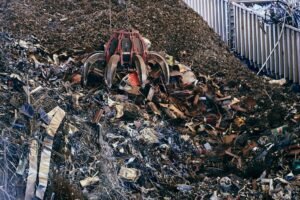
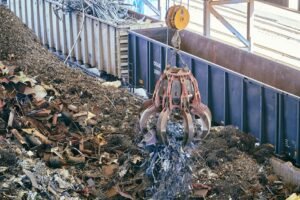
Heavy scrap is cut by 1 000 t guillotine shears into fist-sized pieces. Light gauge enters the shredder where 500 rpm hammers reduce it to palm-size fragments. Magnets extract any aluminium scrap price in 2026 competitors may have mixed in.
3. Media Separation
Eddy-current separators eject non-ferrous metals; air knives blow away fluff (foam, rubber). The remaining 98 % ferrous fraction is ready for melting.
4. Electric Arc Furnace (EAF)
Approximately 85 % of Australia’s recycled steel is melted in EAFs. Each tonne of scrap consumes 880 kWh and replaces 1.4 t of iron ore, 0.8 t of coal and 0.3 t of limestone.
5. Continuous Casting & Rolling
Liquid steel is cast into billets, reheated and rolled into re-bar, merchant bar or structural sections, closing the material loop.
6. Environmental Benefits of Recycling Scrap Steel
Recycling is not just a profit centre; it delivers measurable ecological upside:
- CO₂ savings: 1.85 t of CO₂-equivalent avoided per tonne of scrap used in EAF versus blast-furnace route.
- Energy reduction: 74 % less energy required than virgin production.
- Landfill diversion: Australia generates ~5.5 Mt of ferrous scrap annually; recycling keeps 95 % out of landfill.
- Water conservation: 40 % less water use because sintering and pelletising steps are skipped.
- Decreased mining footprint: Every 1 t of scrap conserves 1.4 t of high-grade ore, reducing disturbance in the Pilbara.
Corporate buyers chasing Scope 3 emission targets now pay a “green premium” of up to AUD 5 per tonne for mill-certified recycled content. Ask your recycler for a carbon-offset certificate to monetise this benefit.
7. Forecasting Scrap Price Steel – 2024–2026 Outlook
Three structural forces will shape pricing over the next 24 months:
1. Green Steel Mandates
The EU Carbon Border Adjustment Mechanism (CBAM) starts phasing in for steel in 2026. Australian mills exporting slab to Europe must prove recycled content, raising domestic scrap demand and supporting scrap price steel.
2. India’s New EAF Capacity
India is adding 20 Mt of EAF capacity by 2026, increasing seaborne scrap demand by ~12 Mt. Australian exporters will face competition, pushing FOB prices higher.
3. Australian Infrastructure Boom
Federal Transport and Defence budgets earmark AUD 120 bn of steel-intensive projects through 2027. Domestic re-bar demand will tighten scrap supply, especially for clean mild steel grades.
Consensus among analysts is a gradual rise to AUD 0.55 per kg for HMS by Q4 2025, assuming no global recession. Hedge by forward-selling quarterly contracts rather than spot, and keep an eye on the Aluminum Scrap Price In 2026 as aluminium-bodied EVs begin to reach end-of-life, potentially cross-contaminating shredder streams.
8. Legal & Safety Considerations When Trading Scrap Steel
Before you load the first bin, ensure compliance:
- Chain of custody: Under the Australian Waste Export Act 2020, scrap shipments must be inspected and licensed. Fines for illegal export reach AUD 2 million.
- Radioactive sources: Industrial gauges can end up in scrap. Yards use gate-mounted radiation detectors; nevertheless, declare any suspected items.
- Weightbridge certification: National Measurement Act requires annual verification. Always request the calibration certificate if you dispute a weight.
- Payment terms: Cash payments above AUD 10 000 are prohibited under AML rules. Insist on EFT and keep invoices for five years.
Conclusion – Turn Your Scrap into a Revenue Stream
Whether you manage a fabrication shop generating sheet metal off-cuts or a council demolishing a stadium, knowing the drivers behind scrap price steel empowers you to capture maximum value. Sort aggressively, track global ore futures, and leverage online platforms to benchmark offers. Beyond profit, every tonne you recycle cuts 1.85 t of CO₂ and preserves finite iron ore for future generations. Bookmark this guide and revisit it whenever you need an update on current scrap prices, or dive deeper via the internal resources linked throughout.
Frequently Asked Questions
What is the average scrap price steel per kg in Sydney today?
Mixed domestic scrap price steel currently trades at AUD 0.28–0.34 per kg ex-yard, while clean heavy structural steel reaches AUD 0.42–0.46 per kg. Prices are updated twice daily on ScrapTrade.com.au.
How do recyclers grade my steel scrap?
Operators classify material by thickness, length, density and contamination. HMS 1/2 (6 mm+) commands top dollar, whereas light sheet or turnings with oil are discounted due to lower yield and higher processing cost.
Will steel prices rise in 2025?
Analysts forecast a gradual climb to AUD 0.55 per kg for HMS by late 2025, driven by India’s new EAF capacity and Australian infrastructure demand. Ore prices and currency swings remain key variables.
Is recycling steel better for the environment than mining?
Yes. Every tonne of recycled scrap steel avoids 1.85 t of CO₂ emissions, saves 74 % energy and keeps 95 % of scrap out of landfill, making it a critical pathway to net-zero steel production.