
Whether you are a tradesman cleaning out a worksite, a renovator pulling out copper pipe, or a factory manager with weekly turnings, this authoritative guide shows scrap sellers exactly how to value, segregate, document and monetise every kilo of metal while keeping 100 % compliant with Australian regulations.
1. How the Australian Scrap Market Works in 2024
Domestic demand for recycled metal is driven by Port Kembla steelworks, aluminium smelters in Tomago and Bell Bay, and a growing network of secondary processors. Prices are quoted $AUD per kg or tonne ex-yard and move daily with the London Metal Exchange (LME) and local AUD/USD parity. Scrap sellers who understand these levers—and time their sale—routinely achieve 5-15 % above spot.
The easiest way to track real-time bids is through digital trading hubs. Why Scrap Sellers Are Moving Online explains how live tenders replace phone haggling and put transparent competition at your fingertips.
2. Where to Sell: Yards, Traders or Online Platforms?
Option A — Local scrap yard: Instant cash for scrap, no freight cost, but prices may be lower if you only have a ute load.
Option B — Mobile scrap dealer: Will come to site and use digital scales; travel fee may apply.
Option C — National online marketplace: Aggregates vetted buyers so you can compare bids, lock in a forward price and schedule pick-up. Read What Is Scrap Trade to see how it works.
Regardless of channel, always verify the buyer holds a state-issued second-hand dealer licence and issues a Scrap Metal Purchase Record (SMPR)—a legal requirement in QLD, NSW, VIC, SA and WA since 2018.
3. Getting the Best Price: Grades, Purity & Timing
3.1 Non-Ferrous Grades (higher value)
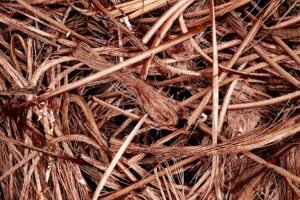
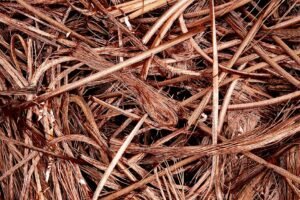
- Bare bright copper wire—> 99.9 % Cu, no oxidation, plastic or solder. Average price $11.20-$12.50 kg.
- #1 Copper—clean pipe, busbar, enamel wire. $10.40-$11.20 kg.
- #2 Copper—painted, soldered or coated. $8.60-$9.40 kg.
- Aluminium clean sheet—no steel, plastic or corrosion. $2.20-$2.50 kg. See dedicated page for aluminium scrap sellers.
- 6063 extrusion—window frames, minus glass & rubber. $2.40-$2.70 kg.
- Stainless 304—18/8, non-magnetic. $2.60-$3.10 kg.
- Stainless 316—marine grade, Mo content. $3.80-$4.20 kg.
- Brass rod & turnings—C38500/C360. $6.20-$6.90 kg.
- Bronze solids—manganese or aluminium bronze. $5.40-$6.10 kg.
3.2 Ferrous Grades (volume game)
- HMS 1/2 80:20—heavy melting steel, ½ inch thick. $380-$420 tonne.
- Shred grade—fragmented auto bodies, <400 mm. $350-$390 tonne.
- Rebar & structural—cut to 1 m lengths. $320-$360 tonne.
- Cast iron—machinery blocks, grates. $340-$370 tonne.
3.3 Clean vs Contaminated
Scrap yards apply a downgrade penalty if attachments exceed 3 % by weight. Removing wood, plastic, concrete or rubber can lift value by 20-40 %. Example: Separating clean copper radiator (worth $7.40 kg) from brass-tanked ends lifts return to $11.20 kg for the copper and $6.80 kg for the brass.
3.4 Timing the Market
Copper and aluminium prices typically soften December-January when northern hemisphere factories close, then rally March-May during China’s construction season. Scrap sellers holding inventory in a bonded yard can forward-contract when contango appears. Subscribe to daily SMS alerts from Scrap.Trade to catch spikes.
4. How to Prepare and Weigh Your Material
Step 1 — Sort on site. Use a magnet to separate ferrous from non-ferrous. Colour-code bins: red for copper, blue for aluminium, yellow for stainless, green for brass.
Step 2 — Strip attachments. Use an alligator shear for thin-wall extrusions, or a small hydraulic press for radiators. Wear eye protection.
Step 3 — Weigh with certified scales. Most yards have 1 m×1 m platform scales (3 t capacity). Ask for the weigh-bridge ticket printed with date/time and licence number—your proof if payment is disputed.
Step 4 — Moisture alert. Water trapped in turnings can add 2-5 % weight; yards test with a microwave moisture gauge and will adjust. Drain coolant or swarf overnight on a mesh table.
5. Required Documents & Compliance Checklist
- Photo ID—driver’s licence or passport (mandatory in all states).
- ABN—if selling as a business or requesting a tax invoice.
- Purchase Record—buyer must enter seller’s name, address, vehicle rego, description of material, price per kg and total paid.
- Police reference number—generated automatically in QLD and WA real-time databases; must be on receipt.
- Photographic evidence—some yards photograph the load and the seller holding the ID; stored 12 months.
- Cash payment limit—QLD and VIC cap cash at $50; anything above must be EFT or cheque. NSW allows up to $5 000 cash but only from an ATM on site; above that EFT.
Keep your copy of the SMPR for five years—tax office and EPA audits can go back that far if you claim recycling rebates or carbon credits.
6. How Recycling Works and Environmental Benefits
Once weighed, material is fed into an auto-shredder (9 000 hp hammermill) that reduces cars and white goods to fist-sized pieces. Eddy-current separators eject aluminium, while X-ray transmission sorts heavy alloys. Copper chops are smelted in a top-blown rotary converter at 1 250 °C, cast into 8 t anodes, then electro-refined to 99.99 % cathode sheets ready for new wire or EV batteries.
Recycling metrics: 1 tonne of recycled copper saves 3.7 MWh of energy and 2.1 t CO₂-e versus mining. Aluminium saves even more—14 MWh per tonne. In FY-23 Australian scrap sellers diverted 5.6 Mt of metal from landfill, equivalent to removing 1.2 million cars from the road for a year.
7. Online vs Offline: Maximising Convenience and Profit
Traditional yards still dominate ferrous volumes, but non-ferrous scrap sellers increasingly list material on digital marketplaces where smelters and traders bid nationwide. Benefits include:
- Live bids—see multiple offers in minutes.
- Freight quotes—platforms pre-contract trucks at back-haul rates, often cheaper than your own transport.
- Payment guarantee—funds held in escrow until POD (proof of delivery) is uploaded; you get paid within 24 h.
- Audit trail—all compliance documents stored digitally for seven years.
Ready to try? Sell Scrap in three clicks and compare prices from 70+ verified buyers.
8. Demolition & Construction: Turning Scrap Building Waste into Cash
Demolition contractors who plan for metal recovery can add 2-4 % to project margin. Key steps:
- During tender, ask for a scrap rebate clause—you keep proceeds rather than letting the client claim them.
- Sequence demolition: strip copper cable and aluminium window frames before structural collapse to minimise contamination.
- Use hydraulic shears on beams to keep steel under 1 m lengths—yards pay more for mill-grade feed.
- Store on plastic sheet to avoid soil embedment, which incurs a dirty steel penalty of $30-$50 t.
For a deeper dive, read our case study on scrap building sites that generated $140 000 in metal credits.
9. Safety & Insurance: Protecting People and Profits
Scrap yards are classed as high-risk environments under WorkCover: moving equipment, forklift traffic, sharp edges, asbestos residue. Scrap sellers delivering loads must wear PPE: high-vis shirt, steel-cap boots, gloves, eye protection. Some yards insist on hard hats and fluoro vests with reflective tape.
Public liability: Check your policy covers “scrap delivery” and “weigh-bridge operations.” A $10 million cover costs ~$550 p.a. but protects you if a drum of unidentified chemicals leaks and triggers an EPA clean-up.
10. Advanced Tips for Regular Traders
- Hedge on LME—if you hold 5 t of copper, sell a forward contract on CME or SHFE to lock price.
- Inventory finance—some yards will advance 70 % of market value if you store metal in their bonded warehouse, letting you buy more scrap without cash-flow strain.
- Copper breakage discount—if you can’t separate copper from transformers, negotiate a breakage assay clause: buyer pays 85 % of copper content after smelting assay, rather than downgrading to #2.
- Stainless 2205 duplex—common in marine tanks. Contains 22 % Cr, 5 % Ni, 3 % Mo. Use a NITON analyser to prove grade and earn an extra $200-$300 t.
- Turnings briquettes—compressing aluminium or steel swarf increases density 4×, slashes freight cost and often lifts price from $250 t to $320 t.
Conclusion: Your Next Steps
Successful scrap sellers treat metal as a commodity, not waste. Sort to grade, know your weigh-bridge rights, document every kilo, and leverage online competition to get paid top dollar. Whether you have a single basket of copper pipe or 40 t of demolition steel, list it today on Scrap.Trade and compare bids from verified buyers across Australia.
Frequently Asked Questions
Do I need a licence to sell scrap in Australia?
No—sellers only need government-issued photo ID. The buyer must hold a second-hand dealer licence and record your details on a Scrap Metal Purchase Record (SMPR).
What is the best way to get the highest price for aluminium extrusion?
Remove all steel screws, rubber seals and plastic clips so the material is classified as clean 6063. Then list it on an online marketplace like Scrap.Trade to let multiple aluminium processors bid.
Can I still get cash for scrap or is it bank transfer only?
Queensland and Victoria cap cash at $50; NSW allows up to $5 000 from on-site ATMs. Above these limits, licensed dealers must pay by EFT or cheque on the spot.
How do I prove the weight if the yard claims my scale is wrong?
Ask for a printed weigh-bridge ticket showing date, time and NMI-certified scale number. You can also request a photo of your load on the scale; keep the ticket for five years in case of dispute.