Scrap steel Hornsby is one of the most traded ferrous metal streams in Northern Sydney. Whether you are a demolition contractor, fabricator or household recycler, understanding grades, pricing levers and environmental benefits turns waste into revenue and keeps valuable mild steel in the circular economy.
1. What Counts as Scrap Steel in Hornsby?
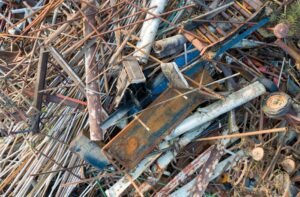
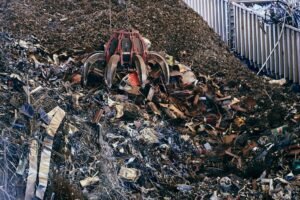
All magnetic steel that enters Hornsby’s waste network is classed as scrap steel. Common sources include:
- Construction off-cuts and rebar
- End-of-life household appliances
- Auto bodies after parts removal
- Industrial sheet metal skeletons
- Farm machinery and rail lines
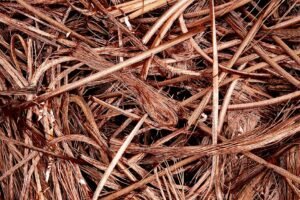
Local recyclers grade material by density, copper content and physical size. The cleaner and denser the load, the higher the Steel Scrap Grading 1 Prepared 2 Prepared Shredded category it reaches, which directly lifts the steel price per tonne.
2. Major Grades Explained
Scrap steel Hornsby depots follow the national Australian Metal Classification System. Each grade has a maximum copper tolerance and minimum thickness requirement.
#1 Heavy Melting Steel (HMS 1)
- Thickness ≥ 6 mm, length ≤ 1.5 m
- Copper ≤ 0.3 %
- Typical price band: $280–$310 ex-yard
#2 Heavy Melting Steel (HMS 2)
- Includes galvanised, re-rolled and light gauge
- Copper ≤ 0.5 %
- Usually sells at a $20–$30 discount to HMS 1
1 Prepared / 2 Prepared
Material sheared or shredded to specification. Density > 0.8 t/m³ commands premium pricing. Refer to our deep-dive on Steel Scrap Grading 1 Prepared 2 Prepared Shredded for cut-length tables and tolerances.
Shredded Scrap
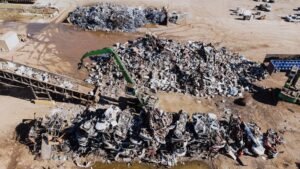
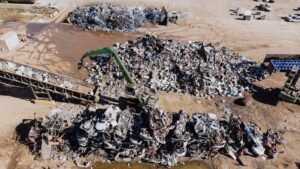
Auto bodies and appliances pass through 1800 hp shredders, producing fist-sized frag that mills prize for fast melt rates. Shredded lots routinely achieve $300 per tonne when free of non-ferrous contaminants.
Turnings & Borings
Lathe swarf from engineering shops. Requires centrifuging to remove cutting oil. Prices sit lower ($120–$150) because of oil and oxidation losses.
3. How Recycling Works in Hornsby
Once your bin or skip leaves site, this is the journey:
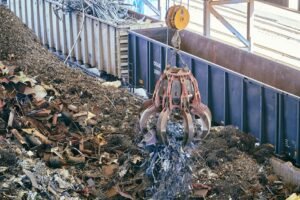
- Weighbridge: Gross, tare and net weights are captured electronically.
- Visual Inspection: Yard inspectors photograph every load and assign a grade.
- Sorting & Shearing: Over-size pieces are cropped to 600 mm or shredded.
- Baling: Loose sheet metal is compressed into 600 kg bales for dense export.
- Shipment: Containers of #1 HMS head to Port Kembla or overseas EAF mills.
- Melting: Electric arc furnaces remelt scrap at 1,600 °C, producing new rebar, beam and coil.
Hornsby recyclers divert roughly 200,000 t of ferrous metal each year, enough to build 25 Sydney Harbour Bridges.
4. Environmental Benefits of Recycling Steel
- CO₂ savings: 1.8 t of CO₂ avoided per tonne of scrap used versus virgin ore.
- Energy cut: 75 % less energy compared to blast-furnace route.
- Water savings: 40 % reduction in water consumption.
- Landfill relief: Every tonne of scrap steel recycled keeps 0.9 t out of landfill and preserves dwindling waste capacity in Hornsby’s LGA.
Recycling also lowers local airborne particulate levels because sintering and coke making—two of the dirtiest steelmaking steps—are skipped entirely.
5. Price Drivers and Market Outlook
Scrap steel Hornsby prices move in lockstep with Turkish import bids, iron ore futures and AUD/USD swings. Domestic construction activity adds a regional premium. Key indicators to watch:
- Iron ore 62 % Fe CFR China < USD 100/t → scrap falls
- Rebar futures on SHFE rise → scrap demand up
- Shipping container rates spike → local yards prefer domestic sales, lowering export bids
Seasonally, prices soften December–January when demolition sites shut for holidays, then spike March–April as mills restock. Sellers who store clean #1 HMS over summer often capture a $20–$30 spring premium. Track daily updates on the Scrap.Trade price hub and compare with the ScrapTrade.com.au market reports for southern states.
6. How to Maximise Value When You Sell
1. Source-separate on site
Keep rebar off-cuts away from light-gauge roofing. Mixed loads default to the lowest grade.
2. Remove contaminants
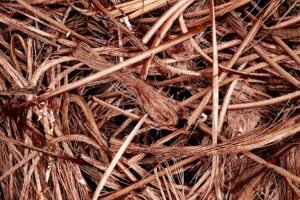
Cut off concrete, wood and rubber. Copper attachments downgrade the whole tonne to #2 category and cost you roughly $40 per tonne.
3. Cut to spec
Pieces longer than 1.5 m are rejected or re-classified as unprepared, losing $25 per tonne. A quick pass with a gas axe pays for itself.
4. Use covered bins
Rain adds weight but mills pay only for metal. Water increases slag volume and may trigger moisture penalties.
5. Negotiate on gross weight
Hornsby facilities deduct for “dirt” if the load looks sloppy. A clean 20 t semi of #1 HMS can fetch $6,200 versus $5,200 for a dirty mix.
6. Time the market
Follow the weekly Stainless Steel Scrap Price for alloy trends; ferrous often shadows nickel moves because mills switch feedstock.
7. Regulatory Considerations in NSW
All Hornsby scrap yards must hold an Environment Protection Licence (EPL) under POEO Act 1997. Key obligations:
- Record weights via certified weighbridges
- File quarterly returns to NSW EPA
- Prevent storm-water contamination by using sealed floors and sumps
Commercial sellers need a Permit to Transport Waste if moving more than 20 t per load. Penalties reach $15,000 for non-compliance. Always ask your recycler for EPL number and a copy of the docket; this protects you from illegal dumping fines.
8. Comparing Hornsby with Nearby Regions
Hornsby’s northern corridor enjoys proximity to the M1, giving quick access to Port Botany and export ships. Freight savings of $10–$15 per tonne often translate into higher gate prices than inland yards. If you are closer to Bankstown, check our sister article on scrap steel yagoona for price comparisons and transport tips. For a broader overview of how markets operate, read What Scrap Trade Actually Is.
9. Equipment and Tools for Producers
Small fabricators can justify a 400-tonne shear when monthly arisings exceed 40 t. Capital payback is 18 months at current margins. For construction crews, a mobile alligator shear on the back of a 3.5 t tray saves cutting costs and keeps sites compliant with WorkCover load limits. Always wear eye protection and high-vis when cutting rebar; sparks travel up to 6 m.
10. Community Drop-off and Household Services
Hornsby Shire Council runs a free e-waste and metal drop-off day each quarter at Park Avenue Waste Facility. Domestic loads under 100 kg are accepted without charge. Separate your whitegoods from general steel; the council contractor pays a rebate back to council that funds local parks. Businesses must use licenced facilities such as those listed on the scrap metal hornsby directory.
11. Future Trends: Green Steel and EAF Expansion
Australia’s only two EAF mills are expanding, and new mini-mills in Laverton and Port Kembla will add 3 Mt of scrap demand by 2028. Hydrogen-based DRI plants may also source scrap as cooling carbon. Analysts forecast a structural scrap deficit on the east coast, pushing realisations up 25 % over five years. Storing clean scrap now could be a lucrative carbon-friendly hedge.
Conclusion
Scrap steel Hornsby is more than a waste stream; it is a tradeable commodity that rewards smart sorting, timing and compliance. Understand the grades, watch global drivers, and leverage local infrastructure to turn every tonne into maximum value while cutting emissions and landfill. For daily prices, yard locations and grade specifications, explore the resources linked throughout this guide and keep your recycling operations ahead of the curve.
Frequently Asked Questions
What is the current scrap steel Hornsby price per tonne?
Clean #1 HMS trades at $280–$310 per tonne ex-yard as of this week. Shredded auto frag can reach $300. Prices move weekly with Turkish import bids and AUD/USD swings.
Do I need to remove plastic handles from whitegoods?
Yes. Plastic is a contaminant and can drop the whole load to #2 grade, costing about $40 per tonne. A quick pass with a utility knife pays for itself.
Can households sell scrap steel in Hornsby?
Absolutely. Domestic loads under 100 kg are accepted free at council drop-off days. Larger loads should go to a licenced recycler; you’ll need photo ID and an e-Waste docket.
How does scrap steel recycling benefit the environment?
Recycling one tonne of scrap steel avoids 1.8 tonnes of CO₂ and saves 75 % of the energy required for virgin steel. It also keeps 0.9 tonnes of material out of landfill.