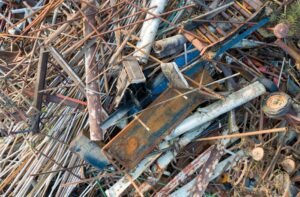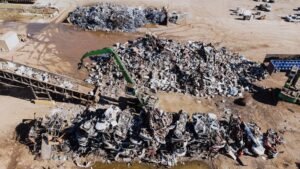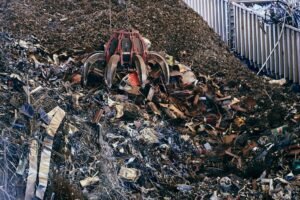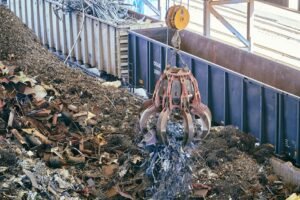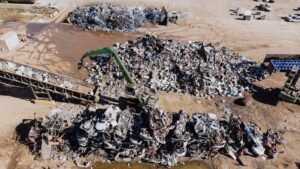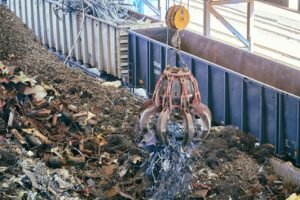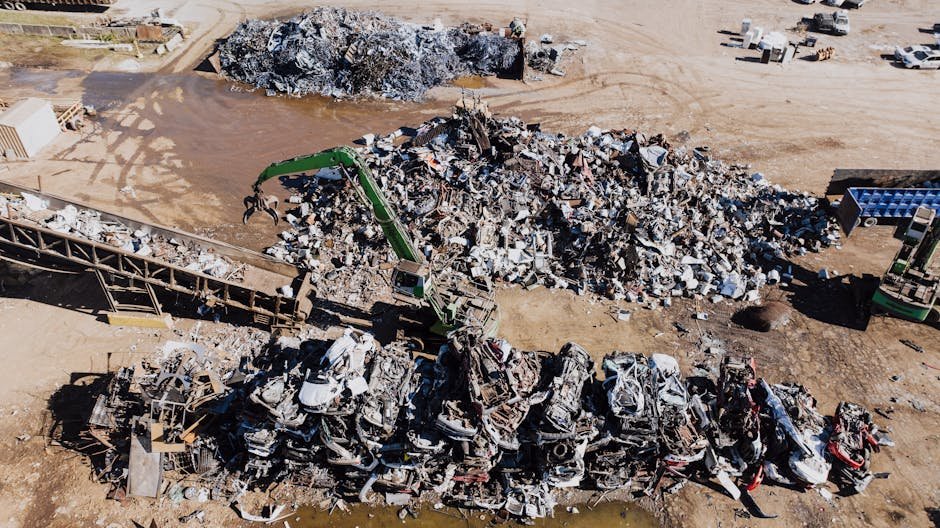

When Australians think of a southern scrap recycling company, they picture a noisy yard of cranes and magnets. In reality, today’s facilities are tightly-orchestrated, high-tech hubs that turn seemingly worthless waste into furnace-ready commodities worth hundreds of millions of dollars a year. This guide walks you through the grades you’ll be paid for, how modern plants turn scrap into new steel, aluminium and copper, and why every tonne recycled keeps 1.6 t of CO₂ out of the atmosphere.
1. What Makes a Southern Scrap Recycling Company Different?
A southern scrap recycling company operates in the industrialised southern states—Victoria, South Australia, southern NSW and Tasmania—where ports, mills and logistics networks converge. Proximity to the scrap recycling company headquarters in Melbourne, the Port of Adelaide and Whyalla Steelworks means shorter haulage distances and faster payment cycles compared with operators in remote regions. These advantages allow southern yards to pay premiums for cleaner, denser grades and to invest in advanced sensor-based sorting lines that small regional yards simply cannot afford.
Modern southern yards are also integrated trading houses. They buy from demolition contractors, mines, farms and the public, then export or sell domestically depending on Turkish, Vietnamese or Korean mill demand. In other words, they straddle both sides of the Scrap Trading Vs Recycling Business equation: trader when prices spike, processor when margins compress.
2. Scrap Grades You’ll Encounter at a Southern Scrap Recycling Company
Every southern scrap recycling company uses the same globally-recognised specifications published by the Bureau of International Recycling (BIR) and the Institute of Scrap Recycling Industries (ISRI). Knowing the grade before you deliver guarantees you negotiate from a position of strength.
2.1 Ferrous Grades
- HMS 1&2 (80:20 mix): ¼ inch thick, 60 cm max, no re-rolled rails, no ex-factory plate off-cuts. Price benchmark for most Melbourne docks.
- Shredded: Auto bodies and white goods shredded to fist-size, density > 70 lb/ft³. Premium over HMS when Turkish deep-sea bids rise.
- P&S (Plate & Structural): Clean cut structural beams and plate, 3 ft max, ¼ inch thick. Mill’s favourite for EAF charge balance.
- Busheling: Clean new factory off-cuts, < ½ ft, density > 85 lb/ft³. Commands up to AUD $70/t over HMS in tight mill markets.
- Cast Iron: Automotive engine blocks, municipal grates, storm-water grates. Higher chromium and silicon, lower yield loss.
2.2 Non-Ferrous Grades
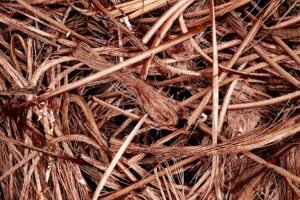
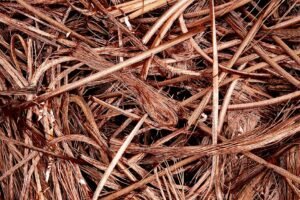
- Candy / Bare Bright Copper Wire: 99.9% Cu, 16 mm+ diameter, no burnt, tinned or plated. LME Grade A cathode minus AUD $350/t conversion.
- #1 Copper: Clean bus-bar, commutator segments, unalloyed tubing. No solder, paint or brass fittings.
- #2 Copper: Copper wire > 94% Cu, enamel coated OK, max 5% oxidation. Price spread to #1 can blow out to AUD $1,200/t in tight supply.
- Aluminium Extrusion 6063: Window and door sections, clean, no thermal break, no anodising penalty.
- Aluminium UBC (Used Beverage Cans): Minimum 50 t load, densified to 14 lb/ft³, moisture < 3%. Southern yards feed to Alcoa Portland or export to Malaysia.
2.3 Stainless and Exotic Alloys
Stainless 304 solids clip at 8% Ni, 18% Cr is bread-and-butter. 316 solids command up to AUD $150/t more due 2-3% Mo content. Inconel, Monel and titanium turnings are bought by the kilogram, not tonne, and stored in sealed drums to prevent moisture pickup.
3. How the Recycling Process Works Inside a Southern Scrap Recycling Company
The journey from a rusty excavator bucket to gleaming slab steel takes less than 48 hours inside a modern southern scrap recycling company. Here is the step-by-step process common to every major yard from Dandenong to Wingfield.
3.1 Inbound Inspection and Weighing
Every truck is RFID-scanned on a 60 t digital weighbridge. Camera gantries capture licence plates, container numbers and load photos. A handheld XRF gun grades non-ferrous in under five seconds, eliminating manual guesswork that once cost yards millions in mis-classification.
3.2 Shearing and Fragmentation
Oversized mining truck trays are torch-cut into 1 m pieces, then fed to a 6,000 t shear that exerts 1,200 t of force—enough to slice through 50 mm armour plate. Automobiles enter a 4,000 hp shredder whose hammers spin at 600 rpm, reducing a Territory SUV to 150 mm shards in 45 seconds.
3.3 Separation Lines
Post-shredder, material travels on a 1.2 m wide rubber conveyor under a magnetic drum that pulls ferrous. The remaining non-ferrous mix passes an eddy-current rotor that repels aluminium into a bunker while stainless, copper and zinc fall straight. Induction sorters use artificial intelligence to eject copper meatballs from zurik shred, improving downstream purity to 98%.
3.4 Baling and Containerisation
Aluminium UBC is densified into 300 kg briquettes under 1,200 psi, raising bulk density from 3 lb/ft³ to 35 lb/ft³. Ferrous bales are 1 m³ cubes, 1.2 t each, tied with 8-gauge wire, loaded 26 t per 20 ft container. Every bale is tagged with a QR code that traces back to the original weighbridge ticket, ensuring full chain-of-custody for mill buyers.
3.5 Laboratory and Mill Despatch
Shift samples are milled to 150 µm and analysed by ICP-OES for Cu, Cr, Ni, Mo and Sn. Any tramp copper above 0.25% in a shredded bale triggers rejection; yards therefore maintain on-site metallurgists who blend low-copper feed to meet mill specs. Once certified, rail wagons depart nightly to Port Kembla or Whyalla where EAF mills melt scrap into billet within two hours.
4. Environmental Benefits of Choosing a Southern Scrap Recycling Company
Every tonne of scrap steel melted in an electric arc furnace (EAF) uses 1,100 kWh of electricity—sounding high until you realise that producing the same tonne from iron ore consumes 20 GJ of coking coal and 2.8 t of iron ore. The result is a 1.6 t reduction in CO₂-equivalent emissions, or the same benefit as taking 350 cars off the road for a day. A mid-sized southern scrap recycling company processing 500,000 t/y therefore abates 800,000 t CO₂, equal to the annual emissions of 175,000 Victorian households.
Recycling also slashes mining waste. Steelmaking from ore generates 600 kg of blast-furnace slag per tonne of metal, while EAF melting produces only 150 kg. That 450 kg difference is enough to fill 17 Olympic pools for a 1 Mt yard. Add in the 95% reduction in landfill when cars are shredded and the 90% energy saving for aluminium remelting, and it becomes clear why state EPA regulators now insist on scrap pre-treatment rather than virgin extraction.
5. Practical Tips to Maximise Payment From a Southern Scrap Recycling Company
- Clean your non-ferrous: Strip plastic insulation from copper cable to upgrade from #2 to Bare Bright and pocket an extra AUD $2,200 per tonne.
- Cut to spec: HMS larger than 60 cm is downgraded to “unprepared” and you lose AUD $40/t. A quick pass with a plasma cutter pays for itself.
- Separate alloys: 304 stainless contaminated with a single 316 elbow can cause a 5 Ni assay to read 10 Ni, triggering downgrading and a AUD $300/t penalty.
- Deliver on dry days: Moisture content above 2% triggers a deduction because water turns to steam in the furnace and causes dangerous slugs.
- Bundle your aluminium: Delivering loose UBCs costs you AUD $0.25/kg because yards must run their densifier; crush cans in a 205 L drum first.
- Keep scale tickets: If you are a demolition contractor, weighbridge dockets from the site prove original tonnage and deter under-scaling at the yard.
6. Finding the Best Southern Scrap Recycling Company Near You
Price spreads between yards can exceed AUD $80 per tonne on ferrous and AUD $600 per tonne on copper, so location matters. Use the Scrap Metal Recycling Near Me portal to compare live gate prices for 42 southern sites updated every trading day. If you are in the Upper Hunter, Scone Scrap Your Guide To Local Scrap Trading And Recycling lists containerised rail options that avoid the 2.5 h truck haul to Newcastle, saving AUD $35/t in freight and lifting net returns.
Metro Melbourne generators within 30 km of Port Phillip can capitalise on same-day settlement because exporters bid aggressively to fill coastal vessels before freight rates spike. Conversely, if you are north of Adelaide, the scrap metal recycling hornsby page details how northern yards share rail head space to keep landed costs competitive with coastal exporters.
7. Regulatory Landscape and Safety Standards
Victoria’s new Environment Protection Act 2017 imes a general environmental duty (GED) on facility operators to eliminate or reduce risks so far as reasonably practicable. A southern scrap recycling company must submit a Risk Screening Tool (RST) to EPA if annual throughput exceeds 50,000 t. The WorkSafe Victoria compliance code for “Managing risks in scrap metal recycling” mandates guarding on conveyors, lock-out procedures on shear lines and respirable crystalline silica monitoring.
In South Australia, the Scrap Metal Industry Act 2016 requires photo ID for every seller and a 100-point proof-of-ownership for copper cable to deter theft. Yards must hold material for seven days before shipping copper, giving police time to inspect. Failure to comply can trigger AUD $50,000 fines and licence suspension, so reputable southern yards now integrate SAPOL’s real-time stolen-goods database into their ERP systems.
8. Future Trends: Smart Scrap and Carbon Credits
Blockchain traceability pilot projects in Geelong are linking each shredded automobile to a carbon-offset token that mills can retire against Scope 3 emissions. If rolled out nationally, a southern scrap recycling company could sell not only metal but also verified carbon credits worth an extra AUD $15–20 per tonne. Meanwhile, AI-driven robotics from Finland can now sort zorba mixed non-ferrous into 99% pure aluminium, zinc and copper fractions, eliminating hand-picking and cutting labour by 40%.
Conclusion: Why Partnering With a Southern Scrap Recycling Company Pays
Whether you are a farmer with 5 t of field scrap or a Tier-1 demolition company stripping 30,000 t of steel, aligning with a southern scrap recycling company gives you deeper liquidity, higher prices and faster payment than any other region in Australia. You also gain measurable environmental benefits: every tonne you divert from landfill to an EAF saves 1.6 t CO₂, 1.4 t iron ore, 0.8 t coal and 8 GJ of energy. Use the practical tips above, verify grades with an XRF gun and always compare live gate prices on scrap.trade or scraptrade.com.au before you deliver. The result is maximum cash in your pocket and a measurable contribution to Australia’s circular economy.
Frequently Asked Questions
- Question: What is the highest-paying scrap grade in Australia right now?
- Answer: Bare Bright Copper Wire (Grade A) is trading at roughly LME cathode minus AUD $350, translating to around AUD $11,200 per tonne ex-yard Melbourne, well above gold-bearing CPUs or titanium solids.
- Question: How quickly can I get paid by a southern scrap recycling company?
- Answer>Most yards offer same-day EFT if you deliver before 11 a.m. and your material passes assay; larger industrial suppliers receive 70% advance on weighbridge ticket and balance after lab clearance, typically within 24 hours.
- Question: Do I need to remove plastic from aluminium UBCs?
- Answer: No, modern eddy-current lines burn off coatings, but moisture must be below 3%. Crushing cans and draining residual drink saves you AUD $0.25/kg in drying penalties.
- Question: Can a small yard compete with a southern scrap recycling company on price?
- Answer: Rarely. Southern hubs achieve economies of scale—rail siding, deep-water port access and 100,000 t shredders—cutting unit costs by AUD $35/t, so they consistently outbid regional yards while still maintaining margin.
Related: Scrap Trading Vs Recycling Business