
A stainless steel product is central to modern fabrication, construction and recycling economies. Whether you are a fabricator quoting on Stainless Steel Scrap Price or a recycler assessing incoming material, understanding grades, finishes and market levers is non-negotiable. This pillar guide dissects everything from alloy chemistry to export regulations so you can buy, sell or process stainless with confidence.
What Exactly Is a Stainless Steel Product?
Stainless steels are ferrous metals containing minimum 10.5 % chromium, forming a self-healing chromium-oxide film that blocks rust. Unlike mild steel, they need no coating, making them ideal for food, medical and marine environments. In Australia the term stainless steel product covers mill forms—coil, plate, bar, pipe and fittings—and downstream fabrications such as benchtops, tanks, handrails and fasteners. Each grade delivers a specific corrosion/price balance.
Key points:
- 304 stainless (18 % Cr, 8 % Ni) dominates architectural and kitchen uses.
- 316 stainless adds 2–3 % Mo for pitting resistance in coastal chloride zones.
- Both grades are 100 % recyclable with negligible property loss.
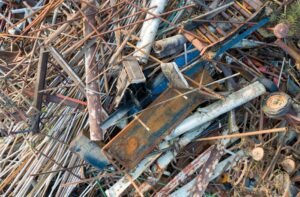
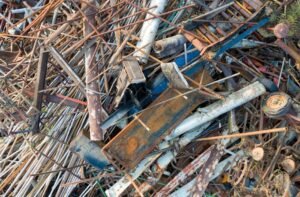
- Scrap steel arisings from fabrication off-cuts and end-of-life items feed back into electric-arc furnaces, closing the loop.
While carbon steel commands a lower steel price per tonne, stainless retains value because alloying elements nickel and molybdenum are costly to mine. Recyclers therefore quote stainless separately from scrap steel or sheet metal bundles.
304 vs 316 Stainless: Choosing the Right Grade
Grade selection drives both performance and resale value. Engineers specify 304 stainless for interior food equipment, ducting and architectural panels. Its balanced corrosion resistance and lower cost make it the volume leader. Fabricators often purchase it as stainless steel strip for precision blanking.
316 stainless steps up where chlorides, acids or marine atmospheres attack 304. Chemical plants, coastal handrails, boat fittings and pharmaceutical tanks rely on its molybdenum-enhanced passivity. The higher nickel content also lifts the stainless steel scrap value, so recyclers favour segregating 316 from mixed 200-series material.
Practical identification tips:
- Spark test: 316 sparks shorter with reddish forks compared with 304’s longer orange sparks.
- Moly test drops: apply ammonium purpurate reagent; 316 turns pink.
- XRF guns provide instant grade confirmation—most stainless steel dealers now carry them.
Market Pricing: How Stainless Scrap Is Valued
Unlike ferrous metal indices that track generic scrap steel, stainless pricing hinges on London Metal Exchange (LME) nickel quotes, chrome ore contracts and regional stainless melt rates. Australian processors publish Stainless Steel Scrap Price weekly, segregated into 304 solids, 316 turnings and 400-series briquettes.
Price levers:
- Nickel spot price: every USD 1 000/t move shifts 304 scrap ~USD 180/t.
- Contamination with mild steel or wood can down-grade a load from “mill-grade” to “re-melt”, cutting value up to 25 %.
- Mo content in 316 adds ~USD 600/t over 304 at current rates.
- Exchange rate AUD/USD directly inflates or deflates domestic offers.
Sellers should segregate 304 and 316 at source, remove combustibles and keep moisture below 1 % to avoid penalty. Large generators—breweries, dairies, mines—can lock in forward pricing with processors, effectively treating scrap as a commodity rather than waste. For deeper strategy, read Scrap As Product An Opportunity.
Processing and Recycling Workflow
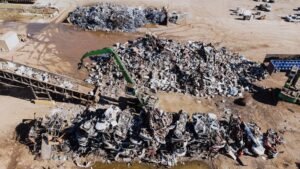
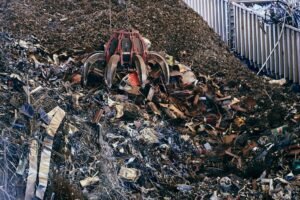
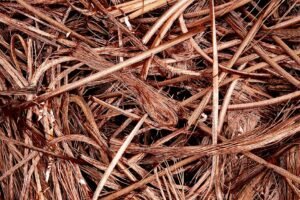
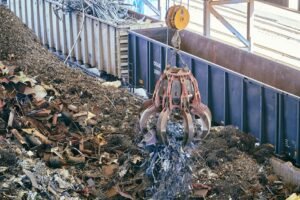
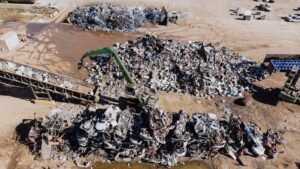
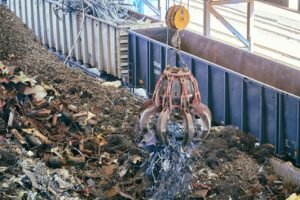
Recycling a stainless steel product starts with manual or mechanical separation. Magnets pull free iron contamination; eddy-current separators eject non-magnetic metals. Shears and shredders resize oversize items to furnace-friendly 50 mm–150 mm fractions. Stainless turnings are centrifuged to remove coolant, then briquetted to raise bulk density above 2.5 t/m³ for cheaper freight.
Melters prefer chemical consistency, so processors blend scrap into grades matching ASTM A240 or JIS G4305. Typical electric-arc furnace charge contains 70 % scrap stainless and 30 % virgin alloys to hit target Ni 8 %, Cr 18 %. Emerging plasma smelting reduces energy 7 % versus conventional EAF, lowering Scope 1 emissions and boosting margin.
Environmental compliance in Australia requires processors to hold EPA licences, monitor stack emissions and track incoming material via the Product Stewardship Act. Exporters must obtain VIM/VOCI permits for waste-coded stainless; clean shredded 304/316 is generally exempt under HS 7204.21.00.
Fabrication Tips for Sheet Metal and Strip
Stainless behaves differently from carbon sheet metal during forming. Its higher work-hardening exponent (n≈0.45) means you must over-bend 2–4 ° to compensate for spring-back. Use sharp tooling with 6–8 % clearance relative to thickness; dull dies gall and smear the chromium-oxide film, inviting tea-staining.
Welding:
- Pick 316L filler when joining 316 parent; 308L suffices for 304.
- Keep heat input <1.0 kJ/mm to avoid carbide precipitation in heat-affected zones.
- Purge back side with argon to maintain corrosion resistance.
Finishes affect downstream resale. No. 4 (180-grit) is standard for shop fronts, whereas 2B cold-rolled suits chemical plant drums. Mirror polishing (#8) raises cost 30 % yet lifts architectural premiums. Off-cuts of known finish should be kept separate—they fetch higher stainless steel scrap prices because re-melt mills can predict final appearance.
Regulatory Landscape and Export Dynamics
Australia exports ~350 kt of stainless scrap annually, 70 % to Indonesia and India. Basel code B3010 covers “clean and uncontaminated” stainless scrap, but mixed loads with >2 % wood or plastics trigger hazardous-waste protocols. Since 2022, Indian buyers require Pre-Shipment Inspection Certificates (PSIC) verifying radiation and chemical composition. Failure to comply risks container re-export at seller’s cost.
Domestically, the Recycling and Waste Reduction Act 2020 encourages accredited reprocessors by offering carbon credits under the Emissions Reduction Fund. Processors that demonstrate 2 t CO₂-e avoided per tonne of recycled stainless can earn AUD 17/t, effectively subsidising collection logistics.
Business Opportunities: Treat Scrap as Product
Forward-thinking factories now weigh each stainless steel product through its lifecycle, monetising off-cuts instead of landfilling them. By installing colour-coded bins and training staff to segregate 316 clips, one Queensland fabricator lifted scrap revenue AUD 180 k in 12 months. Learn how to replicate this approach in Scrap As Product.
Traders can arbitrage regional price gaps. For example, Melbourne processors often quote AUD 50/t less than Perth due to freight back-haul availability. Tying supply contracts to forward LME nickel swaps hedges volatility, smoothing cashflow. Digital platforms such as Scrap.Trade and ScrapTrade.com.au aggregate bids, letting sellers compare steel price per tonne in real time.
Maintenance and Longevity of Installed Products
Even the best stainless steel product can fail if incorrectly maintained. Chloride deposits from pool or ocean environments break down the passive film, leading to pitting. Wash exterior panels quarterly with potable water, followed by a 1 % nitric-acid rinse to re-passivate the surface. Avoid hydrochloric-acid based cleaners—they remove the chromium-oxide layer and accelerate rust.
For food plants, schedule annual swab tests for listeria and salmonella hiding in scratches. Scotch-brite pads leave micro-grooves; use soft nylon brushes instead. When deep scratches exceed 0.5 mm, polish them out with 120-grit then 240-grit to restore Ra <0.4 µm finish.
Future Trends: Green Steel and Alloy Substitution
Global mills are experimenting with hydrogen-direct-reduction (HDR) to produce low-carbon stainless. Outokumpu’s prototype plant in Finland cut CO₂ emissions 64 % versus blast-furnace route. If commercialised, green primary nickel could compress scrap demand unless regulators incentivise circular feedstock. Simultaneously, rising nickel prices push research into high-manganese 200-series grades, though these offer lower corrosion resistance and scrap value.
Digital traceability—blockchain-based heat-number tracking—will reward processors who document alloy history, commanding premiums from mills seeking consistent chemistry. Australian recyclers investing in sensor-based sorters and XRF drones will outpace competitors still relying on manual grade guessing.
Conclusion
Mastering the stainless steel product lifecycle—from grade selection and fabrication to recycling and resale—delivers measurable economic and environmental wins. By segregating 304 and 316, monitoring London Metal Exchange drivers and treating off-cuts as Scrap As Product An Opportunity, Australian businesses convert waste into revenue while advancing circular-economy goals. Stay updated with live pricing via Stainless Steel Scrap Price and leverage vetted stainless steel dealers to maximise returns on every tonne.
Frequently Asked Questions
How do I identify 304 vs 316 stainless steel scrap quickly?
Use a handheld XRF analyzer for instant chemistry, or apply moly test drops; 316 turns pink due to molybdenum. Alternatively, observe spark patterns—316 sparks shorter with reddish forks compared with 304’s longer orange stream.
Is stainless steel scrap export from Australia regulated?
Yes. Clean shredded 304/316 is exempt under HS 7204, but mixed loads with >2 % non-metallics require Basel B3010 documentation and may trigger PSIC for India. Always verify latest AWRE guidelines.
Why does nickel price volatility affect 304 more than 316?
304 contains ~8 % nickel, so its scrap value moves roughly 18 % for every USD 1 000/t LME nickel swing. 316’s extra molybdenum cushions the ratio, though nickel still dominates pricing.