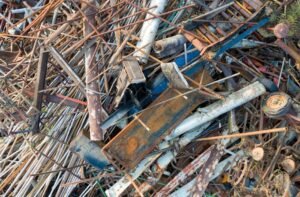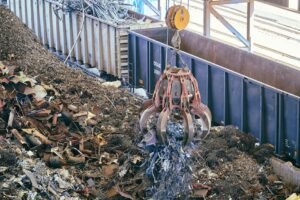

The term future recycling encapsulates a transformative shift in how Australia manages waste, recovers resources, and integrates sustainability into industrial and consumer practices. As global demand for raw materials intensifies and environmental pressures grow, the future recycling paradigm is no longer optional—it is a strategic imperative. This comprehensive guide explores the evolution, technologies, policies, economic drivers, and community engagement models that are defining the next era of resource recovery, with a particular focus on scrap metal recycling. From urban mining to AI-driven sorting systems, the future recycling movement is redefining waste as a valuable feedstock, positioning Australia as a potential leader in the global circular economy.
Defining the Future Recycling Landscape
Future recycling is not merely an extension of current recycling practices but a systemic reimagining of how materials are used, recovered, and reintegrated into production cycles. It moves beyond the traditional linear model of ‘take-make-dispose’ to a circular framework where materials, especially metals, are continuously cycled back into manufacturing with minimal loss of quality or value.
In Australia, this shift is being driven by several converging factors: rising landfill costs, tightening global supply chains for critical minerals, evolving consumer expectations, and federal and state-level policy commitments to net-zero emissions by 2050. The National Waste Policy Action Plan 2019 set ambitious targets, including an 80% average resource recovery rate from all waste streams by 2030. For metals—particularly ferrous and non-ferrous types like steel, aluminium, copper, and brass—this means accelerating collection, improving sorting efficiency, and expanding domestic processing capacity.
Scrap metal is uniquely positioned within the future recycling ecosystem due to its high recyclability. Steel, for instance, can be recycled indefinitely without degradation in quality, making it a cornerstone of sustainable manufacturing. Aluminium recycling saves up to 95% of the energy required to produce primary aluminium, translating into massive carbon emission reductions. As industries seek to meet Scope 3 emissions targets, recycled content in raw materials is becoming a key sustainability metric.
Moreover, future recycling in Australia is increasingly data-driven. Digital platforms are emerging to track material flows, verify recycled content, and connect suppliers with buyers in real time. For businesses and individuals alike, finding Metal Recycling Near Me is no longer just about convenience—it’s about participating in a transparent, accountable, and efficient system that contributes to national resource security.
Technological Innovations Shaping Future Recycling
The backbone of future recycling lies in technological advancement. Automation, artificial intelligence (AI), robotics, and advanced material science are collectively transforming how recyclable materials are identified, sorted, and processed—especially in the scrap metal sector.
One of the most significant developments is the deployment of sensor-based sorting systems. These use near-infrared (NIR) spectroscopy, X-ray fluorescence (XRF), and electromagnetic detection to differentiate between metal types at high speed and accuracy. This is crucial for mixed scrap streams, which often contain contamination that reduces the value and usability of recovered materials. Modern facilities can now sort aluminium alloys with precision, enabling high-purity outputs suitable for aerospace and automotive applications.
AI-powered optical sorting systems are being integrated into material recovery facilities (MRFs) to identify and separate non-metallic contaminants such as plastics, rubber, and glass from metal scrap. These systems use machine learning algorithms trained on thousands of images to improve sorting accuracy over time. Some advanced systems can identify and remove galvanised coatings or paint layers from steel, enhancing the quality of the final product.
Another breakthrough is the use of blockchain for material traceability. As manufacturers demand proof of recycled content for environmental reporting, blockchain provides an immutable ledger that records the origin, processing history, and chain of custody of scrap metal. This transparency is increasingly required in global supply chains, especially under regulations like the EU’s Green Deal and the U.S. Buy Clean standards.
Additionally, robotics is playing a growing role in hazardous sorting environments. Robotic arms equipped with sensors and grippers can safely handle heavy or contaminated materials, reducing worker exposure to injury and improving operational efficiency. In Australia, companies like TOMRA and ZenRobotics are piloting such solutions in partnership with local recyclers.
These technologies are not just theoretical—they are being deployed today. For example, Sims Metal, one of Australia’s largest recyclers, has invested in advanced sorting lines at its facilities in Sydney and Melbourne, significantly increasing recovery rates and output quality. As these innovations scale, they will redefine the economics of scrap metal recycling, making it more profitable and sustainable in the future of scrap metal recycling.
Policy and Regulatory Frameworks Driving Change
Government policy is a critical enabler of future recycling. In Australia, federal, state, and local governments are implementing a suite of regulations, incentives, and infrastructure programs to support the transition to a circular economy.
The National Waste Policy and the Recycling and Waste Reduction Act 2020 provide the legislative foundation for this transformation. The Act establishes the Australian Recycling Infrastructure Fund (ARIF), which has committed over $250 million to modernise recycling infrastructure, including scrap metal processing facilities. Projects funded under ARIF include the upgrade of shredding plants, the installation of advanced sorting technology, and the development of regional collection hubs.
Extended Producer Responsibility (EPR) schemes are also gaining traction. Under EPR, manufacturers are held accountable for the end-of-life management of their products. For metals, this means appliances, vehicles, and construction materials must be designed for disassembly and recyclability. The federal government is currently developing an EPR framework for electronics and packaging, with potential expansion to other sectors.
State-level initiatives are equally impactful. Victoria’s Waste and Resource Recovery Infrastructure Strategy includes targets for metal recovery from construction and demolition waste, which accounts for nearly 40% of the state’s total waste stream. Similarly, New South Wales has introduced landfill levies that increase annually, making recycling a more economically attractive option for businesses and councils.
These policies are not operating in isolation. They are aligned with international climate commitments and trade requirements. As global markets demand lower-carbon materials, Australian metal recyclers are well-positioned to supply high-quality recycled feedstock to industries such as automotive, construction, and renewable energy infrastructure. This creates a powerful economic incentive to invest in future recycling capabilities.
However, policy consistency remains a challenge. With different regulations across states, recyclers face compliance complexity. Harmonisation of standards—such as consistent definitions of ‘recycled content’ and uniform labelling requirements—would reduce friction and improve market efficiency. Industry bodies like the Australian Council of Recycling (ACOR) are advocating for national alignment to support the scalability of future recycling initiatives.
Economic Opportunities in the Future Recycling Sector
Future recycling is not just an environmental imperative—it is a major economic opportunity. The global recycled metals market was valued at over USD 300 billion in 2023 and is projected to grow at a compound annual growth rate (CAGR) of 5.8% through 2030. Australia, with its abundant scrap resources and strong mining and manufacturing sectors, is poised to capture a significant share of this growth.
One of the most promising areas is urban mining—the process of extracting valuable metals from end-of-life products and infrastructure. Australia generates over 70 million tonnes of construction and demolition waste annually, much of which contains recoverable steel and copper. By improving deconstruction techniques and material recovery, urban mining can reduce the need for virgin mining, lower emissions, and create local jobs.
The rise of electric vehicles (EVs) is also creating new recycling opportunities. EVs contain significant amounts of copper, lithium, cobalt, and rare earth elements in their motors and batteries. While battery recycling is still in its infancy, metal recovery from EV drivetrains and chassis is already viable. As Australia’s EV fleet grows—projected to exceed 3 million vehicles by 2030—the volume of recyclable metal will increase substantially.
Domestic processing is another key economic lever. Currently, a portion of Australia’s scrap metal is exported, often at lower value. By investing in advanced smelting and refining technologies, Australia can upgrade scrap into high-value products domestically. For example, recycled aluminium billets or steel ingots can be sold directly to manufacturers, capturing more value within the local economy.
Small and medium enterprises (SMEs) are also benefiting. Digital platforms like Scrap.Trade are democratising access to the scrap market, allowing smaller recyclers and collectors to connect with buyers, compare prices, and track market trends in real time. This transparency levels the playing field and encourages greater participation in the future recycling ecosystem.
Moreover, the job creation potential is significant. The recycling sector already employs over 50,000 Australians, and this number is expected to grow as automation complements rather than replaces human labour. New roles in data analysis, logistics coordination, quality assurance, and sustainability reporting are emerging, offering career pathways in a green economy.
Community Engagement and the Recycling Community
Public participation is essential to the success of future recycling. No amount of technology or policy can compensate for low collection rates or contamination in the waste stream. That’s why building a strong Recycling Community is a strategic priority.
Education is the first step. Many Australians remain unaware of what can be recycled, how to prepare materials, or where to take them. Local councils, schools, and NGOs are partnering with recyclers to run awareness campaigns, workshops, and clean-up events. These initiatives not only improve recycling rates but also foster a culture of responsibility and stewardship.
Convenience is equally important. The easier it is to recycle, the more people will do it. This is where services like Scrap Metal Recycling Near Me make a tangible difference. By providing searchable directories of drop-off points, buy-back centres, and mobile collection services, these platforms remove barriers to participation. Whether you’re a homeowner clearing out a garage or a contractor managing demolition debris, knowing where to go—and what payment to expect—increases engagement.
Community-led initiatives are also gaining momentum. Repair cafes, metal swap events, and school-based recycling drives are fostering local networks of action and knowledge sharing. In regional areas, where access to services may be limited, community cooperatives are forming to pool resources and negotiate better prices with processors.
Social media and digital tools are amplifying these efforts. Platforms like Facebook groups, WhatsApp networks, and dedicated apps allow people to share tips, report illegal dumping, and organise collection events. The metal recycling near me search trend reflects growing public interest in local, actionable solutions.
Ultimately, the future recycling movement depends on collective action. When individuals, businesses, and governments align around common goals, the impact multiplies. The Scrap Trade Australia network exemplifies this synergy, connecting stakeholders across the value chain to drive innovation and inclusion.
Sustainability and Environmental Impact of Future Recycling
The environmental benefits of future recycling are profound. By reducing reliance on virgin material extraction, recycling conserves natural resources, lowers greenhouse gas emissions, and minimises ecosystem disruption.
Consider the lifecycle of aluminium. Producing one tonne of primary aluminium generates approximately 12 tonnes of CO₂ equivalent. In contrast, recycling the same amount emits less than 0.5 tonnes—a 95% reduction. With Australia’s aluminium industry under pressure to decarbonise, increasing the use of recycled content is one of the most effective strategies available.
Steel recycling delivers similar gains. Recycling one tonne of steel saves 1.1 tonnes of iron ore, 0.6 tonnes of coal, and 0.5 tonnes of limestone. It also reduces energy consumption by 60–75% compared to primary production. Given that steel accounts for over 50% of all recycled materials in Australia by weight, these savings add up quickly.
Beyond emissions, future recycling helps protect biodiversity. Mining operations often fragment habitats, pollute waterways, and displace communities. By reducing the need for new mines, recycling supports conservation efforts and aligns with the UN’s Sustainable Development Goals (SDGs), particularly SDG 12 (Responsible Consumption and Production) and SDG 13 (Climate Action).
Water conservation is another benefit. Primary metal production is highly water-intensive. For example, copper mining can require up to 200 tonnes of water per tonne of metal. Recycling, by contrast, uses minimal water—especially when advanced dry-processing technologies are employed.
Life cycle assessments (LCAs) consistently show that recycled metals outperform virgin materials across environmental indicators. As more companies adopt environmental, social, and governance (ESG) reporting, the demand for low-impact materials will only grow. Future recycling is thus not just an operational choice but a strategic advantage in a carbon-constrained world.
Challenges and Barriers to Future Recycling Adoption
Despite its promise, future recycling faces several challenges. Contamination, market volatility, infrastructure gaps, and regulatory fragmentation all pose risks to scalability and long-term success.
Contamination remains a persistent issue. When non-recyclable materials are mixed with scrap metal—such as plastics in shredded automotive waste—they reduce the quality and value of the output. Contaminated loads may be rejected or downgraded, leading to financial losses and increased landfilling. Public education and stricter sorting at collection points are essential to address this.
Market volatility affects pricing and investment. Global scrap prices fluctuate based on supply and demand, trade policies, and currency exchange rates. For example, China’s National Sword policy, which restricted scrap imports, caused a temporary oversupply and price drop in Australia. While domestic processing can buffer some of this volatility, long-term stability requires diversified markets and value-added processing.
Infrastructure gaps are particularly acute in regional and remote areas. Many communities lack access to recycling facilities, forcing them to transport materials long distances or dispose of them locally. Mobile collection units, regional hubs, and public-private partnerships can help bridge this gap. Initiatives like the Regional Recycling Fund are already making progress, but more investment is needed.
Finally, inconsistent regulation across jurisdictions complicates compliance and planning. A national standard for material classification, labelling, and reporting would streamline operations and improve transparency. Industry collaboration and advocacy will be key to achieving this.
Conclusion: Building a Resilient Future Recycling System
The future recycling movement in Australia is at a pivotal moment. With the right combination of technology, policy, economic incentives, and community engagement, the nation can build a resilient, inclusive, and sustainable resource recovery system. Scrap metal recycling will remain at the heart of this transformation, offering a proven model of circularity that other sectors can emulate.
From urban mining to AI-driven sorting, from blockchain traceability to community-led collection networks, the tools and strategies are available. What is needed now is coordinated action—across government, industry, and civil society—to scale what works and innovate where gaps remain.
For individuals and businesses, the path forward is clear: participate, advocate, and invest in future recycling. Whether you’re searching for Scrap Metal Recycling Near Me or joining a local Recycling Community, every action contributes to a larger vision of sustainability and resource security. The future of recycling is not a distant ideal—it is being built today, one tonne of scrap at a time.
Frequently Asked Questions
What is future recycling and why is it important?
Future recycling refers to the next generation of waste recovery and resource management systems that prioritise circularity, technology, and sustainability. It is important because it reduces environmental impact, conserves natural resources, and supports economic growth through efficient material reuse.
How does technology improve scrap metal recycling?
Advanced technologies like AI-powered sorting, robotics, and blockchain traceability enhance the accuracy, efficiency, and transparency of scrap metal recycling. These innovations reduce contamination, improve recovery rates, and ensure compliance with global sustainability standards.
What role do policies play in shaping future recycling?
Government policies such as the Recycling and Waste Reduction Act, landfill levies, and Extended Producer Responsibility schemes create regulatory and financial incentives that drive investment in recycling infrastructure and encourage sustainable practices across industries.
How can individuals contribute to future recycling efforts?
Individuals can participate by properly sorting recyclables, using local services to find Metal Recycling Near Me, reducing contamination, and engaging with community initiatives that promote reuse and responsible disposal.