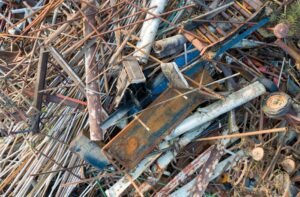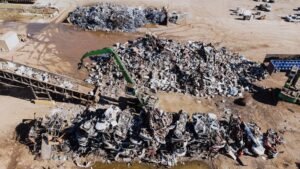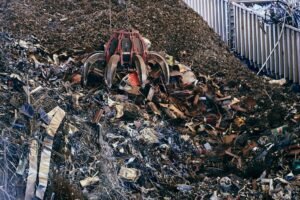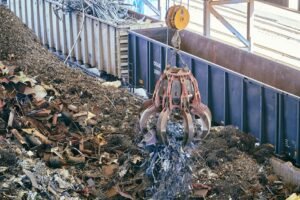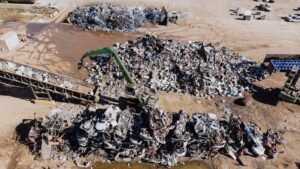

Trading metals has become a strategic pillar of Australia’s circular economy, turning 11.2 million tonnes of discarded copper, aluminium, steel and exotic alloys into export revenue worth AUD 18.6 billion last year. Whether you are a demolition contractor with 40 t of structural beam, an electrician sitting on bright-bar off-cuts, or a new entrant comparing Scrap Trading Vs Recycling Business, this authoritative guide walks you through every stage of the modern Australian scrap supply chain.
1. Australian Scrap Metal Market Overview
Australia’s geographic isolation and high domestic mining output create unique arbitrage windows. Five deep-water ports (Port Kembla, Port of Melbourne, Port of Adelaide, Fremantle and Townsville) handle 82 % of the 3.9 Mt exported annually, while local mills operated by sims metals, InfraBuild and Liberty Steel consume the remainder. Prices are quoted in AUD per tonne, free-on-truck (FOT) yard, and track the London Metal Exchange (LME) minus ocean-freight and finance spreads.
Key indicators to watch:
- LME Cash-Settled Copper (HG): correlates 0.94 with domestic bright copper wire prices.
- Turkish Import HMS 80/20 CFR: sets the floor for Australian heavy melt steel.
- SHFE Nickel: drives stainless 304 solids.
- USD/AUD: every 1 ¢ move shifts export scrap value ~AUD 10/t.
2. How Scrap is Graded and Priced
AS 1816-2021 classifies scrap into 51 distinct grades across eight major families. Mis-classification can cost up to AUD 160/t. Below is a practical cheat-sheet used by commercial traders:
| Grade | Description | Typical Contamination | 2024 FOT Price Band (AUD/t) |
|---|---|---|---|
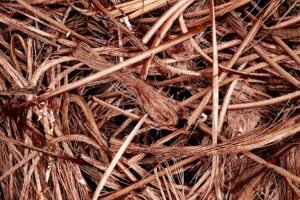
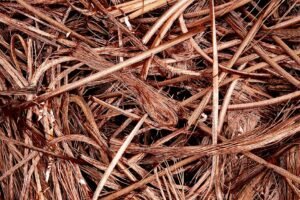
| Bare Bright Copper Wire | >99.9 % Cu, <#16 B&S, uncoated | <0.1 % O2 | 11,000 – 11,400 |
| Number 1 Copper | Clean tube, busbar, <0.3 % solder | Paint, brass fittings | 10,200 – 10,600 |
| Number 2 Copper | Painted, soldered, max 5 % other | Plastic, Ni | 9,000 – 9,500 |
| 6063 Extrusion Tense | Aluminium window frames | Steel screws 1 % | 2,300 – 2,500 |
| 304 Stainless Solids | 8.5 % Ni, 18 % Cr | Mo, oil | 2,100 – 2,300 |
| HMS 1&2 (80/20) | Max 6 mm thickness, <0.3 % Cu | Rubber, concrete | 350 – 420 |
| shredded scrap | Post-shred auto fragment, >75 % Fe | Copper meatballs, glass | 310 – 360 |
Always insist on digital photos and a weighbridge docket before accepting a buyer’s counter-grade. Moisture, dirt and Scrap Rust Understanding Removing And Trading Rusted Metals each reduce yield. If the load arrives at port 1 % above contract moisture, you could be debit-noted AUD 15/t.
3. Legal Framework: Permits, GST, Chain of Custody
Each state regulates scrap differently. In NSW, you need a Second-hand Dealers & Pawnbrokers Permit (max penalty AUD 5,500). Queensland requires a Scrap Metal Recycler Licence under the Waste Reduction & Recycling Act 2011. South Australia mandates photo ID recording for cash transactions over AUD 50, while Victoria banned cash payments above AUD 1,000 in 2018.
From 1 July 2022, all ferrous and non-ferrous scrap is subject to 10 % GST on domestic sales. Exporters can claim the refund via the Deferred GST Scheme. Keep these documents for five years:
- Weighbridge ticket (sealed)
- Photo ID of the seller or driver
- Material Safety Data Sheet (if processed)
- Basel code for trans-boundary movement (if exported)
4. Sourcing, Consolidation and Logistics
4.1 Urban Collection Streams
Metropolitan demolition, auto dismantling and factory off-cuts remain the cheapest source. Build multi-year supply agreements instead of spot buying; you lock-in feedstock at AUD 50/t below spot and guarantee mill off-take.
4.2 Regional Circuit Runs
Using B-double tippers, you can collect 35 t per load within a 400 km radius of a major yard. Factor AUD 0.18/tonne/km plus AUD 18/t loading labour. Aim for back-loading grain or fertiliser to avoid dead-heading.
4.3 Export Consolidation
Most exporters demand minimum 2,000 t parcels. If you aggregate smaller loads in a public yard, insist on weighted average pricing (WAP) to avoid grade slippage. Track containerised exports through ScrapTrade.com.au.
5. Trading Metals Through Digital Platforms
A modern B2b Scrap Trading Platform removes price opacity, offers escrow payment and generates compliance paperwork in minutes. Typical workflow:
- Upload geotagged photos and weighbridge docket.
- AI classifier suggests grade; human verifier confirms.
- Counter-parties bid live; seller accepts best FOT or delivered port price.
- Platform issues tax invoice with split GST.
- Funds held in escrow until buyer’s weighbridge confirms variance <1 %.
Users report average 4.3 % price premium versus local yard quotes, and payment within 24 h versus 30-day industry standard. APIs also push live indicative prices to your ERP, eliminating spreadsheet reconciliation.
6. Processing & Value-Add Upgrading
Simply brokering loose metal limits margin to AUD 35–60/t. By contrast, shredded, de-tinned and briquetted material commands higher premiums:
- Wire granulation: Strip plastic off copper cable to upgrade from 35 % Cu to 99 % bare bright; margin jumps AUD 1,800/t.
- Stainless shearing: Remove steel attachments; 304 solids price beats 304 turnings by AUD 400/t.
- Hot-wash HDPE: Removing grease raises aluminium turnings briquette price by AUD 220/t.
CapEx ranges from AUD 120 k for a 15 t/h shear to AUD 1.8 m for a 4,000 hp shredder. Payback under current spread is 14–22 months if you process >20,000 t/a.
7. Hedging & Risk Management
Trading metals without hedging is gambling. Use these instruments:
- LME Copper futures: 10 t lot, margin AUD 9,000.
- SGX Iron Ore swaps: proxy for steel scrap volatility.
- USD/AUD forwards: lock FX for 90-day export receivables.
- Freight swaps: cap Capesize rates if you ship bulk.
Target hedge ratio = (inventory + forward sales) × 0.65. Rolling 30 % of position into nearby month reduces contango bleed.
8. Sustainability, Carbon Credits and ESG Reporting
Every tonne of recycled aluminium saves 16 t of CO₂-e versus bauxite mining. Under the Emissions Reduction Fund (ERF), projects that divert MSW metal from landfill can earn Australian Carbon Credit Units (ACCUs). Current spot ACCU price is AUD 35, translating to an extra AUD 42/t on shredded aluminium if documentation is compliant.
Large consumers such as Nestlé, Coca-Cola and BlueScope now require Scope 3 data. Provide them with Digital Product Passports (DPP) to secure long-term off-take. Blockchain-enabled DPPs issued through Scrap Trade are already accepted by Ford and Tesla supplier audit teams.
9. Common Pitfalls and How to Avoid Them
1. Mis-declaring HSE waste. Even 0.5 % asbestos in demolition scrap can trigger contamination fees of AUD 250/t plus site closure. Always run NATA-approved fibre counts.
2. Over-estimating yield. If your cable granulator only achieves 96 % Cu recovery but you paid 99 % price, you lose AUD 550/t. Calibrate plants monthly.
3. Ignoring currency timing. A 2 ¢ AUD appreciation post-contract can wipe your entire margin. Use FX options or invoice in USD.
4. Poor stockyard drainage. Ferrous scrap left in standing water gains 3–5 % moisture, leading to rejection at port. Invest in concrete hardstand with camber.
10. Future Trends: Green Steel, Lithium and Circular Design
Australia’s steelmakers plan to inject 2 Mt/a of hydrogen-reduced DRI by 2030. Scrap will supply 55 % of the metallic charge, pushing demand for low-residual shredded scrap. Simultaneously, spent lithium-ion batteries will grow from 6 kt in 2023 to 130 kt by 2030. Capturing these new streams requires specialised sclap trading know-how, including Class 9 dangerous-goods licensing and cryogenic shredding.
Forward-thinking traders are partnering with OEMs at product-design stage to lock in reverse-logistics contracts, securing scrap before generation. These agreements, known as urban mining partnerships, guarantee supply margins of AUD 80–110/t for 10-year terms.
11. Conclusion
Trading metals profitably in Australia is no longer about who shouts loudest on the weighbridge; it is about data-driven price discovery, compliant logistics and value-add processing. Master the regulatory maze, leverage digital platforms, hedge your price risk and embed yourself early in emerging battery and green-steel supply chains. Execute these fundamentals and you convert discarded metal into sustainable, scalable margin for the next decade.
Frequently Asked Questions
What licence do I need to start trading metals in Queensland?
You need a Scrap Metal Recycler Licence issued by the Department of Environment and Science. The application fee is AUD 1,050 and must be renewed annually with a clean criminal-history check.
How do I avoid price slippage when exporting mixed scrap?
Pre-sort loads to within 2 % of contract grade, use sealed weighbridge photos, and nominate independent third-party inspection at load port. Include an LME-linked price-adjustment clause for chemistry variances.
Is GST payable on export sales?
No, export sales are GST-free under section 38-185 of the GST Act, but you must hold proof of export such as an Export Declaration Number (EDN) and bill of lading within 60 days.
Can I hedge aluminium scrap that is not LME deliverable?
Yes. Use the LME Aluminium Alloy contract as a proxy and adjust for historical basis differential. Rolling the hedge before expiry prevents physical delivery issues.