
Understanding worldwide scrap markets is now essential for every Australian recycler, trader or manufacturer who wants to turn waste into profit while lowering carbon footprints. This pillar guide walks you through the grades, pricing levers, recycling science, environmental wins and practical trading tips that industry leaders use every day.
1. Global Flows: How Worldwide Scrap Moves Around the Planet
More than 100 million tonnes of worldwide scrap metals cross borders annually. The largest exporters are the United States, EU-27, Japan and the UK; the biggest importers are Turkey, India, Vietnam, Indonesia and Bangladesh. Australia exports roughly 2.2 million tonnes, dominated by shredded steel, HMS 1&2 and aluminium extrusion scrap.
Containerised shipments dominate short-sea routes, while bulk carriers move 85 % of seaborne scrap on deep-sea legs. Prices are quoted in US$/tonne CFR (Cost & Freight) and move daily on platforms such as Scrap.trade. Traders hedge currency and freight risk using iron-ore swaps as a proxy for ferrous scrap direction.
2. Standard Scrap Grades You Will Meet in Worldwide Scrap Trade
Every deal references a specification. Learn the codes and you avoid price disputes, rejected loads and lost margins.
Ferrous Grades (ISRI / IS 2000)
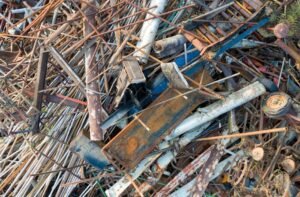
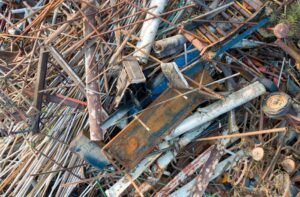
- HMS 1&2 (200-206): ¼ inch thick, 60 cm × 60 cm max. Premium in Turkey drives global price.
- Shredded (210): Density ≥ 70 lb/ft³, 94 % metallic. Steel mills love it for fast melt.
- P&S (211): Plate and structural, 5 ft max. Higher yield, lower residual Cu.
- Busheling (207): Clean new factory clippings. Low residuals, perfect for EAF flat-rolled.
Non-Ferrous Grades
- E.C. Wire (Millberry): 99.9 % Cu, insulated wire removed. SpA premium to LME Grade-A.
- Tense/Tali: Old cast aluminium pistons, 2 % max Fe. Gulf smelters pay on Al recovery.
- Aluminium Extrusion 6063: Painted or unpainted. Australia ships 60 kt/yr to Malaysia.
- Brass Honey: 65 % Cu, 35 % Zn. Fetches LME Cu × 0.68 minus treatment charge.
Always insist on joint sampling at loading port and retain a sealed reference sample for 60 days. For more detail on contract basics, read What Is Scrap Trade.
3. How Metal Recycling Works: From Bin to Bloom
Recycling is not melting. It is a sequence of size reduction, separation, metallurgical upgrading and re-melt. Each step adds value.
Step 1 – Collection & Sorting
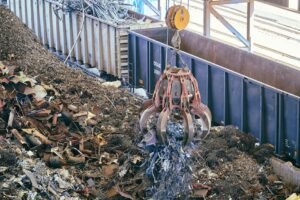
MRFs (materials-recovery facilities) use eddy-current separators to eject non-ferrous from household scrap. Industrial scrap goes direct to processors, bypassing MRFs and capturing higher margins.
Step 2 – Shredding & Liberation
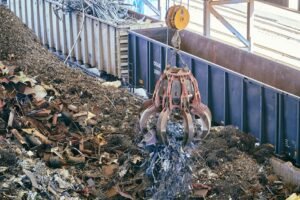
A 6 000 hp hammer mill shreds a car in 45 seconds. Fragments pass under 2 m diameter magnets that pull 98 % of ferrous. The remaining non-ferrous “zurik” is split into stainless, copper and aluminium fractions using X-ray transmission (XRT) sorters.
Step 3 – Pyro-Metallurgy
In the EAF, shredded scrap melts at 1 600 °C with 90 % less energy than making steel from iron ore. A single EAF shop in Port Kembla can consume 1.2 Mt/yr of scrap and ship 0.9 Mt of billet.
Step 4 – Hydro-Metallurgy (Cu & Al)
Copper scrap is fire-refined to 99.4 % then electro-refined to 99.99 % cathode. Aluminium scrap is de-coated in a 500 °C kiln, melted in a reverberatory furnace and cast into 10 t sows for rolling mills.
Want to monetise your own material? List it today on Sell Scrap and reach domestic and export buyers in real time.
4. Environmental Benefits: Why Worldwide Scrap Is the Green Feedstock
Using worldwide scrap instead of virgin ore delivers measurable environmental wins:
- Energy: 75 % saving for aluminium, 62 % for copper, 56 % for steel.
- CO₂: 1.8 t CO₂ saved per tonne of steel; 9.5 t CO₂ saved per tonne of aluminium.
- Water: 40 % less freshwater intake.
- Landfill: Every tonne of recycled steel keeps 1.2 m³ of landfill space free.
The World Steel Association estimates global scrap recycling avoids 950 Mt of CO₂ annually—equal to the emissions of Germany plus the UK combined. In Australia, the recycling sector offsets 12 Mt CO₂-e per year, helping heavy industry meet Safeguard Mechanism baselines without paying $75/t penalties.
5. Price Drivers and Trading Tips for Australian Exporters
Scrap prices are notoriously volatile. Here are the levers you must watch:
- Turkish rebar export price: Turkish mills set the headline CFR scrap price because they import 25 % of seaborne scrap. Track it daily on ScrapTrade.com.au.
- Iron-ore spot: When 62 % Fe ore drops below $80/t, EAF mills buy more scrap and prices rise.
- Freight rates: A $10 move in Capesize rates can swing landed scrap by $6/t in Asia.
- FX: AUD/USD and USD/TRY volatility can wipe out thin margins overnight.
- Import quotas: Indonesia relaxed purity rules to 95 % in 2023, boosting demand for lower-grade zorba.
Practical Tips
- Buy FAS (Free Alongside Ship) if you control loading; buy CFR if you don’t.
- Always secure a letter-of-credit (LC) at 100 % value, not 95 %, to avoid cash-flow gaps.
- Insert a tolerance clause ±2 % on weight and ±0.5 % on chemistry to avoid rejection.
- Ship in 20 ft containers for non-ferrous; 40 ft HC for shredded steel to maximise freight utilisation.
6. Compliance, Quality Control and Rejected Loads
One rejected container can erase profit on ten good ones. Follow these checkpoints:
- Radiation: Every load must pass a portal monitor; even 0.5 μSv/h above background triggers a full unload.
- Explosives: Gas bottles, ammunition or flares lead to immediate red-tagging and $5 000+ de-contamination fee.
- Mercury: Found in relays, thermometers, fluorescent lamps. ISRI limit is 1 mg/kg.
- PCBs: Old transformers < 50 ppm are allowed; anything higher is hazardous waste.
Use a pre-shipment inspection (PSI) company such as SGS or Bureau Veritas. They will issue a certificate that travels with the LC and protects both buyer and seller.
7. Technology Trends: AI, Blockchain and Green Steel
Recycling plants now deploy AI vision sorters that identify 1 mm copper fragments at 98 % accuracy. Blockchain pilots in Japan record carbon-savings data for each scrap batch, feeding green-steel premiums of $15–30/t. Expect hydrogen-based EAFs by 2030 that accept higher residual scrap without quality loss, widening the feedstock pool.
8. How to Get Started in the Australian Market
New entrants need three things: supply, finance and offtake. Start local:
- Partner with demolition contractors who generate regular HMS and reo-bar.
- Install a 1 000 t shear-baler to densify material and cut freight cost by 18 %.
- List inventory on Scrap marketplace to reach smelters in Taiwan, Vietnam and India.
Finance tip: Australian EFIC provides export credit guarantees for ferrous scrap up to 85 % of invoice value if the buyer is in an emerging market.
9. Case Study: Sydney-Based Recycler Turns Aluminium UBC Into $1.2 M Export Revenue
In 2023, Sydney Metal Processors (SMP) collected 9 200 t of used beverage cans (UBC) from NSW deposit-scheme collectors. After de-coating and baling, SMP exported 8 700 t to South Korea at an average price of US$1 470/t CFR Busan. Gross revenue hit AU$18.9 M; EBIT margin was 11 %. Key success factors:
- Guaranteed chemistry: Si < 0.2 %, Fe < 0.3 %, thanks to optical sorters.
- Shipment in 40 ft containers, 22 t net each, maximising Korean road weight limits.
- LC at sight, 100 %, issued by KEB Hana Bank, eliminating counter-party risk.
SMP’s next project is to add a twin-shaft shredder to process aluminium extrusion scrap for the same buyers, proving that worldwide scrap success is replicable if quality is non-negotiable.
Conclusion: Turning Waste Into Wealth
Worldwide scrap is no longer the junk trade of last century; it is a strategic, technology-driven commodity that underpins decarbonisation, energy security and circular-economy policy. Whether you are a demolition contractor with 500 t of reo-bar or a multinational trader shipping 50 000 t of shredded steel, the playbook is the same: know your grades, control quality, hedge your risk and use digital platforms to find transparent counterparties. Start today by listing material on worldwide scrap metal marketplace and turn your next pile of Scrap into profit.
Frequently Asked Questions
What is the most valuable grade of worldwide scrap?
Millberry copper wire (99.9 % Cu) consistently commands the highest price, trading at LME Grade-A minus a small discount. Clean extrusion 6063 aluminium and busheling steel also attract strong premiums.
How can I avoid rejected scrap shipments?
Book pre-shipment inspection, verify radiation and moisture levels, and include a ±2 % weight tolerance clause. Rejections usually stem from mercury, PCBs or incorrect chemistry.
Is exporting scrap metal from Australia profitable?
Yes. With 2.2 Mt exported annually, Australian exporters benefit from strong Asian demand. Profitability hinges on freight optimisation, FX hedging and meeting strict import specifications.
What environmental impact does scrap recycling have?
Recycling steel saves 56 % energy and 1.8 t CO₂ per tonne; recycling aluminium saves 75 % energy and 9.5 t CO₂ per tonne, making worldwide scrap critical to global decarbonisation goals.