
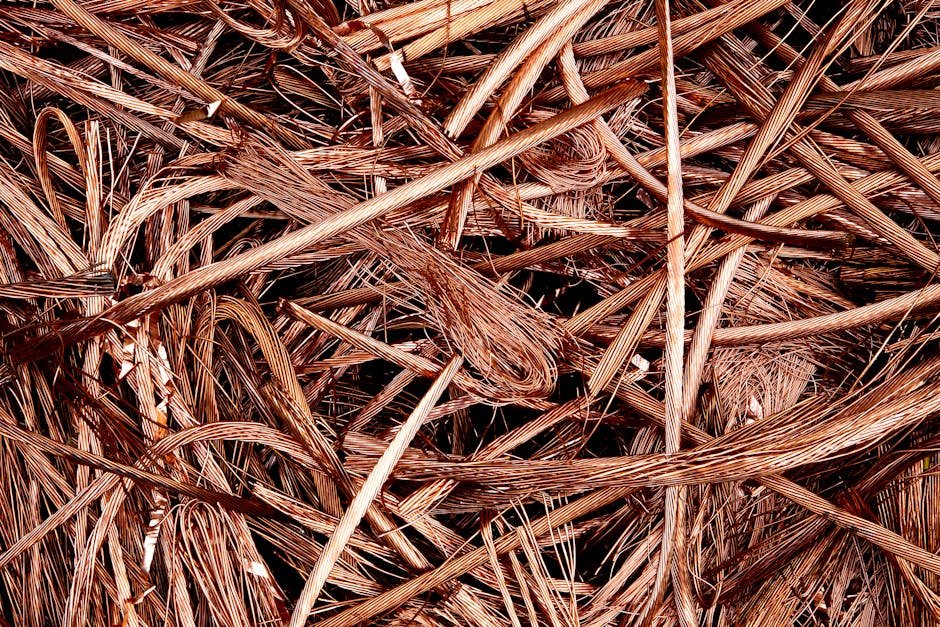

Navigating the market for scrap copper clayton requires a sophisticated understanding of both global commodity trends and local industrial dynamics. As a primary hub for manufacturing and trade in Melbourne’s southeast, Clayton serves as a critical node in the Victorian circular economy. Whether you are a licensed plumber with offcuts of copper pipe, an electrician with surplus copper wire, or an industrial site manager clearing out decommissioned machinery, understanding the nuances of copper grading is the difference between a standard transaction and a high-value return. The local market for scrap metal recycling is highly competitive, making it essential for sellers to remain informed about daily price fluctuations and the specific requirements of local processing facilities.
The Hierarchy of Copper Grades: Maximizing Your Return
In the world of metal recycling, not all copper is created equal. The classification of your material directly dictates the copper price per kg you will receive at the scale. To achieve the highest possible valuation for your scrap copper clayton, you must categorize your inventory according to industry-standard grades. The most coveted grade is bare bright copper. This consists of uncoated, unalloyed copper wire that is no thinner than 16 gauge. It must be free of any insulation, paint, or solder. Because it is nearly 99.9% pure, refineries can melt it down with minimal processing, which is why it consistently fetches the top market rate.
Following bare bright is #1 Copper. This grade includes clean copper pipe and tubing that is free of fittings, solder, and corrosion. While similar to bare bright in purity, its physical form (tubing vs. wire) places it in a slightly different processing category. If your copper has traces of oxidation or light paint, it typically falls into the Scrap Copper category known as #2 Copper. This grade allows for some contamination, such as uncleaned solder joints or heavy oxidation, but it must still be at least 94% copper content. Understanding these distinctions is vital; mixing a small amount of #2 copper into a bin of bare bright can result in the entire load being downgraded by the buyer.
The Industrial Recycling Process in Clayton
The journey of scrap copper clayton from a construction site to a new product is a marvel of modern industrial engineering. Once the material is delivered to a local facility, it undergoes a rigorous sorting process. Large-scale recyclers utilize spectroscopic analysis to verify the metallurgical composition of the alloys, ensuring that contaminants like lead or tin are identified early. For those looking for Scrap Copper Prices Near Me, the efficiency of this local processing is what allows Clayton-based yards to offer competitive rates compared to more remote locations.
After sorting, the copper is often granulated or baled. Copper wire that is still insulated is fed into high-speed granulators that mechanically separate the plastic PVC coating from the copper granules. This mechanical separation is far more environmentally friendly than the obsolete and illegal practice of burning wire. The resulting copper “chops” are then sent to a secondary smelter. In the furnace, the copper is melted and refined through a process called fire refining or electrolysis. This restores the metal to a high-purity state, often 99.99%, where it is cast into ingots, cakes, or rods, ready to be drawn into new electrical components or plumbing fixtures. This closed-loop system is a cornerstone of the Copper Scrap Group initiatives across Australia.
Economic Drivers of the Copper Price Per KG
The copper price per kg in Clayton is not set in a vacuum; it is a reflection of the London Metal Exchange (LME) and the COMEX in New York. Copper is often referred to as “Dr. Copper” by economists because its price is a reliable barometer for the health of the global economy. When industrial production in major economies like China or the United States surges, the demand for copper—and consequently the price for scrap copper clayton—rises sharply. Conversely, during periods of high interest rates or slowing construction activity, prices may soften.
Local factors also play a significant role. In Clayton, the proximity to major transport infrastructure and the concentration of heavy industry mean that logistics costs are lower, allowing for better margins for the seller. However, sellers must also account for the “spread”—the difference between the global spot price and what a local yard pays. This spread covers the yard’s overhead, labor, machinery maintenance, and the risk of price volatility during the time it takes to aggregate and ship the metal to a refinery. For a comparison of how regional markets differ, one might look at the Scrap Copper Malaga: Recycling Guide & Prices to see how Western Australian logistics impact local valuations.
Environmental Benefits of Copper Recycling
The environmental argument for recycling scrap copper clayton is as compelling as the financial one. Mining virgin copper is an energy-intensive process that involves open-pit mining, crushing massive amounts of rock, and chemical leaching. In contrast, recycling copper uses up to 85% to 90% less energy than primary production. This massive reduction in energy consumption translates directly to lower greenhouse gas emissions. By choosing to recycle your old copper pipe and wiring, you are actively participating in the reduction of the global carbon footprint.
Furthermore, copper is 100% recyclable without any loss of quality. Unlike plastics or paper, which degrade each time they are recycled, copper can be processed infinitely. This makes it one of the most sustainable materials in existence. In a suburb like Clayton, where industrial sustainability is becoming a key metric for corporate responsibility, robust copper recycling programs help local businesses meet their ESG (Environmental, Social, and Governance) targets. The preservation of landfill space is another critical benefit; metal does not biodegrade, and keeping it out of the waste stream prevents long-term soil contamination and resource wastage.
Advanced Sorting: Number 1 vs. Number 2 Copper
To truly master the scrap copper clayton market, one must understand the technical thresholds between #1 and number 2 copper. Number 1 copper is defined as scrap that is at least 1/16th of an inch thick and essentially free of any foreign attachments. This includes clean bus bars, thick wire, and unalloyed clippings. It is the “workhorse” grade of the industry—highly valuable and easily processed. If you have large quantities of clean industrial scrap, this is likely where your material will land.
Number 2 copper is more diverse. It includes light gauge sheets, copper with solder, and wire that has a high degree of oxidation (turning green or black). While the copper price per kg for #2 is lower, it is often easier to accumulate in large volumes during demolition projects. For example, old copper pipe pulled from a residential renovation in Clayton will almost always be classified as #2 because of the solder joints and mineral buildup inside the pipe. Expert scrappers often take the time to cut off the soldered joints, upgrading the bulk of the pipe to #1 grade and keeping the joints as #2, thereby maximizing their total payout.
Practical Tips for Preparing Your Scrap
If you want to get the best deal for your scrap copper clayton, preparation is key. First, invest in a high-quality wire stripper. While you can sell insulated copper wire as is, the price is significantly lower because the yard must account for the weight of the plastic and the cost of granulation. By stripping the wire to reveal bare bright copper, you can often double your profit margin per kilogram. However, you must weigh the time spent stripping against the volume of wire; for thin data cables or ribbon wire, the labor often outweighs the price increase.
Second, keep your metals separated. Never mix brass fittings with your copper pipe. Even though brass contains copper, it is an alloy and will be priced much lower. Use a magnet to ensure no steel or iron is attached to your copper loads; if a magnet sticks to it, it isn’t copper. Finally, stay informed about the market. Prices can change daily. Establishing a relationship with a reputable dealer through professional scrap metal services ensures you have access to transparent weighing and fair market rates. In Clayton, reputation is everything, and the best yards value long-term partnerships with consistent suppliers.
Regulatory Landscape and Safety in Victoria
Selling scrap copper clayton is governed by the Victorian Second-hand Dealers and Pawnbrokers Act. To combat metal theft, it is illegal for scrap yards in Victoria to pay cash for scrap metal. All transactions must be conducted via electronic funds transfer (EFT) or cheque. Furthermore, sellers must provide valid photo identification, which the yard is required to keep on record. While this may seem like an inconvenience, these regulations protect the integrity of the industry and ensure that legitimate tradespeople and businesses are not undercut by illegal activity.
Safety is another paramount concern. Handling copper wire and heavy copper pipe carries risks of cuts, abrasions, and strain injuries. Always wear cut-resistant gloves and eye protection when processing scrap. If you are collecting scrap from a construction site in Clayton, ensure you have the proper permits and that you are following all site-specific OHS protocols. Professionalism in how you present your scrap—neatly organized, free of debris, and accurately graded—not only ensures a faster turnaround at the yard but also signals to the buyer that you are a knowledgeable seller who expects a fair copper price per kg.
Conclusion: The Future of Copper in Clayton
The demand for copper is only set to increase as the world shifts toward electrification and renewable energy. Electric vehicles, for instance, use four times as much copper as internal combustion engine vehicles. This long-term demand ensures that scrap copper clayton will remain a high-value commodity for decades to come. By understanding the grades—from bare bright copper to number 2 copper—and staying abreast of the copper price per kg, sellers in the Clayton area can turn their waste into a significant revenue stream while contributing to a more sustainable future. Whether you are managing a large industrial cleanout or simply clearing out your garage, the principles of sorting, cleaning, and market timing remain the same: knowledge is the most valuable tool in your kit.
Frequently Asked Questions
What is the difference between #1 and #2 copper scrap?
#1 copper consists of clean, unalloyed, and uncoated copper solids or pipe with a thickness of at least 1/16th of an inch. #2 copper includes material with light oxidation, solder joints, or thin coatings, resulting in a slightly lower price per kilogram.
How is the copper price per kg determined in Clayton?
The local price is based on the London Metal Exchange (LME) spot price, adjusted for the purity of the grade, the volume of the material, and the local processing costs of the Clayton recycling facility.
Can I get cash for my scrap copper in Victoria?
No, Victorian law prohibits cash payments for scrap metal to prevent theft. All reputable dealers in Clayton must pay via electronic funds transfer (EFT) or cheque and require a valid photo ID for the transaction.
Is it worth stripping the insulation off my copper wire?
Stripping insulation can significantly increase your return by upgrading the material to ‘bare bright copper,’ but it is generally only cost-effective for thicker gauges. For thin or complex wiring, the labor time may exceed the additional profit.