
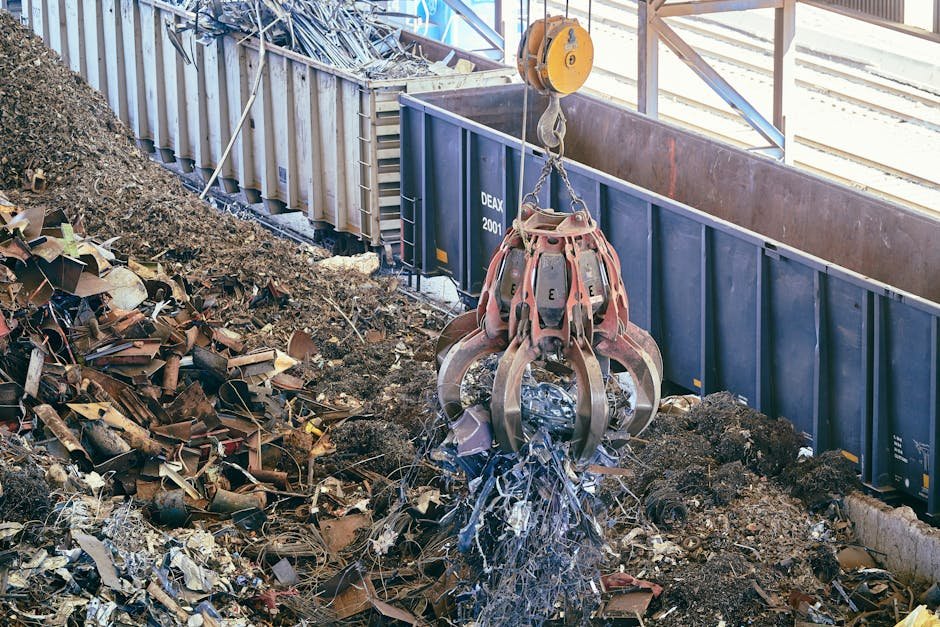

Understanding the current price of scrap metal per kg is the cornerstone of a profitable recycling strategy for both industrial contractors and residential sellers. Because the Australian market is intrinsically linked to global industrial demand—particularly from manufacturing hubs in Asia—prices are rarely static. To navigate this landscape, you must first recognize that the value you receive at the weighbridge is a derivative of the London Metal Exchange (LME) spot prices, adjusted for local logistics, processing costs, and the specific alloy composition of your material. Whether you are clearing out a shed or managing a large-scale demolition site, staying informed on current scrap prices is essential for ensuring you aren’t leaving money on the table.
The Mechanics of Market Pricing
The price of scrap metal per kg is not an arbitrary figure set by individual yards; it is a complex calculation influenced by macroeconomic forces. At its core, the market rate is determined by the cost of virgin ore extraction versus the cost of recycling. When global demand for raw steel or aluminum spikes, the demand for high-quality scrap follows, driving up the price per kg. Conversely, during periods of economic contraction, industrial output slows, leading to a surplus of scrap and a subsequent drop in value.
Local factors also play a massive role in what you are paid. Logistics are a major cost component; moving heavy, dense materials like steel requires significant fuel and specialized transport, which is factored into the final price. Furthermore, the volume of material you provide can influence the rate. Commercial clients with consistent, high-volume supply chains often negotiate better pricing tiers compared to casual sellers. For those looking to dive deeper into the nuances of market fluctuations, Understanding Scrap Metal Price: A 2026 Market Guide provides a granular analysis of how these economic cycles impact your bottom line.
Decoding Metal Grades and Quality
Not all metal is created equal, and understanding grading is the fastest way to increase your payout. Scrap yards categorize metals into specific grades based on chemical composition, contamination, and physical size. For example, ‘Bright Shiny Copper’ commands a significantly higher price than ‘Burnt Copper’ or ‘Copper Pipe with Solder.’ This is because high-purity scrap requires less energy and processing to be refined into new products.
When you take your load to Crg Scrap Metal, the staff will inspect for ‘contaminants.’ Contamination refers to any non-metallic material—such as plastic insulation, rubber, or wood—attached to the metal. If you bring in copper wire still encased in heavy PVC coating, the yard must deduct the weight of the plastic and the labor cost to strip it. By stripping your wires at home or separating your clean aluminum from your dirty aluminum, you effectively move your material into a higher-value bracket. This is particularly relevant when tracking the Aluminum Scrap Price In 2026, where purity levels are the primary determinant of profit margins.
The Lifecycle of Recycling
The recycling process is a marvel of industrial efficiency. Once scrap is collected, it undergoes a rigorous sorting process. Ferrous metals (iron and steel) are separated from non-ferrous metals (copper, aluminum, brass, stainless steel) using powerful magnets and eddy current separators. Once sorted, the material is shredded or baled to optimize density for shipping. From there, it is melted down in furnaces, cast into ingots, and sold back to manufacturers to be turned into everything from car parts to beverage cans.
This circular economy is vital for Australia’s industrial sustainability. By recycling metals, we drastically reduce the energy consumption required for mining and refining raw ore. For instance, recycling aluminum uses approximately 95% less energy than producing it from bauxite. When you track the latest Scrap Metal Prices, you are participating in a system that preserves natural resources and reduces landfill waste. For more information on how to optimize your recycling efforts, visit Scrap Trade Australia to connect with reputable local buyers.
Factors That Influence Your Payout
Beyond the global market rate, several practical factors dictate your final payout. First is the ‘cleanliness’ of your load. A mixed load of steel and aluminum is worth less than two separate, clean piles because the yard must spend time and money separating them. Second is the volume. Large quantities of sorted metal are easier for yards to process and transport, which allows them to offer more competitive rates. Third is market timing. While you cannot predict the future, watching for trends in industrial manufacturing output can help you decide when to sell.
Another factor is the specific facility you choose. Not all yards operate with the same efficiency or overheads. Some specialize in high-volume industrial scrap, while others are better equipped for residential trade. Always verify that your chosen yard is transparent about their grading process. If you are unsure about the value of your scrap, ask for a breakdown of the grades. A reputable dealer will explain why your material falls into a specific category, helping you understand how to improve your sorting for future visits.
Environmental and Economic Impacts
The environmental case for metal recycling is overwhelming. Beyond the energy savings mentioned earlier, recycling metal reduces the need for destructive open-cut mining and lowers greenhouse gas emissions associated with primary metal production. Economically, the industry serves as a crucial barometer for the health of the manufacturing sector. When recycling rates are high, it indicates a robust demand for raw materials, suggesting that the broader economy is in a growth phase.
For businesses, scrap management is not just about revenue—it is about ESG (Environmental, Social, and Governance) compliance. Many companies now implement rigorous scrap recovery programs to minimize their carbon footprint and contribute to a circular economy. By properly managing your scrap, you are not only securing a better price of scrap metal per kg but also contributing to a more sustainable future for the Australian industrial landscape.
Expert Tips for Maximizing Returns
To get the best result, treat your scrap like a commodity. Start by creating a dedicated space for sorting. Use clearly labeled bins for different metals: copper, brass, aluminum, stainless steel, and steel. Keep these areas clean and dry to prevent corrosion, which can downgrade the value of your metals. Avoid ‘mixing’ grades; even a small amount of brass in a bin of copper can cause the entire batch to be downgraded to a lower, mixed-metal price.
Before heading to the yard, call ahead. Ask for the current buying rates for the specific grades you have. If you have a large commercial quantity, ask if they offer pick-up services or bin hire. Establishing a relationship with a reliable yard is a long-term strategy that pays dividends. They will often provide advice on how to prepare your material to meet their specific requirements, ensuring you get the highest possible return every time you visit.
Future Trends in the Scrap Industry
The industry is rapidly evolving with the integration of new technologies. Automated sorting, AI-driven quality control, and blockchain-based tracking for recycled materials are all on the horizon. These advancements will likely lead to more precise grading and, consequently, more accurate pricing for sellers. As the global push for net-zero emissions accelerates, the demand for recycled metals will only grow, as they are essential for the production of electric vehicles, wind turbines, and renewable energy infrastructure.
In 2026 and beyond, the focus will shift toward higher efficiency and lower contamination. Those who master the art of sorting and maintain high standards of material quality will be the ones who benefit most from the market’s evolution. By staying informed and adapting to these changes, you ensure that your scrap metal remains a valuable asset rather than a waste management burden. Keep monitoring the market, refine your sorting processes, and treat your scrap collection as a professional venture to ensure you are always getting the best possible value.
Frequently Asked Questions
What is the most valuable scrap metal to collect?
Copper is consistently the most valuable common scrap metal due to its high demand in electrical and plumbing applications. Other high-value metals include brass, stainless steel, and lead, though their prices fluctuate based on purity and market demand.
Does the price of scrap metal per kg change daily?
Yes, scrap metal prices are highly volatile and can change daily or even hourly. They are pegged to global commodity markets, meaning international supply chain disruptions or shifts in industrial manufacturing demand directly impact what you get at the local yard.
How can I get a better price for my scrap?
The best way to maximize your payout is to sort your metals by type and grade before arriving at the yard. Removing non-metallic contaminants like plastic, rubber, or wood significantly increases the value of your load.
Why do scrap yards deduct weight from my load?
Yards deduct weight to account for ‘tare’ (the weight of the container) and ‘contamination’ (non-metallic materials attached to the metal). This ensures they are paying only for the pure, recyclable metal weight, which is the standard practice across the industry.