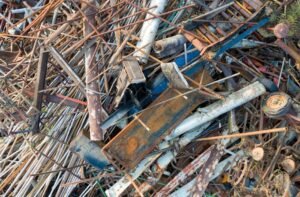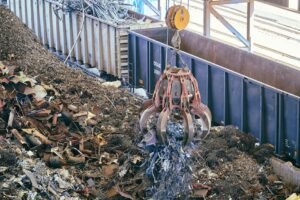

Scrap steel emerald is more than a local search term—it is the economic and environmental lifeline of Central Queensland’s ferrous metal stream. Whether you run a farm workshop, a mine maintenance crew or a fabrication business, knowing how to separate, grade and sell your steel scrap can turn a waste problem into a revenue stream while cutting carbon emissions. This authoritative guide walks you through every practical detail: accepted grades, preparation rules, pricing levers, recycling science and where to find a reliable scrap steel buyer in perth if you ever freight material west.
Why Scrap Steel Matters in Emerald
Emerald sits at the junction of two industries that generate huge volumes of ferrous metal: coal mining and agriculture. Dragline refurbishments, pump overhauls and broken cultivation discs all end up at regional yards. Because transport represents up to 40 % of the delivered cost, local knowledge is crucial. The term scrap steel emerald captures this geography-specific market, connecting sellers with buyers who quote a transparent steel price per tonne ex-yard or delivered to Rockhampton port.
Understanding the Steel Scrap Grading 1 Prepared 2 Prepared Shredded system before you shear, cut or torch will decide whether you earn top-tier or loose-bulky rates. In Emerald, the spread between these grades can exceed $140 per tonne in 2024 markets.
Major Grades of Scrap Steel Explained
Australia adopts the ISRI specifications with local overlays. When you ring around for quotes, mention the exact grade so processors can match furnace charge recipes. Below are the grades most commonly traded in Central Queensland:
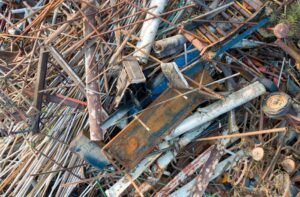
- 1 Prepared (1H): Mill-grade mild steel scrap under 600 mm any direction, 6 mm thick minimum, no galvanised or tin-coated, cut by shear or torch. Typical sources: structural off-cuts, plate remnants, farm implement beams.
- 2 Prepared (2H): Light gauge ferrous metal, same size limits but 3–6 mm thick. Think of sheet metal roofing, ductwork and silo skins after cyclone clean-ups.
- Shredded (210): Fragmented in an auto-shredder, density > 0.85 t/m³, 95 % metallic. Vehicles, whitegoods and mixed scrap steel emerald arisings are shredded in Brisbane and Gladstone.
- Turnings/Borings (211): Machine swarf, usually oil-coated, requires centrifuging to remove moisture and raise the steel price per tonne.
- Heavy melting scrap (HMS 1/2 80:20): Uncut scrap > 6 mm thick, may include mining bucket lips, crusher jaws and rail wheels. Requires torching to <1.5 m for furnace entry.
Rockhampton processors dock $15–25 per tonne for reclassification if the delivered mix strays from the stated grade. Measure a few pieces with a vernier and photograph the stock before pick-up to protect your price.
How the Recycling Process Works from Emerald to EAF
Once your bin is full at the Capricorn Highway workshop, the journey to becoming new rebar follows eight tightly controlled steps:
- Collection & Weighing: Licensed transporters use on-board scales calibrated by Queensland Government. Ask for a printed docket showing gross, tare and nett in tonnes.
- Visual Inspection & Hand Sorting: Operators remove copper-bearing parts, excessive rubber and any radioactive triggers. This is where correct torch cutting pays off.
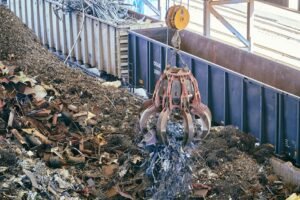
- Shearing/Baling: Over-sized mild steel is guillotined to <600 mm. Light sheet metal is compressed into 600 × 400 mm bales to raise bulk density for freight economy.
- Shredding & Media Separation: The 4 000 hp shredder uses magnetic drums to split ferrous metal from non-ferrous and fluff. Eddy currents eject aluminium and copper.
- Homogenisation: Conveyor belts build 300 t stockpiles of consistent chemistry. Samples are spark-OES tested for Cu, Cr, Ni and Sn.
- Electric Arc Furnace Charging: The furnace consumes 95 % scrap and 5 % pig iron. Every tonne of scrap steel emerald charged saves 1.13 t of CO₂ compared with virgin iron ore.
- Continuous Casting & Rolling: Molten steel becomes billet then rebar, merchant bar or pipe within six hours of furnace tap-out.
- Market Re-entry: Regional distributors sell back to mines, farms and construction, closing the loop.
Energy saving is dramatic: 1 100 kWh per tonne of finished steel using scrap versus 6 400 kWh using ore. That is why buyers on the scrap steel market pay a premium for clean, dense material.
Environmental and Economic Benefits for Central Queensland
Recycling scrap steel emerald is not a feel-good sideline; it is central to local climate targets. The 250 000 t of ferrous metal collected regionally in 2023 cut 282 000 t of CO₂, equal to taking 61 000 cars off the road. Additional benefits include:
- Reduced haul truck traffic on the Gregory Mine Road because rebar is rolled in Rockhampton instead of billet imported from Whyalla.
- Lower landfill leachate: Steel is 100 % recyclable and diverts 8 kg of mixed waste per tonne from rural tips.
- Regional jobs: Each 10 000 t of scrap supports 6.2 full-time equivalents in transport, processing and administration.
On the economics side, sellers gain a hedge against volatile commodity cycles. When iron ore spikes, the steel price per tonne for scrap follows within four weeks. Storing compacted scrap on-farm is effectively holding a liquid commodity that can be sold when prices peak. Track the Singapore futures and ring local dealers when HMS prices cross your breakeven, usually around $330 delivered for heavy grades.
Sorting and Preparing Your Material for Top Dollar
Use these field-tested tips to push your material into the highest paying grade:
- Size before you cut: Measure stack height with a tape; 580 mm is safer than 600 mm to allow for spring-back after shearing.
- Remove contaminants: A single brass valve can downgrade an entire 20 t bin to shredded price, costing $18 per tonne.
- Separate light and heavy: Mixing sheet metal with plate confuses density checks. Keep piles labelled for the inspector.
- Keep moisture out: Rain adds up to 3 % weight, yet buyers deduct water at the scale. Tarp bins overnight.
- Document unusual alloys: If you have manganese crusher liners, notify the buyer; they contain 12–14 % Mn and attract a premium over mild steel.
Finally, photograph every load with a time-stamped phone image. Disputes on Stainless Steel Scrap Price or ferrous consignments drop by 70 % when visual proof exists.
Current Pricing Levers and Market Outlook
The Emerald price for 1 prepared averaged $385 per tonne ex-yard in April 2024, up $28 from January. Key drivers include:
- Turkey’s re-entry as a bulk importer after the earthquake rebuild.
- India’s new 45 % export tax on iron ore pellets, pushing mills to buy more scrap.
- Higher coking coal quotes, making the electric arc route cheaper relative to blast furnace.
Domestically, port congestion at Gladstone has lifted freight to $38 per tonne, so inland yards now quote delivered-to-mill numbers transparently. Sign fixed-price contracts for three-month windows if you exceed 100 t per month; volatility risk is then borne by the processor and you achieve cash-flow certainty. Watch the A$–US$ cross because 62 % Fe fines still anchor sentiment for ferrous metal globally.
Where to Sell in and Around Emerald
Options range from the local transfer station to national processors. Compare not only headline price but also payment terms and weightbridge credentials.
- Emerald Metal Traders: Open Saturday mornings, instant EFT, will collect farm clean-ups over 8 t.
- CQ Recycling Park: Accepts mixed sheet metal, provides grapple loader for bins.
- Capricorn Scrap Pty Ltd: Exports through Port Alma, prefers 1 prepared and shredded, issues assay-based pricing.
If you move west for mine work, remember you can still monetise clean-up stock by contacting a reliable scrap steel buyer in perth and freight via containerised rail. Perth processors currently pay $20–30 premium over Queensland due to lower regional arisings.
Regulations, Licensing and Safe Handling
Queensland requires sellers of more than 100 t per annum to hold an Environmental Authority (ERA 54). Maintain records for five years, including weighbridge dockets and buyer invoices. When oxy-cutting:
- Use a ventilated area—hexavalent chromium fumes from stainless exceed workplace exposure standards after 15 minutes.
- Wear flame-resistant overalls; molten ball bearings in mild steel can spit 8 m.
- Check for closed cylinders or fuel tanks; puncture twice before torch application.
Transporters must comply with the Heavy Vehicle National Law—scrap loaders over 4.5 t GVM need a certified loading plan. Random audits on the Gregory Highway can impose $3 200 fines for unsecured scrap protruding more than 300 mm beyond the bin.
Connecting to the National Scrap Trade Network
Success in scrap steel emerald ultimately hinges on market reach. Listing on Australia’s largest digital scrap marketplace exposes your material to processors in Brisbane, Sydney and offshore. Upload photos, set your target price and receive offers within 24 hours. For those new to commodity trading, read What Scrap Trade Actually Is to understand contract terms like settlement weight and assay arbitration.
Alternatively, if you prefer direct phone sales, list on the Queensland-specific trading portal where buyers filter by region and can book back-loading trucks, saving freight and raising your nett return.
Conclusion: Turning Scrap into Strategic Advantage
Scrap steel emerald is not a waste product—it is a carefully graded commodity that rewards knowledge. Master the grading rules, prepare clean dense loads and time your sale against global cues. Doing so will maximise the steel price per tonne you receive, slash your carbon footprint and keep Central Queensland’s foundries competitive. Start with one disciplined clean-up, measure your cut sizes and photograph the pile; the $90 extra per tonne you earn on 15 t is enough to fund your next workshop upgrade.
Frequently Asked Questions
Q: What is the current scrap steel emerald price per tonne?
A: As of April 2024, 1 prepared mild steel ex-yard Emerald averages $385 per tonne, while light sheet metal shredded grades fetch $325 per tonne. Prices move weekly with Turkish import bookings and AUD/USD swings.
Q: How do I separate 1 prepared from 2 prepared sheet metal?
A: Use a vernier: 1 prepared must be ≥6 mm thick and ≤600 mm in any direction. Anything 3–6 mm thick qualifies as 2 prepared. Keep piles separate and photograph before collection to lock in the higher price.
Q: Can I include galvanised roofing in my scrap steel emerald load?
Q: Where can I find a reliable scrap steel buyer if I freight material west?
scrap steel buyer in perth who offers container rail rates ex-Brisbane; Perth buyers currently pay $20–30 over Queensland quotes due to regional scarcity.
Frequently Asked Questions
What is the current scrap steel emerald price per tonne?
As of April 2024, 1 prepared mild steel ex-yard Emerald averages $385 per tonne, while light sheet metal shredded grades fetch $325 per tonne. Prices move weekly with Turkish import bookings and AUD/USD swings.
How do I separate 1 prepared from 2 prepared sheet metal?
Use a vernier: 1 prepared must be ≥6 mm thick and ≤600 mm in any direction. Anything 3–6 mm thick qualifies as 2 prepared. Keep piles separate and photograph before collection to lock in the higher price.
Can I include galvanised roofing in my scrap steel emerald load?
Galvanised material is classed as zinc-coated and attracts a discounted price or rejection. Torch-cut the zinc layer away or sell separately as ‘galv’ to avoid downgrading the entire bin.
Where can I find a reliable scrap steel buyer if I freight material west?
Contact a licensed scrap steel buyer in perth who offers container rail rates ex-Brisbane; Perth buyers currently pay $20–30 over Queensland quotes due to regional scarcity.