

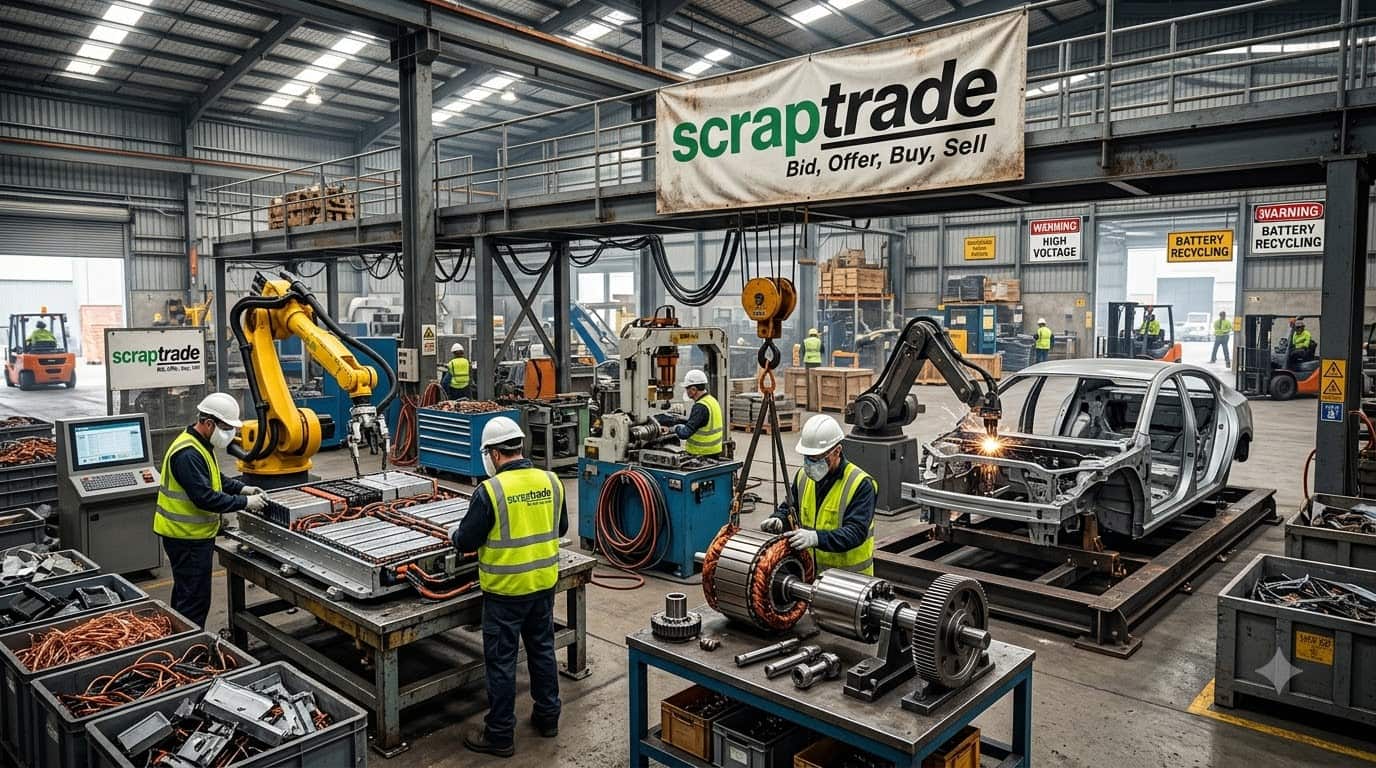
Electric vehicles are changing the automotive industry, and they are also changing the way end-of-life vehicles are dismantled and recycled. An electric vehicle contains many familiar materials found in conventional cars, including steel, aluminium, copper, glass and plastics. However, it also contains high-voltage battery systems, electric motors, power electronics and other specialised components that require different handling.
The electric vehicle recycling process therefore combines established vehicle dismantling practices with additional procedures for batteries and electrical equipment. For recyclers and scrap traders, understanding these differences is important when assessing electric car scrap, recovered metals and battery-related material.
This guide explains what happens to an end-of-life EV, which materials can be recovered, why battery handling requires specialist controls and how the scrap market is adapting to electric vehicles.
Why EV Recycling Is Becoming Important
As more electric vehicles enter the global vehicle fleet, recycling systems need to accommodate vehicles with different components and material flows from conventional internal-combustion vehicles.
An end-of-life EV still contains a substantial amount of conventional automotive material. The difference is that the vehicle also contains a high-voltage electrical system and traction battery that cannot simply be treated like ordinary vehicle scrap.
Effective recycling can help separate these materials into appropriate streams.
Key areas include:
- Battery recovery: EV batteries contain valuable materials and require specialised handling.
- Metal recovery: Steel, aluminium and copper remain important recyclable materials.
- Motor recovery: Electric motors contain copper, steel and, in some designs, permanent magnets.
- Component reuse: Some EV components may be suitable for reuse or remanufacturing after appropriate testing.
- Specialised processing: Battery and electrical components require procedures different from ordinary vehicle dismantling.
The commercial opportunity is not limited to the vehicle shell. Battery packs, motors, wiring, electronics and other components can represent separate material streams with different processing requirements.
What Is Different About EV Recycling?
At a basic level, EV dismantling follows the same principle as conventional vehicle recycling: identify reusable components, remove hazardous or regulated materials, dismantle the vehicle and separate recyclable materials.
The major difference is the presence of a high-voltage propulsion system.
An EV may contain:
- High-voltage traction battery
- Battery management system
- Inverter or power electronics
- Electric motor or motors
- High-voltage cables and connectors
- Aluminium and steel structures
- Copper wiring
- Conventional automotive components
- Cooling and thermal-management systems
These components should not automatically be processed together.
High-Voltage Battery Handling
The traction battery is one of the most important differences between EVs and conventional vehicles.
Many EVs use lithium-ion battery technology, although battery chemistry and pack construction can vary between manufacturers and vehicle models.
A battery pack can contain multiple modules or cell assemblies along with electrical connections, monitoring systems, cooling components and protective structures.
Because high-voltage batteries can present electrical, thermal and fire hazards, dismantling and handling should be performed by appropriately trained and equipped personnel following applicable procedures.
For recyclers, the key principle is simple: an EV battery should not be treated as ordinary scrap metal.
A typical battery-related recycling chain may involve:
- Vehicle identification and assessment
- Safe isolation of the high-voltage system
- Removal of the battery pack by qualified personnel
- Assessment of battery condition and chemistry
- Routing toward reuse, repair, second-life applications or recycling where appropriate
- Controlled dismantling or processing by specialised facilities
- Recovery of suitable material fractions
The correct route depends on battery condition, chemistry, manufacturer design, regulatory requirements and available processing infrastructure.
Battery packs that are still technically suitable may have options beyond immediate material recycling. Others may require specialised recycling to recover materials from cells and modules.
Electric Motors and Power Electronics
Electric motors are another important EV component.
An electric motor typically contains steel, copper and other materials. Some motor designs also use permanent magnets containing rare-earth elements.
After removal, motors may be dismantled for component recovery or processed through appropriate recycling systems.
Power electronics are also important. Components such as inverters and control units contain electronic assemblies, copper, aluminium and other materials. Their recovery may overlap with established e-waste and electronic-component recycling practices.
The material value depends on the specific component, its design, condition and the downstream processing route.
Metals Recovered from EVs
Although EVs have different propulsion systems, they still contain many conventional automotive metals.
Steel
Steel remains a major structural material in many vehicles. Body panels, structural components, suspension parts and other assemblies can enter established ferrous-metal recycling streams after appropriate dismantling and preparation.
Aluminium
Aluminium can be found in vehicle structures, body components, battery housings, wheels, cooling systems and other parts.
Separated aluminium can be sorted according to alloy or product category where practical. Clean and well-prepared aluminium is generally easier for buyers to evaluate than mixed automotive scrap.
Copper
Copper is particularly important in electric vehicles because electrical systems require conductive materials.
Copper can be found in:
- High-voltage cables
- Motor windings
- Wiring harnesses
- Electrical connectors
- Power electronics
- Charging components
The amount and form of copper vary by vehicle design. Scrap traders should therefore avoid assuming a standard copper content for every EV.
Battery Materials
EV batteries can contain several materials of commercial and strategic interest. Depending on the battery chemistry, these may include lithium, nickel, cobalt, manganese, copper, aluminium, steel, graphite and other components.
Not every battery chemistry contains the same materials. This is why identifying the battery chemistry and pack design is important before assessing its recycling route or commercial value.
Battery recycling can produce intermediate materials such as black mass, which may then undergo further processing to recover valuable elements.
Safety and Compliance Considerations
EV recycling requires careful separation between ordinary vehicle dismantling and high-voltage or battery-related work.
The specific safety and regulatory requirements vary by country, jurisdiction, vehicle type and business activity. Recyclers should follow current requirements from the relevant environmental, transport, occupational-safety and waste-management authorities.
Important areas include:
High-voltage isolation: EV electrical systems can retain hazardous electrical energy. Appropriate procedures and equipment are required before components are handled.
Battery damage: Crushed, punctured, swollen, overheated or otherwise damaged batteries can present additional hazards and should be managed through appropriate specialist procedures.
Storage: Battery storage requirements can differ from ordinary vehicle-scrap storage. Facilities should follow applicable fire, environmental and safety requirements.
Transportation: Transporting used or damaged batteries may be subject to specific requirements, particularly for cross-border shipments.
Waste classification: Battery packs, electronic components and other materials may fall under different waste-management rules depending on jurisdiction.
Documentation: Commercial and regulatory documentation should accurately describe the material being transported or traded.
Because EV recycling rules are evolving, businesses should verify current requirements before handling or shipping battery materials. Requirements can change as governments introduce new battery, waste and vehicle-recycling policies.
How the Scrap Market Is Adapting
The rise of EVs is creating a more specialised automotive scrap market.
Traditional vehicle recyclers can still recover steel, aluminium, copper, plastics, glass and other conventional materials. However, EVs add battery packs, electric motors, power electronics and potentially rare-earth-containing components to the material mix.
This creates several changes for scrap traders.
More specialised material identification
A trader dealing with EV scrap needs to distinguish between complete vehicles, dismantled battery packs, electric motors, electronic components and separated metals.
A listing simply described as "EV scrap" may not provide enough information for a specialist buyer.
More specialised buyers
Battery recyclers, electronic recyclers, metal processors and automotive dismantlers may each be interested in different components.
For example, a battery recycler may want a defined battery chemistry and condition, while a metal buyer may be interested in separated copper or aluminium.
Better documentation
Buyers may need information about vehicle model, battery type, component condition, quantity and location before evaluating a transaction.
Clear photographs and accurate descriptions can reduce uncertainty and help buyers determine whether they have the appropriate processing capability.
ScrapTrade provides a global marketplace where businesses can connect around automotive scrap, batteries and recyclable materials. Suppliers can explore the ScrapTrade marketplace to present available materials to potential buyers.
FAQs
How are electric vehicles recycled?
End-of-life EVs are assessed and dismantled to recover reusable components and recyclable materials. Steel, aluminium, copper, plastics and other conventional materials enter established recycling streams, while high-voltage batteries, motors and power electronics require more specialised handling and processing.
What materials can be recovered from an electric vehicle?
EVs can contain steel, aluminium, copper, plastics, glass and other conventional automotive materials. Depending on the battery chemistry and component design, additional materials such as lithium, nickel, cobalt, manganese, graphite and rare-earth elements may also be present.
Is EV battery recycling different from normal car recycling?
Yes. EV batteries are high-voltage energy-storage systems and require specialised handling, isolation, storage and transportation procedures. They should not be treated as ordinary vehicle scrap. Battery recycling may involve specialised processes to recover materials from cells and modules.
Are electric motors valuable as scrap?
Electric motors can contain copper, steel and, depending on their design, permanent magnets containing rare-earth elements. Their commercial value depends on motor type, condition, quantity and the cost and capability of downstream processing.
Conclusion
Electric vehicle recycling combines established automotive recycling with specialised battery and electrical-component recovery. Steel, aluminium and copper remain important material streams, while traction batteries, electric motors and power electronics introduce additional processing requirements.
For recyclers and scrap traders, the biggest change is the need for better material identification and specialised handling. A complete EV, a removed battery pack, an electric motor and separated copper are different trading products and should be described accordingly.
As EV adoption develops, recycling businesses will need suitable processes, trained personnel, reliable buyers and up-to-date compliance knowledge. Businesses handling EV scrap should focus on safety first and provide accurate material information when entering the market.