

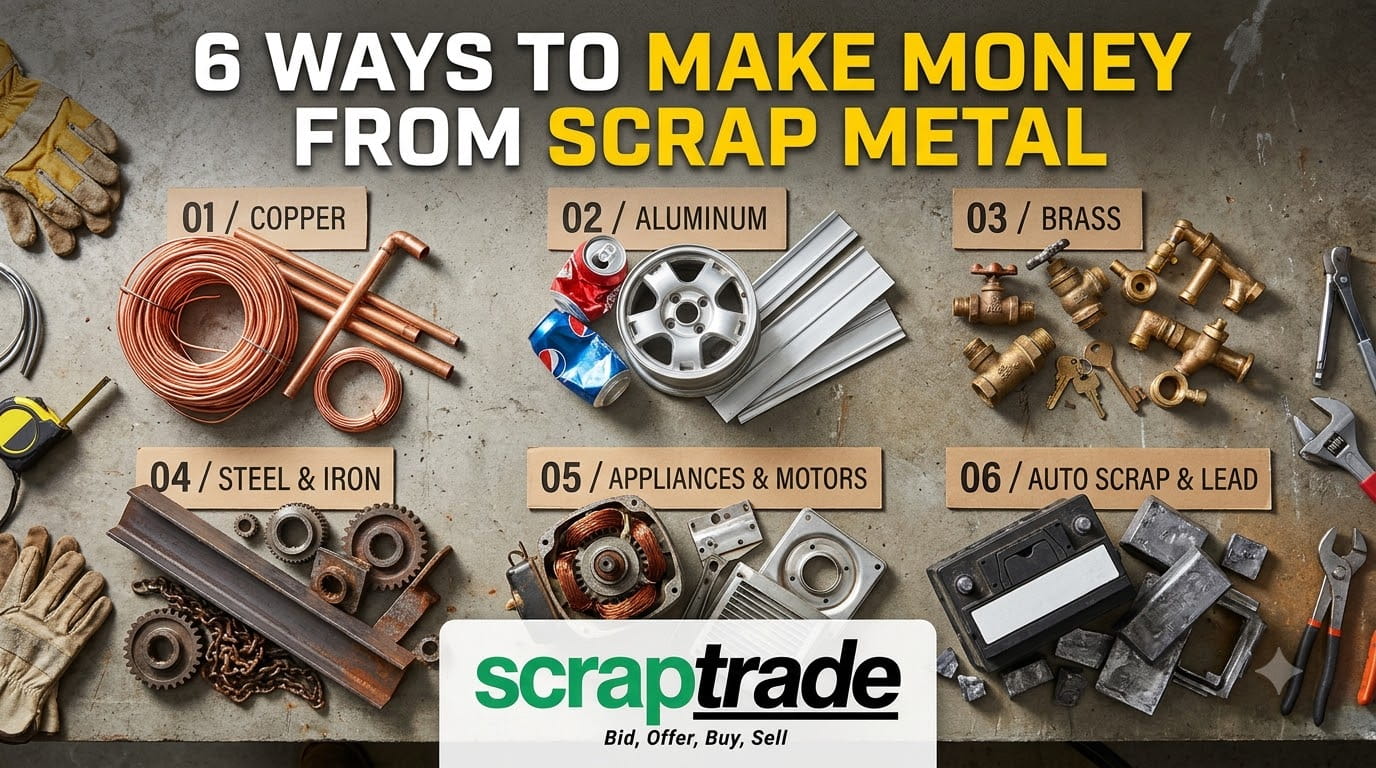
Scrap metal can create income opportunities for individuals, scrap dealers, recycling businesses, contractors, and industrial companies. Materials such as copper, aluminium, brass, steel, and stainless steel can retain value when collected, sorted, and sold through suitable channels.
However, making money from scrap metal involves more than collecting discarded materials. Profitability depends on the type and condition of the scrap, purchase costs, transportation, processing requirements, buyer demand, and the price agreed for the material.
Whether you want to start a small scrap business or expand an existing recycling operation, understanding different ways to source and sell scrap can help you identify commercial opportunities.
1. Collect and Sell Scrap Metal
One of the simplest ways to enter the scrap business is by collecting recyclable metal from legitimate sources and selling it to scrap yards, metal recyclers, or other buyers.
Potential sources include construction projects, manufacturing facilities, renovation contractors, automotive workshops, plumbing businesses, and industrial sites. Depending on local requirements, businesses may also collect scrap from households or commercial premises.
Common materials include copper pipes, aluminum frames, steel offcuts, brass fittings, and stainless steel components.
How to get started
Start by identifying the types of scrap available in your area and finding potential buyers who accept those materials. Ask about accepted grades, minimum quantities, contamination requirements, weighing procedures, and payment terms before collecting large volumes.
Keep records of how much you spend acquiring the material and the costs of collection, labor, fuel, storage, and handling.
For example, if you purchase a batch of aluminum scrap for $300 and sell it for $450, the difference is $150 before other operating expenses. If collection and handling cost another $60, the remaining amount is $90 before any additional overheads or taxes.
This is an illustrative calculation, not a typical scrap price or guaranteed profit.
The key is to source suitable material at a cost that leaves room for expenses and a reasonable return.
2. Focus on High-Value Non-Ferrous Metals
Another approach is to specialise in particular scrap categories rather than collecting every type of metal.
Non-ferrous metals, including copper, aluminium, and brass, are often commercially attractive because they have established recycling markets and are used in many industries. Their actual selling prices vary according to grade, condition, location, market conditions, and buyer requirements.
Copper may be found in pipes, electrical cable, motors, and industrial equipment. Aluminium can come from window frames, extrusions, alloy wheels, and used beverage cans. Brass may be recovered from plumbing fittings, valves, and certain industrial components.
Why material identification matters
Two items made from the same broad metal category may receive different offers because of their condition and composition.
Clean copper wire, insulated cable, mixed copper components, and contaminated copper scrap are not interchangeable grades. Similarly, aluminium extrusion scrap may be assessed differently from mixed aluminium or alloy wheels containing attached steel components.
Before buying or collecting material, learn how to identify its grade and understand the buyer's acceptance criteria.
Use appropriate testing or inspection where necessary, and avoid assuming that an item's appearance confirms its exact composition.
Specialising in a few materials can help you build knowledge, develop repeat supplier relationships, and target buyers who regularly purchase those categories.
3. Buy Scrap in Bulk and Resell It
Buying scrap in bulk and reselling it to suitable buyers can create an opportunity for scrap dealers and trading businesses. This model requires more working capital, accurate material assessment, and careful control of logistics.
A trader might purchase a bulk quantity of steel scrap from an industrial supplier and sell it to a recycler or processor that needs that material.
The business earns money when the resale revenue exceeds the material acquisition cost and the other expenses associated with the transaction.
Calculate the full cost before buying
Before purchasing a bulk load, consider:
- The purchase price and accepted material grade.
- Estimated versus confirmed quantity and weight.
- Transport, loading, unloading, and storage costs.
- Sorting, processing, and inspection expenses.
- Potential deductions for contamination or grade differences.
- Payment terms and the time required to receive funds.
A high resale offer does not automatically make a deal profitable. Freight charges, unexpected contamination, weight discrepancies, and changes in market conditions can reduce the margin.
It is also important to confirm that the buyer can accept the proposed material and quantity before committing to the purchase.
For larger transactions, document the agreed grade, price basis, weighing procedure, delivery responsibilities, inspection conditions, and settlement terms.
Bulk trading may offer opportunities to grow beyond small collections, but it also increases financial exposure if the material cannot be sold on the expected terms.
4. Earn by Connecting Scrap Sellers With Buyers
You do not always need to own a large quantity of scrap to participate in the scrap trading industry. Another potential business model is connecting legitimate scrap suppliers with suitable buyers.
Depending on the arrangement, this may involve sourcing enquiries, identifying potential counterparties, helping businesses communicate their requirements, or introducing sellers to buyers looking for specific materials.
For example, a manufacturing business may regularly generate aluminium scrap, while a recycler in another region is seeking consistent supplies. Someone who understands both businesses' requirements may be able to facilitate an introduction.
How this business model works
Start by developing relationships with suppliers and learning what materials, grades, and quantities they can offer. Then identify potential buyers whose requirements match those supplies.
Accurate information is essential. Confirm whether the quantity is available, whether the grade has been verified, where the material is located, and whether the supplier is authorised to sell it.
If you receive payment for introductions or trading services, establish the arrangement clearly before work begins. Commission structures, responsibilities, payment triggers, and dispute procedures should be agreed in writing.
You should also check any local licensing, agency, tax, and compliance requirements that apply to your activities.
An online marketplace can help with discovering potential trading counterparties. ScrapTrade is a global online scrap marketplace where buyers and sellers can explore listings and trading opportunities. ScrapTrade does not act as a broker or take ownership of the materials.
This model can reduce the need to purchase and store inventory, but income is not guaranteed. Successful transactions depend on suitable matches, reliable counterparties, clear terms, and completed deals.
5. Sort, Prepare, and Add Value to Scrap
Scrap material that is mixed, contaminated, or difficult to handle may be less attractive to some buyers than material that is clearly identified and prepared to their specifications.
Sorting and preparation can therefore create opportunities to improve the commercial appeal of scrap before selling it.
Depending on the material and buyer requirements, preparation may include separating ferrous and non-ferrous metals, sorting different grades, removing non-metal attachments where appropriate, or arranging material into manageable lots.
For example, a mixed load containing steel offcuts, aluminium components, and copper-bearing material may be easier for buyers to assess when the different categories are separated and accurately described.
Preparation must make commercial sense
Sorting and processing take time, labour, equipment, and sometimes additional storage space. Removing attachments or dismantling an item may also introduce safety risks.
Before processing a load, compare the expected buyer offers for the material in its current condition with the likely offers after preparation. Include labour, equipment, disposal costs, and any changes in the quantity of saleable material.
Do not dismantle electrical equipment, batteries, vehicles, or potentially hazardous components without suitable training and procedures. Some materials require specialised handling or authorised recycling facilities.
The goal is not to process every load as much as possible. It is to identify preparation steps that buyers value and that make commercial sense for the specific material.
6. Build an Online Scrap Trading Business
Online trading can help scrap businesses reach potential buyers and suppliers beyond their immediate local networks. Instead of relying entirely on existing contacts, businesses can use digital platforms to discover listings, communicate requirements, and explore new commercial relationships.
This approach can be particularly useful for scrap dealers, manufacturers, recyclers, exporters, and businesses that handle bulk quantities.
How online scrap trading creates opportunities
A seller can prepare a listing that describes the material, grade, quantity, location, photographs, and relevant collection or delivery conditions. Potential buyers can review the information and decide whether the material matches their requirements.
The seller can then evaluate offers based on price, quantity, payment terms, transport arrangements, inspection conditions, and counterparty suitability.
For buyers, online listings can provide another way to identify available materials and potential suppliers. Clear requirements and accurate material descriptions can help both parties determine whether further discussion is worthwhile.
Use a global marketplace to expand your network
ScrapTrade's global scrap trading marketplace helps businesses discover scrap trading opportunities through online listings. Buyers and sellers can explore materials and discuss potential transactions without relying solely on local contacts.
Before completing a deal, both parties should verify the counterparty, confirm the material details, document the agreed terms, and understand the applicable payment, logistics, and regulatory requirements. International transactions may also involve customs classification, import or export restrictions, and additional shipping documentation.
An online marketplace does not guarantee a buyer, a sale, or a particular price. Its value is in helping businesses discover opportunities and connect with potential trading partners.
How to Improve Your Scrap Metal Profits
Regardless of which business model you choose, managing costs and reducing avoidable transaction problems are essential.
First, understand the material. Learn how grades differ and confirm the buyer's specifications before purchasing or collecting scrap.
Second, compare offers. Do not evaluate a deal on price alone. Consider transport, loading, handling, processing, payment timing, and any potential deductions.
Third, maintain accurate records. Track the material acquired, accepted weight, purchase cost, sale revenue, operating expenses, and payment status. This allows you to evaluate actual performance rather than relying on the difference between two headline prices.
FAQs
What is the easiest way to make money from scrap metal?
Collecting suitable scrap and selling it to established buyers can be a straightforward starting point. Begin with materials you can identify, understand the buyer's requirements, and calculate collection and transport costs before committing to a load.
Which scrap metals can be profitable?
Copper, aluminium, brass, stainless steel, and certain steel grades all have established recycling markets. Profitability depends on the grade, condition, quantity, acquisition cost, location, and buyer demand. No material guarantees a profit.
Can I make money from scrap metal without owning a scrap yard?
Potentially, yes. You could collect and sell smaller quantities, connect legitimate buyers and sellers under an agreed arrangement, or use online marketplaces to explore trading opportunities. Each model has different costs, responsibilities, and compliance requirements.
How do I find scrap metal buyers online?
Prepare an accurate description of the material, including grade, quantity, location, condition, and photographs where useful. You can then explore online marketplaces such as ScrapTrade to discover potential buyers and discuss trading terms.
Conclusion
There are several ways to make money from scrap metal, from collecting and selling recyclable materials to specialising in non-ferrous metals, trading bulk loads, connecting buyers and sellers, preparing scrap for resale, and building an online trading business.
The best approach depends on your available capital, material knowledge, supplier relationships, operating capacity, and access to buyers. Start with a clear understanding of the material and its costs, then build a repeatable process for sourcing, assessing, selling, and recording transactions.
For businesses looking to expand beyond existing contacts, ScrapTrade provides a global online marketplace for exploring scrap listings and connecting with potential trading partners. Accurate listings, careful buyer checks, and well-documented agreements can help you evaluate opportunities more effectively.