

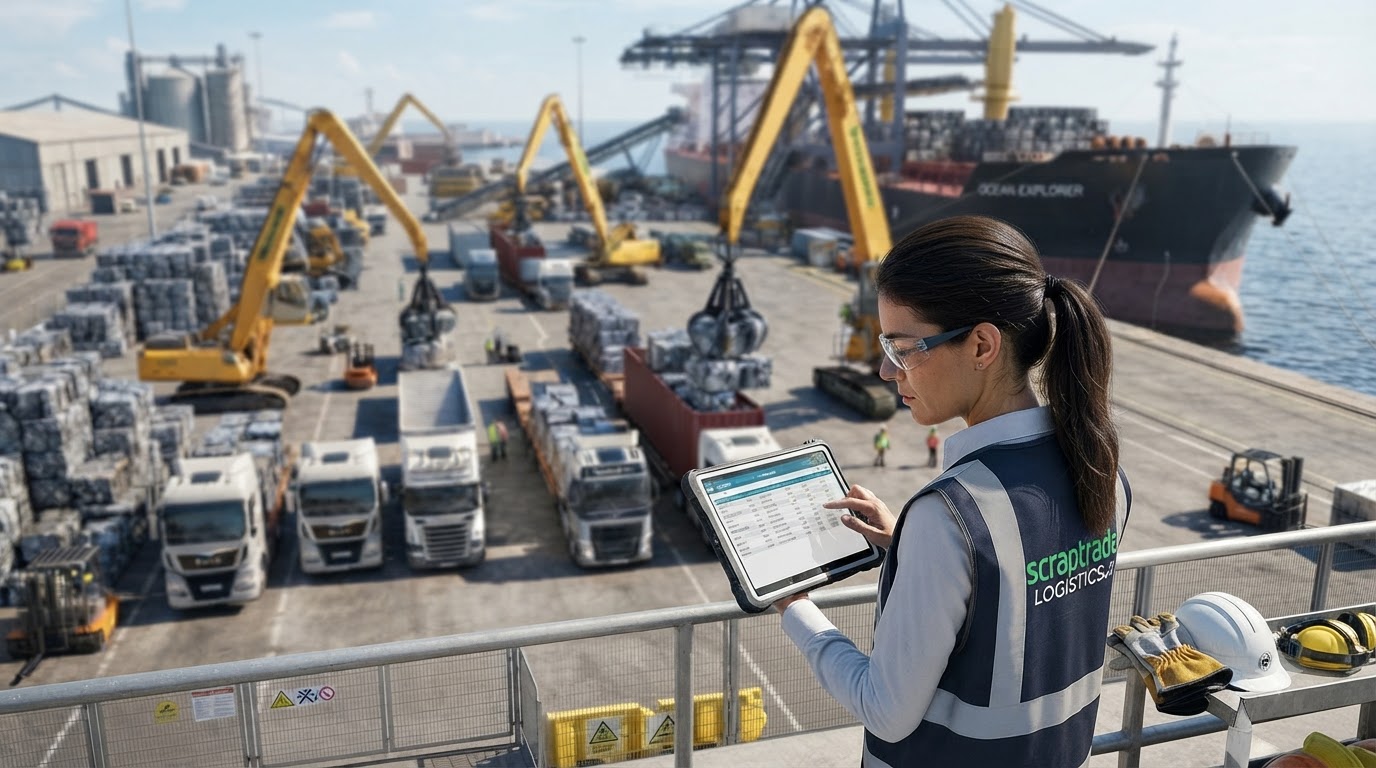
B2B scrap trade is the buying and selling of recyclable materials between businesses rather than individual consumers. It can involve manufacturers, recycling companies, scrap yards, processors, exporters, importers, industrial businesses, traders, and other commercial buyers and sellers.
Unlike a one-off local scrap sale, B2B transactions often involve larger quantities, recurring supply, specific material grades, formal business requirements, negotiated pricing, and more detailed logistics.
A business may need a regular supply of copper, aluminium, steel, brass, e-waste, machinery, plastics, or other recyclable materials. At the same time, another business may generate significant quantities of scrap and need reliable buyers.
Digital scrap trading platforms can help bring these businesses together by providing tools for listings, RFQs, business profiles, verification, communication, and transaction management.
What Makes Scrap Trade B2B
The main difference between B2B scrap trading and a simple one-off sale is the commercial scale and relationship involved.
A business buying a few kilograms of material for immediate use has different requirements from a recycling company looking to source hundreds of tonnes over multiple shipments.
B2B scrap transactions may involve:
- Larger quantities or recurring supply
- Defined material grades and specifications
- Business-to-business pricing negotiations
- RFQs and purchase requirements
- Formal payment terms
- Inspection and verification
- Pickup, freight, or delivery arrangements
- Ongoing supplier or buyer relationships
For example, a manufacturer may regularly generate aluminium scrap and want a dependable buyer rather than finding a new buyer for every shipment. Similarly, a processor may have an ongoing requirement for a particular grade of copper scrap.
This makes B2B scrap trade less about a single transaction and more about creating a reliable commercial relationship.
The process can also involve several people within each company. Procurement teams, sales teams, operations staff, finance departments, logistics providers, and company management may all have a role in a larger transaction.
Bulk Listings and RFQs Explained
Bulk listings and RFQs, or Requests for Quotation, are particularly useful in B2B scrap trading.
A bulk listing allows a seller to present a significant quantity of material to potential buyers. Instead of selling small amounts individually, the seller can communicate the available volume, specifications, location, and commercial requirements in a structured way.
For example, a seller may have a recurring supply of a particular scrap grade and want to attract buyers capable of purchasing larger quantities.
An RFQ works from the buyer's side.
Instead of simply browsing available listings, a buyer can describe what they need and invite suitable sellers to respond.
An RFQ may specify:
- Required material and grade
- Target quantity
- Delivery or pickup location
- Required timeframe
- Quality specifications
- Pricing expectations or quotation requirements
- Other commercial conditions
This creates a more structured purchasing process.
For businesses with recurring requirements, RFQs can be particularly useful because they allow buyers to communicate a defined purchasing need rather than searching randomly through available material.
A digital platform can bring listings and RFQs together, allowing sellers to discover purchasing requirements while buyers can discover available supply.
Business Verification and Trust at Scale
Trust becomes increasingly important as the size and value of a transaction increase.
A business considering a significant scrap purchase needs confidence that the counterparty is a legitimate business and that the material information is reasonably accurate.
Similarly, a seller may want to understand who is making an offer before progressing with a large transaction.
Business verification can help establish basic information about trading participants. Depending on the platform and applicable requirements, this may involve business identity, registration information, contact details, or other verification processes.
However, verification should not be treated as a substitute for commercial due diligence.
Businesses should still evaluate the material, specifications, quantities, payment arrangements, logistics, contractual terms, and other relevant transaction details before completing a deal.
At scale, clear documentation becomes particularly important. A small misunderstanding about grade, quantity, delivery terms, or payment conditions can become commercially significant when dealing with large volumes.
Digital platforms can support this by keeping important business and listing information organized in one environment.
Managing Repeat Trading Relationships
Successful B2B scrap trade often extends beyond a single transaction.
A business may want to establish a recurring relationship with a supplier that consistently provides suitable material. Likewise, a seller may prefer working with buyers who understand its specifications, meet payment terms, and provide predictable purchasing demand.
Repeat relationships can make future transactions more efficient because both sides become familiar with each other's requirements.
For example, a buyer purchasing copper scrap regularly may establish preferred specifications and quantity requirements. Once a suitable supplier understands those requirements, future negotiations may require less time.
However, repeat business should still be supported by accurate documentation and clear commercial terms. Material quality, quantities, prices, and logistics can change from one transaction to another.
A digital scrap trade platform can help businesses maintain a structured view of their trading opportunities rather than relying entirely on scattered emails, messages, spreadsheets, and contact lists.
How ScrapTrade Supports B2B Scrap Trade
ScrapTrade is designed as a digital marketplace for B2B scrap trading, connecting buyers, sellers, recyclers, and businesses.
Businesses can create profiles, present available scrap, discover potential trading partners, and communicate about commercial opportunities.
For buyers with specific requirements, an RFQ can provide a structured way to communicate what material they are looking to purchase.
For sellers, detailed listings can make available material easier for potential buyers to discover. Information such as material type, quantity, specifications, location, and pricing requirements can help buyers determine whether an opportunity matches their needs.
Business profiles also provide additional context about the companies participating in the marketplace. A company profile can help establish a business presence and give potential trading partners more information when evaluating a commercial relationship.
ScrapTrade can therefore support different stages of B2B scrap dealing, from discovering supply and demand to communicating with potential counterparties.
The platform does not replace the commercial responsibilities of buyers and sellers. Businesses should still conduct appropriate due diligence, confirm material information, agree on payment and delivery terms, and ensure that their transactions meet applicable requirements.
FAQs
What is B2B scrap trade?
B2B scrap trade is the commercial buying and selling of recyclable materials between businesses. Transactions can involve scrap yards, recyclers, manufacturers, processors, exporters, importers, traders, and industrial companies.
How is B2B scrap trading different from selling scrap locally?
B2B scrap trading generally involves commercial businesses, larger quantities, defined material specifications, formal negotiations, and potentially recurring transactions. Local scrap sales can be smaller and more focused on immediate or one-off transactions.
What is an RFQ in scrap trading?
An RFQ, or Request for Quotation, is a purchasing request that describes what a buyer wants to purchase and invites potential sellers to provide quotations. In scrap trading, an RFQ can specify material, grade, quantity, location, timeframe, and other requirements.
Why is business verification important in B2B scrap trade?
Business verification can provide additional confidence about the identity of a trading participant. However, verification is only one part of due diligence. Buyers and sellers should also evaluate material details, commercial terms, payment arrangements, logistics, and other transaction-specific information.
Conclusion
B2B scrap trade operates differently from simple one-off scrap sales. Larger quantities, specific material requirements, RFQs, business verification, negotiated pricing, logistics, and repeat relationships can all become important as trading activity grows.
For businesses buying or selling scrap at scale, a digital marketplace can provide a more structured way to discover supply and demand and connect with potential commercial partners.
ScrapTrade brings buyers, sellers, recyclers, and businesses together through a global digital scrap marketplace, supporting both available-material listings and buyer requirements.
If your business is ready to expand its scrap trading network, set up a business account on ScrapTrade and start exploring B2B trading opportunities.