

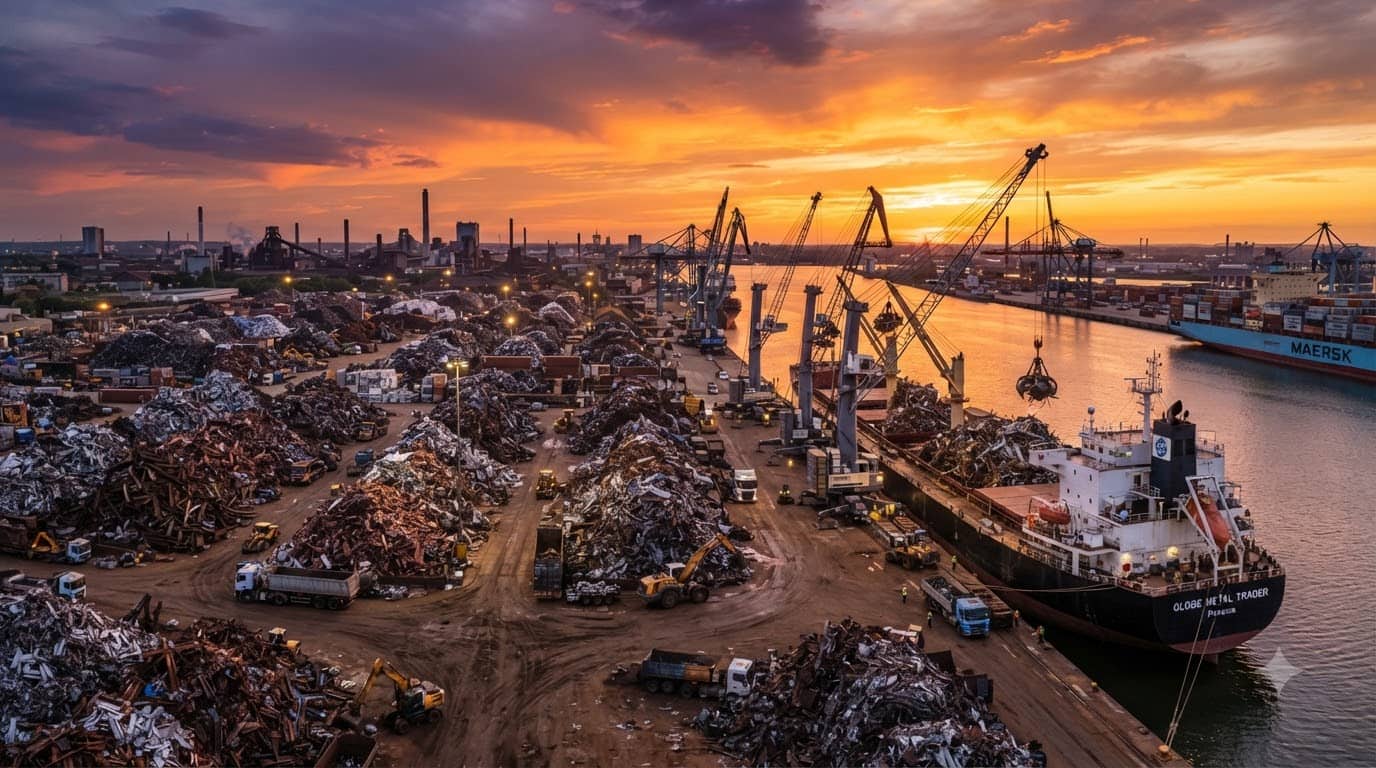
The global scrap markets are constantly changing. Scrap prices move with supply and demand, commodity markets, manufacturing activity, energy costs, transportation, currency movements, and changes in recycling demand. For businesses buying or selling scrap internationally, understanding these market movements can make it easier to evaluate opportunities and negotiate transactions.
Scrap is no longer simply a local commodity sold to the nearest yard. Copper, aluminium, steel, brass, stainless steel, e-waste, machinery, and other recyclable materials can move through international supply chains connecting sellers, recyclers, manufacturers, traders, and industrial buyers.
What Shapes Global Scrap Market Prices
Scrap prices are influenced by several interconnected factors rather than one single benchmark.
Supply and Demand
The basic relationship between supply and demand remains one of the most important factors affecting scrap markets.
When buyers require more material while available supply is limited, competition for suitable scrap can increase. Conversely, when supply is readily available while buyer demand weakens, sellers may face greater price pressure.
Demand can also vary by material. Copper scrap, aluminium scrap, steel scrap, brass, stainless steel, and other materials each have different industrial applications and supply chains.
Commodity Market Conditions
Scrap markets are closely connected to broader commodity markets.
For example, movements in primary metal markets can influence how buyers evaluate recyclable metal. Scrap processors and manufacturers may consider the relationship between the cost of primary raw materials and the availability and quality of recycled alternatives.
However, scrap does not necessarily move in exactly the same way as refined or primary commodities. Grade, contamination, recovery value, location, and processing costs can all affect the price offered for a particular scrap material.
Manufacturing and Industrial Activity
Industrial production can influence demand for recycled raw materials.
When manufacturing activity increases, processors and manufacturers may require more metal and other recyclable inputs. Changes in construction, automotive production, infrastructure investment, electronics manufacturing, and other industrial sectors can therefore affect demand for specific scrap categories.
Transportation and Logistics
The location of scrap is an important part of its commercial value.
A seller may have a competitive material price, but transportation, handling, loading, freight, and other logistics costs can affect the final economics of a transaction.
This is particularly important in international scrap trading, where material may need to travel long distances before reaching the buyer.
Currency Movements
International scrap transactions can involve different currencies.
Exchange-rate changes can influence the effective value of a transaction when a buyer and seller operate in different markets. This means businesses involved in global scrap trading should consider currency conditions alongside the material price.
Material Quality and Grade
Not all scrap within the same broad category has the same value.
Copper grades, aluminium grades, steel grades, and other materials can vary according to composition, cleanliness, preparation, contamination, and recovery potential.
A reliable scrap price therefore requires more information than simply knowing the material name.
Regional Demand Trends Worth Watching
Global scrap demand does not move uniformly across every country or region.
Different markets have different recycling infrastructure, manufacturing industries, import requirements, industrial demand, and access to domestic scrap supply.
Industrial Manufacturing Markets
Regions with strong manufacturing activity can generate significant demand for recycled raw materials.
Metal processors, foundries, mills, manufacturers, and recycling companies may purchase scrap according to their production requirements.
For sellers, this means that demand may exist outside the market where the scrap was originally generated.
Infrastructure and Construction Activity
Construction and infrastructure projects can influence demand for steel, aluminium, copper, and other materials.
When construction activity changes, the requirements of downstream manufacturers and processors can also change.
This can create opportunities for businesses that can supply suitable scrap in the required quantity and specification.
Automotive and Machinery Markets
Automotive manufacturing, vehicle recycling, machinery production, and industrial equipment can create demand for both ferrous and non-ferrous materials.
Copper, aluminium, steel, stainless steel, and other recyclable materials can enter these supply chains in different forms.
Recycling and Circular-Economy Demand
Growing attention to resource efficiency and material recovery is also relevant to scrap markets.
Recycling allows recoverable materials to re-enter industrial supply chains rather than being discarded. As businesses seek to improve resource efficiency, the importance of reliable scrap supply networks can increase.
How Ferrous and Non-Ferrous Markets Differ
One of the most important distinctions in the global scrap markets is between ferrous and non-ferrous materials.
Ferrous Scrap
Ferrous scrap contains iron as the primary metallic component.
Common examples include steel scrap and HMS.
Ferrous scrap markets are closely connected to steel production, mills, foundries, construction activity, manufacturing, and infrastructure demand.
Because steel scrap is generally traded in large volumes, transportation and processing economics can have an important effect on transactions.
Non-Ferrous Scrap
Non-ferrous scrap does not primarily consist of iron.
Common examples include:
- Copper
- Aluminium
- Brass
- Stainless steel
- Certain specialised metal streams
Non-ferrous materials often have different pricing structures and quality considerations. Copper and aluminium, for example, can have significant differences in grade, composition, recovery value, and industrial demand.
For sellers, identifying the exact material and grade is therefore important before comparing offers.
How ScrapTrade Reflects Live Market Pricing
Digital scrap marketplaces can make market information more accessible to buyers and sellers.
ScrapTrade provides a digital environment where businesses can list recyclable materials, discover available scrap, and connect with potential trading partners.
ScrapTrade also provides market-price information designed to help users understand current reference pricing for different scrap materials and locations.
The important distinction is between a market reference price and the final price of an individual scrap transaction.
A reference price can help establish a starting point, while an actual buyer offer may depend on material grade, quantity, quality, location, transportation, market demand, and other commercial conditions.
Businesses can check the available ScrapTrade market prices when researching current scrap-price information.
The ScrapTrade market can also help buyers and sellers explore actual listings and trading opportunities.
For businesses involved in international transactions, this can complement broader research into international scrap trade.
FAQs
What are global scrap markets?
Global scrap markets are the international networks through which recyclable materials such as steel, copper, aluminium, brass, and other materials are bought, sold, processed, and moved between businesses and countries.
What factors affect scrap metal prices?
Scrap prices can be influenced by supply and demand, commodity markets, manufacturing activity, material grade, quality, transportation costs, currency movements, and regional market conditions.
Are scrap prices the same in every country?
No. Scrap prices can vary between markets because of differences in local demand, supply, material quality, transportation, processing costs, currency, and other commercial conditions.
What is the difference between ferrous and non-ferrous scrap?
Ferrous scrap primarily contains iron and includes materials such as steel and HMS. Non-ferrous scrap includes materials such as copper, aluminium, and brass. Their markets, grades, applications, and pricing factors can differ.
Conclusion
The global scrap markets are influenced by supply and demand, commodity conditions, manufacturing activity, logistics, currency movements, material quality, and regional industrial requirements.
Understanding these factors can help buyers and sellers make more informed trading decisions. However, there is no single price that automatically applies to every scrap transaction. The final value depends on the specific material, grade, quantity, location, quality, logistics, and commercial terms.