

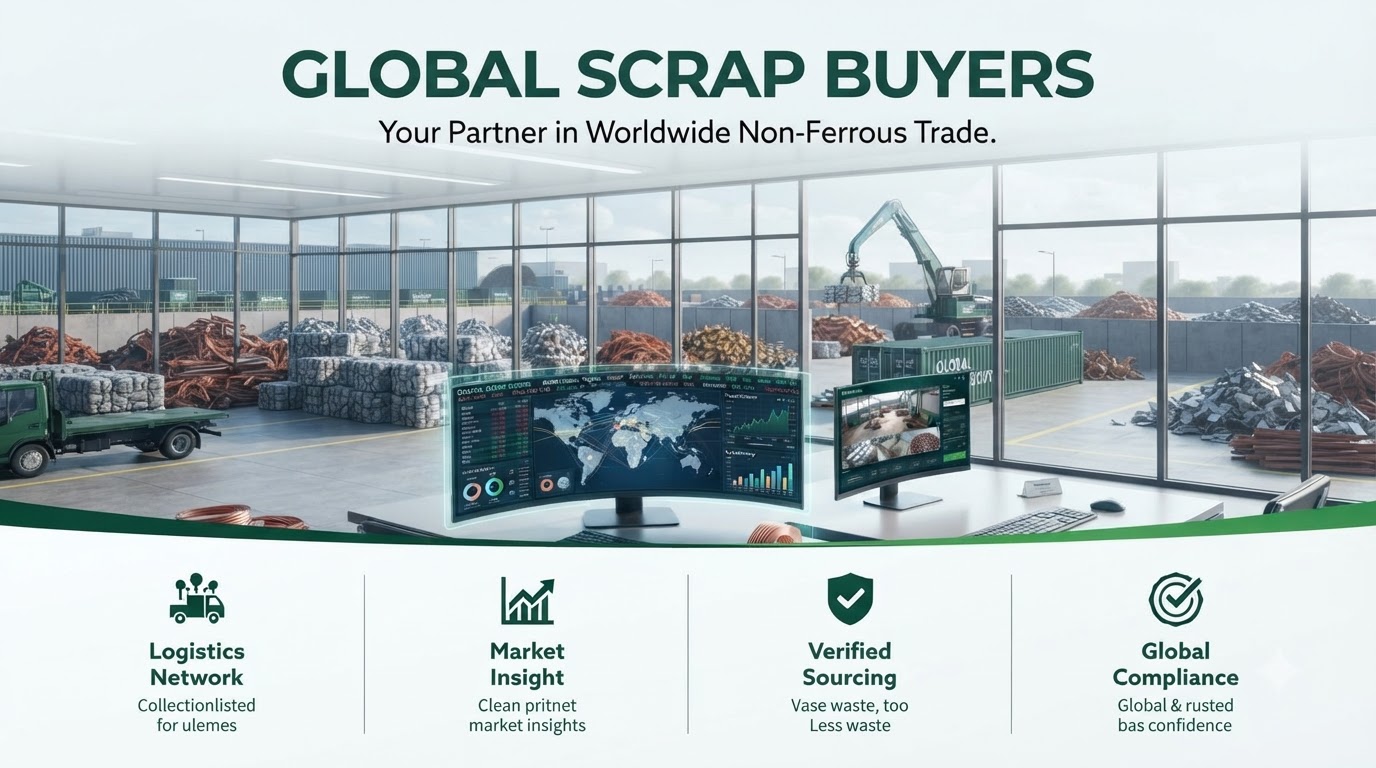
Finding reliable buyers can be one of the hardest parts of selling scrap, especially when you have commercial quantities and want to reach markets outside your local area. Many sellers still depend on local scrap yards, personal contacts, brokers, or repeated phone calls to find potential buyers.
But sellers today can reach global scrap buyers through digital B2B marketplaces, making it easier to showcase available materials and connect with businesses in different markets.
This guide explains who global scrap buyers are, where sellers traditionally find them, how online buyer discovery works, what verification can check, and how to create a listing that attracts serious buyers for cross-border scrap transactions.
Who Are Global Scrap Buyers?
Global scrap buyers are businesses or organizations that purchase recyclable materials from suppliers in different regions or countries.
Depending on their business model, they may buy scrap for recycling, processing, manufacturing, resale, or material recovery.
Common types of international scrap buyers include:
- Scrap metal recycling companies
- Scrap yards
- Metal processors
- Steel mills
- Foundries
- Manufacturing companies
- E-waste recyclers
- Plastic recycling companies
- Commodity traders
- Industrial material buyers
- Importers and exporters
The materials they purchase can vary significantly.
For example, a buyer may specialize in copper scrap, while another may purchase aluminium, steel, brass, stainless steel, HMS, machinery, e-waste, plastics, paper, or vehicle scrap.
This means sellers need to find buyers whose requirements match their specific material, grade, quantity, and location.
Where Sellers Traditionally Find Buyers and Why It's Limited
Traditionally, scrap sellers have relied on several methods to find buyers.
Local Scrap Yards
Local yards can be convenient because transportation distances are shorter. However, sellers are generally limited to buyers operating within a particular geographic market.
Brokers and Middlemen
Brokers can introduce sellers to buyers, but another intermediary may increase communication steps and affect the overall transaction structure.
Personal Business Networks
Established businesses often maintain relationships with repeat buyers.
This can work well for existing transactions, but it may make it harder to discover new buyers or enter unfamiliar markets.
Phone and Email Outreach
Sellers can contact potential buyers directly, but researching suitable companies and sending individual inquiries can be time-consuming.
Trade Events
Industry events can help businesses establish relationships with international companies, but they require time, travel, and ongoing follow-up.
The common limitation is buyer discovery. A seller may have valuable scrap available but still struggle to find the right buyer at the right time.
Digital marketplaces address this problem by making available material listings discoverable to a broader network of potential buyers.
How to Reach Global Scrap Buyers Online
Online B2B marketplaces provide another way for sellers to reach potential international buyers.
Instead of searching for companies individually, sellers can publish their material information where buyers actively looking for scrap can discover it.
1. Create a Detailed Scrap Listing
Start by providing accurate information about your material.
A useful listing should include:
- Material name
- Grade or specification
- Available quantity
- Current location
- Photos
- Videos when relevant
- Packaging details
- Availability
- Target price or bidding requirements
- Loading information
- Other important commercial terms
The more useful information a buyer receives initially, the easier it becomes for them to determine whether the material matches their requirements.
2. Make the Material Easy to Understand
Avoid vague descriptions such as “metal scrap available.”
Instead, describe the material specifically.
For example:
Copper Scrap – 20 MT – Available for International Buyers
Then provide the relevant grade, condition, location, photos, quantity, and other information.
This helps attract buyers searching for a particular type of scrap.
3. Reach Buyers Beyond Your Local Market
A digital marketplace can make a listing visible to potential buyers outside the seller's immediate geographic area.
This is particularly useful for businesses with larger quantities that may benefit from international buyer discovery.
You can explore the ScrapTrade marketplace to see how digital scrap trading can connect buyers and sellers.
4. Compare Buyer Offers
When multiple interested buyers respond, sellers can compare offers based on more than just price.
Consider:
- Offered price
- Required quantity
- Payment terms
- Pickup or delivery requirements
- Buyer location
- Transaction conditions
- Timing
A higher nominal price may not necessarily represent the most suitable transaction if other commercial conditions differ.
What Buyer Verification Actually Checks
Verification is an important consideration when dealing with unfamiliar businesses, particularly in international transactions.
However, verification does not mean that every possible commercial risk disappears. Sellers should still perform appropriate due diligence.
Depending on the platform and its verification process, buyer verification may involve checking information such as:
Business Identity
The platform may require business registration or company information to establish that the buyer represents a legitimate business.
Contact Information
Business contact details can help establish a communication trail between the parties.
KYC or Business Documentation
Where applicable, businesses may be asked to provide documentation supporting their identity or business status.
Trading Information
A buyer's stated requirements, material interests, and marketplace activity can provide additional context for sellers.
Compliance Information
Depending on the transaction and jurisdiction, additional checks may be relevant to regulatory or compliance requirements.
For international scrap transactions, sellers should remember that platform verification is one part of due diligence. Businesses should independently confirm contracts, payment terms, shipping arrangements, import requirements, and other transaction details before completing a deal.
Building a Listing That Attracts Serious Buyers
A strong listing does more than announce that scrap is available. It answers the questions buyers are likely to ask.
Use a Specific Title
Compare:
Metal Scrap Available
with:
HMS 1&2 Steel Scrap – 500 MT – Bulk Export Lot
The second title gives buyers significantly more information.
Provide Accurate Quantity
Commercial buyers need to know whether the available quantity fits their purchasing requirements.
Use appropriate units such as MT, tonnes, or kg and avoid unclear estimates.
Add Clear Photos
Good images can help buyers understand the condition, preparation, packaging, and general appearance of the material.
For some materials, videos can provide additional context.
Explain Material Specifications
Include the grade, composition, dimensions, condition, or other specifications relevant to the material.
Mention the Location
Location is important because transportation and logistics can significantly affect the economics of an international scrap transaction.
Make Commercial Terms Clear
Where appropriate, explain your target price, minimum quantity, bidding requirements, availability, and preferred transaction conditions.
A transparent listing helps reduce unnecessary back-and-forth communication.
How ScrapTrade Helps Sellers Reach Global Scrap Buyers
ScrapTrade provides a digital marketplace for businesses looking to buy and sell scrap online.
Sellers can create listings for recyclable materials and make them available to potential buyers across different markets.
The platform can help sellers with buyer discovery by providing a structured environment where businesses can:
- List available scrap
- Present material specifications
- Connect with potential buyers
- Receive buyer inquiries or offers
- Compare available opportunities
- Manage trading information digitally
This approach can be particularly useful for sellers who want to expand beyond traditional local buyer networks.
Businesses can also use the ScrapTrade product listing system to publish available materials and use the RFQ marketplace to discover relevant buying requirements.
For sellers entering international markets, this creates a more structured starting point for finding potential trading partners.
FAQs
How can I find global scrap buyers?
You can find global scrap buyers through B2B marketplaces, industry networks, trade directories, direct business outreach, and recycling industry events. Digital scrap marketplaces can make buyer discovery easier by connecting listings with businesses looking for specific materials.
What information do international scrap buyers need?
Buyers generally need information such as material type, grade, quantity, location, condition, photos, specifications, availability, pricing expectations, and logistics details. More complete listings can make it easier for buyers to evaluate an opportunity.
Are verified scrap buyers guaranteed to purchase my material?
No. Verification can help establish business identity or other information, but it does not guarantee that a buyer will complete a transaction. Sellers should still confirm commercial terms, payment arrangements, logistics, and other relevant transaction details.
Can I sell scrap to buyers in other countries?
Yes, businesses can trade scrap across borders when the material, transaction, and shipment comply with applicable export, import, customs, environmental, and other regulatory requirements.
Conclusion
Finding the right buyer is often the first major challenge when selling commercial quantities of scrap. Local scrap yards and established contacts can remain useful, but they may not provide the market reach needed by every seller.
Digital B2B marketplaces offer another way to discover global scrap buyers, present material professionally, receive potential offers, and connect with businesses outside a seller's immediate market.
The process starts with a clear listing. Accurate material information, quantity, specifications, images, location, and commercial terms can help attract more relevant buyer interest.