

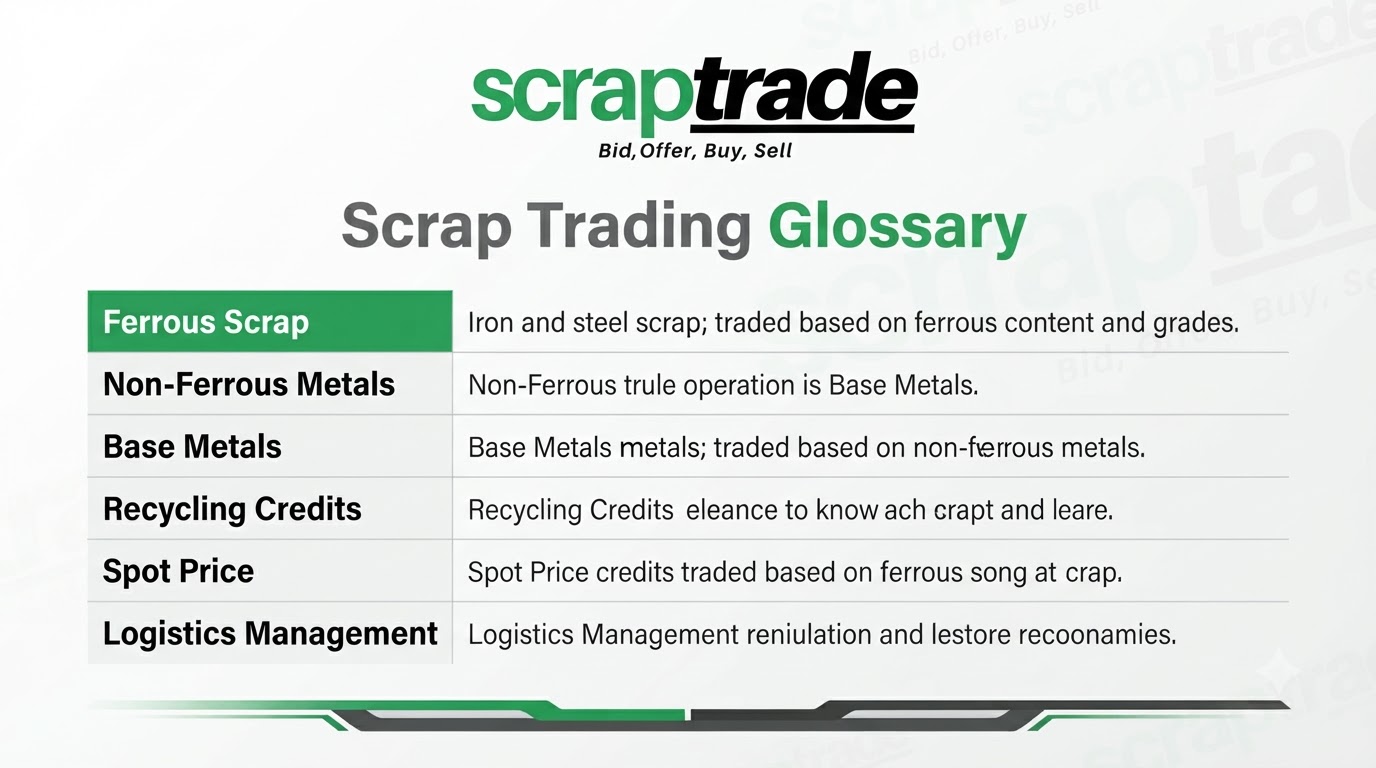
Scrap trading has its own terminology for material grades, pricing, quality checks, shipping, payments, and business verification. Whether you are selling copper scrap locally, sourcing bulk steel, or negotiating an international shipment, understanding these terms helps you communicate clearly and reduce misunderstandings.
This scrap trading glossary explains more than 40 essential terms in plain English, including HMS, UBC, ISRI, LME-linked pricing, FOB, CIF, RFQ, reverse bidding, escrow, and KYC.
Why Scrap Trading Has Its Own Language
Scrap is not a single standardised product. Two shipments described as copper scrap, aluminium scrap, or steel scrap may differ in grade, composition, cleanliness, moisture, processing, and suitability for a buyer's operation.
Traders use industry terminology to describe materials, establish specifications, compare offers, and agree on delivery and payment conditions. International transactions add another layer of terminology covering shipping responsibilities, documentation, inspection, and risk allocation.
Knowing these terms helps buyers request the right material and enables sellers to prepare more accurate listings. It also makes quotations easier to compare because both parties can identify what is included in a proposed deal.
Definitions below are general explanations. Always confirm the specifications in the relevant purchase agreement, buyer requirements, and applicable standards.
Grades and Material Terms (HMS, UBC, Bare Bright, ISRI)
1. HMS (Heavy Melting Scrap)
HMS is a category of heavy ferrous scrap commonly traded for steelmaking. HMS 1 and HMS 2 are commonly used grade descriptions, but exact acceptance requirements depend on the applicable specification and buyer.
2. HMS 1
A commonly recognised category of heavy melting steel scrap with tighter restrictions on certain material characteristics than HMS 2 under many grading systems. Confirm the agreed grade definition before shipment.
3. HMS 2
A category of heavy melting steel scrap that may permit a broader range of material characteristics than HMS 1. The exact distinction depends on the grading specification used in the contract.
4. Ferrous Scrap
Scrap containing iron as its principal metal component. Common examples include steel beams, iron components, and many types of steel manufacturing offcuts.
5. Non-Ferrous Scrap
Scrap made from metals such as copper, aluminium, brass, lead, and zinc. These materials are generally distinguished from ferrous scrap by their composition rather than simply by appearance.
6. Bare Bright Copper
A high-quality copper wire scrap category generally associated with clean, uncoated, unalloyed, uninsulated copper wire meeting the buyer's specification. Coatings, solder, attachments, and contamination can affect classification.
7. No. 1 Copper
A copper scrap grade generally associated with clean, high-quality copper material that meets the relevant grading requirements. It is not automatically interchangeable with bare bright copper.
8. No. 2 Copper
A copper scrap category that may include material with more oxidation, coatings, solder, or other characteristics than higher-grade copper. The exact acceptable composition must be agreed upon.
9. UBC (Used Beverage Cans)
Recovered aluminium beverage cans collected for recycling. Buyers may specify requirements for contamination, moisture, compaction, and other material characteristics.
10. ISRI Specifications
Industry-recognised scrap grading descriptions historically associated with the Institute of Scrap Recycling Industries, now part of the Institute of Scrap Recycling Industries' successor organisation, the Recycled Materials Association (ReMA). These specifications help traders describe scrap consistently. Confirm the current specification and any contract-specific modifications.
11. Alloy
A material made by combining a metal with one or more other elements. Aluminium and stainless steel scrap can contain different alloy compositions, which may influence their suitability and value.
12. Contamination
Unwanted substances or materials mixed with the scrap, such as dirt, plastic, rubber, oil, or unrelated metals. Contamination can affect processing costs, acceptance, and the final price.
13. Mixed Scrap
A load containing more than one type, grade, or composition of scrap. Buyers may require sorting or a detailed breakdown before providing a firm offer.
Pricing and Quoting Terms (LME-Linked, FOB, CIF, MOQ)
14. LME (London Metal Exchange)
An international metals exchange that provides reference prices for certain metals, including copper and aluminium. LME prices can inform scrap pricing, but they are not the same as the final price offered for scrap material.
15. LME-Linked Pricing
A pricing method that uses an agreed LME reference as one component of the calculation. The final price may account for grade, metal content, recovery, processing, location, freight, and other commercial adjustments.
16. Spot Price
A price associated with a transaction for relatively prompt purchase or delivery. The precise meaning depends on the commodity, market, and agreement.
17. Quotation (Quote)
A seller's stated offer to supply material at specified prices and conditions, or a buyer's stated offer to purchase it. A quote should identify quantity, grade, currency, delivery terms, and validity where relevant.
18. MOQ (Minimum Order Quantity)
The smallest quantity a seller is willing to supply or a buyer is willing to purchase under stated conditions.
19. Price Benchmark
A reference price used to help assess market conditions or compare offers. A benchmark is not necessarily the price achievable for a particular scrap load.
20. Net Weight
The weight of the material excluding packaging, containers, or other items included in gross weight. The agreed weighing method and any deductions should be clear.
21. Gross Weight
The total measured weight before deducting the tare weight of packaging, containers, or transport equipment, as applicable.
22. FOB (Free On Board)
An Incoterms® rule for sea or inland waterway transport. Under FOB, the seller delivers the goods on board the vessel nominated by the buyer at the named port of shipment, and risk transfers according to the rule. It should not be used indiscriminately for every transport mode.
23. CIF (Cost, Insurance and Freight)
An Incoterms® rule for sea or inland waterway transport under which the seller arranges and pays the cost of carriage and specified insurance to the named destination port. Risk transfers when the goods are on board the vessel at the port of shipment, not when they arrive at the destination.
24. Incoterms®
International commercial terms published by the International Chamber of Commerce (ICC). They define specific responsibilities, costs, delivery obligations, and risk allocation between sellers and buyers. The contract should name the chosen rule and the relevant place or port.
Platform and Deal Terms (RFQ, Reverse Bidding, Escrow, KYC)
25. RFQ (Request for Quotation)
A formal request inviting suppliers to quote for specified materials, quantities, quality requirements, and delivery conditions. Buyers can use RFQs to compare offers from potential suppliers.
26. Reverse Bidding
A process in which buyers submit competing offers to purchase a seller's listed material. The available process and visibility of other offers depend on the platform's features and rules.
27. Listing
A digital offer describing scrap available for sale or, on some platforms, material a buyer wants to source. Useful details include grade, quantity, location, photographs, and commercial terms.
28. Buyer Offer
A proposal from a buyer stating the price and conditions under which they are willing to purchase the listed material. The seller can assess the offer against the listing requirements and other proposals.
29. Counteroffer
A response that proposes revised terms, such as a different price, quantity, delivery arrangement, or payment condition.
30. KYC (Know Your Customer)
A process used to establish and verify the identity of a customer or business. Depending on the platform and transaction, this may involve company details, identity documents, and other verification information.
31. Business Verification
Checks intended to confirm relevant details about a business, such as its registration or authorised representatives. The scope of verification varies, and verification should not be interpreted as a guarantee of every future transaction.
32. Escrow
An arrangement in which funds are held by an agreed third party or service under specified conditions until a defined release requirement is met. The parties should understand the applicable terms, fees, dispute process, and release conditions.
33. Digital Contract
An agreement created, shared, or signed electronically. It can record the material specification, price, quantity, delivery terms, payment conditions, and other agreed obligations.
Shipping and Documentation Terms (Bill of Lading, Packing List, Incoterms)
34. Bill of Lading (B/L)
A transport document commonly issued for sea freight. Depending on its form and applicable arrangements, it can serve as evidence of receipt of goods, evidence of the contract of carriage, and a document of title.
35. Packing List
A document describing the shipment's packages or units, contents, weights, and other handling details. It helps buyers, carriers, and customs representatives reconcile the shipment with its documentation.
36. Commercial Invoice
A document recording the sale details, typically including seller and buyer information, goods description, quantity, price, currency, and agreed commercial terms.
37. Certificate of Origin
A document used to identify the country of origin of goods under the relevant origin rules. Its format, issuing process, and acceptance requirements depend on the transaction and destination.
38. Freight Forwarder
A service provider that coordinates the movement of goods, potentially including transport bookings, documentation, and logistics arrangements. The scope of services depends on the agreement.
39. Customs Clearance
The process of completing applicable customs formalities for goods entering or leaving a country. Requirements can depend on the material, its classification, the countries involved, and current regulations.
40. Containerised Shipment
Cargo packed and transported in a shipping container. Scrap must be prepared, loaded, secured, and documented according to the agreed transport and safety requirements.
Quality and Inspection Terms (XRF, Contamination, Moisture)
41. XRF (X-Ray Fluorescence)
A testing technique used to identify elements in many metal samples. It can help assess alloy composition, but results depend on the equipment, sample condition, testing method, and material.
42. Inspection
An examination of scrap to assess whether it matches the agreed specification. Inspection may involve visual checks, weighing, sampling, testing, or reviewing documents.
43. Moisture Content
The amount of water present in a material or load. Excess moisture can affect measured weight, handling, processing, and acceptance under a buyer's specification.
44. Sampling
Taking a representative portion of a shipment for testing or assessment. The sampling method matters because an unrepresentative sample may not reflect the overall load.
45. Rejection
A buyer's refusal to accept some or all of a shipment because of issues such as incorrect grade, contamination, short quantity, or failure to meet agreed conditions. Contracts should explain inspection, notification, and dispute procedures.
46. Tolerance
An agreed allowance for a variation in a measured or specified characteristic, such as weight or composition. Tolerances should be defined in the contract rather than assumed.
How to Use This Glossary Before Your First Deal
Before listing or purchasing scrap, confirm the material name and grade, quantity, location, photographs, and any known contamination or processing requirements. If a buyer uses a grading code, ask which specification and version applies.
Next, compare quotations on a like-for-like basis. A higher headline price may not represent a better deal if freight, inspection, handling, payment timing, or other costs differ. Confirm the currency, quote validity, minimum order quantity, delivery rule, and who is responsible for each cost.
For international shipments, agree on the Incoterms® rule and named place, identify the required documents, and check applicable export, import, transport, and environmental requirements before committing to the transaction.
On a digital marketplace, review the listing details, buyer or seller information, offer conditions, and payment arrangements. If escrow or business verification is available, understand exactly what the service covers. Keep the final agreed terms in a written record.
ScrapTrade connects buyers and sellers through an online marketplace where businesses can browse listings and explore trading opportunities. You can use the global scrap trading marketplace to put these terms into practice when sourcing or listing material.
FAQs
What does HMS mean in scrap trading?
HMS stands for Heavy Melting Scrap, a category of ferrous scrap commonly used in steelmaking. HMS 1 and HMS 2 describe different grades, and buyers should confirm the exact specification before trading.
What is the difference between FOB and CIF?
FOB and CIF are Incoterms® rules used for sea and inland waterway transport. Under FOB, the seller delivers the goods on board the nominated vessel at the shipment port. Under CIF, the seller also pays for carriage and specified insurance to the destination port, although risk transfers at the shipment port.
What does RFQ mean?
RFQ means Request for Quotation. It is a request for suppliers to provide offers based on defined material, quantity, quality, and delivery requirements.
What is the purpose of KYC in scrap trading?
KYC helps establish and verify customer or business identity. It can support a platform's onboarding and risk-management processes, but it does not eliminate every transaction risk.
Does an LME price equal the price of scrap?
No. An LME price is a reference for certain metals. A scrap offer may also reflect grade, recoverable metal content, contamination, processing, transport, and local market conditions.
What should a scrap listing include?
A useful listing should include the material and grade, available quantity, location, photographs, condition, known contamination, and preferred commercial terms. Accurate details help buyers assess whether the material suits their requirements.
Conclusion
Understanding scrap trading terminology helps buyers and sellers communicate more accurately, evaluate offers, and manage transaction risks. Terms such as HMS, UBC, LME-linked pricing, RFQ, FOB, CIF, escrow, and XRF describe different parts of the trading process, so it is important to use each one correctly.
Before closing a deal, confirm the material specification, price basis, delivery responsibilities, inspection process, documentation, and payment conditions. Clear definitions and written agreements help create more transparent trading relationships.
Ready to apply these terms to a real transaction? Browse listings, compare opportunities, and connect with businesses through ScrapTrade's global marketplace.