

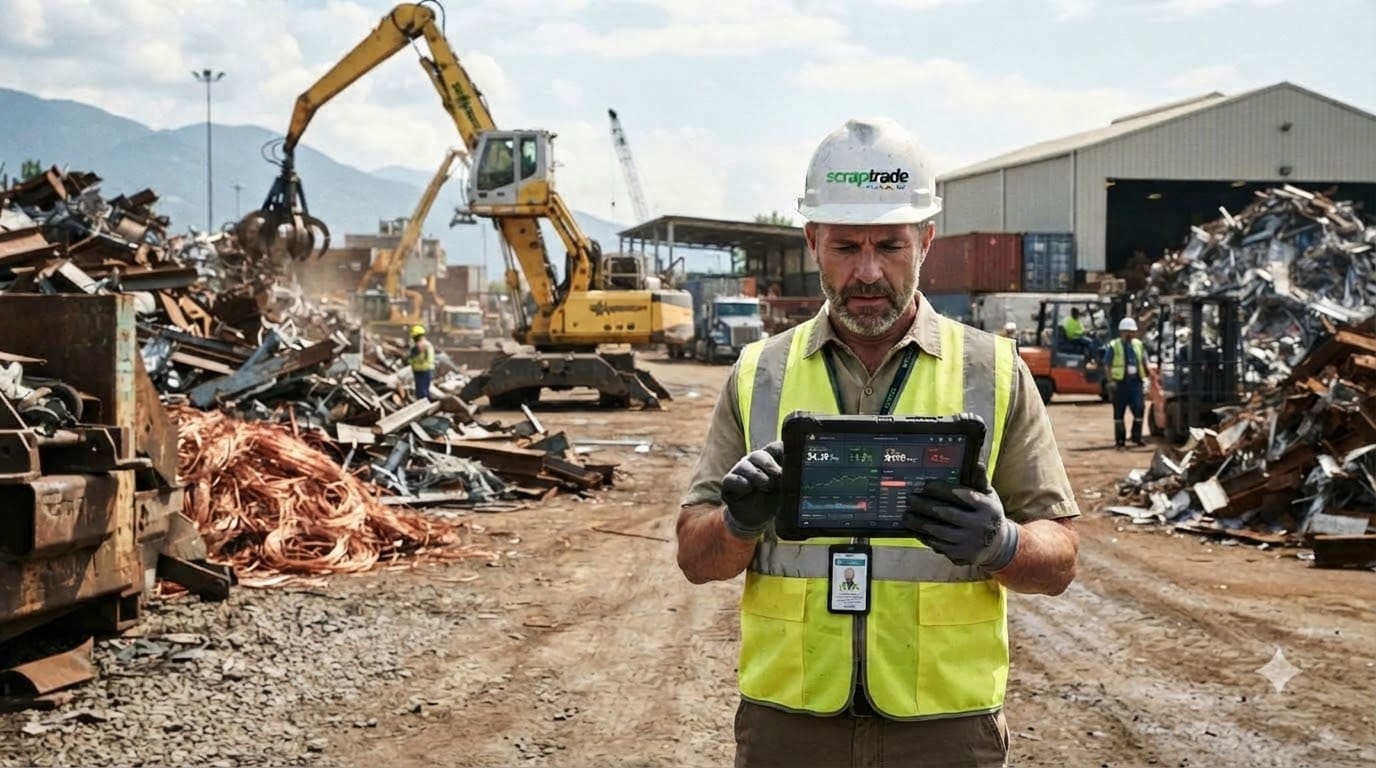
A scrap trader is a person or business involved in buying, selling, sourcing, or arranging trades of recyclable materials such as scrap metal, industrial waste, vehicles, machinery, plastics, paper, and other recoverable materials.
Scrap traders connect material suppliers with buyers who need specific grades, quantities, and qualities of scrap. Traditionally, this work has relied heavily on local networks, phone calls, personal relationships, physical inspections, and direct negotiations. Today, digital marketplaces are changing how traders discover opportunities, communicate with trading partners, compare offers, and manage transactions.
For people entering the scrap industry, understanding what a scrap trader does is an important first step. The role combines market knowledge, sales, sourcing, negotiation, material understanding, and commercial decision-making.
What Does a Scrap Trader Do?
The day-to-day work of a scrap trader depends on the type of business and materials being traded. However, the central responsibility is usually the same: finding suitable scrap buying or selling opportunities and turning them into commercially viable transactions.
A trader may source material from businesses, manufacturers, demolition companies, recycling operations, scrap yards, vehicle dismantlers, or other suppliers. On the other side of the transaction, the trader may work with recyclers, processors, manufacturers, exporters, importers, or other scrap buyers.
A typical trading process can involve:
- Finding available scrap and understanding its material specifications
- Identifying potential buyers or sellers
- Checking quantity, grade, quality, and location
- Discussing prices and commercial terms
- Coordinating inspections, documentation, logistics, and payment
- Following the transaction through to completion
The trader therefore acts as a commercial link between supply and demand.
For example, a supplier may have a large quantity of copper wire scrap but no established international buyer. A scrap trader can identify potential buyers interested in that material, compare commercial requirements, negotiate terms, and help move the transaction forward.
The role is not limited to metal. Depending on the market, scrap traders may handle HMS, copper, aluminium, brass, stainless steel, e-waste, batteries, vehicles, machinery, plastics, tyres, paper, and cardboard.
Types of Scrap Traders (Independent, Yard-Based, Platform-Based)
Not every scrap trader operates in the same way. The business model often determines where opportunities are found and how transactions are managed.
Independent Scrap Trader
An independent trader works through their own network of suppliers and buyers. They may source material from multiple locations and negotiate directly with counterparties.
Relationships are particularly important in this model because repeat transactions and trusted contacts can generate a steady flow of opportunities.
The challenge is that independent traders may spend considerable time searching for suitable material, contacting potential buyers, checking information, and negotiating manually.
Yard-Based Scrap Trader
A yard-based trader operates from or closely with a physical scrap yard or recycling facility. The business may purchase material locally, sort or process it, and then sell larger quantities to downstream buyers.
Because the trader has access to physical material, knowledge of grades, weighing, sorting, and inspection can be particularly important.
Yard-based trading can combine physical operations with commercial trading. A business may buy mixed scrap locally, process it into more specific grades, and sell those grades to larger buyers.
Platform-Based Scrap Trader
A platform-based trader uses digital marketplaces and online tools to discover trading opportunities.
Instead of relying exclusively on personal contacts, the trader can search digital listings, review material information, communicate with potential counterparties, and manage opportunities through an online system.
For international trading, this model can make it easier to discover buyers and sellers outside the trader's immediate geographic network.
Digital platforms do not eliminate the need for commercial knowledge. Rather, they can reduce some of the manual work involved in finding and managing trading opportunities.
Skills That Make a Good Scrap Trader
Successful scrap trading requires more than knowing the current price of a material. Traders need a combination of technical, commercial, communication, and analytical skills.
Material Knowledge
A trader should understand the materials being traded, including grades, specifications, contamination considerations, quality differences, and typical applications.
For example, copper scrap can have substantially different commercial value depending on its form, purity, insulation, attachments, and specifications. Similar differences exist across aluminium, brass, steel, stainless steel, and other materials.
The more accurately a trader understands the material, the easier it becomes to communicate with both suppliers and buyers.
Market Awareness
Scrap prices can change because of supply and demand, commodity markets, manufacturing activity, energy costs, logistics, currency movements, and regional market conditions.
A trader therefore needs to monitor market information rather than relying on an old price or a single quotation.
Reference prices can help establish a starting point, but the final transaction price can depend on grade, quantity, location, freight, payment terms, quality, and the specific buyer.
Negotiation
Negotiation is one of the central skills in scrap trading.
A trader may need to negotiate:
- Price
- Quantity
- Material specifications
- Inspection requirements
- Payment conditions
- Pickup or shipping arrangements
- Delivery terms
Good negotiation is not simply about obtaining the highest possible price. It involves understanding the commercial requirements of both sides and reaching terms that can realistically be completed.
Communication and Relationship Management
Scrap trading involves frequent communication between buyers, sellers, recyclers, logistics providers, inspectors, and other participants.
Clear communication helps prevent misunderstandings about material quality, quantity, pricing, location, and transaction terms.
Long-term relationships can also create repeat trading opportunities, particularly in B2B scrap markets.
Verification and Due Diligence
Traders also need to assess the reliability of potential trading partners and the information provided about the material.
Business identity, material details, quantity, location, specifications, and transaction requirements may all need to be checked before a deal proceeds.
Digital platforms can support this process through business verification, listing information, transaction records, and other tools, but traders still need to apply appropriate commercial judgment.
How Scrap Trading Has Changed with Digital Platforms
For many years, scrap trading depended primarily on local networks, phone calls, emails, spreadsheets, and personal relationships.
Those methods are still used, but digital platforms have introduced another way to discover and manage trading opportunities.
A global scrap marketplace can bring buyers and sellers together through online listings. Instead of searching individually for every potential counterparty, traders can review available materials and trading requirements in one digital environment.
This can be particularly useful when a trader wants to expand beyond a local market.
Digital tools can support several parts of the trading process:
| Traditional Trading | Digital Scrap Trading |
|---|---|
| Search through personal contacts | Discover listings online |
| Manual price discussions | Compare available offers |
| Email and phone-based communication | Digital communication tools |
| Separate spreadsheets | Centralized listing information |
| Limited geographic reach | Access to wider markets |
| Manual opportunity tracking | Digital dashboards and workflows |
However, technology does not replace the fundamentals of scrap trading. Material knowledge, verification, negotiation, compliance, logistics, and relationship management remain important.
The difference is that digital tools can make those activities more connected and easier to manage.
How to Get Started as a Scrap Trader
Starting in scrap trading does not necessarily require immediately operating a large scrap yard or handling huge volumes of material.
A practical starting point is to understand a specific material category and its market.
Learn how the material is graded, what affects its value, who typically buys it, where supply comes from, and what information buyers expect before making an offer.
Next, develop a network of reliable businesses. Depending on your market, this may include scrap suppliers, recyclers, manufacturers, processors, exporters, importers, and industrial businesses.
Digital marketplaces can also provide a way to begin building this network.
On a platform such as ScrapTrade, traders can explore available scrap listings, connect with buyers and sellers, and participate in B2B scrap trading opportunities through a digital marketplace.
Before committing to a transaction, traders should pay attention to material specifications, quantity, location, pricing, payment conditions, logistics, and verification.
It is also important to start with transactions that match your knowledge and operational capabilities. Understanding one or two material categories well can be more useful than trying to trade every type of scrap immediately.
As experience grows, a trader can expand into additional materials, markets, and international trading opportunities.
FAQs
What is a scrap trader?
A scrap trader is an individual or business that sources, buys, sells, or connects buyers and sellers of recyclable materials. Scrap traders may deal with metals, vehicles, machinery, e-waste, plastics, paper, and other recoverable materials.
What does a scrap metal trader do?
A scrap metal trader identifies buying and selling opportunities, evaluates material specifications and quantities, communicates with buyers and sellers, negotiates commercial terms, and helps coordinate transactions involving materials such as copper, aluminium, steel, brass, and other scrap metals.
Do scrap traders need a physical scrap yard?
Not necessarily. Some traders operate from physical yards, while others work through supplier and buyer networks or digital marketplaces. The requirements depend on the business model, materials, location, and applicable regulations.
Can I become a scrap trader using an online marketplace?
Digital marketplaces can provide tools for discovering listings, connecting with trading partners, comparing opportunities, and managing B2B transactions. However, successful trading still requires knowledge of materials, pricing, verification, negotiation, and logistics.
Conclusion
A scrap trader connects supply with demand in the recycling and secondary-materials market. The role can involve sourcing, pricing, negotiation, verification, relationship management, and transaction coordination.
While traditional scrap trading continues to depend on industry knowledge and relationships, digital marketplaces are creating new ways for traders to discover buyers and sellers beyond their immediate networks.
For someone looking to enter or expand in B2B scrap trading, combining traditional trading skills with digital tools can create a more efficient way to identify and manage opportunities.